← Voltar para a lista de provas Secretaria de Estado da Educação de Sergipe (SEED/SE) · Professor de Educação Básica – Área de Atuação: Grupo I – Ensino Fundamental e Ensino Médio – Disciplina: Língua Inglesa 20 questões nesta prova · 20 com gabarito Gabarito disponível Ideia central: o Newspeak foi criado para limitar o pensamento por meio da substituição do vocabulário. O texto explica que o Newspeak substitui deliberadamente palavras e que seu propósito era tornar impossíveis outras formas de pensamento. Essa é a síntese global do texto. A) Errada: a ciência era esvaziada de sentido no Newspeak. C) Errada: o Partido restringia o pensamento. D) Errada: era o Partido que impunha o vocabulário aos cidadãos, e não o contrário. E) Errada: o Newspeak reduzia a capacidade de pensar livremente. Referência: Texto 11A1-I Resolução comentada do VaiConcursos. Gabarito disponível 'Expression' é o substantivo abstrato do trecho. 'Expression' em 'a medium of expression' designa a ideia abstrata de expressar-se, algo não concreto nem tangível. É, portanto, um substantivo abstrato. A) 'alternative' funciona como adjetivo ('alternative facts'). B) 'official' é adjetivo. C) 'Party' é substantivo, mas designa uma organização concreta (o partido). D) 'class' designa categorias de vocabulário, usadas como grupos concretos de palavras no texto. Referência: Texto 11A1-I Resolução comentada do VaiConcursos. Gabarito disponível Consequência lógica do Newspeak: o vocabulário restrito molda a percepção da realidade. O texto diz que o Newspeak servia para tornar impossíveis outros modos de pensamento e que os cidadãos deviam ter 'an outlook' moldado por palavras restritas. Logo, a visão de mundo dos cidadãos era moldada pela linguagem limitada. A) Errada: o texto não fala em resistência com o Oldspeak, que era justamente o que se queria substituir. C) Errada: não havia liberdade para criar significados. D) Errada: contraria o objetivo de tornar outros pensamentos impossíveis. E) Errada: o vocabulário era restringido, não ampliado. Referência: Texto 11A1-I (Josh Jones, sobre 1984, de Orwell) Resolução comentada do VaiConcursos. Gabarito disponível Gabarito disponível Gabarito disponível Gabarito disponível Gabarito disponível Classe gramatical de 'know' e 'go'. Em 'you will know' e 'you'll go', ambos vêm após o auxiliar/sujeito e funcionam como verbos principais no infinitivo sem 'to'. A) 'go' não é preposição. B) 'know' não é advérbio. D) Nenhum é adjetivo. E) 'know' não é substantivo aqui. Referência: Gramática inglesa – classes de palavras. Resolução comentada do VaiConcursos. Gabarito disponível Comparativo proporcional 'the more... the more'. A estrutura 'The more... the more...' expressa proporção: conforme uma ação aumenta (ler, aprender), a outra também aumenta (saber, ir a lugares). A) Não compara dois adjetivos. B) Não é superlativo. D) Não indica ações opostas que diminuem. E) Diz o contrário: mais leitura leva a mais conhecimento. Referência: Gramática inglesa – double comparatives. Resolução comentada do VaiConcursos. Gabarito disponível Inferência sobre acesso ao inglês na pandemia. Os obstáculos citados (economia deprimida, internet ruim em áreas rurais, falta de dispositivos) permitem inferir que alunos com menos recursos tiveram mais dificuldade de acessar as aulas on-line. A) Contradiz a diferença de contextos. C) O texto não fala de dificuldade do conteúdo. D) Não afirma que as aulas se tornaram desnecessárias. E) Contradiz os problemas de acesso. Referência: Cambridge, Local contexts can make a difference. Resolução comentada do VaiConcursos. Gabarito disponível Característica negativa da mentalidade monolíngue. O 2º parágrafo diz que essa perspectiva 'limita as oportunidades de os alunos se engajarem dinamicamente com múltiplas línguas e dificulta o desenvolvimento da mobilidade linguística'. Esse é o aspecto negativo apontado. A) Letramento digital não é mencionado. C) 'Paradoxo' não é citado. D) O texto aponta desigualdade entre escolas privadas e públicas, não afirma que afeta especialmente os privilegiados. E) A integração intercultural é uma solução, não o que o texto atribui diretamente à mentalidade monolíngue. Referência: Text 11A2-I, 2º parágrafo. Resolução comentada do VaiConcursos. Gabarito disponível O que 'funds of perezhivanie' incentiva reconhecer. O conceito integra experiências, conhecimentos, potenciais, valores e emoções acumulados ao longo da vida. Ao reconhecê-los, o educador cria um ambiente inclusivo. Assim, valoriza as experiências e conhecimentos acumulados dos alunos. A) Multiletramento e proficiência não são citados nesse trecho. C) 'Only' academic knowledge contradiz a ideia. D) Testes padronizados contrariam a proposta. E) Separação estrita é a mentalidade monolíngue criticada. Referência: Text 11A2-I, 3º parágrafo. Resolução comentada do VaiConcursos. Gabarito disponível Definição de interculturalidade no 4º parágrafo. O texto define interculturalidade como uma 'disposição', um modo de vida, uma atitude de viver as referências da 'nossa' identidade em relação aos 'outros'. Isso expressa um compromisso de ver o eu como relacional, e não isolado. A) Avaliar valores de uma comunidade não é mencionado. B) O texto não a define como domínio de conhecimento cultural. C) Currículo universal contraria a proposta. E) O texto nega que seja um diálogo entre tradições filosóficas. Referência: Text 11A2-I, 4º parágrafo. Resolução comentada do VaiConcursos. Gabarito disponível Dimensão da heteroglossia sobre discursos de esferas sociais. O texto afirma que 'Multidiscursivity refers to the coexistence of distinct speech types or discourses associated with particular social spheres'. A resposta é multidiscursividade. A) Perezhivanie é outro conceito (experiências vividas). B) Interculturalidade é outro conceito. C) Multivocalidade trata de vozes individuais. E) Diversidade linguística trata da multiplicidade de línguas e variedades. Referência: Text 11A2-I, 6º parágrafo. Resolução comentada do VaiConcursos. Gabarito disponível Aspecto da multivocalidade. O texto define multivoicedness como a presença de diversas vozes individuais nos espaços discursivos, com cada enunciado situado na fronteira entre o eu e o outro. Isso equivale à existência de expressões pessoais variadas. B) Separação estrita das línguas é a mentalidade monolíngue criticada. C) Fragmentação em dialetos não é o conceito. D) Habilidade de navegar paisagens dialógicas não é definida assim. E) Prosódia não é mencionada. Referência: Text 11A2-I, 6º parágrafo. Resolução comentada do VaiConcursos. Gabarito disponível Preocupação dos educadores com a BNCC. O primeiro parágrafo fala de uma 'perspectiva homogeneizante' e questiona como definir conhecimentos essenciais para todos os alunos num país diverso como o Brasil, ignorando especificidades pessoais, regionais e locais. Isso corresponde a tratar os alunos como grupo coeso, sem reconhecer a diversidade. A) A língua franca não é tema do 1º parágrafo. B) Não se fala em priorizar alunos carentes. C) Avaliação de literatura não é mencionada. E) Humanidades versus ciências não é discutido. Referência: Text 11A2-II, 1º parágrafo. Resolução comentada do VaiConcursos. Gabarito disponível Visão de Szundy sobre o eixo intercultural. Segundo o texto, o eixo intercultural aproxima o documento de uma postura ideológica que valoriza modos plurais de ser, e Szundy diz que a BNCC pode levar a situar o ensino no campo das práticas decoloniais. Logo, a opção B. A) Neoliberalismo é associado à noção de lingua franca, não ao eixo intercultural. C) Não se afirma ausência de influência corporativa. D) e E) Não há relação com historiografia literária ou literatura. Referência: Text 11A2-II, 2º parágrafo. Resolução comentada do VaiConcursos. Gabarito disponível Contradição de Szundy nas habilidades do 6º ano. O texto diz que Szundy encontra uma visão autônoma de leitura nas habilidades do 6º ano, com verbos como identify e locate. Isso está 'at odds' com a compreensão formativa e política do inglês da introdução do componente. B) Os verbos críticos como debate estão nas habilidades do 9º ano, não na introdução. C) A ênfase no aprendiz é apresentada como interpretação possível, não como antagonista. D) Letramento digital não é mencionado. E) O eixo intercultural é incorporado. Referência: Text 11A2-II, 3º parágrafo. Resolução comentada do VaiConcursos. Gabarito disponível Aspecto da BNCC que incentiva o empreendedorismo sem questionar estruturas. Na citação de Szundy, é o 'English language's status as a lingua franca' que ajuda o aluno a ser 'self-entrepreneur' e a participar do mundo global sem questionar suas estruturas. O aspecto é, portanto, a compreensão do inglês como língua franca. A) Diversidade discursiva é descrita de outra forma. B) A organização em competências não é criticada nesse ponto. D) e E) Valores democráticos e contribuições periféricas são vistos de modo positivo ou problemático em outro trecho. Referência: Text 11A2-II, 4º parágrafo. Resolução comentada do VaiConcursos. Gabarito disponível Característica do 'Cartesian reader'. O texto afirma que a concepção pedagógica da BNCC assume um leitor cartesiano 'equipped with enough autonomy to identify the precise routes laid down by authors'. Assim, a característica central é a autonomia para identificar os percursos interpretativos propostos pelos autores. A) Contradiz a ideia de rotas precisas. C) O texto critica ignorar o contexto social. D) Letramento digital não é mencionado. E) Apreço por autores clássicos não é citado. Referência: Text 11A2-II, último parágrafo. Resolução comentada do VaiConcursos.SEED/SE 2025 — Professor de Educação Básica — Cargo 11: Língua Inglesa — Prova Objetiva — Conhecimentos Específicos
Text 11A1-I
“Newspeak,” the “official language of Oceania” in the novel 1984, comes from “new speak” and was created to supersede “Oldspeak,” or Standard English. Newspeak isn’t just buzzwords, but the deliberate replacement of one set of words in the language for another. Its transition, expected to be completed “by about the year 2050,” appears not through history or social change, but through the will of the Party. The purpose of Newspeak was not only to provide a medium of expression for the world-view and mental habits proper to the devotees of Ingsoc, but also to make all other modes of thought impossible.
Orwell discusses the “perfected” form of Newspeak, with grammatical “peculiarities,” such as “an almost complete interchangeability between different parts of speech.” Its vocabulary is divided into the A, B, and C classes. The A class contains “everyday life” words mutated with prefixes and intensifiers like “uncold,” “pluscold,” and “doublepluscold.” The B class contains doublethink coinages like “joycamp” and “Minipax,” similar to “the characteristic features of political language (…) in totalitarian countries.” The citizens of Oceania must have “an outlook” shaped by these restricted words; even sexual life was regulated by “sexcrime” and “goodsex.”
The C class “consisted entirely of scientific and technical terms,” defined rigidly and stripped of meanings. There was no vocabulary for science as a habit of mind; any meaning it could bear was “already sufficiently covered by the word Ingsoc.” This linguistic control made translating the past nearly impossible. “All mans are equal” could exist only as “a palpable untruth,” and Jefferson’s preamble could only be swallowed by the single word “crimethink.”
The phrase “alternative facts” could fit easily into the “Newspeak Dictionary,” showing how such language can sink into discourse and become Newspeak itself.
Josh Jones. George Orwell Explains How “Newspeak” Works, the Official Language of His Totalitarian Dystopia in 1984. January 25th, 2017. Internet: <https://www.openculture.com/> (adapted).
Using reading strategies to obtain a global understanding of text 11A1-I, choose the option that best synthesizes the central idea conveyed by the text.Resolução comentada
Análise das alternativas
Text 11A1-I
“Newspeak,” the “official language of Oceania” in the novel 1984, comes from “new speak” and was created to supersede “Oldspeak,” or Standard English. Newspeak isn’t just buzzwords, but the deliberate replacement of one set of words in the language for another. Its transition, expected to be completed “by about the year 2050,” appears not through history or social change, but through the will of the Party. The purpose of Newspeak was not only to provide a medium of expression for the world-view and mental habits proper to the devotees of Ingsoc, but also to make all other modes of thought impossible.
Orwell discusses the “perfected” form of Newspeak, with grammatical “peculiarities,” such as “an almost complete interchangeability between different parts of speech.” Its vocabulary is divided into the A, B, and C classes. The A class contains “everyday life” words mutated with prefixes and intensifiers like “uncold,” “pluscold,” and “doublepluscold.” The B class contains doublethink coinages like “joycamp” and “Minipax,” similar to “the characteristic features of political language (…) in totalitarian countries.” The citizens of Oceania must have “an outlook” shaped by these restricted words; even sexual life was regulated by “sexcrime” and “goodsex.”
The C class “consisted entirely of scientific and technical terms,” defined rigidly and stripped of meanings. There was no vocabulary for science as a habit of mind; any meaning it could bear was “already sufficiently covered by the word Ingsoc.” This linguistic control made translating the past nearly impossible. “All mans are equal” could exist only as “a palpable untruth,” and Jefferson’s preamble could only be swallowed by the single word “crimethink.”
The phrase “alternative facts” could fit easily into the “Newspeak Dictionary,” showing how such language can sink into discourse and become Newspeak itself.
Josh Jones. George Orwell Explains How “Newspeak” Works, the Official Language of His Totalitarian Dystopia in 1984. January 25th, 2017. Internet: <https://www.openculture.com/> (adapted).
Considering text 11A1-I, choose the option that presents a word that, in the text, functions as an abstract noun denoting a non-concrete concept.Resolução comentada
Análise das alternativas
Text 11A1-I
“Newspeak,” the “official language of Oceania” in the novel 1984, comes from “new speak” and was created to supersede “Oldspeak,” or Standard English. Newspeak isn’t just buzzwords, but the deliberate replacement of one set of words in the language for another. Its transition, expected to be completed “by about the year 2050,” appears not through history or social change, but through the will of the Party. The purpose of Newspeak was not only to provide a medium of expression for the world-view and mental habits proper to the devotees of Ingsoc, but also to make all other modes of thought impossible.
Orwell discusses the “perfected” form of Newspeak, with grammatical “peculiarities,” such as “an almost complete interchangeability between different parts of speech.” Its vocabulary is divided into the A, B, and C classes. The A class contains “everyday life” words mutated with prefixes and intensifiers like “uncold,” “pluscold,” and “doublepluscold.” The B class contains doublethink coinages like “joycamp” and “Minipax,” similar to “the characteristic features of political language (…) in totalitarian countries.” The citizens of Oceania must have “an outlook” shaped by these restricted words; even sexual life was regulated by “sexcrime” and “goodsex.”
The C class “consisted entirely of scientific and technical terms,” defined rigidly and stripped of meanings. There was no vocabulary for science as a habit of mind; any meaning it could bear was “already sufficiently covered by the word Ingsoc.” This linguistic control made translating the past nearly impossible. “All mans are equal” could exist only as “a palpable untruth,” and Jefferson’s preamble could only be swallowed by the single word “crimethink.”
The phrase “alternative facts” could fit easily into the “Newspeak Dictionary,” showing how such language can sink into discourse and become Newspeak itself.
Josh Jones. George Orwell Explains How “Newspeak” Works, the Official Language of His Totalitarian Dystopia in 1984. January 25th, 2017. Internet: <https://www.openculture.com/> (adapted).
Based on text 11A1-I, choose the option that most accurately reflects a logical consequence of the linguistic policy imposed on the citizens of Oceania.Resolução comentada
Análise das alternativas
Text 11A1-II

Kathryn LeMieux. When English teachers snap. Internet: <https://engl3202lsu.weebly.com> (adapted).
Text 11A1-II shows a teacher being arrested after correcting a sentence on a billboard. Considering the grammatical rules and the humorous meaning of the text, it is correct to conclude that its comic effect results from the fact that
Text 11A1-II
Kathryn LeMieux. When English teachers snap. Internet: <https://engl3202lsu.weebly.com> (adapted).
In the billboard original sentence “got milk?”, presented in text 11A1-II, the teacher crosses out the word “got” and includes the words “Do you have any”. Considering word classes and syntax, it is correct to conclude that the billboard original sentence was incorrect in standard English because
Text 11A1-III
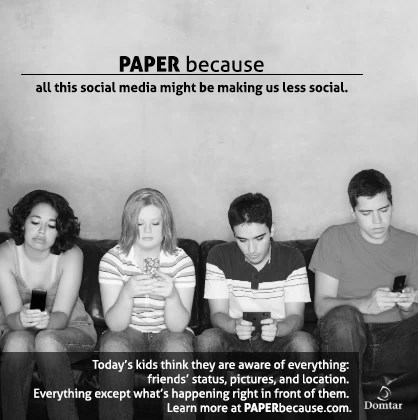
Internet: <https://www.nytimes.com> (adapted).
Text 11A1-III is an advertisement produced by paper company Domtar. According to the meanings conveyed by the text, it is correct to infer that
Text 11A1-III
Internet: <https://www.nytimes.com> (adapted).
At the bottom of the advertisement presented in text 11A1-III, there are the sentences “Today’s kids think they are aware of everything: friends’ status, pictures, and location. Everything except what’s happening right in front of them”. Choose the option that expresses the main idea conveyed by these sentences.
Text 11A1-IV
The more that you read, the more things you will know.
The more that you learn, the more places you’ll go.
Dr. Seuss. I can read with my eyes shut! New York: Random House, 1987.
Considering text 11A1-IV, which presents a famous Dr. Seuss quote, choose the correct option regarding the grammatical class of the words “know” and “go”.Resolução comentada
Análise das alternativas
Text 11A1-IV
The more that you read, the more things you will know.
The more that you learn, the more places you’ll go.
Dr. Seuss. I can read with my eyes shut! New York: Random House, 1987.
The comparative construction used in both sentences of text 11A1-IVResolução comentada
Análise das alternativas
Learners in Ecuador take English from first grade, but disconnection from the language and culture can reduce engagement.
Lester Pereddo examined the effects of covid-19 on teaching English in Ecuador, identifying barriers such as the depressed economy, poor internet in rural highlands, work obligations at home, and lack of devices. These challenges reflected local realities, and Lester shared lessons and suggestions for teachers.
Catherine Rayson. Local contexts can make a difference in learning and adapting. September 10th, 2021. Internet: <https://www.cambridge.org> (adapted).
Considering the challenges described by Lester Pereddo in the previous text, choose the option that presents a correct inference about the access to English learning during the coronavirus pandemic.Resolução comentada
Análise das alternativas
Text 11A2-I
The exploration of bilingual education in Brazil reveals a landscape filled with significant challenges and promising possibilities. Inequalities between private institutions and the public sector perpetuate socioeconomic gaps and limited access to it.
Despite the increasing presence of bilingual education, many programs continue to operate under a monolingual mindset that emphasizes strict separation between languages and prioritizes linguistic accuracy over communicative practices. This perspective limits students’ opportunities to engage dynamically with multiple languages and hinders their development of linguistic mobility. To move beyond these limitations, it is crucial to foster intercultural competences. To do so, creating spaces where students can appreciate and interact with cultural and linguistic diversity becomes essential.
Central to this discussion is the concept of “funds of perezhivanie”, which integrates various theoretical and practical elements, encompassing experiences, knowledge, potentials, values, and emotions of individuals or groups accumulated throughout their lives. By recognizing these diverse experiences, educators can create a more inclusive and responsive educational environment that values the cultural and experiential diversity of students.
The concept of “interculturality” is also significant for our context. By exploring strategies for intercultural education, we conceive bilingual education as a possibility for the formation of subjects with an intercultural stance and with greater willingness and knowledge to face the inequalities imposed by our society. Crafting bilingual identities, in this sense, means forging spaces for the construction of intercultural and critical curricula. So interculturality, from the perspective we adopt, is not a theoretical position or a dialogue between cultures or philosophical traditions but a “position” or “disposition,” a “way of life”. An attitude of willingness to live “our” identity references in relation to “others” that opens the human experience toward a process of relearning and of cultural and contextual relocation, which allows us to perceive cultural illiteracies.
This leads us to the second challenge faced by public bilingual schools that can contribute to the formation of empowered and agentive global citizens: the need to move toward heteroglossic perspectives.
Heteroglossia is here understood in a broad sense, drawing on Bakhtin’s view of language as inherently plural, layered, and dynamic. According to Busch, this concept encompasses three interrelated dimensions: 1) Multidiscursivity refers to the coexistence of distinct speech types or discourses associated with particular social spheres, time periods, professions, or communities; 2) Multivoicedness highlights the presence of diverse individual voices within these discursive spaces. Every utterance is situated on the boundary between self and other and becomes meaningful only when appropriated and reaccentuated by the speaker; and 3) Linguistic diversity points to the multiplicity of languages and language varieties shaped by social differentiation.
Framing bilingual education through heteroglossic lenses challenges dominant monolingual and homogenizing ideologies. It invites schools to cultivate spaces where varied discourses, voices, and languages can coexist, interact, and contribute to the construction of knowledge.
Internet: <jstor.org/stable> (adapted).
Considering text 11A2-I, choose the option that presents a major negative feature of the “monolingual mindset” (first sentence of the second paragraph) often found in current Brazilian bilingual programs.Resolução comentada
Análise das alternativas
Text 11A2-I
The exploration of bilingual education in Brazil reveals a landscape filled with significant challenges and promising possibilities. Inequalities between private institutions and the public sector perpetuate socioeconomic gaps and limited access to it.
Despite the increasing presence of bilingual education, many programs continue to operate under a monolingual mindset that emphasizes strict separation between languages and prioritizes linguistic accuracy over communicative practices. This perspective limits students’ opportunities to engage dynamically with multiple languages and hinders their development of linguistic mobility. To move beyond these limitations, it is crucial to foster intercultural competences. To do so, creating spaces where students can appreciate and interact with cultural and linguistic diversity becomes essential.
Central to this discussion is the concept of “funds of perezhivanie”, which integrates various theoretical and practical elements, encompassing experiences, knowledge, potentials, values, and emotions of individuals or groups accumulated throughout their lives. By recognizing these diverse experiences, educators can create a more inclusive and responsive educational environment that values the cultural and experiential diversity of students.
The concept of “interculturality” is also significant for our context. By exploring strategies for intercultural education, we conceive bilingual education as a possibility for the formation of subjects with an intercultural stance and with greater willingness and knowledge to face the inequalities imposed by our society. Crafting bilingual identities, in this sense, means forging spaces for the construction of intercultural and critical curricula. So interculturality, from the perspective we adopt, is not a theoretical position or a dialogue between cultures or philosophical traditions but a “position” or “disposition,” a “way of life”. An attitude of willingness to live “our” identity references in relation to “others” that opens the human experience toward a process of relearning and of cultural and contextual relocation, which allows us to perceive cultural illiteracies.
This leads us to the second challenge faced by public bilingual schools that can contribute to the formation of empowered and agentive global citizens: the need to move toward heteroglossic perspectives.
Heteroglossia is here understood in a broad sense, drawing on Bakhtin’s view of language as inherently plural, layered, and dynamic. According to Busch, this concept encompasses three interrelated dimensions: 1) Multidiscursivity refers to the coexistence of distinct speech types or discourses associated with particular social spheres, time periods, professions, or communities; 2) Multivoicedness highlights the presence of diverse individual voices within these discursive spaces. Every utterance is situated on the boundary between self and other and becomes meaningful only when appropriated and reaccentuated by the speaker; and 3) Linguistic diversity points to the multiplicity of languages and language varieties shaped by social differentiation.
Framing bilingual education through heteroglossic lenses challenges dominant monolingual and homogenizing ideologies. It invites schools to cultivate spaces where varied discourses, voices, and languages can coexist, interact, and contribute to the construction of knowledge.
Internet: <jstor.org/stable> (adapted).
It is correct to conclude from text 11A2-I that “the concept of ‘funds of perezhivanie’” (first sentence of the third paragraph) encourages educators in bilingual education to recognize and valueResolução comentada
Análise das alternativas
Text 11A2-I
The exploration of bilingual education in Brazil reveals a landscape filled with significant challenges and promising possibilities. Inequalities between private institutions and the public sector perpetuate socioeconomic gaps and limited access to it.
Despite the increasing presence of bilingual education, many programs continue to operate under a monolingual mindset that emphasizes strict separation between languages and prioritizes linguistic accuracy over communicative practices. This perspective limits students’ opportunities to engage dynamically with multiple languages and hinders their development of linguistic mobility. To move beyond these limitations, it is crucial to foster intercultural competences. To do so, creating spaces where students can appreciate and interact with cultural and linguistic diversity becomes essential.
Central to this discussion is the concept of “funds of perezhivanie”, which integrates various theoretical and practical elements, encompassing experiences, knowledge, potentials, values, and emotions of individuals or groups accumulated throughout their lives. By recognizing these diverse experiences, educators can create a more inclusive and responsive educational environment that values the cultural and experiential diversity of students.
The concept of “interculturality” is also significant for our context. By exploring strategies for intercultural education, we conceive bilingual education as a possibility for the formation of subjects with an intercultural stance and with greater willingness and knowledge to face the inequalities imposed by our society. Crafting bilingual identities, in this sense, means forging spaces for the construction of intercultural and critical curricula. So interculturality, from the perspective we adopt, is not a theoretical position or a dialogue between cultures or philosophical traditions but a “position” or “disposition,” a “way of life”. An attitude of willingness to live “our” identity references in relation to “others” that opens the human experience toward a process of relearning and of cultural and contextual relocation, which allows us to perceive cultural illiteracies.
This leads us to the second challenge faced by public bilingual schools that can contribute to the formation of empowered and agentive global citizens: the need to move toward heteroglossic perspectives.
Heteroglossia is here understood in a broad sense, drawing on Bakhtin’s view of language as inherently plural, layered, and dynamic. According to Busch, this concept encompasses three interrelated dimensions: 1) Multidiscursivity refers to the coexistence of distinct speech types or discourses associated with particular social spheres, time periods, professions, or communities; 2) Multivoicedness highlights the presence of diverse individual voices within these discursive spaces. Every utterance is situated on the boundary between self and other and becomes meaningful only when appropriated and reaccentuated by the speaker; and 3) Linguistic diversity points to the multiplicity of languages and language varieties shaped by social differentiation.
Framing bilingual education through heteroglossic lenses challenges dominant monolingual and homogenizing ideologies. It invites schools to cultivate spaces where varied discourses, voices, and languages can coexist, interact, and contribute to the construction of knowledge.
Internet: <jstor.org/stable> (adapted).
In its fourth paragraph, text 11A2-I defines ‘interculturality’ primarily as a ‘position’ or ‘disposition’ that involvesResolução comentada
Análise das alternativas
Text 11A2-I
The exploration of bilingual education in Brazil reveals a landscape filled with significant challenges and promising possibilities. Inequalities between private institutions and the public sector perpetuate socioeconomic gaps and limited access to it.
Despite the increasing presence of bilingual education, many programs continue to operate under a monolingual mindset that emphasizes strict separation between languages and prioritizes linguistic accuracy over communicative practices. This perspective limits students’ opportunities to engage dynamically with multiple languages and hinders their development of linguistic mobility. To move beyond these limitations, it is crucial to foster intercultural competences. To do so, creating spaces where students can appreciate and interact with cultural and linguistic diversity becomes essential.
Central to this discussion is the concept of “funds of perezhivanie”, which integrates various theoretical and practical elements, encompassing experiences, knowledge, potentials, values, and emotions of individuals or groups accumulated throughout their lives. By recognizing these diverse experiences, educators can create a more inclusive and responsive educational environment that values the cultural and experiential diversity of students.
The concept of “interculturality” is also significant for our context. By exploring strategies for intercultural education, we conceive bilingual education as a possibility for the formation of subjects with an intercultural stance and with greater willingness and knowledge to face the inequalities imposed by our society. Crafting bilingual identities, in this sense, means forging spaces for the construction of intercultural and critical curricula. So interculturality, from the perspective we adopt, is not a theoretical position or a dialogue between cultures or philosophical traditions but a “position” or “disposition,” a “way of life”. An attitude of willingness to live “our” identity references in relation to “others” that opens the human experience toward a process of relearning and of cultural and contextual relocation, which allows us to perceive cultural illiteracies.
This leads us to the second challenge faced by public bilingual schools that can contribute to the formation of empowered and agentive global citizens: the need to move toward heteroglossic perspectives.
Heteroglossia is here understood in a broad sense, drawing on Bakhtin’s view of language as inherently plural, layered, and dynamic. According to Busch, this concept encompasses three interrelated dimensions: 1) Multidiscursivity refers to the coexistence of distinct speech types or discourses associated with particular social spheres, time periods, professions, or communities; 2) Multivoicedness highlights the presence of diverse individual voices within these discursive spaces. Every utterance is situated on the boundary between self and other and becomes meaningful only when appropriated and reaccentuated by the speaker; and 3) Linguistic diversity points to the multiplicity of languages and language varieties shaped by social differentiation.
Framing bilingual education through heteroglossic lenses challenges dominant monolingual and homogenizing ideologies. It invites schools to cultivate spaces where varied discourses, voices, and languages can coexist, interact, and contribute to the construction of knowledge.
Internet: <jstor.org/stable> (adapted).
Based on text 11A2-I, choose the option that presents the dimension of heteroglossia that refers to the coexistence of different speech types or discourses associated with particular social spheres.Resolução comentada
Análise das alternativas
Text 11A2-I
The exploration of bilingual education in Brazil reveals a landscape filled with significant challenges and promising possibilities. Inequalities between private institutions and the public sector perpetuate socioeconomic gaps and limited access to it.
Despite the increasing presence of bilingual education, many programs continue to operate under a monolingual mindset that emphasizes strict separation between languages and prioritizes linguistic accuracy over communicative practices. This perspective limits students’ opportunities to engage dynamically with multiple languages and hinders their development of linguistic mobility. To move beyond these limitations, it is crucial to foster intercultural competences. To do so, creating spaces where students can appreciate and interact with cultural and linguistic diversity becomes essential.
Central to this discussion is the concept of “funds of perezhivanie”, which integrates various theoretical and practical elements, encompassing experiences, knowledge, potentials, values, and emotions of individuals or groups accumulated throughout their lives. By recognizing these diverse experiences, educators can create a more inclusive and responsive educational environment that values the cultural and experiential diversity of students.
The concept of “interculturality” is also significant for our context. By exploring strategies for intercultural education, we conceive bilingual education as a possibility for the formation of subjects with an intercultural stance and with greater willingness and knowledge to face the inequalities imposed by our society. Crafting bilingual identities, in this sense, means forging spaces for the construction of intercultural and critical curricula. So interculturality, from the perspective we adopt, is not a theoretical position or a dialogue between cultures or philosophical traditions but a “position” or “disposition,” a “way of life”. An attitude of willingness to live “our” identity references in relation to “others” that opens the human experience toward a process of relearning and of cultural and contextual relocation, which allows us to perceive cultural illiteracies.
This leads us to the second challenge faced by public bilingual schools that can contribute to the formation of empowered and agentive global citizens: the need to move toward heteroglossic perspectives.
Heteroglossia is here understood in a broad sense, drawing on Bakhtin’s view of language as inherently plural, layered, and dynamic. According to Busch, this concept encompasses three interrelated dimensions: 1) Multidiscursivity refers to the coexistence of distinct speech types or discourses associated with particular social spheres, time periods, professions, or communities; 2) Multivoicedness highlights the presence of diverse individual voices within these discursive spaces. Every utterance is situated on the boundary between self and other and becomes meaningful only when appropriated and reaccentuated by the speaker; and 3) Linguistic diversity points to the multiplicity of languages and language varieties shaped by social differentiation.
Framing bilingual education through heteroglossic lenses challenges dominant monolingual and homogenizing ideologies. It invites schools to cultivate spaces where varied discourses, voices, and languages can coexist, interact, and contribute to the construction of knowledge.
Internet: <jstor.org/stable> (adapted).
According to the sixth paragraph of text 11A2-I, the concept of multivoicedness specifically highlights an aspect of language within discursive spaces. That aspect is theResolução comentada
Análise das alternativas
Text 11A2-II
The production of the BNCC (Base Nacional Comum Curricular) gave rise to a series of discussions on the role of school systems in Brazil. A number of educators and researchers expressed their concerns about the homogenizing perspective reflected and refracted by the document. In other words, in a country as socially and culturally diverse as Brazil is, how might an educational instrument outline “essential types of knowledge” for students, irrespective of their personal, regional, and local specificities?
On the other hand, the document also incorporates a discourse which values peripheral contributions. In doing so, it adopts a more overtly progressive tone, which accentuates the importance of diversity. Szundy, in her examination of the BNCC’s English Language component, underscores how the document subscribes to the notion of ideological literacy. The author believes that the BNCC’s introduction of an intercultural axis brings the document closer to an ideological stance which “understands languages as resources that put us in contact with otherness, with plural and equally valid ways of being and of being in the world.” A bit further, the author argues that “BNCC may urge us to situate teaching within the realm of decolonial practices”.
We could be led to think that BNCC, by laying emphasis on the situated nature of learners’ knowledge, reinforces democratic ideals and seeks to promote unrestricted access to critical education. This interpretation, albeit problematic, seems less harmful than the enunciation of universal, “essential knowledge.” However, it is also Szundy who, in her analysis of the competences and skills associated with the teaching of English in the Brazilian 6th grade, encounters an autonomous view of reading: “The use of verbs such as formulate, identify and locate in these three reading skills is at odds with the formative and political understanding of the English language found in the component’s introduction, as well as with the document’s overall apprehension of the lingua franca concept (…)”.
BNCC’s discursive and ideological diversity refracts a myriad of epistemological and axiological contradictions, illuminating a clash between ideological systems. Amidst such conflicts, however, we may find openings for the creation of new curricula. This point is repeatedly made in Szundy’s analysis as she dwells on the skills and competences outlined by the BNCC for the 9th grade in Middle Education. In such descriptors, the use of verbs such as debate, analyse and discuss could suggest the development of more critical and political linguistic practices. Yet, in Szundy’s own words: “In BNCC, the English language’s status as a lingua franca (…) is designed to assist students in developing the skills and competences they need to become self-entrepreneurs and to participate in the global world without ever calling its macro and micro structures into question; without ever examining how these very structures operate to keep huge swaths of the population at bay, deprived of any access to the commodities of an utopian global village.”
BNCC, a normative document, prescribes a conditioning of students’ reading practices. The underlying pedagogical conception assumes the existence of a Cartesian reader, equipped with enough autonomy to identify the precise routes laid down by authors, as if fruition automatically conferred such abilities. This project is incongruous with the nature of language itself, i.e., with the fact that meaning emerges through socially and historically situated contact with otherness (even when that otherness is materialized in texts). Here, the notion of ideological sign comes in handy once more, since meanings only arise in concrete communicative situations, where they are imbued with existing social values.
Internet: <doi.org> (adapted).
According to the first paragraph of text 11A2-II, educators and researchers’ concern about the BNCC is that it reflects aResolução comentada
Análise das alternativas
Text 11A2-II
The production of the BNCC (Base Nacional Comum Curricular) gave rise to a series of discussions on the role of school systems in Brazil. A number of educators and researchers expressed their concerns about the homogenizing perspective reflected and refracted by the document. In other words, in a country as socially and culturally diverse as Brazil is, how might an educational instrument outline “essential types of knowledge” for students, irrespective of their personal, regional, and local specificities?
On the other hand, the document also incorporates a discourse which values peripheral contributions. In doing so, it adopts a more overtly progressive tone, which accentuates the importance of diversity. Szundy, in her examination of the BNCC’s English Language component, underscores how the document subscribes to the notion of ideological literacy. The author believes that the BNCC’s introduction of an intercultural axis brings the document closer to an ideological stance which “understands languages as resources that put us in contact with otherness, with plural and equally valid ways of being and of being in the world.” A bit further, the author argues that “BNCC may urge us to situate teaching within the realm of decolonial practices”.
We could be led to think that BNCC, by laying emphasis on the situated nature of learners’ knowledge, reinforces democratic ideals and seeks to promote unrestricted access to critical education. This interpretation, albeit problematic, seems less harmful than the enunciation of universal, “essential knowledge.” However, it is also Szundy who, in her analysis of the competences and skills associated with the teaching of English in the Brazilian 6th grade, encounters an autonomous view of reading: “The use of verbs such as formulate, identify and locate in these three reading skills is at odds with the formative and political understanding of the English language found in the component’s introduction, as well as with the document’s overall apprehension of the lingua franca concept (…)”.
BNCC’s discursive and ideological diversity refracts a myriad of epistemological and axiological contradictions, illuminating a clash between ideological systems. Amidst such conflicts, however, we may find openings for the creation of new curricula. This point is repeatedly made in Szundy’s analysis as she dwells on the skills and competences outlined by the BNCC for the 9th grade in Middle Education. In such descriptors, the use of verbs such as debate, analyse and discuss could suggest the development of more critical and political linguistic practices. Yet, in Szundy’s own words: “In BNCC, the English language’s status as a lingua franca (…) is designed to assist students in developing the skills and competences they need to become self-entrepreneurs and to participate in the global world without ever calling its macro and micro structures into question; without ever examining how these very structures operate to keep huge swaths of the population at bay, deprived of any access to the commodities of an utopian global village.”
BNCC, a normative document, prescribes a conditioning of students’ reading practices. The underlying pedagogical conception assumes the existence of a Cartesian reader, equipped with enough autonomy to identify the precise routes laid down by authors, as if fruition automatically conferred such abilities. This project is incongruous with the nature of language itself, i.e., with the fact that meaning emerges through socially and historically situated contact with otherness (even when that otherness is materialized in texts). Here, the notion of ideological sign comes in handy once more, since meanings only arise in concrete communicative situations, where they are imbued with existing social values.
Internet: <doi.org> (adapted).
According to text 11A2-II, the BNCC’s inclusion of an intercultural axis, which values plural ways of being in the world, is viewed by Szundy as a feature thatResolução comentada
Análise das alternativas
Text 11A2-II
The production of the BNCC (Base Nacional Comum Curricular) gave rise to a series of discussions on the role of school systems in Brazil. A number of educators and researchers expressed their concerns about the homogenizing perspective reflected and refracted by the document. In other words, in a country as socially and culturally diverse as Brazil is, how might an educational instrument outline “essential types of knowledge” for students, irrespective of their personal, regional, and local specificities?
On the other hand, the document also incorporates a discourse which values peripheral contributions. In doing so, it adopts a more overtly progressive tone, which accentuates the importance of diversity. Szundy, in her examination of the BNCC’s English Language component, underscores how the document subscribes to the notion of ideological literacy. The author believes that the BNCC’s introduction of an intercultural axis brings the document closer to an ideological stance which “understands languages as resources that put us in contact with otherness, with plural and equally valid ways of being and of being in the world.” A bit further, the author argues that “BNCC may urge us to situate teaching within the realm of decolonial practices”.
We could be led to think that BNCC, by laying emphasis on the situated nature of learners’ knowledge, reinforces democratic ideals and seeks to promote unrestricted access to critical education. This interpretation, albeit problematic, seems less harmful than the enunciation of universal, “essential knowledge.” However, it is also Szundy who, in her analysis of the competences and skills associated with the teaching of English in the Brazilian 6th grade, encounters an autonomous view of reading: “The use of verbs such as formulate, identify and locate in these three reading skills is at odds with the formative and political understanding of the English language found in the component’s introduction, as well as with the document’s overall apprehension of the lingua franca concept (…)”.
BNCC’s discursive and ideological diversity refracts a myriad of epistemological and axiological contradictions, illuminating a clash between ideological systems. Amidst such conflicts, however, we may find openings for the creation of new curricula. This point is repeatedly made in Szundy’s analysis as she dwells on the skills and competences outlined by the BNCC for the 9th grade in Middle Education. In such descriptors, the use of verbs such as debate, analyse and discuss could suggest the development of more critical and political linguistic practices. Yet, in Szundy’s own words: “In BNCC, the English language’s status as a lingua franca (…) is designed to assist students in developing the skills and competences they need to become self-entrepreneurs and to participate in the global world without ever calling its macro and micro structures into question; without ever examining how these very structures operate to keep huge swaths of the population at bay, deprived of any access to the commodities of an utopian global village.”
BNCC, a normative document, prescribes a conditioning of students’ reading practices. The underlying pedagogical conception assumes the existence of a Cartesian reader, equipped with enough autonomy to identify the precise routes laid down by authors, as if fruition automatically conferred such abilities. This project is incongruous with the nature of language itself, i.e., with the fact that meaning emerges through socially and historically situated contact with otherness (even when that otherness is materialized in texts). Here, the notion of ideological sign comes in handy once more, since meanings only arise in concrete communicative situations, where they are imbued with existing social values.
Internet: <doi.org> (adapted).
According to text 11A2-II, the key contradiction Szundy finds in the BNCC’s English language component, particularly in 6th grade skills, isResolução comentada
Análise das alternativas
Text 11A2-II
The production of the BNCC (Base Nacional Comum Curricular) gave rise to a series of discussions on the role of school systems in Brazil. A number of educators and researchers expressed their concerns about the homogenizing perspective reflected and refracted by the document. In other words, in a country as socially and culturally diverse as Brazil is, how might an educational instrument outline “essential types of knowledge” for students, irrespective of their personal, regional, and local specificities?
On the other hand, the document also incorporates a discourse which values peripheral contributions. In doing so, it adopts a more overtly progressive tone, which accentuates the importance of diversity. Szundy, in her examination of the BNCC’s English Language component, underscores how the document subscribes to the notion of ideological literacy. The author believes that the BNCC’s introduction of an intercultural axis brings the document closer to an ideological stance which “understands languages as resources that put us in contact with otherness, with plural and equally valid ways of being and of being in the world.” A bit further, the author argues that “BNCC may urge us to situate teaching within the realm of decolonial practices”.
We could be led to think that BNCC, by laying emphasis on the situated nature of learners’ knowledge, reinforces democratic ideals and seeks to promote unrestricted access to critical education. This interpretation, albeit problematic, seems less harmful than the enunciation of universal, “essential knowledge.” However, it is also Szundy who, in her analysis of the competences and skills associated with the teaching of English in the Brazilian 6th grade, encounters an autonomous view of reading: “The use of verbs such as formulate, identify and locate in these three reading skills is at odds with the formative and political understanding of the English language found in the component’s introduction, as well as with the document’s overall apprehension of the lingua franca concept (…)”.
BNCC’s discursive and ideological diversity refracts a myriad of epistemological and axiological contradictions, illuminating a clash between ideological systems. Amidst such conflicts, however, we may find openings for the creation of new curricula. This point is repeatedly made in Szundy’s analysis as she dwells on the skills and competences outlined by the BNCC for the 9th grade in Middle Education. In such descriptors, the use of verbs such as debate, analyse and discuss could suggest the development of more critical and political linguistic practices. Yet, in Szundy’s own words: “In BNCC, the English language’s status as a lingua franca (…) is designed to assist students in developing the skills and competences they need to become self-entrepreneurs and to participate in the global world without ever calling its macro and micro structures into question; without ever examining how these very structures operate to keep huge swaths of the population at bay, deprived of any access to the commodities of an utopian global village.”
BNCC, a normative document, prescribes a conditioning of students’ reading practices. The underlying pedagogical conception assumes the existence of a Cartesian reader, equipped with enough autonomy to identify the precise routes laid down by authors, as if fruition automatically conferred such abilities. This project is incongruous with the nature of language itself, i.e., with the fact that meaning emerges through socially and historically situated contact with otherness (even when that otherness is materialized in texts). Here, the notion of ideological sign comes in handy once more, since meanings only arise in concrete communicative situations, where they are imbued with existing social values.
Internet: <doi.org> (adapted).
In the fourth paragraph of text 11A2-II, Szundy argues that there is an aspect in the BNCC English language component that incites students to become independent entrepreneurs while ignoring the underlying social structures that foster inequality. That aspect, according to Szundy, is theResolução comentada
Análise das alternativas
Text 11A2-II
The production of the BNCC (Base Nacional Comum Curricular) gave rise to a series of discussions on the role of school systems in Brazil. A number of educators and researchers expressed their concerns about the homogenizing perspective reflected and refracted by the document. In other words, in a country as socially and culturally diverse as Brazil is, how might an educational instrument outline “essential types of knowledge” for students, irrespective of their personal, regional, and local specificities?
On the other hand, the document also incorporates a discourse which values peripheral contributions. In doing so, it adopts a more overtly progressive tone, which accentuates the importance of diversity. Szundy, in her examination of the BNCC’s English Language component, underscores how the document subscribes to the notion of ideological literacy. The author believes that the BNCC’s introduction of an intercultural axis brings the document closer to an ideological stance which “understands languages as resources that put us in contact with otherness, with plural and equally valid ways of being and of being in the world.” A bit further, the author argues that “BNCC may urge us to situate teaching within the realm of decolonial practices”.
We could be led to think that BNCC, by laying emphasis on the situated nature of learners’ knowledge, reinforces democratic ideals and seeks to promote unrestricted access to critical education. This interpretation, albeit problematic, seems less harmful than the enunciation of universal, “essential knowledge.” However, it is also Szundy who, in her analysis of the competences and skills associated with the teaching of English in the Brazilian 6th grade, encounters an autonomous view of reading: “The use of verbs such as formulate, identify and locate in these three reading skills is at odds with the formative and political understanding of the English language found in the component’s introduction, as well as with the document’s overall apprehension of the lingua franca concept (…)”.
BNCC’s discursive and ideological diversity refracts a myriad of epistemological and axiological contradictions, illuminating a clash between ideological systems. Amidst such conflicts, however, we may find openings for the creation of new curricula. This point is repeatedly made in Szundy’s analysis as she dwells on the skills and competences outlined by the BNCC for the 9th grade in Middle Education. In such descriptors, the use of verbs such as debate, analyse and discuss could suggest the development of more critical and political linguistic practices. Yet, in Szundy’s own words: “In BNCC, the English language’s status as a lingua franca (…) is designed to assist students in developing the skills and competences they need to become self-entrepreneurs and to participate in the global world without ever calling its macro and micro structures into question; without ever examining how these very structures operate to keep huge swaths of the population at bay, deprived of any access to the commodities of an utopian global village.”
BNCC, a normative document, prescribes a conditioning of students’ reading practices. The underlying pedagogical conception assumes the existence of a Cartesian reader, equipped with enough autonomy to identify the precise routes laid down by authors, as if fruition automatically conferred such abilities. This project is incongruous with the nature of language itself, i.e., with the fact that meaning emerges through socially and historically situated contact with otherness (even when that otherness is materialized in texts). Here, the notion of ideological sign comes in handy once more, since meanings only arise in concrete communicative situations, where they are imbued with existing social values.
Internet: <doi.org> (adapted).
In text 11A2-II, the BNCC’s pedagogical conception is criticized for assuming the existence of a “Cartesian reader.” It is correct to conclude from the text that the key characteristic of this idealized reader isResolução comentada
Análise das alternativas
Texto-base:
Texto-base:
Texto-base:
Texto-base:
Texto-base:
Texto-base:
Texto-base:
Texto-base:
Texto-base:
In July, colleagues in Ecuador shared how the coronavirus pandemic affected teaching in the country and how students adapted. They also showed how rooting a course in the local context increases learner engagement.
Texto-base:
Texto-base:
Texto-base:
Texto-base:
Texto-base:
Texto-base:
Texto-base:
Texto-base:
Texto-base:
Texto-base: