← Voltar para a lista de provas Marinha do Brasil — Escola Naval · Admissão à Escola Naval (CPAEN) 40 questões nesta prova · página 2 de 2 · 40 com gabarito Gabarito disponível Gabarito disponível Limite exponencial fundamental: ((x+1)/(x−1))^x tende a e² quando x→+∞. Reescreva (x+1)/(x−1) = 1 + 2/(x−1). O limite fica (1 + 2/(x−1))^x. Faça m = (x−1)/2, que tende a +∞. Então a expressão vale [(1+1/m)^m]^2 · (1+1/m), e o limite é e²·1 = e². A) 1: a base tende a 1, mas o expoente tende a infinito, o que é uma indeterminação 1^∞ e não resulta em 1. B) e^(−1): teria sinal trocado, o que ocorreria se a base fosse (x−1)/(x+1). C) e: seria o resultado se o numerador fosse 1 + 1/x, ou seja, se o acréscimo fosse 1 e não 2. E) 0: a base tende a 1 e não a zero, então o limite não é nulo. Referência: Limite fundamental lim (1+1/m)^m = e, quando m→∞. Resolução comentada do VaiConcursos. Gabarito disponível Conferir cada afirmação com o texto. 1) F: ele ainda serve na Marinha (29 anos). 2) F: o grupo de voluntários chegou a 27 pessoas; as 70 são sua equipe de trabalho. 3) V: sinal na janela (smiley-face). 4) V: entrega de comida e remédios. 5) F: os pais moram a 300 milhas de distância. Sequência: F F V V F. A, B, D e E marcam como verdadeira alguma das afirmações 1, 2 ou 5, ou como falsa alguma das afirmações 3 ou 4, o que contraria o texto. Referência: Interpretação de texto (true/false). Resolução comentada do VaiConcursos. Gabarito disponível A maioria dos britânicos prefere o sistema público. O texto informa que só uma pequena minoria opta pelo sistema privado e que os britânicos amam seu sistema universal de saúde (título). Logo, a maioria prefere o sistema público. A: o texto contrasta as opiniões de americanos e britânicos. B: McElroy ficou encantado ('This is amazing!'). D: a plateia é 'mostly British', e não somente britânica. E: os britânicos riem da piada. Referência: Interpretação de texto (reading comprehension). Resolução comentada do VaiConcursos. Gabarito disponível 'Overburdened' = sobrecarregado, ou seja, lotado. No texto, os hospitais estão sobrecarregados: há filas de espera, ambulâncias na porta e hospitais cheios ('simply full'). Assim, o sentido é 'completely crowded'. A: 'broke' significa sem dinheiro, e o texto diz que o gasto cresceu. C: 'abandoned' não se aplica. D: 'expensive' contraria o fato de o serviço ser gratuito. E: 'extremely bad' é vago, e a crítica é à lotação, não à qualidade. Referência: Vocabulário em contexto. Resolução comentada do VaiConcursos. Gabarito disponível O texto diz que migrantes climáticos se assemelham a refugiados. O texto afirma 'climate migrants who flee unbearable conditions resemble refugees', ou seja, há alguma semelhança, embora não tenham a mesma proteção legal. É o que diz a alternativa B. A: o número cresce ('As their numbers grow'). C: o ACNUR não tem recursos. D: a comunidade internacional pode ser forçada no futuro, mas não está considerando isso agora. E: o clima atual tende a limitar a proteção, não a ampliar. Referência: Interpretação de texto (reading comprehension). Resolução comentada do VaiConcursos. Gabarito disponível Preposições regidas por expressões e verbos. 'Drained out after office' faz sentido para o cansaço depois do expediente. 'Worried about meeting' é a regência de worry. 'Unable to achieve' leva infinitivo com 'to'. 'Lead to stress' é a regência de lead, e 'faced by the majority' é a voz passiva com agente. A sequência é after / about / to / to / by. As demais opções trazem 'worried with/of', 'unable of', 'lead from' ou 'faced for', combinações que não existem ou não fazem sentido, além de 'before' e 'during', que não combinam com o sentido de estar esgotado após o trabalho. Referência: Prepositions after adjectives and verbs. Resolução comentada do VaiConcursos. Gabarito disponível Aplicar os requisitos a cada candidato. Os requisitos são idade entre 17 e 23 anos (não ter feito 23 até 1º de julho), solteiro, sem gravidez nem obrigações de paternidade/maternidade, e cidadania americana. A mulher americana de 19 anos solteira cumpre todos. A: gestante não pode. B: homem casado não pode. C: precisa ser cidadão americano, não basta morar nos EUA. E: acima de 24 anos excede o limite. Referência: Interpretação de texto (reading comprehension). Resolução comentada do VaiConcursos. Gabarito disponível Quantificadores: enough, most, a few. 'Get enough sleep most nights' é natural, pois 'most nights' significa na maioria das noites. 'It'll take a few days' usa quantificador contável, pois 'days' é plural contável. A e B: 'much sleep' tem sentido diferente e 'every' exige singular ('every night'). C: 'every nights' é erro, e 'a little days' não vale para contável. E: 'many sleep' é errado, pois 'sleep' é incontável. Referência: Quantifiers: enough, most, a few, many, much. Resolução comentada do VaiConcursos. Gabarito disponível 'Take part in' significa participar. 'Personnel aboard HMS Queen Elizabeth took part in a sports day' e 'an opportunity for personnel to take part in a range of activities'. A expressão phrasal 'take part in' significa participar de. B: 'take place' significa acontecer e não aceita 'in' nem sujeito 'personnel'. C: 'got over' (superar) e 'take off' (decolar) não cabem. D: 'got up' (levantar) não cabe. E: 'get away with' (escapar impune) não cabe. Referência: Phrasal verbs: take part in. Resolução comentada do VaiConcursos. Gabarito disponível Reported speech com verbos no passado. 'Then he asked if I traveled a lot' reporta pergunta indireta com 'asked if'. 'I said that I did' é resposta. 'He asked where' é pergunta indireta, e 'I told him that I went' usa 'told' com objeto direto. A sequência é asked if / traveled / said / asked / told / went. A, B, C e D trocam 'said' e 'told' (told exige objeto, como em 'told him'), ou usam 'travel' e 'go' no presente, incompatível com o passado narrativo, ou 'asked if' onde a pergunta é 'where'. Referência: Reported speech; say vs. tell. Resolução comentada do VaiConcursos. Gabarito disponível Verbo + infinitivo com ou sem 'to'. 'Makes people want to read more' usa 'make' + objeto + infinitivo sem 'to', e 'want to read' completa a ideia. 'You rarely need to explain' leva infinitivo com 'to'. 'Allows you to say' também leva 'to'. 'You might as well use' leva infinitivo sem 'to' após modal. A, B, D e E erram ao usar 'to' após 'make', gerúndio após 'need' ou 'allow', 'want reading' ou 'to use' após 'might as well'. Referência: Infinitive and gerund; verbs followed by infinitive. Resolução comentada do VaiConcursos. Gabarito disponível Concordância afirmativa: 'So do I'. O interlocutor diz 'You do?' (afirmativo), e a continuação concorda de forma afirmativa: 'So do I'. A estrutura é 'so + auxiliar + sujeito'. 'Nor do I' e 'Neither do I' são usadas para concordar com negativas. 'I do neither' e 'So I do' são estruturas inadequadas, pois 'So I do' tem ideia de confirmação, não de concordância. Referência: Short answers: so / neither / nor. Resolução comentada do VaiConcursos. Gabarito disponível Segunda condicional exige passado simples na oração com 'if'. 'You'd get bored' (would + verbo) pede 'if' + passado simples: 'if you spent'. Em 'if you spend' há mistura de estruturas, o que torna D incorreta. A: segunda condicional correta (would... if + could). B, C e E: primeira condicional ou condicional zero, com 'if' + presente e 'will/can/imperativo' na principal, todas corretas. Referência: Conditional sentences (zero, first and second). Resolução comentada do VaiConcursos. Gabarito disponível Question tag com frase afirmativa pede tag negativa. Aqui, porém, a frase final é negativa. A oração principal é 'your heart doesn't want to let go', que é negativa. Por isso a tag é afirmativa e concorda com o sujeito 'your heart' (it), usando o auxiliar 'does': 'does it?'. A, B e E são tags negativas (aren't you, isn't it, doesn't it) e não combinam com frase negativa. D ('is it') tem auxiliar errado, pois o verbo da frase é 'do/does'. Referência: Question tags. Resolução comentada do VaiConcursos. Gabarito disponível Adjetivos em -ing descrevem a causa; em -ed descrevem quem sente. 'A stressful job' é um trabalho que causa estresse. 'Got bored' descreve o sentimento da pessoa, e 'was surprised' também. 'Which do you find more tiring' fala do que causa cansaço. A sequência é stressful / bored / surprised / tiring. A, B, C e D trocam -ed por -ing ou o contrário. Por exemplo, 'stressed job' e 'boring with it' não fazem sentido, e 'tireless' (incansável) muda o sentido. Referência: Participial adjectives (-ed / -ing). Resolução comentada do VaiConcursos. Gabarito disponível Passado simples, voz passiva e futuro passivo. 'In February... HMS Talent fired' é passado ativo, e 'before it enters service' usa presente após 'before' com sentido de futuro. 'The torpedo was fired at Talent' e 'was programmed' são passivos. 'The trials provided' é passado ativo, e 'will be introduced' é passivo, pois a arma é introduzida nos submarinos. A, C e E usam 'was fired' com Talent como sujeito, o que está errado, pois o submarino disparou o torpedo. D traz 'fired' para o torpedo, que deveria estar na passiva, e 'will introduce' no fim. C ainda tem 'were provided' sem sentido passivo. Referência: Simple past, passive voice e future passive. Resolução comentada do VaiConcursos. Gabarito disponível Verbos modais de possibilidade e capacidade. 'How you could be hacked' expressa possibilidade. 'Can affect you' indica uma possibilidade geral. 'You might not be familiar' indica incerteza. 'We can examine' indica capacidade, e 'so you can avoid' indica finalidade e habilidade. Esta é a sequência could / can / might / can / can. B, C, D e E usam 'must' ou 'should' onde o texto pede possibilidade ou incerteza, por exemplo 'you must not be familiar', o que mudaria o sentido para uma obrigação ou dedução forte. Também trazem 'ought to' sem concordar com 'we ___ examine'. Referência: Modal verbs: can, could, might. Resolução comentada do VaiConcursos. Gabarito disponível 'Whose' indica posse. A pergunta é 'Whose advice do you follow more...?' ('O conselho de quem...?'). 'Whose' é o pronome interrogativo de posse e acompanha o substantivo 'advice'. 'Who' e 'whom' perguntam por pessoa (sujeito ou objeto) e não se ligam a um substantivo. 'When' pergunta sobre tempo e 'where' sobre lugar. Referência: Pronomes interrogativos em inglês (who, whom, whose). Resolução comentada do VaiConcursos. Gabarito disponível Passado simples, presente, infinitivos de finalidade e 'said' no discurso reportado. 'On July 30th' marca fato concluído no passado, então 'answered' (ou 'received'). 'Considers' está no presente, expressando uma opinião geral. 'An opportunity to reinforce' e 'to promote' usam o infinitivo após o substantivo, em paralelo. A declaração do porta-voz é narrada no passado, logo 'said'. A: 'will consider' e 'say' não se encaixam (o porta-voz é singular e a fala é passada). B: 'has answered' é incompatível com data definida, e 'reinforcing' e 'say' não cabem. C: 'answers' não combina com 'On July 30th', e 'reinforces' não completa 'opportunity ___ ties'. E: 'has answered' é incompatível com data definida, e 'will consider' não fecha a frase. Referência: Gramática da língua inglesa: tempos verbais e infinitivo de finalidade. Resolução comentada do VaiConcursos.CPAEN 2021 — Concurso Público de Admissão à Escola Naval — 1º Dia: Prova de Matemática e Inglês — Prova Amarela
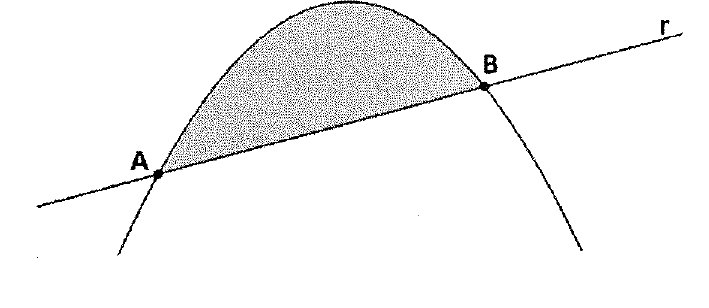
Segmento Parabólico (região hachurada)
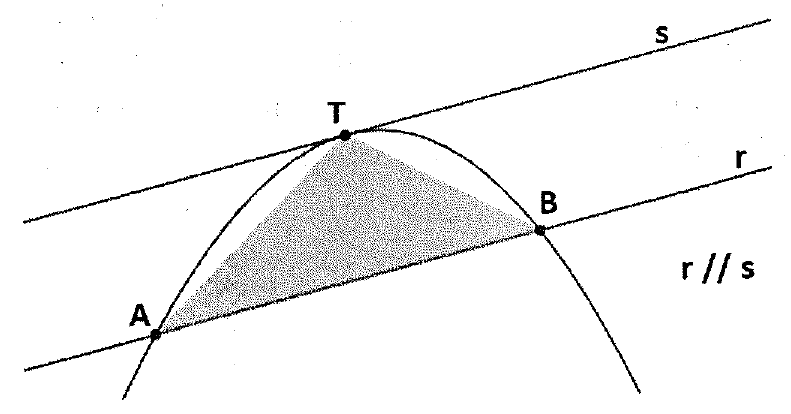
Essa área do segmento parabólico equivale a 4/3 da área do triângulo ABT seguinte, inscrito no segmento parabólico, sendo as retas r e s paralelas e T o ponto de tangência.
Seja p uma parábola com foco F(−√2/2; 3√2/2) e reta diretriz d: x + y + √2 = 0.
A parábola é seccionada pela reta r: √2.x + √2.y − 8 = 0, originando a região hachurada da figura abaixo.
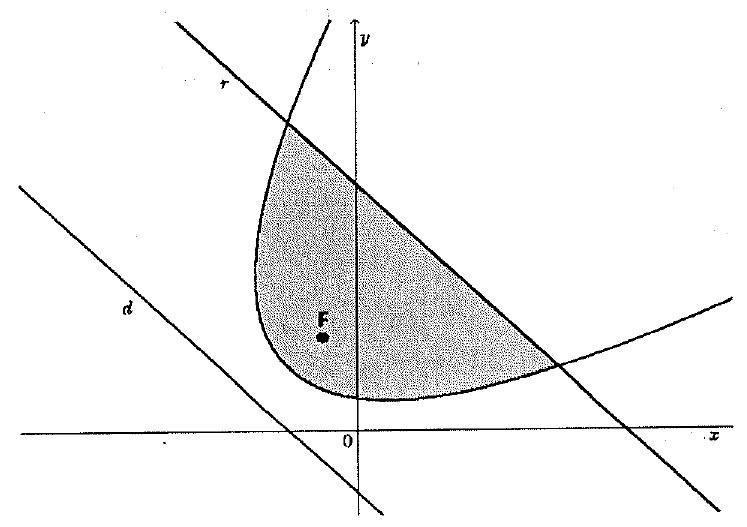
Com base nas informações apresentadas, é correto afirmar que a área da região hachurada é igual aResolução comentada
Análise das alternativas
Read the text below and answer question 23.
Dedicated to helping his community
December 2020
When the country went into coronavirus lockdown this year, one Royal Navy sailor sprang into action to protect his local community with all the dedication and efficiency of a military operation.
Chief Petty Officer Sean Mackenzie has served in the Royal Navy for 29 years and works at Royal Navy Air Station Culdrose in Cornwall. So when people in his village of Tregony faced the uncertainty of lockdown in March, CPO Mackenzie knew exactly what to do.
In the navy, he specialises in logistics at 1700 Naval Air Squadron, which deploys teams of sailors around the world to allow flying operations on navy warships, support ships and air bases. He also supervises a team of 70 personnel at Culdrose's extensive supply chain depot.
“From the first day of lockdown, I got together with a couple of former military men and we created our own group,” he said. “We did rounds of the village and we deliberately made it as military as we could. I wanted to help my community and these people in it are all part of that together.”
His team of volunteers, which grew to 27 people, immediately set up a ‘smiley-face system’ where anyone, many of them elderly, could indicate with a simple sign in their window if they needed help or not.
Regular smiley-face patrols were soon underway every day in the village of around 450 households. This was followed by a ‘buddy system’, where socially-isolated people could receive a visit and talk to someone - for many it could be their only contact all day, [...] from a safe distance outside.
The team also prepared an emergency kitchen [...], established their own foodbank and updated noticeboards with the latest advice.
They bought food for those who could not get out, including up to 20 visits a day to the local shop. Soon, dog-walking and pizza-delivery services followed as well as a medicine delivery service, which collected more than 2,000 prescriptions over lockdown, which were then personally handed out to each patient.
All of this was on top of Chief Petty Officer Mackenzie's responsibilities at work, where he continued as a key-worker, helping to ensure that the Royal Navy could still meet its key defence requirements.
“I was really aware that everyone needed help and I was capable of helping. I was also aware that my own parents were sat in a similar situation, but 300 miles away. Here I could do something to help my community.”
He has now been singled out for an award by the commanding officer of RNAS Culdrose, Captain Stuart Finn, who said: “Chief Petty Officer Mackenzie has displayed exemplary leadership skills, both in his professional capacity with the Royal Navy and a selfless approach to service in his local community.”
(Adapted from “Dedicated to helping his community”. Naval News, p. 39, December 2020. & https://www.cornwalllive.com)
Decide if the statements below are true (T) or false (F) according to the text. Then choose the option that contains the correct sequence.
( ) After retiring from the Navy, Sean Mackenzie decided to help his community during coronavirus lockdown.
( ) Sean Mackenzie was helped by a team of 70 volunteers.
( ) People could show that they needed help by putting a sign in their window.
( ) Mackenzie and other volunteers helped people in different ways, such as delivering food and medicine to them.
( ) Mackenzie's parents, who live near him, also needed help during lockdown.Resolução comentada
Análise das alternativas
Read the text below and answer questions 24 and 25.
U.K. hospitals are overburdened. But the British love their universal health care
March 7, 2018
When Erich McElroy takes the stage at comedy clubs in London, his routine includes a joke about the first time he went to see a doctor in Britain.
Originally from Seattle, McElroy, 45, has lived in London for almost 20 years. A stand-up comedian, he's made a career out of poking fun at the differences in the ways Americans versus Britons see the world - and one of the biggest differences is their outlook on health care.
"I saw a doctor, who gave me a couple pills and sent me on my way. But I still hadn't really done any paperwork. I was like, 'This isn't right!' " McElroy says onstage, to giggles from the crowd. "So I went back to the same woman, and I said, 'What do I do now?' And she said, 'You go home!' "
The mostly British audience erupts into laughter.
McElroy acknowledges it doesn't sound like much of a joke. He's just recounting his first experience at a U.K. public hospital. But Britons find it hilarious, he says, that an American would be searching for a cash register, trying to find how to pay for treatment at a doctor's office or hospital. It is a foreign concept here, McElroy explains.
Onstage, McElroy recounts how, when the hospital receptionist instructed him to go home, he turned to her and exclaimed, "This is amazing!"
Amazing, he says, because he did not have to pay - at least not at the point of service. In Britain, there is a state-funded system called the National Health Service, or NHS, which guarantees care for all. That means everything from ambulance rides and emergency room visits to long hospital stays, complex surgery, radiation and chemotherapy - are all free. They are paid for with payroll taxes. In addition, any medication you get during a hospital visit is free, and the cost of most prescription drugs at a pharmacy are cheap - a few dollars. (Private health care also exists in the U.K., paid out-of-pocket or through private insurance coverage, but only a small minority of residents opt for it.)
Since the 2008 financial crisis, the U.K., like many countries, has been taking in less tax revenue - so it has had to cut spending. Its expenditure on the National Health Service has still grown, but at a slower pace than before. [...] Wait times at the emergency room are up, says Richard Murray, policy director at the King's Fund, a health care think tank.
"If the ER is really busy, it makes the ambulances queue outside the front door - not great," Murray says. "And in some cases, the hospital is simply full."
(Adapted from https://www.npr.org)
According to the text, which option is correct?Resolução comentada
Análise das alternativas
Read the text below and answer questions 24 and 25.
U.K. hospitals are overburdened. But the British love their universal health care
March 7, 2018
When Erich McElroy takes the stage at comedy clubs in London, his routine includes a joke about the first time he went to see a doctor in Britain.
Originally from Seattle, McElroy, 45, has lived in London for almost 20 years. A stand-up comedian, he's made a career out of poking fun at the differences in the ways Americans versus Britons see the world - and one of the biggest differences is their outlook on health care.
"I saw a doctor, who gave me a couple pills and sent me on my way. But I still hadn't really done any paperwork. I was like, 'This isn't right!' " McElroy says onstage, to giggles from the crowd. "So I went back to the same woman, and I said, 'What do I do now?' And she said, 'You go home!' "
The mostly British audience erupts into laughter.
McElroy acknowledges it doesn't sound like much of a joke. He's just recounting his first experience at a U.K. public hospital. But Britons find it hilarious, he says, that an American would be searching for a cash register, trying to find how to pay for treatment at a doctor's office or hospital. It is a foreign concept here, McElroy explains.
Onstage, McElroy recounts how, when the hospital receptionist instructed him to go home, he turned to her and exclaimed, "This is amazing!"
Amazing, he says, because he did not have to pay - at least not at the point of service. In Britain, there is a state-funded system called the National Health Service, or NHS, which guarantees care for all. That means everything from ambulance rides and emergency room visits to long hospital stays, complex surgery, radiation and chemotherapy - are all free. They are paid for with payroll taxes. In addition, any medication you get during a hospital visit is free, and the cost of most prescription drugs at a pharmacy are cheap - a few dollars. (Private health care also exists in the U.K., paid out-of-pocket or through private insurance coverage, but only a small minority of residents opt for it.)
Since the 2008 financial crisis, the U.K., like many countries, has been taking in less tax revenue - so it has had to cut spending. Its expenditure on the National Health Service has still grown, but at a slower pace than before. [...] Wait times at the emergency room are up, says Richard Murray, policy director at the King's Fund, a health care think tank.
"If the ER is really busy, it makes the ambulances queue outside the front door - not great," Murray says. "And in some cases, the hospital is simply full."
(Adapted from https://www.npr.org)
Which option replaces the word “overburdened” in the title “U.K. hospitals are overburdened”, according to its meaning in the text?Resolução comentada
Análise das alternativas
Read the text below and answer question 26.
Time to envision legal recourse for climate refugees
As gradually worsening climate patterns and severe weather events prompt an increase in human mobility, people who choose to move will do so with little legal protection. The current system of international law is not equipped to protect climate migrants, as there are no legally binding agreements obliging countries to support climate migrants.
While climate migrants who flee unbearable conditions resemble refugees, the legal protections afforded to refugees do not extend to them. In the aftermath of World War II, the United Nations established a system to protect civilians who had been forced from their home countries by political violence. Today, there are almost 20.4 million officially designated refugees under the protection of the United Nations High Commission for Refugees (UNHCR), but there is an additional group of 21.5 million people who flee their homes as a result of sudden onset weather hazards every year.
The UNHCR has refused to grant these people refugee status, instead designating them as “environmental migrants,” in large part because it lacks the resources to address their needs. But with no organized effort to supervise the migrant population, these desperate individuals go where they can, not necessarily where they should. As their numbers grow, it will become increasingly difficult for the international community to ignore this challenge. As severe climate change displaces more people, the international community may be forced to either redefine “refugees” to include climate migrants or create a new legal category and accompanying institutional framework to protect climate migrants. However, opening that debate in the current context would be very difficult. Currently, the atmosphere in Europe and the U.S. would most likely lead to limiting refugee protections rather than expanding them.
(Adapted from https://www.brookings.edu)
Choose the correct option according to the text.Resolução comentada
Análise das alternativas
Do you feel mentally drained out ______ office? Are you constantly worried ______ meeting your deadline or are unable ______ achieve your targets? All these can lead ______ stress, a phenomenon faced ______ the majority of the working population.
(https://www.thehealthsite.com)Resolução comentada
Análise das alternativas
How do I know if I'm eligible to apply to the Naval Academy?
You must be:
- at least 17 years of age and must not have passed your 23rd birthday on July 1st of the year of admission;
- unmarried, not pregnant and have no incurred obligations of parenthood; and
- a United States citizen (except for the limited quotas of international midshipmen specifically authorized by Congress).
(Adapted from https://www.usna.edu/)
Considering only the requirements above, who can apply to the Naval Academy?Resolução comentada
Análise das alternativas
Ultimately you can't go long term without an appropriate duration of sleep, so it's important to try to get ______ sleep ______ nights.
While everyone's exact sleep requirements are different, on average you should be getting between six and nine hours of sleep a night. Your brain is hardwired for what it needs. Getting less sleep than you need can cause sleepiness and moodiness, as well as difficulty concentrating, poor coordination and poor work quality.
Overall it's important to try to maintain a consistent and regular sleep cycle. Be aware that when you miss sleep, it'll take ______ days to get back on track.
(Adapted from https://wexnermedical.osu.edu/)Resolução comentada
Análise das alternativas
Personnel aboard HMS Queen Elizabeth ______ in a sports day to reinvigorate interest in team sports.
The event, led by the NAVYfit team at HMS Temeraire, working under Covid-19 guidance, provided an opportunity for personnel to ______ in a range of activities, designed to show the importance of sport and fitness to health and well-being.
(“Sporting opportunities for carrier personnel”. Naval News, p. 36, December 2020.)Resolução comentada
Análise das alternativas
[...] Then he ______ I ______ a lot, and I ______ that I did. He ______ where, and I ______ him that I ______ throughout Europe and to the east coast in America, primarily.
(MCDANIEL, Phyllis. Over the line: a Detective Bendix mystery VI. 2013. p. 200)Resolução comentada
Análise das alternativas
A good CV
It starts with a brilliant summary that makes people ______ more; it is daring, lively. You rarely need ______ trivial details of your early education or training except in passing.
Your CV is a creative document that allows you ______ what you think is appropriate, compared with forms, which confine self-expression; you might as well ______ that freedom!Resolução comentada
Análise das alternativas
[...] Go on, don't let the conversation die. Say something; just keep talking. "Do you read many novels? You do? ______, or some at least, though nonfiction is more in my line....".
(Adapted from CALVINO, Italo. If on a winter's night a traveller. Harcourt Brace Jovanovich, Inc.,1981. p.21)Resolução comentada
Análise das alternativas
Resolução comentada
Análise das alternativas
“Would you like to go to Vyas Chhatri, madam?” Lal asks, as I get back into the car. “It was built in honour of Maharishi Ved Vyas. I'm sure your head tells you to go back, but your heart doesn't want to let go of the opportunity, ______?”
(Adapted from www.travelandleisureindia.in)Resolução comentada
Análise das alternativas
I- She has a ______ job.
II- I enjoyed the movie at first, but after a time I got ______ with it.
III- I was ______ at her knowledge of literature.
IV- Which do you find more ______, traveling by car or by bus?
Which option completes the sentences correctly?Resolução comentada
Análise das alternativas
In February, the Royal Navy's submarine HMS Talent (S92) ______ the upgraded Spearfish torpedo near the Isle of Skye to rigorously test it before it ______ service.
During the three-day trial, the torpedo ______ at Talent three times and ______ to safely pass the submarine.
The trials ______ valuable data in the final stages of the upgraded torpedo's development ahead of its entry into service.
The operational version of the weapon ______ to all front-line Royal Navy submarines by 2025.
(Adapted from https://www.navaltoday.com)Resolução comentada
Análise das alternativas
Social engineering: here's how you ______ be hacked
Learn how social engineering ______ affect you, plus common examples to help you identify and stay safe from these schemes.
Social engineering is an important term in the security world, but you ______ not be familiar with exactly what it means. While it is a broad subject, there are specific types of social engineering that we ______ examine to learn more. Let's look at social engineering as a concept so you ______ avoid falling victim to it.
Social engineering is the act of manipulating people to steal private information from them, or make them give up such confidential details.
(Adapted from https://www.muo.com)Resolução comentada
Análise das alternativas
______ advice do you follow more, your parents' or your friends' advice?Resolução comentada
Análise das alternativas
Brazil has joined Combined Maritime Forces (CMF)
“On July 30th, the Brazilian Navy ______ the invitation letter from the CCFM accepting the affiliation as a full member of the CMF. The Brazilian Navy ______ this kind of event an excellent opportunity ______ ties of friendship, as well as ______ cooperation and mutual respect among the participating navies,” a spokesperson for the Brazilian Navy ______.
(Adapted from https://www.navaltoday.com)Resolução comentada
Análise das alternativas
Um dos mais brilhantes trabalhos do matemático grego Arquimedes (287 a.C. - 212 a.C.) foi a Quadratura da Parábola. Através do Método da Exaustão, Arquimedes demonstrou que a área de um segmento parabólico (região compreendida entre a parábola e uma linha reta r), conforme figura abaixo.
Assinale a opção que apresenta o valor de lim (x→+∞) ((x+1)/(x−1))^x.
Texto-base:
Texto-base:
Texto-base:
Texto-base:
Which option completes the text below correctly?
Read the information below.
Which option completes the text below correctly?
Which is the correct option to complete the text below?
Mark the option that completes the excerpt below correctly.
Which is the correct option to complete the text below?
Which option completes the paragraph below correctly?
Mark the sentence that is INCORRECT.
Which option completes the paragraph below correctly?
Read the sentences below.
Choose the correct option to complete the text below.
Which is the correct option to complete the text below?
Which word best completes the question below?
Which option completes the paragraph below correctly?