← Voltar para a lista de provas Marinha do Brasil — Colégio Naval · Admissão ao Colégio Naval (CPACN) 40 questões nesta prova · página 2 de 2 · 40 com gabarito Gabarito disponível Adjetivo usado no comentário #2 para descrever os habitantes locais do Quirguistão. No comentário #2 está escrito "the people were just amazing". O adjetivo que descreve as pessoas é "amazing". A) "Impressive" descreve a variedade de paisagens. C) "Beautiful" descreve o país ("stunningly beautiful"). D) "Fantastic" descreve a comida. E) "Incredible" descreve a experiência como um todo. Referência: Interpretação de texto: informação explícita (Text I). Resolução comentada do VaiConcursos. Gabarito disponível Valor do Present Perfect em "the safest country I've ever been to". O Present Perfect com "ever" é usado para falar de experiências de vida sem marcar quando ocorreram. Aqui o autor compara o Japão com todos os países que já visitou até hoje. A) Arranjo futuro usa Present Continuous. B) Decisão instantânea usa "will". C) Plano pessoal usa "going to". D) Rotina usa Simple Present. Referência: Gramática: Present Perfect (experiência de vida). Resolução comentada do VaiConcursos. Gabarito disponível Inferência a partir dos comentários sobre viagens. O comentário #8 diz que o Japão tem "awesome outdoors (especially for a skier like me)". Pode-se inferir que o país é ótimo para quem gosta de esquiar. A) Contraria #3, em que o autor diz ter estado em muitos países. B) "Minus the taxi drivers" sugere o oposto. D) O autor de #7 elogia mais o norte da Itália ("the most gorgeous place"). E) Panama tem "less tourists" que a Costa Rica. Referência: Interpretação de texto: inferência (Text I). Resolução comentada do VaiConcursos. Gabarito disponível Avaliar cinco afirmações sobre as pessoas citadas no texto. II é correta: Keller ficou cega e surda antes dos dois anos. III é correta: ela se formou na Radcliffe College. V é correta: Braun perdeu a capacidade de andar por causa da distrofia muscular, doença incurável. I é falsa porque Kahlo é mexicana, não europeia, e o texto não a chama de ativista. IV é falsa porque a corrida ao Polo Sul foi no 10º aniversário de ele ter ficado cego, não no 10º aniversário de nascimento. A, D e E incluem I ou IV, que são falsas. B omite a III, que é verdadeira. Só II, III e V estão corretas. Referência: Interpretação de texto (Text II). Resolução comentada do VaiConcursos. Gabarito disponível Trecho que apresenta uma situação hipotética e seu resultado (oração condicional). "If I just sat in a wheelchair, I would be giving up completely" é uma condicional do tipo 2: "if" + passado simples na oração condicional e "would" + verbo na oração principal. A hipótese (ficar sentado na cadeira de rodas) e a consequência (desistir completamente) aparecem juntas. A, B e D usam "would go on" ou "would eventually lead" para falar de um futuro visto do passado, sem hipótese. E contém "would never be able" em discurso indireto ("doctors warned him"), sem estrutura condicional. Referência: Gramática: Conditional Sentences (Type 2). Resolução comentada do VaiConcursos. Gabarito disponível Identificar a palavra que não é advérbio no trecho de Ralph Braun. "Eventually", "fully", "actively" e "independently" são advérbios, formados com o sufixo -ly a partir de adjetivos. "Lively" termina em -ly, mas é um adjetivo: em "the lively young boy" ele modifica o substantivo "boy". A) Advérbio, modifica o verbo "lead". C) Advérbio, modifica "participate". D) Advérbio, modifica "participate". E) Advérbio, modifica "live". A única exceção é B. Referência: Gramática: advérbios x adjetivos terminados em -ly. Resolução comentada do VaiConcursos. Gabarito disponível Formação da pergunta correta para a resposta "realized his disability didn't have to stop him". Para perguntar sobre o objeto de "realized" no passado simples, usa-se "What + did + sujeito + verbo na forma base". Com o auxiliar "did", o verbo principal fica no infinitivo sem "to": "What did he realize about his disability?". A) "realized" não pode vir no passado depois de "did". B) "was he realize" mistura auxiliar e verbo de forma incorreta. C) Falta o auxiliar "did" e a ordem da pergunta. D) "What realized him" inverte sujeito e objeto e não tem estrutura de pergunta correta. Referência: Gramática: perguntas no Simple Past com auxiliar "did". Resolução comentada do VaiConcursos. Gabarito disponível Gabarito disponível Gabarito disponível Gabarito disponível Julgar V/F quatro afirmações sobre o trecho de Dracula's Guest. 1) Falsa: o narrador diz que havia "just enough of English mixed with the German", ou seja, Johann falava um pouco de inglês. 2) Verdadeira: o sol brilhava, mas Herr Delbruck alerta para uma possível tempestade repentina. 3) Verdadeira: ele diz "Remember you are back by nightfall". 4) Verdadeira: o narrador pergunta "what is tonight?", mostrando que não sabia o que a noite poderia trazer. A sequência é F, T, T, T. As alternativas B, C, D e E erram ao marcar como verdadeira a primeira afirmação (Johann entendia algum inglês) ou ao marcar como falsas as outras, que estão de acordo com o texto. Referência: Interpretação de texto (Text IV). Resolução comentada do VaiConcursos. Gabarito disponível Identificar a afirmação incorreta sobre o texto: Dracula foi publicado em 1897, antes da morte de Stoker. O texto informa que Stoker viveu de 1847 a 1912 e que "Dracula" é de 1897. Portanto o romance foi publicado antes da morte do autor, e não depois. Por isso a alternativa B é a única incorreta. A) Correta: o conto saiu dois anos após a morte do autor (1912 + 2 = 1914). B) Incorreta: 1897 é anterior a 1912. C) Correta: o texto diz que se acredita que seria o primeiro capítulo de Dracula. D) Correta: é uma coletânea de contos de Stoker. E) Correta: foi cortado pelos editores originais, que o consideraram supérfluo. Referência: Interpretação de texto (Text IV, nota sobre "Dracula's Guest", Bram Stoker). Resolução comentada do VaiConcursos. Gabarito disponível Gabarito disponível Gabarito disponível 'This shift' retoma o aumento de mulheres atuando em STEM. A frase anterior trata do maior número de mulheres cientistas, engenheiras e outras profissionais trabalhando para resolver problemas. 'This shift' refere-se a essa mudança, ou seja, mais mulheres trabalhando em STEM. A) O interesse global não é o referente direto. C) A sub-representação aparece só no parágrafo seguinte. D) Os avanços em STEM não são o referente de 'shift'. E) O viés e a falta de acesso aparecem no terceiro parágrafo. Referência: Texto VI, abakcus.com. Resolução comentada do VaiConcursos. Gabarito disponível 'Can' indica possibilidade. Em 'can be attributed to a number of factors', o verbo modal 'can' indica possibilidade, ou seja, a sub-representação pode ser atribuída a vários fatores. B) Permissão não se aplica ao contexto. C) Não há proibição. D) Obrigação seria expressa por must ou have to. E) Não há pedido. Referência: Verbos modais em inglês (can). Resolução comentada do VaiConcursos. Gabarito disponível O tema central é a relevância da contribuição das mulheres em STEM. O texto destaca as contribuições das mulheres, o aumento de sua participação e a importância de apoiá-las. Assim, o tópico principal é a relevância das contribuições femininas em STEM. A) O texto não trata do aumento da força de trabalho em geral. B) O progresso científico é tratado apenas de passagem. C) O texto fala de aumento, não de queda, da representação. D) A inovação global é um ponto secundário. Referência: Texto VI, abakcus.com. Resolução comentada do VaiConcursos. Gabarito disponível O texto avalia a série, ou seja, é uma resenha (review). O texto traz opinião ('in our opinion', 'actually good', 'is a relief') e avalia a qualidade da adaptação, além de descrevê-la. Por isso, seu objetivo principal é uma resenha de série de TV. B) A descrição é só parte do texto, que predominantemente avalia. C) A adaptação é o tema, não o produto oferecido ao leitor. D) Não explica o jogo. E) Não há apelo de venda ou propaganda, mas avaliação crítica. Referência: Texto VII, Techcrunch. Resolução comentada do VaiConcursos. Gabarito disponível O autor diz que a série foca nas relações entre os personagens. O texto afirma que a série centra-se em Joel e Ellie e que, em vez de tiroteios, foca nas relações humanas. Portanto, é uma história centrada na relação entre dois personagens principais. B) O texto diz que não é apenas mais uma história de sobrevivência e zumbis. C) A série é elogiada como boa adaptação. D) A série é baseada no jogo, não o inspirou. E) O autor diz que não é preciso jogar para entender. Referência: Texto VII, Techcrunch. Resolução comentada do VaiConcursos. Gabarito disponívelMarinha do Brasil — CPACN/2024 — 1º Dia — Prova de Matemática e Inglês — Prova Amarela
Text I
What is the best country you have travelled to in your lifetime?
08 comments to the question
#1
Norway. It has the most beautiful nature in the world. Genuinely nice people and it's so safe I hardly locked my bike in most places.
#2
Kyrgyzstan. It absolutely blew my mind. It's stunningly beautiful and has an impressive range of landscapes for such a small country. The food was fantastic, the people were just amazing, and the entire experience was incredible.
#3
Costa Rica, by far. I've been to a lot of countries, but the friendly atmosphere, combined with the beautiful views of Costa Rica are just perfect for me.
#4
Taiwan gets my vote. I think I could live there. I love it! It's easy to get around. The people are so kind. It's clean and safe. So scenic. Big fan.
#5
Panama. Amazing landscapes (tropical forests, mountains, beaches), incredible wildlife (some of the best birds I've had the chance to see) and extremely friendly people. And less tourists than its neighbor, Costa Rica, where I've also been to and liked so much.
#6
Turkey (specifically Istanbul). The food was obscenely tasty and very reasonably priced. The people were friendly (minus the taxi drivers) and the metro was incredibly clean. There's so much history there and so much fun stuff to do.
#7
Italy, for sure. Northern Italy was the most gorgeous place I've ever seen! Traveling to small towns nestled in the Dolomites, eating some of the best food I've ever had, and driving on incredible mountain roads. Then you go south to see beautiful sandy beaches and some famous cities in Europe! That place has everything.
#8
Japan. Hands down the safest country I've ever been to. The best food (not just Japanese food), awesome outdoors (especially for a skier like me), everything is super clean, the mix between ancient and modern, and the most hospitable people I've ever met traveling. If I were to move to another country for a couple of years out of the ones I've been to so far (9 countries), I'd definitely move to Japan.
Adapted from https://www.reddit.com/r/travel/comments
What adjective did the writer in comment #2 use to describe the locals in Kyrgyzstan?Resolução comentada
Análise das alternativas
Text I
What is the best country you have travelled to in your lifetime?
08 comments to the question
#1
Norway. It has the most beautiful nature in the world. Genuinely nice people and it's so safe I hardly locked my bike in most places.
#2
Kyrgyzstan. It absolutely blew my mind. It's stunningly beautiful and has an impressive range of landscapes for such a small country. The food was fantastic, the people were just amazing, and the entire experience was incredible.
#3
Costa Rica, by far. I've been to a lot of countries, but the friendly atmosphere, combined with the beautiful views of Costa Rica are just perfect for me.
#4
Taiwan gets my vote. I think I could live there. I love it! It's easy to get around. The people are so kind. It's clean and safe. So scenic. Big fan.
#5
Panama. Amazing landscapes (tropical forests, mountains, beaches), incredible wildlife (some of the best birds I've had the chance to see) and extremely friendly people. And less tourists than its neighbor, Costa Rica, where I've also been to and liked so much.
#6
Turkey (specifically Istanbul). The food was obscenely tasty and very reasonably priced. The people were friendly (minus the taxi drivers) and the metro was incredibly clean. There's so much history there and so much fun stuff to do.
#7
Italy, for sure. Northern Italy was the most gorgeous place I've ever seen! Traveling to small towns nestled in the Dolomites, eating some of the best food I've ever had, and driving on incredible mountain roads. Then you go south to see beautiful sandy beaches and some famous cities in Europe! That place has everything.
#8
Japan. Hands down the safest country I've ever been to. The best food (not just Japanese food), awesome outdoors (especially for a skier like me), everything is super clean, the mix between ancient and modern, and the most hospitable people I've ever met traveling. If I were to move to another country for a couple of years out of the ones I've been to so far (9 countries), I'd definitely move to Japan.
Adapted from https://www.reddit.com/r/travel/comments
In the sentence, "Hands down the safest country I've ever been to" (comment #8), the writer used the present perfect tense to express:Resolução comentada
Análise das alternativas
Text I
What is the best country you have travelled to in your lifetime?
08 comments to the question
#1
Norway. It has the most beautiful nature in the world. Genuinely nice people and it's so safe I hardly locked my bike in most places.
#2
Kyrgyzstan. It absolutely blew my mind. It's stunningly beautiful and has an impressive range of landscapes for such a small country. The food was fantastic, the people were just amazing, and the entire experience was incredible.
#3
Costa Rica, by far. I've been to a lot of countries, but the friendly atmosphere, combined with the beautiful views of Costa Rica are just perfect for me.
#4
Taiwan gets my vote. I think I could live there. I love it! It's easy to get around. The people are so kind. It's clean and safe. So scenic. Big fan.
#5
Panama. Amazing landscapes (tropical forests, mountains, beaches), incredible wildlife (some of the best birds I've had the chance to see) and extremely friendly people. And less tourists than its neighbor, Costa Rica, where I've also been to and liked so much.
#6
Turkey (specifically Istanbul). The food was obscenely tasty and very reasonably priced. The people were friendly (minus the taxi drivers) and the metro was incredibly clean. There's so much history there and so much fun stuff to do.
#7
Italy, for sure. Northern Italy was the most gorgeous place I've ever seen! Traveling to small towns nestled in the Dolomites, eating some of the best food I've ever had, and driving on incredible mountain roads. Then you go south to see beautiful sandy beaches and some famous cities in Europe! That place has everything.
#8
Japan. Hands down the safest country I've ever been to. The best food (not just Japanese food), awesome outdoors (especially for a skier like me), everything is super clean, the mix between ancient and modern, and the most hospitable people I've ever met traveling. If I were to move to another country for a couple of years out of the ones I've been to so far (9 countries), I'd definitely move to Japan.
Adapted from https://www.reddit.com/r/travel/comments
It can be inferred from the comments that:Resolução comentada
Análise das alternativas
Text II
Disability is not an obstacle to success. These inspirational leaders prove that.
World Economic Forum
Dec 2, 2016
Disability need not be an obstacle to success," Stephen Hawking wrote in the first ever world disability report back in 2011. As one of the most influential scientists of modern times, the wheelchair-bound physicist is certainly proof of that. These four leaders show that disability is no barrier to achieving incredible things.
Frida Kahlo
Mexico's most famous artist was born with spina bifida, a condition that can cause defects in the spinal cord. At six, she contracted polio, which left one leg much thinner than the other.
In spite of these challenges, she was an active child, but at 18 a bus accident left her with serious injuries. It was while recovering from the accident that Frida discovered her love of painting. She would go on to be one of the most famous Surrealists in the world.
Helen Keller
Born in the US in 1880, an illness left Helen Keller both blind and deaf before her second birthday. While the services available to people with disabilities were less extensive than they are today, Keller's mother sought out experts and ensured her daughter received the best education.
In 1904, Keller graduated from Radcliffe College, becoming the first deaf-blind person to earn a Bachelor of Arts. It was at university that her career as a writer and social activist started. Today, the Helen Keller archives contain almost 500 speeches and essays on topics as varied as birth control and Fascism in Europe.
She would go on to achieve international acclaim, becoming America's first Goodwill Ambassador, and to this day she remains an inspiration to the deaf and blind.
Mark Pollock
"I went blind at 22. From an athlete, I became a young man with a white cane, unsure how to live my life," Mark Pollock, a Forum Young Global Leader explains. But very soon, he found a deeper purpose in life, and realized his disability didn't have to stop him from achieving great things.
"I began to race in deserts, mountains, across oceans, and on the 10th anniversary of going blind, I raced over 43 days to the South Pole."
But in 2010, an accident left him paralyzed, and once again his world changed overnight: "My new life was shattered."
He had a choice: to let his disability define him for the rest of his life, or to continue fighting. There was only ever one way it was going to go."If I just sat in a wheelchair, I would be giving up completely," he remembers. Today, he's working with other leaders from science, technology and communications to fund and fast-track a cure for paralysis.
Ralph Braun
Ralph Braun was still a young boy when he was diagnosed with muscular dystrophy, an incurable group of genetic diseases that leads to a loss of muscle mass.
A few years after his diagnosis, Ralph began to lose his ability to walk. While doctors warned him he would never be able to lead an independent life, the lively young boy was already proving people wrong, building the first battery-powered scooter. His passion would eventually lead him to establish wheelchair manufacturer BraunAbility.
He died in 2013, but as his company's website notes, his legacy lives on. "Necessity is the mother of invention, and Ralph's physical limitations only served to fuel his determination to live independently and prove to society that people with physical disabilities can participate fully and actively in life."
Adapted from https://medium.com/world-economic-forum/disability-is-not-an-obstacle-to-success-these-inspirational-leaders-prove-that-72176033669
Read the statements below about the text.
I- Frida Kahlo was the most important European activist and painter of her time.
II- Helen Keller lost her sight and hearing before she was two years old.
III- Helen Keller's disabilities did not stop her from having a degree at college.
IV- When he celebrated his 10th birthday, Mark Pollock spent more than 43 days racing to the South Pole.
V- Ralph Braun lost his ability to walk due to a disease that cannot be cured.
Now, mark the correct option.Resolução comentada
Análise das alternativas
Text II
Disability is not an obstacle to success. These inspirational leaders prove that.
World Economic Forum
Dec 2, 2016
Disability need not be an obstacle to success," Stephen Hawking wrote in the first ever world disability report back in 2011. As one of the most influential scientists of modern times, the wheelchair-bound physicist is certainly proof of that. These four leaders show that disability is no barrier to achieving incredible things.
Frida Kahlo
Mexico's most famous artist was born with spina bifida, a condition that can cause defects in the spinal cord. At six, she contracted polio, which left one leg much thinner than the other.
In spite of these challenges, she was an active child, but at 18 a bus accident left her with serious injuries. It was while recovering from the accident that Frida discovered her love of painting. She would go on to be one of the most famous Surrealists in the world.
Helen Keller
Born in the US in 1880, an illness left Helen Keller both blind and deaf before her second birthday. While the services available to people with disabilities were less extensive than they are today, Keller's mother sought out experts and ensured her daughter received the best education.
In 1904, Keller graduated from Radcliffe College, becoming the first deaf-blind person to earn a Bachelor of Arts. It was at university that her career as a writer and social activist started. Today, the Helen Keller archives contain almost 500 speeches and essays on topics as varied as birth control and Fascism in Europe.
She would go on to achieve international acclaim, becoming America's first Goodwill Ambassador, and to this day she remains an inspiration to the deaf and blind.
Mark Pollock
"I went blind at 22. From an athlete, I became a young man with a white cane, unsure how to live my life," Mark Pollock, a Forum Young Global Leader explains. But very soon, he found a deeper purpose in life, and realized his disability didn't have to stop him from achieving great things.
"I began to race in deserts, mountains, across oceans, and on the 10th anniversary of going blind, I raced over 43 days to the South Pole."
But in 2010, an accident left him paralyzed, and once again his world changed overnight: "My new life was shattered."
He had a choice: to let his disability define him for the rest of his life, or to continue fighting. There was only ever one way it was going to go."If I just sat in a wheelchair, I would be giving up completely," he remembers. Today, he's working with other leaders from science, technology and communications to fund and fast-track a cure for paralysis.
Ralph Braun
Ralph Braun was still a young boy when he was diagnosed with muscular dystrophy, an incurable group of genetic diseases that leads to a loss of muscle mass.
A few years after his diagnosis, Ralph began to lose his ability to walk. While doctors warned him he would never be able to lead an independent life, the lively young boy was already proving people wrong, building the first battery-powered scooter. His passion would eventually lead him to establish wheelchair manufacturer BraunAbility.
He died in 2013, but as his company's website notes, his legacy lives on. "Necessity is the mother of invention, and Ralph's physical limitations only served to fuel his determination to live independently and prove to society that people with physical disabilities can participate fully and actively in life."
Adapted from https://medium.com/world-economic-forum/disability-is-not-an-obstacle-to-success-these-inspirational-leaders-prove-that-72176033669
Mark the extract from the text that shows a hypothetical situation and its result.Resolução comentada
Análise das alternativas
Text II
Disability is not an obstacle to success. These inspirational leaders prove that.
World Economic Forum
Dec 2, 2016
Disability need not be an obstacle to success," Stephen Hawking wrote in the first ever world disability report back in 2011. As one of the most influential scientists of modern times, the wheelchair-bound physicist is certainly proof of that. These four leaders show that disability is no barrier to achieving incredible things.
Frida Kahlo
Mexico's most famous artist was born with spina bifida, a condition that can cause defects in the spinal cord. At six, she contracted polio, which left one leg much thinner than the other.
In spite of these challenges, she was an active child, but at 18 a bus accident left her with serious injuries. It was while recovering from the accident that Frida discovered her love of painting. She would go on to be one of the most famous Surrealists in the world.
Helen Keller
Born in the US in 1880, an illness left Helen Keller both blind and deaf before her second birthday. While the services available to people with disabilities were less extensive than they are today, Keller's mother sought out experts and ensured her daughter received the best education.
In 1904, Keller graduated from Radcliffe College, becoming the first deaf-blind person to earn a Bachelor of Arts. It was at university that her career as a writer and social activist started. Today, the Helen Keller archives contain almost 500 speeches and essays on topics as varied as birth control and Fascism in Europe.
She would go on to achieve international acclaim, becoming America's first Goodwill Ambassador, and to this day she remains an inspiration to the deaf and blind.
Mark Pollock
"I went blind at 22. From an athlete, I became a young man with a white cane, unsure how to live my life," Mark Pollock, a Forum Young Global Leader explains. But very soon, he found a deeper purpose in life, and realized his disability didn't have to stop him from achieving great things.
"I began to race in deserts, mountains, across oceans, and on the 10th anniversary of going blind, I raced over 43 days to the South Pole."
But in 2010, an accident left him paralyzed, and once again his world changed overnight: "My new life was shattered."
He had a choice: to let his disability define him for the rest of his life, or to continue fighting. There was only ever one way it was going to go."If I just sat in a wheelchair, I would be giving up completely," he remembers. Today, he's working with other leaders from science, technology and communications to fund and fast-track a cure for paralysis.
Ralph Braun
Ralph Braun was still a young boy when he was diagnosed with muscular dystrophy, an incurable group of genetic diseases that leads to a loss of muscle mass.
A few years after his diagnosis, Ralph began to lose his ability to walk. While doctors warned him he would never be able to lead an independent life, the lively young boy was already proving people wrong, building the first battery-powered scooter. His passion would eventually lead him to establish wheelchair manufacturer BraunAbility.
He died in 2013, but as his company's website notes, his legacy lives on. "Necessity is the mother of invention, and Ralph's physical limitations only served to fuel his determination to live independently and prove to society that people with physical disabilities can participate fully and actively in life."
Adapted from https://medium.com/world-economic-forum/disability-is-not-an-obstacle-to-success-these-inspirational-leaders-prove-that-72176033669
All these words taken from the extract about Ralph Braun are adverbs, EXCEPT for:Resolução comentada
Análise das alternativas
Text II
Disability is not an obstacle to success. These inspirational leaders prove that.
World Economic Forum
Dec 2, 2016
Disability need not be an obstacle to success," Stephen Hawking wrote in the first ever world disability report back in 2011. As one of the most influential scientists of modern times, the wheelchair-bound physicist is certainly proof of that. These four leaders show that disability is no barrier to achieving incredible things.
Frida Kahlo
Mexico's most famous artist was born with spina bifida, a condition that can cause defects in the spinal cord. At six, she contracted polio, which left one leg much thinner than the other.
In spite of these challenges, she was an active child, but at 18 a bus accident left her with serious injuries. It was while recovering from the accident that Frida discovered her love of painting. She would go on to be one of the most famous Surrealists in the world.
Helen Keller
Born in the US in 1880, an illness left Helen Keller both blind and deaf before her second birthday. While the services available to people with disabilities were less extensive than they are today, Keller's mother sought out experts and ensured her daughter received the best education.
In 1904, Keller graduated from Radcliffe College, becoming the first deaf-blind person to earn a Bachelor of Arts. It was at university that her career as a writer and social activist started. Today, the Helen Keller archives contain almost 500 speeches and essays on topics as varied as birth control and Fascism in Europe.
She would go on to achieve international acclaim, becoming America's first Goodwill Ambassador, and to this day she remains an inspiration to the deaf and blind.
Mark Pollock
"I went blind at 22. From an athlete, I became a young man with a white cane, unsure how to live my life," Mark Pollock, a Forum Young Global Leader explains. But very soon, he found a deeper purpose in life, and realized his disability didn't have to stop him from achieving great things.
"I began to race in deserts, mountains, across oceans, and on the 10th anniversary of going blind, I raced over 43 days to the South Pole."
But in 2010, an accident left him paralyzed, and once again his world changed overnight: "My new life was shattered."
He had a choice: to let his disability define him for the rest of his life, or to continue fighting. There was only ever one way it was going to go."If I just sat in a wheelchair, I would be giving up completely," he remembers. Today, he's working with other leaders from science, technology and communications to fund and fast-track a cure for paralysis.
Ralph Braun
Ralph Braun was still a young boy when he was diagnosed with muscular dystrophy, an incurable group of genetic diseases that leads to a loss of muscle mass.
A few years after his diagnosis, Ralph began to lose his ability to walk. While doctors warned him he would never be able to lead an independent life, the lively young boy was already proving people wrong, building the first battery-powered scooter. His passion would eventually lead him to establish wheelchair manufacturer BraunAbility.
He died in 2013, but as his company's website notes, his legacy lives on. "Necessity is the mother of invention, and Ralph's physical limitations only served to fuel his determination to live independently and prove to society that people with physical disabilities can participate fully and actively in life."
Adapted from https://medium.com/world-economic-forum/disability-is-not-an-obstacle-to-success-these-inspirational-leaders-prove-that-72176033669
Mark the grammatically correct question to the answer below.
"(He) realized his disability didn't have to stop him from achieving great things."Resolução comentada
Análise das alternativas
Text III
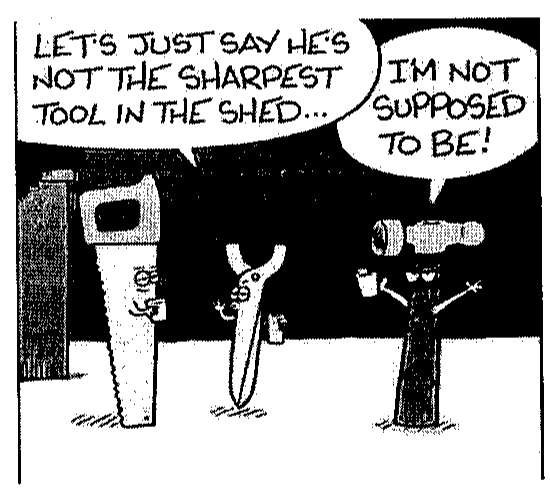
https://www.instagram.com/p/CK_uBg8HTQ9/?igshid=MTc4MmM1Yml2Ng%3D%3D
What lesson can be learned after reflecting upon this cartoon?
Text III
https://www.instagram.com/p/CK_uBg8HTQ9/?igshid=MTc4MmM1Yml2Ng%3D%3D
The cartoon plays with the word "sharp" because it has different meanings. What is the literal meaning of "sharp" in the context of tools?
Text III
https://www.instagram.com/p/CK_uBg8HTQ9/?igshid=MTc4MmM1Yml2Ng%3D%3D
The adjective "sharp" in the cartoon is used in the superlative degree to compare a tool with all the others in the shed. Mark the option in which the adjective in the superlative form is grammatically correct.
Text IV
When we started for our drive the sun was shining brightly on Munich, and the air was full of the joyousness of early summer.
Just as we were about to depart, Herr Delbruck (the maitred'hotel of the QuatreSaisons, where I was staying) came down bareheaded to the carriage and, after wishing me a pleasant drive, said to the coachman, still holding his hand on the handle of the carriage door, "Remember you are back by nightfall. The sky looks bright but there is a shiver in the north wind that says there may be a sudden storm. But I am sure you will not be late." Here he smiled and added, "for you know what night it is."
Johann answered with an emphatic, "Ja, mein Herr," and, touching his hat, drove off quickly. When we had cleared the town, I said, after signalling to him to stop: "Tell me, Johann, what is tonight?" He crossed himself, as he answered laconically: "Walpurgis nacht."
(...) "Well, Johann, I want to go down this road. I shall not ask you to come unless you like; but tell me why you do not like to go", I asked. For answer, he seemed to throw himself off the box, so quickly did he reach the ground. Then he stretched out his hands appealingly to me, and implored me not to go. There was just enough of English mixed with the German for me to understand the drift of his talk. He seemed always just about to tell me something – the very idea of which evidently frightened him; but, each time, he pulled himself up, saying, as he crossed himself: "Walpurgis nacht!"
Excerpt from "Dracula's Guest", a short story by Bram Stoker (1847-1912), first published in the collection "Dracula's Guest and Other Weird Stories", two years after the author's death. It is believed to have been intended as the first chapter for Stoker's 1897 novel "Dracula", but was deleted prior to publication by the original publishers who felt it was superfluous to the story.
Say if the statements below are T (TRUE) or F (FALSE) about the story.
( ) The man driving the carriage couldn't speak English at all.
( ) It was sunny that day, but the weather could suddenly change later.
( ) Herr Delbruck warned the coachman to return with the carriage before sunset.
( ) The narrator of the story seemed to be unaware of what could happen that night.
Now, mark the correct option, from top to bottom.Resolução comentada
Análise das alternativas
Text IV
When we started for our drive the sun was shining brightly on Munich, and the air was full of the joyousness of early summer.
Just as we were about to depart, Herr Delbruck (the maitred'hotel of the QuatreSaisons, where I was staying) came down bareheaded to the carriage and, after wishing me a pleasant drive, said to the coachman, still holding his hand on the handle of the carriage door, "Remember you are back by nightfall. The sky looks bright but there is a shiver in the north wind that says there may be a sudden storm. But I am sure you will not be late." Here he smiled and added, "for you know what night it is."
Johann answered with an emphatic, "Ja, mein Herr," and, touching his hat, drove off quickly. When we had cleared the town, I said, after signalling to him to stop: "Tell me, Johann, what is tonight?" He crossed himself, as he answered laconically: "Walpurgis nacht."
(...) "Well, Johann, I want to go down this road. I shall not ask you to come unless you like; but tell me why you do not like to go", I asked. For answer, he seemed to throw himself off the box, so quickly did he reach the ground. Then he stretched out his hands appealingly to me, and implored me not to go. There was just enough of English mixed with the German for me to understand the drift of his talk. He seemed always just about to tell me something – the very idea of which evidently frightened him; but, each time, he pulled himself up, saying, as he crossed himself: "Walpurgis nacht!"
Excerpt from "Dracula's Guest", a short story by Bram Stoker (1847-1912), first published in the collection "Dracula's Guest and Other Weird Stories", two years after the author's death. It is believed to have been intended as the first chapter for Stoker's 1897 novel "Dracula", but was deleted prior to publication by the original publishers who felt it was superfluous to the story.
All statements are correct about the text, EXCEPT for:Resolução comentada
Análise das alternativas
Text V
@cambridgeuniversity
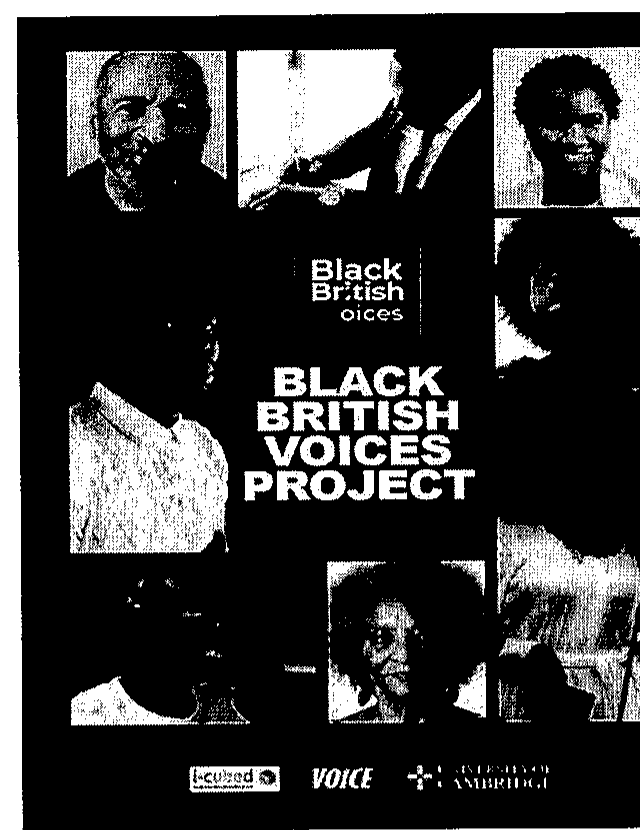
98% of Black Britons said they have compromised self-expression and identity to fit into the workplace, new findings show.
The Black Britons Voices project is a comprehensive survey of over 10,000 Black Britons - the largest research initiative ever to be conducted with Black British communities.
The project is a ground-breaking collaboration between @CamSociology, @TheVoiceNewspaper and I-Cubed consultants.
The research reveals a central split on the question of British pride in Black communities, and shows that racial prejudice and insensitivity in UK workplaces remain entrenched, with almost 9 in 10 respondents saying they have experienced racial discrimination at work.
#BlackBritishVoices #Sociology# #Cambridge #UniversityOfCambridge #CambridgeUniversity
https://www.instagram.com/p/CxvaHkcMW36/?igshid=MTc4MmM1Yml2Ng%3D%3D
Mark the option in which the word, extracted from the text, is a noun formed by adding a prefix and a suffix.
Text V
@cambridgeuniversity
98% of Black Britons said they have compromised self-expression and identity to fit into the workplace, new findings show.
The Black Britons Voices project is a comprehensive survey of over 10,000 Black Britons - the largest research initiative ever to be conducted with Black British communities.
The project is a ground-breaking collaboration between @CamSociology, @TheVoiceNewspaper and I-Cubed consultants.
The research reveals a central split on the question of British pride in Black communities, and shows that racial prejudice and insensitivity in UK workplaces remain entrenched, with almost 9 in 10 respondents saying they have experienced racial discrimination at work.
#BlackBritishVoices #Sociology# #Cambridge #UniversityOfCambridge #CambridgeUniversity
https://www.instagram.com/p/CxvaHkcMW36/?igshid=MTc4MmM1Yml2Ng%3D%3D
According to the text, it is possible to affirm that:
Text VI
Throughout history, countless remarkable women have made invaluable contributions to the fields of Science, Technology, Engineering, and Mathematics (STEM). Their pioneering work has not only advanced human understanding in these disciplines, but also paved the way for future generations of female scientists and engineers, shattering stereotypes and challenging societal norms in the process.
Over the past decade, we've witnessed a significant increase in the number of women and girls from all backgrounds and races expressing interest in STEM fields. This diversity enriches the pool of minds focused on answering some of the most challenging questions of our time. The surge in female participation has led to an explosion of new perspectives, ideas, and innovations, contributing significantly to scientific and technological advancement. There are now more women scientists, engineers, mathematicians, and technologists than ever before working tirelessly to solve complex problems, making our planet a better and more advanced place to live. This shift is not only encouraging but also critical for the future of global innovation.
Despite progress in recent years, there is still a significant gender gap within STEM fields. According to the National Science Foundation, women in STEM make up only 28% of the workforce in science and engineering occupations. This under-representation of women in STEM can be attributed to a number of factors, including unconscious bias and lack of access to opportunities. However, it is crucial that we work towards increasing female representation in these fields, not only for the sake of gender equality, but also to ensure diverse perspectives and approaches to problem-solving within the women in STEM community. By empowering and supporting women in STEM, we can drive innovation and advancements that benefit society as a whole.
Adapted from: https://abakcus.com/
In the sentence "This shift is not only encouraging but also critical for the future of global innovation" (second paragraph), the subject "This shift" refers to:Resolução comentada
Análise das alternativas
Text VI
Throughout history, countless remarkable women have made invaluable contributions to the fields of Science, Technology, Engineering, and Mathematics (STEM). Their pioneering work has not only advanced human understanding in these disciplines, but also paved the way for future generations of female scientists and engineers, shattering stereotypes and challenging societal norms in the process.
Over the past decade, we've witnessed a significant increase in the number of women and girls from all backgrounds and races expressing interest in STEM fields. This diversity enriches the pool of minds focused on answering some of the most challenging questions of our time. The surge in female participation has led to an explosion of new perspectives, ideas, and innovations, contributing significantly to scientific and technological advancement. There are now more women scientists, engineers, mathematicians, and technologists than ever before working tirelessly to solve complex problems, making our planet a better and more advanced place to live. This shift is not only encouraging but also critical for the future of global innovation.
Despite progress in recent years, there is still a significant gender gap within STEM fields. According to the National Science Foundation, women in STEM make up only 28% of the workforce in science and engineering occupations. This under-representation of women in STEM can be attributed to a number of factors, including unconscious bias and lack of access to opportunities. However, it is crucial that we work towards increasing female representation in these fields, not only for the sake of gender equality, but also to ensure diverse perspectives and approaches to problem-solving within the women in STEM community. By empowering and supporting women in STEM, we can drive innovation and advancements that benefit society as a whole.
Adapted from: https://abakcus.com/
In the sentence, "This under-representation of women in STEM can be attributed to a number of factors" (third paragraph), the modal verb expresses the idea of:Resolução comentada
Análise das alternativas
Text VI
Throughout history, countless remarkable women have made invaluable contributions to the fields of Science, Technology, Engineering, and Mathematics (STEM). Their pioneering work has not only advanced human understanding in these disciplines, but also paved the way for future generations of female scientists and engineers, shattering stereotypes and challenging societal norms in the process.
Over the past decade, we've witnessed a significant increase in the number of women and girls from all backgrounds and races expressing interest in STEM fields. This diversity enriches the pool of minds focused on answering some of the most challenging questions of our time. The surge in female participation has led to an explosion of new perspectives, ideas, and innovations, contributing significantly to scientific and technological advancement. There are now more women scientists, engineers, mathematicians, and technologists than ever before working tirelessly to solve complex problems, making our planet a better and more advanced place to live. This shift is not only encouraging but also critical for the future of global innovation.
Despite progress in recent years, there is still a significant gender gap within STEM fields. According to the National Science Foundation, women in STEM make up only 28% of the workforce in science and engineering occupations. This under-representation of women in STEM can be attributed to a number of factors, including unconscious bias and lack of access to opportunities. However, it is crucial that we work towards increasing female representation in these fields, not only for the sake of gender equality, but also to ensure diverse perspectives and approaches to problem-solving within the women in STEM community. By empowering and supporting women in STEM, we can drive innovation and advancements that benefit society as a whole.
Adapted from: https://abakcus.com/
What is the main topic of the text?Resolução comentada
Análise das alternativas
Text VII
Techcrunch - Media and Entertainment
HBO's 'The Last of Us' is a video game adaptation that's actually good
By Lauren Forristal
January 13, 2023
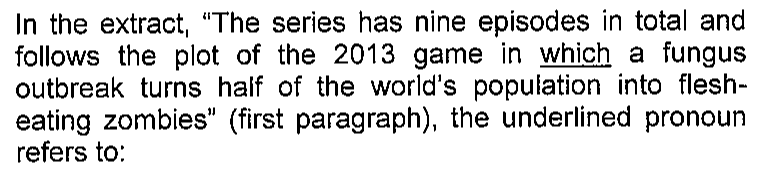
"The Last of Us is HBO's post-apocalyptic thriller based on the popular video game. It debuted on Sunday, January 15, 2023, on HBO channels. The series has nine episodes in total and follows the plot of the 2013 game in which a fungus outbreak turns half of the world's population into flesh-eating zombies – a.k.a. "clickers."
Starring "The Mandalorian" actor Pedro Pascal as Joel (a hardened middle-aged survivor tormented by the trauma of his past), and "Game of Thrones" actress Bella Ramsey as Ellie (a feisty, 14 year-old girl), "The Last of Us centers around these two characters who, at first, want nothing to do with each other. Joel and his confidant, Tess (played by Anna Torv), are tasked with smuggling Ellie out of the quarantine zone in Boston and across the U.S. As the story progresses, Ellie and Joel's dynamic shifts as they start to depend on each other.
"The Last of Us" is HBO's first foray into adapting a video game into a series. After so many video game adaptation fails, the show is a relief to many "Last of Us" fans. It was co-written by the game's creator, Neil Druckmann, so there was little room for it to flop in the first place. HBO's "The Last of Us" is Druckmann's love letter addressed to the millions of loyal fans that help keep the decade-long franchise alive.
On the surface, "The Last of Us" may just seem like another survival story with zombies. However, the HBO series doesn't focus on dramatic, long-winded shootouts and shots of the undead. Instead, it focuses on the human relationships between the uninfected as their world turns more uncertain by the minute.
But what makes this show so great, in our opinion, is the fact that viewers don't need to play the game to understand it. Although HBO's "The Last of Us" is very accurate to the timeline of the game and has Easter eggs sprinkled throughout, there are some key differences that help the story speak to a larger audience.
Adapted from https://techcrunch.com/2023/01/13/the-last-of-us-hbo-series
It is possible to state that the main purpose of the text is to provide readers with a:Resolução comentada
Análise das alternativas
Text VII
Techcrunch - Media and Entertainment
HBO's 'The Last of Us' is a video game adaptation that's actually good
By Lauren Forristal
January 13, 2023
"The Last of Us is HBO's post-apocalyptic thriller based on the popular video game. It debuted on Sunday, January 15, 2023, on HBO channels. The series has nine episodes in total and follows the plot of the 2013 game in which a fungus outbreak turns half of the world's population into flesh-eating zombies – a.k.a. "clickers."
Starring "The Mandalorian" actor Pedro Pascal as Joel (a hardened middle-aged survivor tormented by the trauma of his past), and "Game of Thrones" actress Bella Ramsey as Ellie (a feisty, 14 year-old girl), "The Last of Us centers around these two characters who, at first, want nothing to do with each other. Joel and his confidant, Tess (played by Anna Torv), are tasked with smuggling Ellie out of the quarantine zone in Boston and across the U.S. As the story progresses, Ellie and Joel's dynamic shifts as they start to depend on each other.
"The Last of Us" is HBO's first foray into adapting a video game into a series. After so many video game adaptation fails, the show is a relief to many "Last of Us" fans. It was co-written by the game's creator, Neil Druckmann, so there was little room for it to flop in the first place. HBO's "The Last of Us" is Druckmann's love letter addressed to the millions of loyal fans that help keep the decade-long franchise alive.
On the surface, "The Last of Us" may just seem like another survival story with zombies. However, the HBO series doesn't focus on dramatic, long-winded shootouts and shots of the undead. Instead, it focuses on the human relationships between the uninfected as their world turns more uncertain by the minute.
But what makes this show so great, in our opinion, is the fact that viewers don't need to play the game to understand it. Although HBO's "The Last of Us" is very accurate to the timeline of the game and has Easter eggs sprinkled throughout, there are some key differences that help the story speak to a larger audience.
Adapted from https://techcrunch.com/2023/01/13/the-last-of-us-hbo-series
According to the author, The Last of Us is:Resolução comentada
Análise das alternativas
Text VII
Techcrunch - Media and Entertainment
HBO's 'The Last of Us' is a video game adaptation that's actually good
By Lauren Forristal
January 13, 2023
"The Last of Us is HBO's post-apocalyptic thriller based on the popular video game. It debuted on Sunday, January 15, 2023, on HBO channels. The series has nine episodes in total and follows the plot of the 2013 game in which a fungus outbreak turns half of the world's population into flesh-eating zombies – a.k.a. "clickers."
Starring "The Mandalorian" actor Pedro Pascal as Joel (a hardened middle-aged survivor tormented by the trauma of his past), and "Game of Thrones" actress Bella Ramsey as Ellie (a feisty, 14 year-old girl), "The Last of Us centers around these two characters who, at first, want nothing to do with each other. Joel and his confidant, Tess (played by Anna Torv), are tasked with smuggling Ellie out of the quarantine zone in Boston and across the U.S. As the story progresses, Ellie and Joel's dynamic shifts as they start to depend on each other.
"The Last of Us" is HBO's first foray into adapting a video game into a series. After so many video game adaptation fails, the show is a relief to many "Last of Us" fans. It was co-written by the game's creator, Neil Druckmann, so there was little room for it to flop in the first place. HBO's "The Last of Us" is Druckmann's love letter addressed to the millions of loyal fans that help keep the decade-long franchise alive.
On the surface, "The Last of Us" may just seem like another survival story with zombies. However, the HBO series doesn't focus on dramatic, long-winded shootouts and shots of the undead. Instead, it focuses on the human relationships between the uninfected as their world turns more uncertain by the minute.
But what makes this show so great, in our opinion, is the fact that viewers don't need to play the game to understand it. Although HBO's "The Last of Us" is very accurate to the timeline of the game and has Easter eggs sprinkled throughout, there are some key differences that help the story speak to a larger audience.
Adapted from https://techcrunch.com/2023/01/13/the-last-of-us-hbo-series
In the extract, "The series has nine episodes in total and follows the plot of the 2013 game in which a fungus outbreak turns half of the world's population into flesh-eating zombies" (first paragraph), the underlined pronoun refers to:
Texto-base:
Texto-base:
Texto-base:
Texto-base:
Texto-base:
Texto-base:
Texto-base:
Texto-base:
Texto-base:
Texto-base:
Texto-base:
Texto-base:
Texto-base:
Texto-base:
Texto-base:
Texto-base:
Texto-base:
Texto-base:
Texto-base:
Texto-base: