← Voltar para a lista de provas Academia da Força Aérea — Comando da Aeronáutica · Cadete — Cursos de Formação de Oficiais Aviadores, Intendentes e de Infantaria (CFOAV/CFOINT/CFOINF) 65 questões nesta prova · página 2 de 4 · 64 com gabarito Gabarito disponível Gabarito disponível Centro (6,2) e raio 2; a parábola 3y² − 12y + 2x = 0 contém a origem e (6,2). Tangente ao eixo x em x = 6, o centro é (6, r). A distância à reta 3x − 4y = 0 deve ser r: |18 − 4r|/5 = r, o que dá r = 2 (a outra solução é r = −18). O centro é (6,2). Testando na alternativa B: na origem dá 0 e em (6,2) dá 12 − 24 + 12 = 0. A) Em (6,2): 12(−4) + 36 = −12 ≠ 0. C) Em (6,2): 8 − 18 ≠ 0. D) Em (6,2): 24 − 36 ≠ 0. Só B satisfaz os dois pontos. Referência: Geometria analítica – circunferência e parábola Resolução comentada do VaiConcursos. Gabarito disponível Gabarito disponível Gabarito disponível Total acumulado de 210 L às 11h30; faltam 90 L a 2 L/min, 45 min, e termina às 12h15. Das 8h às 8h15: 15·2 = 30 L. De 9h30 às 11h30 (120 min) o ganho líquido é 1,5 L/min, ou seja, 180 L, totalizando 210 L. Faltam 90 L, que a torneira I enche em 45 min. O tanque enche às 12h15. A) 12h10 enche só 80 L adicionais. C) 12h20 e D) 12h25 passariam de 300 L (100 L e 110 L adicionais). Só 12h15 completa exatamente 300 L. Referência: Funções afins – vazão Resolução comentada do VaiConcursos. Gabarito disponível O triângulo VAC é equilátero de lado 4, e a distância de A a VC é a sua altura, 2√3. A diagonal da base mede 2√2·√2 = 4, então AC = 4. A aresta lateral é √(2² + (2√3)²) = 4. O triângulo VAC tem lados 4, 4 e 4, logo é equilátero. A distância de A a VC é a altura: 4√3/2 = 2√3. A) 2√2 é a aresta da base. C) 4 é o lado do triângulo, não a altura. D) √3 não corresponde a nenhuma medida do triângulo equilátero de lado 4. Referência: Geometria espacial – pirâmides Resolução comentada do VaiConcursos. Gabarito disponível Gabarito disponível O determinante é −2 sen a; deve ser zero, e a compatibilidade exige cos a = 1, logo a = 2kπ. O determinante dos coeficientes é −2 sen a, então sen a = 0. Com isso o sistema fica y = z, x + z = 1 e x + y = cos a, o que dá 1 = cos a. É compatível e indeterminado só se cos a = 1, ou seja, a = 2kπ. A) a = kπ inclui a = π (cos = −1), caso em que o sistema é impossível. C e D tornam sen a = ±1, e então o determinante é diferente de zero, com solução única. Referência: Sistemas lineares – discussão Resolução comentada do VaiConcursos. Gabarito disponível f(x) = (x−2)²/4 + 2 e h(x) = −x/2 + 3; a solução é x < 6, que contém [3,5]. f tem vértice (2,2) e mínimo 2, pois toca y = 2 em um único ponto. Como Q(0,3) pertence a f, a = 1/4. A reta h passa por (0,3) e (2,2), logo h(x) = −x/2 + 3. Como f³ > 0 e g¹⁰ > 0, o sinal depende de h¹⁵, que exige h > 0, ou seja, x < 6. O conjunto (−∞, 6) contém [3,5].
A) [0,8], B) [1,7] e C) [2,6] contêm valores x ≥ 6 (6, 7, 8), onde h(x) ≤ 0 e h(6) = 0 anula o denominador. Só [3,5] fica inteiramente em x < 6.
Referência: Função quadrática e inequações produto-quociente Resolução comentada do VaiConcursos. Gabarito disponível (8/7)^t = 12 resulta em t ≈ 21,6 anos, ou seja, 2º semestre de 2034. Igualando A·1,05^t = B·1,2^t com A = 12B, temos (1,2/1,05)^t = (8/7)^t = 12. Logo t = log 12/(3 log 2 − log 7) = 1,08/0,05 = 21,6 anos. Contando de 2013, isso cai na segunda metade de 2034. A) 1º semestre de 2034 corresponderia a t entre 21 e 21,5. C e D (2035) exigiriam t ≥ 22. Como t = 21,6, a resposta é o 2º semestre de 2034. Referência: Logaritmos – crescimento exponencial Resolução comentada do VaiConcursos. Gabarito disponível |z| ≥ |2z+1| descreve o disco de centro −2/3 e raio 1/3; C é a falsa. Desenvolvendo: 3x² + 3y² + 4x + 1 ≤ 0, ou (x + 2/3)² + y² ≤ 1/9. É um círculo de centro (−2/3, 0) e raio 1/3. Os pontos abaixo do eixo real têm argumento maior que π, então z = −1/3 (argumento π) não é o de maior argumento. A afirmação C é falsa. A) Verdadeira: o círculo tem raio 1/3. B) Verdadeira: z = −1 tem módulo 1, o maior do disco. D) Verdadeira: o disco vai de x = −1 a x = −1/3, sem tocar x = 0, então não há imaginário puro. Referência: Números complexos – lugar geométrico Resolução comentada do VaiConcursos. Gabarito disponível Gabarito disponível O texto mostra que as regras morais sobre a guerra são discutidas há muito tempo. O texto apresenta o debate ético sobre a guerra desde os gregos e romanos, passando por Santo Agostinho, Tomás de Aquino, Grotius e Cícero. Seu propósito principal é mostrar essa longa discussão. A) Não se limita a listar desvantagens da guerra; admite que ela pode ser o 'mal menor'. C) Não pretende impedir os humanos de lutar. D) Não incentiva comportamento belicoso nem justifica guerras futuras. Referência: Interpretação de texto – ideia principal Resolução comentada do VaiConcursos. Gabarito disponível A ética da guerra defende que até inimigos merecem tratamento justo (direitos humanos das vítimas, convenções). O texto trata matar e ferir como abuso dos direitos humanos das vítimas. Também cita códigos como as convenções de Genebra e a punição de crimes de guerra. Daí a ideia de que até o inimigo merece tratamento justo. B) O texto diz o oposto: nem toda ação é justificável e há punição para crimes de guerra. C) A ética visa orientar a ação individual e do governo. D) Matar é descrito como um erro fundamental. Referência: Interpretação de texto Resolução comentada do VaiConcursos. Gabarito disponível O 1º parágrafo diz que se luta e se discute a moralidade da guerra há quase o mesmo tempo. O texto afirma que os humanos lutam desde a pré-história e discutem o certo e o errado disso 'for almost as long'. Ou seja, as duas atividades existem há quase o mesmo tempo. A) Contraria o 'almost as long', pois o debate não começou só depois de muito tempo. B) Não há afirmação de que sempre se cuidou dos direitos dos inimigos. C) O texto não diz que as pessoas eram mais pacíficas na pré-história. Referência: Interpretação de texto Resolução comentada do VaiConcursos. Gabarito disponível 'Drafting' de regras significa elaborar uma versão escrita preliminar. 'Drafting ... of rules of engagement' refere-se à redação das regras. 'Draft' é a versão escrita que ainda não é a final. A) Não há 'ideia concluída sobre uma suposição' no contexto. B) O texto não restringe as regras a oficiais de alta patente. D) 'Draft' pode significar recrutamento, mas aqui o objeto são regras, não soldados. Referência: Vocabulário em contexto Resolução comentada do VaiConcursos. Gabarito disponível 'Should' indica recomendação/o que é correto fazer. Em 'war ... should be avoided if possible', o modal expressa aconselhamento ou juízo moral do que é certo fazer, e não uma obrigação rígida. Isso combina com o contexto ético do texto. A) Obrigação seria 'must' ou 'have to'. B) Probabilidade seria 'may', 'might' ou 'could'. C) Confiança de que algo acontecerá seria 'will'. Só D corresponde ao sentido de 'should'. Referência: Modal verbs – should Resolução comentada do VaiConcursos. Gabarito disponível Gabarito disponível Gabarito disponívelAFA — Exame de Admissão ao CFOAV/CFOINT/CFOINF 2014 — Língua Portuguesa, Matemática, Língua Inglesa, Física e Redação — Versão A
A partir desse quadrado, a escultura foi surgindo nas seguintes etapas:
1ª) Em cada um dos 3 vértices livres do quadrado foi construído um quadrado de lado 1/2 metro.
2ª) Em cada um dos vértices livres dos quadrados construídos anteriormente, construiu-se um quadrado de lado 1/4 de metro.
E assim, sucessivamente, em cada vértice livre dos quadrados construídos anteriormente, construiu-se um quadrado cuja medida do lado é a metade da medida do lado do quadrado anterior.
A figura seguinte esquematiza a escultura nas etapas iniciais de sua confecção.
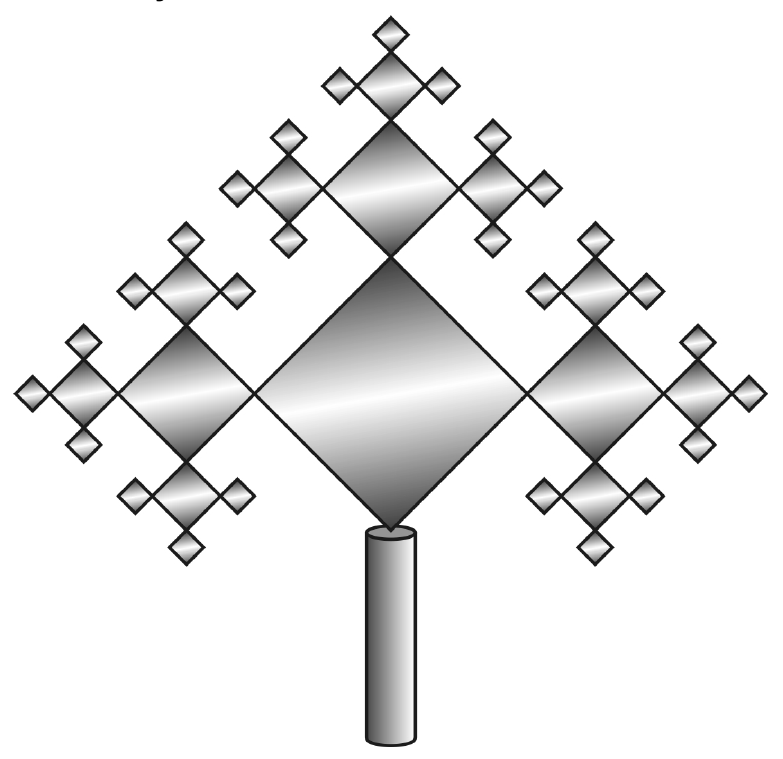
Considerando que a escultura ficou pronta completadas sete etapas, é correto afirmar que a soma das áreas dos quadrados da 7ª etapa é igual a
Dentre as equações abaixo, a que representa uma parábola que contém a origem do plano cartesiano e o centro de λ éResolução comentada
Análise das alternativas
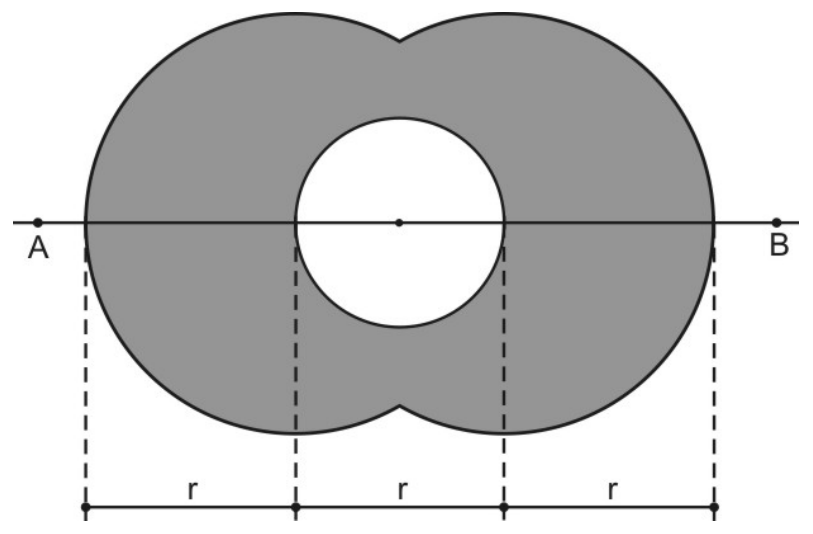
A expressão que fornece o valor da área sombreada é
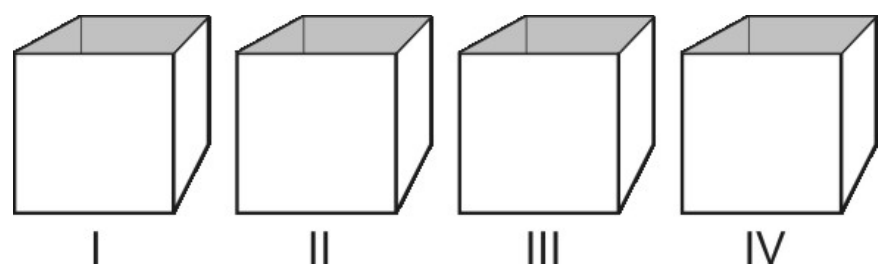
O número de maneiras de Sr. José guardar todas as 4 bolas de forma que uma mesma caixa NÃO contenha mais do que duas bolas, é igual a
A torneira I despeja água no tanque a uma vazão de 2ℓ por minuto. Já a torneira II retira água do tanque a uma vazão de (1/2)ℓ por minuto.
Às 8h de certo dia, com o tanque vazio, a torneira I foi aberta e, após 15 minutos, foi fechada.
Às 9h e 30min as duas torneiras foram abertas, e assim permaneceram até 11h e 30min.
Neste horário a torneira II é fechada, mas a torneira I permanece aberta até o momento em que a água atinge a capacidade do tanque.
Este momento ocorre àsResolução comentada
Análise das alternativas
Sendo 2√2 cm a medida da aresta da base e 2√3 cm a medida da altura dessa pirâmide, a distância, em cm, de A à aresta lateral VC éResolução comentada
Análise das alternativas
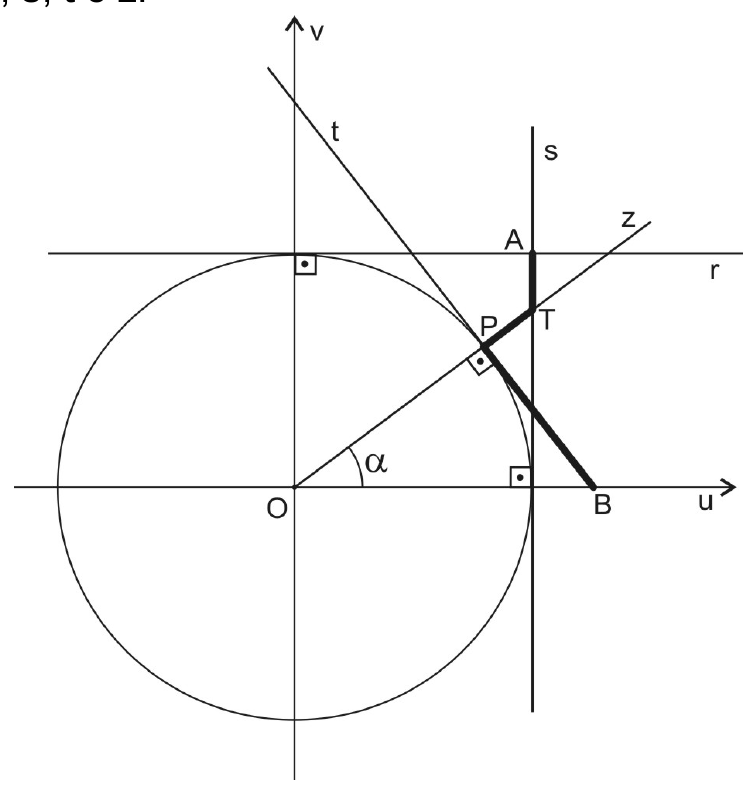
Nestas condições, a soma das medidas dos três segmentos em destaque, AT, TP e PB, pode ser calculado, como função de α, por
{ (sen a)x + y − z = 0
{ x − (sen a)y + z = 1
{ x + y = cos a
Sobre o parâmetro a, a ∈ IR, pode-se afirmar queResolução comentada
Análise das alternativas
• f(x) > 0 ∀ x ∈ IR
• tem gráfico interceptando o gráfico da função g, dada por g(x) = 2, num único ponto cuja abscissa é 2
• seu gráfico possui o ponto Q, simétrico do ponto R (0, − 3) em relação à origem do sistema cartesiano.
Seja h uma função afim cujo gráfico intercepta o gráfico de f no eixo Oy (reta Oy, notação com seta dupla sobre Oy) e no ponto de menor ordenada de f.
Assim sendo, o conjunto solução da inequação [f(x)]³ · [g(x)]¹⁰ / [h(x)]¹⁵ ≥ 0 contém o conjuntoResolução comentada
Análise das alternativas
Sabe-se que a população de pássaros da espécie A cresce a uma taxa de 5% ao ano, enquanto que a população de pássaros da espécie B cresce a uma taxa de 20% ao ano.
Com base nesses dados, é correto afirmar que, essas duas populações de pássaros serão iguais
(Considere: log 7 = 0,85; log 6 = 0,78; log 2 = 0,3 )Resolução comentada
Análise das alternativas
|z| ≥ |2z + 1|
É FALSO afirmar queResolução comentada
Análise das alternativas
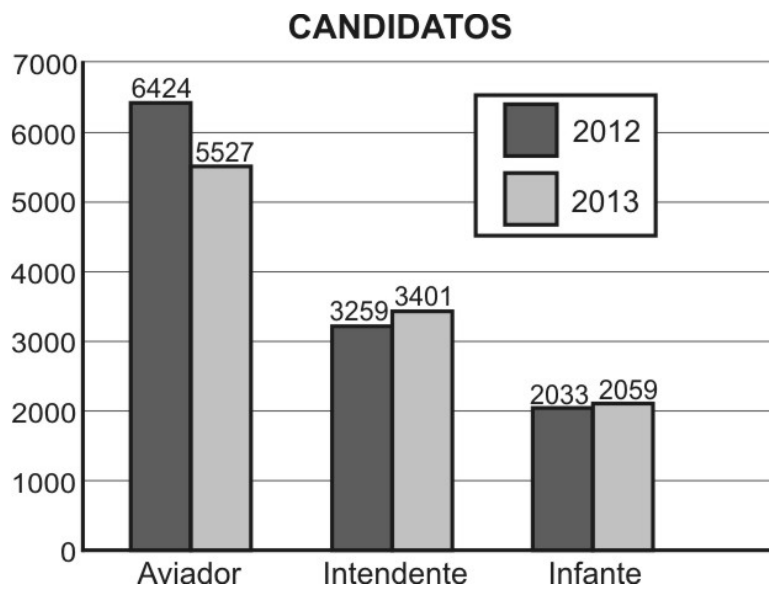
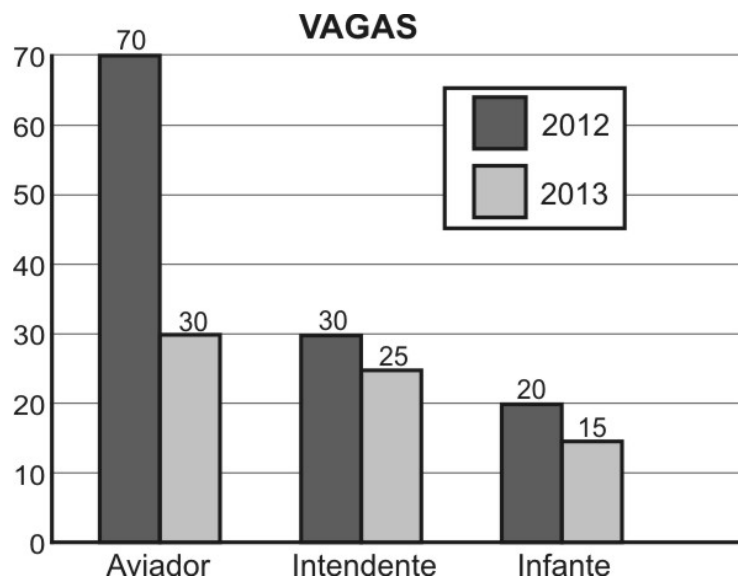
Entenda-se por concorrência a razão entre o número de candidatos e número de vagas.
Do concurso 2012 para o concurso 2013, pode-se afirmar corretamente que
Directions: Answer questions 33 to 40 based on TEXT I.
TEXT I
ETHICS OF WAR
Human beings have been fighting each other
since prehistoric times, and people have been discussing
the rights and wrongs of it for almost as long.
The Ethics of War starts by assuming that war is
5 a bad thing, and should be avoided if possible, but it
recognizes that there can be situations when war may be
the lesser evil of several bad choices.
War is a bad thing because it involves
deliberately killing or injuring people, and this is a
10 fundamental wrong – an abuse of the victims human
rights.
The purpose of war ethics is to help decide what
is right or wrong, both for individuals and countries, and to
contribute to debates on public policy, and ultimately to
15 government and individual action.
War ethics also leads to the creation of formal
codes of war (e.g. the Hague and Geneva conventions),
the drafting and implementation of rules of engagement
for soldiers, and in the punishment of soldiers and others
20 for war crimes.
The three key questions are:
Is it ever right to go to war?
When is it right to fight?
What is the moral way to conduct a war?
25 The discussion of the ethics of war goes back to
the Greeks and Romans, although neither civilization
behaved particularly well in war.
In the Christian tradition war ethics were
developed by St Augustine, and later by St Thomas
30 Aquinas and others.
Hugo Grotius (1583-1645), a Dutch philosopher
and author of De Jure Belli Ac Pacis (The Rights of War
and Peace), wrote down the conditions for a just war that
are accepted today.
35 Cicero argued that there was no acceptable
reason for war outside of just revenge or self-defence –
in which he included the defence of honor.
He also argued that a war could not be just
unless it was publicly declared and unless compensation
40 for the enemy’s offence had first been demanded.
Cicero based his argument on the assumption
that nature and human reason influenced a society
against war, and that there was a fundamental code of
behavior for nations.
Adapted from http://www.bbc.co.uk/ethics/war/. Shtml
Acessado em 14/03/2013
The main purpose of this text is toResolução comentada
Análise das alternativas
Directions: Answer questions 33 to 40 based on TEXT I.
TEXT I
ETHICS OF WAR
Human beings have been fighting each other
since prehistoric times, and people have been discussing
the rights and wrongs of it for almost as long.
The Ethics of War starts by assuming that war is
5 a bad thing, and should be avoided if possible, but it
recognizes that there can be situations when war may be
the lesser evil of several bad choices.
War is a bad thing because it involves
deliberately killing or injuring people, and this is a
10 fundamental wrong – an abuse of the victims human
rights.
The purpose of war ethics is to help decide what
is right or wrong, both for individuals and countries, and to
contribute to debates on public policy, and ultimately to
15 government and individual action.
War ethics also leads to the creation of formal
codes of war (e.g. the Hague and Geneva conventions),
the drafting and implementation of rules of engagement
for soldiers, and in the punishment of soldiers and others
20 for war crimes.
The three key questions are:
Is it ever right to go to war?
When is it right to fight?
What is the moral way to conduct a war?
25 The discussion of the ethics of war goes back to
the Greeks and Romans, although neither civilization
behaved particularly well in war.
In the Christian tradition war ethics were
developed by St Augustine, and later by St Thomas
30 Aquinas and others.
Hugo Grotius (1583-1645), a Dutch philosopher
and author of De Jure Belli Ac Pacis (The Rights of War
and Peace), wrote down the conditions for a just war that
are accepted today.
35 Cicero argued that there was no acceptable
reason for war outside of just revenge or self-defence –
in which he included the defence of honor.
He also argued that a war could not be just
unless it was publicly declared and unless compensation
40 for the enemy’s offence had first been demanded.
Cicero based his argument on the assumption
that nature and human reason influenced a society
against war, and that there was a fundamental code of
behavior for nations.
Adapted from http://www.bbc.co.uk/ethics/war/. Shtml
Acessado em 14/03/2013
War ethics’ intention, according to the text, is to show thatResolução comentada
Análise das alternativas
Directions: Answer questions 33 to 40 based on TEXT I.
TEXT I
ETHICS OF WAR
Human beings have been fighting each other
since prehistoric times, and people have been discussing
the rights and wrongs of it for almost as long.
The Ethics of War starts by assuming that war is
5 a bad thing, and should be avoided if possible, but it
recognizes that there can be situations when war may be
the lesser evil of several bad choices.
War is a bad thing because it involves
deliberately killing or injuring people, and this is a
10 fundamental wrong – an abuse of the victims human
rights.
The purpose of war ethics is to help decide what
is right or wrong, both for individuals and countries, and to
contribute to debates on public policy, and ultimately to
15 government and individual action.
War ethics also leads to the creation of formal
codes of war (e.g. the Hague and Geneva conventions),
the drafting and implementation of rules of engagement
for soldiers, and in the punishment of soldiers and others
20 for war crimes.
The three key questions are:
Is it ever right to go to war?
When is it right to fight?
What is the moral way to conduct a war?
25 The discussion of the ethics of war goes back to
the Greeks and Romans, although neither civilization
behaved particularly well in war.
In the Christian tradition war ethics were
developed by St Augustine, and later by St Thomas
30 Aquinas and others.
Hugo Grotius (1583-1645), a Dutch philosopher
and author of De Jure Belli Ac Pacis (The Rights of War
and Peace), wrote down the conditions for a just war that
are accepted today.
35 Cicero argued that there was no acceptable
reason for war outside of just revenge or self-defence –
in which he included the defence of honor.
He also argued that a war could not be just
unless it was publicly declared and unless compensation
40 for the enemy’s offence had first been demanded.
Cicero based his argument on the assumption
that nature and human reason influenced a society
against war, and that there was a fundamental code of
behavior for nations.
Adapted from http://www.bbc.co.uk/ethics/war/. Shtml
Acessado em 14/03/2013
According to the first paragraph, it’s correct to state thatResolução comentada
Análise das alternativas
Directions: Answer questions 33 to 40 based on TEXT I.
TEXT I
ETHICS OF WAR
Human beings have been fighting each other
since prehistoric times, and people have been discussing
the rights and wrongs of it for almost as long.
The Ethics of War starts by assuming that war is
5 a bad thing, and should be avoided if possible, but it
recognizes that there can be situations when war may be
the lesser evil of several bad choices.
War is a bad thing because it involves
deliberately killing or injuring people, and this is a
10 fundamental wrong – an abuse of the victims human
rights.
The purpose of war ethics is to help decide what
is right or wrong, both for individuals and countries, and to
contribute to debates on public policy, and ultimately to
15 government and individual action.
War ethics also leads to the creation of formal
codes of war (e.g. the Hague and Geneva conventions),
the drafting and implementation of rules of engagement
for soldiers, and in the punishment of soldiers and others
20 for war crimes.
The three key questions are:
Is it ever right to go to war?
When is it right to fight?
What is the moral way to conduct a war?
25 The discussion of the ethics of war goes back to
the Greeks and Romans, although neither civilization
behaved particularly well in war.
In the Christian tradition war ethics were
developed by St Augustine, and later by St Thomas
30 Aquinas and others.
Hugo Grotius (1583-1645), a Dutch philosopher
and author of De Jure Belli Ac Pacis (The Rights of War
and Peace), wrote down the conditions for a just war that
are accepted today.
35 Cicero argued that there was no acceptable
reason for war outside of just revenge or self-defence –
in which he included the defence of honor.
He also argued that a war could not be just
unless it was publicly declared and unless compensation
40 for the enemy’s offence had first been demanded.
Cicero based his argument on the assumption
that nature and human reason influenced a society
against war, and that there was a fundamental code of
behavior for nations.
Adapted from http://www.bbc.co.uk/ethics/war/. Shtml
Acessado em 14/03/2013
The best definition for the word ‘drafting’ (line 18) is a/theResolução comentada
Análise das alternativas
Directions: Answer questions 33 to 40 based on TEXT I.
TEXT I
ETHICS OF WAR
Human beings have been fighting each other
since prehistoric times, and people have been discussing
the rights and wrongs of it for almost as long.
The Ethics of War starts by assuming that war is
5 a bad thing, and should be avoided if possible, but it
recognizes that there can be situations when war may be
the lesser evil of several bad choices.
War is a bad thing because it involves
deliberately killing or injuring people, and this is a
10 fundamental wrong – an abuse of the victims human
rights.
The purpose of war ethics is to help decide what
is right or wrong, both for individuals and countries, and to
contribute to debates on public policy, and ultimately to
15 government and individual action.
War ethics also leads to the creation of formal
codes of war (e.g. the Hague and Geneva conventions),
the drafting and implementation of rules of engagement
for soldiers, and in the punishment of soldiers and others
20 for war crimes.
The three key questions are:
Is it ever right to go to war?
When is it right to fight?
What is the moral way to conduct a war?
25 The discussion of the ethics of war goes back to
the Greeks and Romans, although neither civilization
behaved particularly well in war.
In the Christian tradition war ethics were
developed by St Augustine, and later by St Thomas
30 Aquinas and others.
Hugo Grotius (1583-1645), a Dutch philosopher
and author of De Jure Belli Ac Pacis (The Rights of War
and Peace), wrote down the conditions for a just war that
are accepted today.
35 Cicero argued that there was no acceptable
reason for war outside of just revenge or self-defence –
in which he included the defence of honor.
He also argued that a war could not be just
unless it was publicly declared and unless compensation
40 for the enemy’s offence had first been demanded.
Cicero based his argument on the assumption
that nature and human reason influenced a society
against war, and that there was a fundamental code of
behavior for nations.
Adapted from http://www.bbc.co.uk/ethics/war/. Shtml
Acessado em 14/03/2013
In the phrase “should be avoided” (line 5) the modal verb expressesResolução comentada
Análise das alternativas
Directions: Answer questions 33 to 40 based on TEXT I.
TEXT I
ETHICS OF WAR
Human beings have been fighting each other
since prehistoric times, and people have been discussing
the rights and wrongs of it for almost as long.
The Ethics of War starts by assuming that war is
5 a bad thing, and should be avoided if possible, but it
recognizes that there can be situations when war may be
the lesser evil of several bad choices.
War is a bad thing because it involves
deliberately killing or injuring people, and this is a
10 fundamental wrong – an abuse of the victims human
rights.
The purpose of war ethics is to help decide what
is right or wrong, both for individuals and countries, and to
contribute to debates on public policy, and ultimately to
15 government and individual action.
War ethics also leads to the creation of formal
codes of war (e.g. the Hague and Geneva conventions),
the drafting and implementation of rules of engagement
for soldiers, and in the punishment of soldiers and others
20 for war crimes.
The three key questions are:
Is it ever right to go to war?
When is it right to fight?
What is the moral way to conduct a war?
25 The discussion of the ethics of war goes back to
the Greeks and Romans, although neither civilization
behaved particularly well in war.
In the Christian tradition war ethics were
developed by St Augustine, and later by St Thomas
30 Aquinas and others.
Hugo Grotius (1583-1645), a Dutch philosopher
and author of De Jure Belli Ac Pacis (The Rights of War
and Peace), wrote down the conditions for a just war that
are accepted today.
35 Cicero argued that there was no acceptable
reason for war outside of just revenge or self-defence –
in which he included the defence of honor.
He also argued that a war could not be just
unless it was publicly declared and unless compensation
40 for the enemy’s offence had first been demanded.
Cicero based his argument on the assumption
that nature and human reason influenced a society
against war, and that there was a fundamental code of
behavior for nations.
Adapted from http://www.bbc.co.uk/ethics/war/. Shtml
Acessado em 14/03/2013

Choose the alternative in which the determiner ‘neither’ is used with the same meaning as the one in italics in the text.
Directions: Answer questions 33 to 40 based on TEXT I.
TEXT I
ETHICS OF WAR
Human beings have been fighting each other
since prehistoric times, and people have been discussing
the rights and wrongs of it for almost as long.
The Ethics of War starts by assuming that war is
5 a bad thing, and should be avoided if possible, but it
recognizes that there can be situations when war may be
the lesser evil of several bad choices.
War is a bad thing because it involves
deliberately killing or injuring people, and this is a
10 fundamental wrong – an abuse of the victims human
rights.
The purpose of war ethics is to help decide what
is right or wrong, both for individuals and countries, and to
contribute to debates on public policy, and ultimately to
15 government and individual action.
War ethics also leads to the creation of formal
codes of war (e.g. the Hague and Geneva conventions),
the drafting and implementation of rules of engagement
for soldiers, and in the punishment of soldiers and others
20 for war crimes.
The three key questions are:
Is it ever right to go to war?
When is it right to fight?
What is the moral way to conduct a war?
25 The discussion of the ethics of war goes back to
the Greeks and Romans, although neither civilization
behaved particularly well in war.
In the Christian tradition war ethics were
developed by St Augustine, and later by St Thomas
30 Aquinas and others.
Hugo Grotius (1583-1645), a Dutch philosopher
and author of De Jure Belli Ac Pacis (The Rights of War
and Peace), wrote down the conditions for a just war that
are accepted today.
35 Cicero argued that there was no acceptable
reason for war outside of just revenge or self-defence –
in which he included the defence of honor.
He also argued that a war could not be just
unless it was publicly declared and unless compensation
40 for the enemy’s offence had first been demanded.
Cicero based his argument on the assumption
that nature and human reason influenced a society
against war, and that there was a fundamental code of
behavior for nations.
Adapted from http://www.bbc.co.uk/ethics/war/. Shtml
Acessado em 14/03/2013

The verbal construction of the underlined sentence in the text expresses the notion of an action
Directions: Answer questions 33 to 40 based on TEXT I.
TEXT I
ETHICS OF WAR
Human beings have been fighting each other
since prehistoric times, and people have been discussing
the rights and wrongs of it for almost as long.
The Ethics of War starts by assuming that war is
5 a bad thing, and should be avoided if possible, but it
recognizes that there can be situations when war may be
the lesser evil of several bad choices.
War is a bad thing because it involves
deliberately killing or injuring people, and this is a
10 fundamental wrong – an abuse of the victims human
rights.
The purpose of war ethics is to help decide what
is right or wrong, both for individuals and countries, and to
contribute to debates on public policy, and ultimately to
15 government and individual action.
War ethics also leads to the creation of formal
codes of war (e.g. the Hague and Geneva conventions),
the drafting and implementation of rules of engagement
for soldiers, and in the punishment of soldiers and others
20 for war crimes.
The three key questions are:
Is it ever right to go to war?
When is it right to fight?
What is the moral way to conduct a war?
25 The discussion of the ethics of war goes back to
the Greeks and Romans, although neither civilization
behaved particularly well in war.
In the Christian tradition war ethics were
developed by St Augustine, and later by St Thomas
30 Aquinas and others.
Hugo Grotius (1583-1645), a Dutch philosopher
and author of De Jure Belli Ac Pacis (The Rights of War
and Peace), wrote down the conditions for a just war that
are accepted today.
35 Cicero argued that there was no acceptable
reason for war outside of just revenge or self-defence –
in which he included the defence of honor.
He also argued that a war could not be just
unless it was publicly declared and unless compensation
40 for the enemy’s offence had first been demanded.
Cicero based his argument on the assumption
that nature and human reason influenced a society
against war, and that there was a fundamental code of
behavior for nations.
Adapted from http://www.bbc.co.uk/ethics/war/. Shtml
Acessado em 14/03/2013

Mark the only sentence below that has the same function of the Modal verb in bold (line 6).
Uma escultura de chapa de aço com espessura desprezível foi feita utilizando-se inicialmente uma chapa quadrada de 1 metro de lado apoiada por um de seus vértices sobre um tubo cilíndrico.
A circunferência λ é tangente à reta r : y = (3/4)x e também é tangente ao eixo das abscissas no ponto de abscissa 6.
Na figura abaixo, os três círculos têm centro sobre a reta AB e os dois de maior raio têm centro sobre a circunferência de menor raio.
Sr. José deseja guardar 4 bolas – uma azul, uma branca, uma vermelha e uma preta – em 4 caixas numeradas:
Um tanque com capacidade de 300 litros de água possui duas torneira: I e II
Considere uma pirâmide regular ABCDV de base ABCD.
No ciclo trigonométrico da figura abaixo acrescentou-se as retas r, s, t e z.
O sistema linear nas incógnitas x, y e z abaixo possui uma infinidade de soluções.
Seja f uma função quadrática tal que:
Pesquisas realizadas verificaram que, no planeta Terra, no início do ano de 2013, a população de pássaros da espécie A era 12 vezes a população de pássaros da espécie B.
Considere no plano complexo, o conjunto dos números z = x + yi ; {x, y} ⊂ IR e i² = −1 que satisfazem a condição
Os gráficos a seguir apresentam os números de candidatos e de vagas para os concursos AFA 2012 e 2013.
Texto-base:
Texto-base:
Texto-base:
Texto-base:
Texto-base:
Texto-base:
Texto-base:
Texto-base: