← Voltar para a lista de provas Comando da Aeronáutica — Academia da Força Aérea (AFA) · Exame de Admissão ao CFOAV/CFOINT/CFOINF 65 questões nesta prova · página 3 de 4 · 61 com gabarito Gabarito disponível Gabarito disponível Gabarito disponível Gabarito disponível Gabarito disponível Gabarito disponível Gabarito disponível Gabarito disponível Questão anulada Gabarito disponível Velocidade máxima na curva: v = √(μe·g·R). O atrito estático fornece a força centrípeta, μe·m·g = m·v²/R. Logo v = √(0,5·10·51,2) = √256 = 16 m/s. A) 14,3 não vem de nenhuma combinação correta dos dados. C) 18,0 excede o limite de atrito. D) 21,5 também. Usar μ cinético (0,4) daria cerca de 14,3 m/s, mas não é o caso, pois a caixa não desliza e vale o atrito estático. Referência: Dinâmica do movimento circular; atrito estático. Resolução comentada do VaiConcursos. Gabarito disponível Gabarito disponível Gabarito disponível Gabarito disponível Proposições corretas: 02, 04 e 06, que somam 12. (02) verdadeira: o orifício dilata como se fosse do material da placa. (04) verdadeira: o pirex tem menor coeficiente de dilatação. (06) verdadeira: a dilatação é proporcional em todas as dimensões, o que preserva a forma e os ângulos. Soma: 2+4+6 = 12. (01) falsa: de 1 °C a 7 °C o volume primeiro diminui, até 4 °C, e depois aumenta. (03) falsa: o líquido transbordado mede a dilatação aparente. (05) falsa: a densidade aumenta até 4 °C e depois diminui. Assim, A, B e C não correspondem à soma correta. Referência: Dilatação térmica; anomalia da água. Resolução comentada do VaiConcursos. Gabarito disponível Balanço de calor leva a 0 °C com todo o gelo derretido. O gelo precisa de 600·0,5·10 = 3 000 cal para chegar a 0 °C e de 600·80 = 48 000 cal para fundir, total 51 000 cal. O refrigerante (2 000 g) liberando de 25 °C a 0 °C fornece 50 000 cal, e o recipiente fornece 40·25 = 1 000 cal, total 51 000 cal. A energia é exatamente a necessária, então a temperatura final é 0 °C. A) Seria o caso de o gelo não receber calor suficiente para chegar a 0 °C, o que não ocorre. C e D) Exigiriam calor sobrando depois da fusão total, mas a energia disponível só basta para fundir todo o gelo. Referência: Calorimetria: Q = m·c·ΔT e Q = m·L. Resolução comentada do VaiConcursos. Gabarito disponível Gabarito disponível Questão anulada Gabarito disponível Gabarito disponívelEPCAR — Exame de Admissão ao CFOAV/CFOINT/CFOINF 2015 — Língua Portuguesa, Matemática, Língua Inglesa, Física e Redação — Versão A
Directions: Answer questions 41 to 48 according to TEXT II.
TEXT II
JOBS OF THE FUTURE

“There is no future in any job. The future lies in the person
who holds the job.” – George W. Crane
One of my primary complaints with higher
education is that they tend to prepare students for jobs of
the past. Similarly, the best paying jobs of the future are
all jobs that currently exist today. Many of them will still
[5] exist in the future, but with some changes as technology
and communication systems make their impact.
As a rule of thumb, 60% of the jobs 10 years
from now haven’t been invented yet. With that in mind,
I’ve decided to put together a list of some jobs that will be
[10] in high demand in the future.
Jobs before 2020
Many of the changes we see today will cause
new jobs to materialize quickly. This first section deals
[15] with new positions that will likely be developed within the
next 10 years.
3D printing engineers – Classes in 3D printing are
already being introduced into high schools and the
demand for printer-produced products will rise quickly.
[20] The trend will be for these worker-less workshops to
enter virtually different fields, at the same time, driving
the need for competent technicians and engineers to
design and maintain the next wave of this technology.
Nano-medics – Health professionals capable of working
[25] on the nano-level, both in designing diagnostics systems,
remedies, and monitoring solutions will be in high
demand.
Organ agents – The demand for transplantable organs
is exploding and people who can track down and deliver
[30] healthy organs will be in hot demand.
Octogenarian service providers – As the population
continues to age we will have record numbers of people
living into their 80s, 90s, and 100s. This growing group of
active oldsters will provide a demand for goods and
[35] services currently not being addressed in today’s
marketplace.
Jobs in 2030 and beyond
A number of technologies currently on the
drawing board will require a bit longer lead time before
[40] the industry comes into its own. Here are a few examples
of these kinds of jobs:
Body part & limb makers – The organ agents listed
before will quickly find themselves out of work as soon as
we figure out how to efficiently grow and mass produce
[45] our own organs from scratch.
Earthquake forecasters – While scientists are
developing skills to work with nanoscale precision on the
earth’s surface, the best we can know about below the
surface is blindfolded guesswork done with 100-mile
[50] precision. What we don’t know is literally killing us – over
226,000 killed in 2010 alone. But that will change over
time as we begin to understand the inner working of the
earth and accurately forecast when the next big quakes
are about to hit.
[55] “Heavy air” engineers – Compressed air is useful in a
wide variety of ways. However, we have yet to figure out
how to compress streams of air as they pass through our
existing atmosphere. Once we do, it will create untold
opportunity for non-surface based housing and
[60] transportation system, weather control, and other kinds
of experimentation.
Final thoughts
The jobs and occupations listed above are just
[65] scratching the surface. This list is intended to help
stretch your imagination and start you down a path of
imagining your own future.
(Adapted from http://www.futuristspeaker.com/2011/11/55-jobs-of-the-future)
Read the statements and mark the right option.
I. Universities and colleges prepare students for jobs that already exist.
II. All jobs of the future will be better paid than today's jobs.
III. The majority of future jobs are still unknown.
The correct statement(s) is (are)
Directions: Answer questions 41 to 48 according to TEXT II.
TEXT II
JOBS OF THE FUTURE
“There is no future in any job. The future lies in the person
who holds the job.” – George W. Crane
One of my primary complaints with higher
education is that they tend to prepare students for jobs of
the past. Similarly, the best paying jobs of the future are
all jobs that currently exist today. Many of them will still
[5] exist in the future, but with some changes as technology
and communication systems make their impact.
As a rule of thumb, 60% of the jobs 10 years
from now haven’t been invented yet. With that in mind,
I’ve decided to put together a list of some jobs that will be
[10] in high demand in the future.
Jobs before 2020
Many of the changes we see today will cause
new jobs to materialize quickly. This first section deals
[15] with new positions that will likely be developed within the
next 10 years.
3D printing engineers – Classes in 3D printing are
already being introduced into high schools and the
demand for printer-produced products will rise quickly.
[20] The trend will be for these worker-less workshops to
enter virtually different fields, at the same time, driving
the need for competent technicians and engineers to
design and maintain the next wave of this technology.
Nano-medics – Health professionals capable of working
[25] on the nano-level, both in designing diagnostics systems,
remedies, and monitoring solutions will be in high
demand.
Organ agents – The demand for transplantable organs
is exploding and people who can track down and deliver
[30] healthy organs will be in hot demand.
Octogenarian service providers – As the population
continues to age we will have record numbers of people
living into their 80s, 90s, and 100s. This growing group of
active oldsters will provide a demand for goods and
[35] services currently not being addressed in today’s
marketplace.
Jobs in 2030 and beyond
A number of technologies currently on the
drawing board will require a bit longer lead time before
[40] the industry comes into its own. Here are a few examples
of these kinds of jobs:
Body part & limb makers – The organ agents listed
before will quickly find themselves out of work as soon as
we figure out how to efficiently grow and mass produce
[45] our own organs from scratch.
Earthquake forecasters – While scientists are
developing skills to work with nanoscale precision on the
earth’s surface, the best we can know about below the
surface is blindfolded guesswork done with 100-mile
[50] precision. What we don’t know is literally killing us – over
226,000 killed in 2010 alone. But that will change over
time as we begin to understand the inner working of the
earth and accurately forecast when the next big quakes
are about to hit.
[55] “Heavy air” engineers – Compressed air is useful in a
wide variety of ways. However, we have yet to figure out
how to compress streams of air as they pass through our
existing atmosphere. Once we do, it will create untold
opportunity for non-surface based housing and
[60] transportation system, weather control, and other kinds
of experimentation.
Final thoughts
The jobs and occupations listed above are just
[65] scratching the surface. This list is intended to help
stretch your imagination and start you down a path of
imagining your own future.
(Adapted from http://www.futuristspeaker.com/2011/11/55-jobs-of-the-future)
The text's main goal is to
Directions: Answer questions 41 to 48 according to TEXT II.
TEXT II
JOBS OF THE FUTURE
“There is no future in any job. The future lies in the person
who holds the job.” – George W. Crane
One of my primary complaints with higher
education is that they tend to prepare students for jobs of
the past. Similarly, the best paying jobs of the future are
all jobs that currently exist today. Many of them will still
[5] exist in the future, but with some changes as technology
and communication systems make their impact.
As a rule of thumb, 60% of the jobs 10 years
from now haven’t been invented yet. With that in mind,
I’ve decided to put together a list of some jobs that will be
[10] in high demand in the future.
Jobs before 2020
Many of the changes we see today will cause
new jobs to materialize quickly. This first section deals
[15] with new positions that will likely be developed within the
next 10 years.
3D printing engineers – Classes in 3D printing are
already being introduced into high schools and the
demand for printer-produced products will rise quickly.
[20] The trend will be for these worker-less workshops to
enter virtually different fields, at the same time, driving
the need for competent technicians and engineers to
design and maintain the next wave of this technology.
Nano-medics – Health professionals capable of working
[25] on the nano-level, both in designing diagnostics systems,
remedies, and monitoring solutions will be in high
demand.
Organ agents – The demand for transplantable organs
is exploding and people who can track down and deliver
[30] healthy organs will be in hot demand.
Octogenarian service providers – As the population
continues to age we will have record numbers of people
living into their 80s, 90s, and 100s. This growing group of
active oldsters will provide a demand for goods and
[35] services currently not being addressed in today’s
marketplace.
Jobs in 2030 and beyond
A number of technologies currently on the
drawing board will require a bit longer lead time before
[40] the industry comes into its own. Here are a few examples
of these kinds of jobs:
Body part & limb makers – The organ agents listed
before will quickly find themselves out of work as soon as
we figure out how to efficiently grow and mass produce
[45] our own organs from scratch.
Earthquake forecasters – While scientists are
developing skills to work with nanoscale precision on the
earth’s surface, the best we can know about below the
surface is blindfolded guesswork done with 100-mile
[50] precision. What we don’t know is literally killing us – over
226,000 killed in 2010 alone. But that will change over
time as we begin to understand the inner working of the
earth and accurately forecast when the next big quakes
are about to hit.
[55] “Heavy air” engineers – Compressed air is useful in a
wide variety of ways. However, we have yet to figure out
how to compress streams of air as they pass through our
existing atmosphere. Once we do, it will create untold
opportunity for non-surface based housing and
[60] transportation system, weather control, and other kinds
of experimentation.
Final thoughts
The jobs and occupations listed above are just
[65] scratching the surface. This list is intended to help
stretch your imagination and start you down a path of
imagining your own future.
(Adapted from http://www.futuristspeaker.com/2011/11/55-jobs-of-the-future)
Mark the INCORRECT alternative.
Directions: Answer questions 41 to 48 according to TEXT II.
TEXT II
JOBS OF THE FUTURE
“There is no future in any job. The future lies in the person
who holds the job.” – George W. Crane
One of my primary complaints with higher
education is that they tend to prepare students for jobs of
the past. Similarly, the best paying jobs of the future are
all jobs that currently exist today. Many of them will still
[5] exist in the future, but with some changes as technology
and communication systems make their impact.
As a rule of thumb, 60% of the jobs 10 years
from now haven’t been invented yet. With that in mind,
I’ve decided to put together a list of some jobs that will be
[10] in high demand in the future.
Jobs before 2020
Many of the changes we see today will cause
new jobs to materialize quickly. This first section deals
[15] with new positions that will likely be developed within the
next 10 years.
3D printing engineers – Classes in 3D printing are
already being introduced into high schools and the
demand for printer-produced products will rise quickly.
[20] The trend will be for these worker-less workshops to
enter virtually different fields, at the same time, driving
the need for competent technicians and engineers to
design and maintain the next wave of this technology.
Nano-medics – Health professionals capable of working
[25] on the nano-level, both in designing diagnostics systems,
remedies, and monitoring solutions will be in high
demand.
Organ agents – The demand for transplantable organs
is exploding and people who can track down and deliver
[30] healthy organs will be in hot demand.
Octogenarian service providers – As the population
continues to age we will have record numbers of people
living into their 80s, 90s, and 100s. This growing group of
active oldsters will provide a demand for goods and
[35] services currently not being addressed in today’s
marketplace.
Jobs in 2030 and beyond
A number of technologies currently on the
drawing board will require a bit longer lead time before
[40] the industry comes into its own. Here are a few examples
of these kinds of jobs:
Body part & limb makers – The organ agents listed
before will quickly find themselves out of work as soon as
we figure out how to efficiently grow and mass produce
[45] our own organs from scratch.
Earthquake forecasters – While scientists are
developing skills to work with nanoscale precision on the
earth’s surface, the best we can know about below the
surface is blindfolded guesswork done with 100-mile
[50] precision. What we don’t know is literally killing us – over
226,000 killed in 2010 alone. But that will change over
time as we begin to understand the inner working of the
earth and accurately forecast when the next big quakes
are about to hit.
[55] “Heavy air” engineers – Compressed air is useful in a
wide variety of ways. However, we have yet to figure out
how to compress streams of air as they pass through our
existing atmosphere. Once we do, it will create untold
opportunity for non-surface based housing and
[60] transportation system, weather control, and other kinds
of experimentation.
Final thoughts
The jobs and occupations listed above are just
[65] scratching the surface. This list is intended to help
stretch your imagination and start you down a path of
imagining your own future.
(Adapted from http://www.futuristspeaker.com/2011/11/55-jobs-of-the-future)

Directions: Answer questions 41 to 48 according to TEXT II.
TEXT II
JOBS OF THE FUTURE
“There is no future in any job. The future lies in the person
who holds the job.” – George W. Crane
One of my primary complaints with higher
education is that they tend to prepare students for jobs of
the past. Similarly, the best paying jobs of the future are
all jobs that currently exist today. Many of them will still
[5] exist in the future, but with some changes as technology
and communication systems make their impact.
As a rule of thumb, 60% of the jobs 10 years
from now haven’t been invented yet. With that in mind,
I’ve decided to put together a list of some jobs that will be
[10] in high demand in the future.
Jobs before 2020
Many of the changes we see today will cause
new jobs to materialize quickly. This first section deals
[15] with new positions that will likely be developed within the
next 10 years.
3D printing engineers – Classes in 3D printing are
already being introduced into high schools and the
demand for printer-produced products will rise quickly.
[20] The trend will be for these worker-less workshops to
enter virtually different fields, at the same time, driving
the need for competent technicians and engineers to
design and maintain the next wave of this technology.
Nano-medics – Health professionals capable of working
[25] on the nano-level, both in designing diagnostics systems,
remedies, and monitoring solutions will be in high
demand.
Organ agents – The demand for transplantable organs
is exploding and people who can track down and deliver
[30] healthy organs will be in hot demand.
Octogenarian service providers – As the population
continues to age we will have record numbers of people
living into their 80s, 90s, and 100s. This growing group of
active oldsters will provide a demand for goods and
[35] services currently not being addressed in today’s
marketplace.
Jobs in 2030 and beyond
A number of technologies currently on the
drawing board will require a bit longer lead time before
[40] the industry comes into its own. Here are a few examples
of these kinds of jobs:
Body part & limb makers – The organ agents listed
before will quickly find themselves out of work as soon as
we figure out how to efficiently grow and mass produce
[45] our own organs from scratch.
Earthquake forecasters – While scientists are
developing skills to work with nanoscale precision on the
earth’s surface, the best we can know about below the
surface is blindfolded guesswork done with 100-mile
[50] precision. What we don’t know is literally killing us – over
226,000 killed in 2010 alone. But that will change over
time as we begin to understand the inner working of the
earth and accurately forecast when the next big quakes
are about to hit.
[55] “Heavy air” engineers – Compressed air is useful in a
wide variety of ways. However, we have yet to figure out
how to compress streams of air as they pass through our
existing atmosphere. Once we do, it will create untold
opportunity for non-surface based housing and
[60] transportation system, weather control, and other kinds
of experimentation.
Final thoughts
The jobs and occupations listed above are just
[65] scratching the surface. This list is intended to help
stretch your imagination and start you down a path of
imagining your own future.
(Adapted from http://www.futuristspeaker.com/2011/11/55-jobs-of-the-future)

Directions: Answer questions 41 to 48 according to TEXT II.
TEXT II
JOBS OF THE FUTURE
“There is no future in any job. The future lies in the person
who holds the job.” – George W. Crane
One of my primary complaints with higher
education is that they tend to prepare students for jobs of
the past. Similarly, the best paying jobs of the future are
all jobs that currently exist today. Many of them will still
[5] exist in the future, but with some changes as technology
and communication systems make their impact.
As a rule of thumb, 60% of the jobs 10 years
from now haven’t been invented yet. With that in mind,
I’ve decided to put together a list of some jobs that will be
[10] in high demand in the future.
Jobs before 2020
Many of the changes we see today will cause
new jobs to materialize quickly. This first section deals
[15] with new positions that will likely be developed within the
next 10 years.
3D printing engineers – Classes in 3D printing are
already being introduced into high schools and the
demand for printer-produced products will rise quickly.
[20] The trend will be for these worker-less workshops to
enter virtually different fields, at the same time, driving
the need for competent technicians and engineers to
design and maintain the next wave of this technology.
Nano-medics – Health professionals capable of working
[25] on the nano-level, both in designing diagnostics systems,
remedies, and monitoring solutions will be in high
demand.
Organ agents – The demand for transplantable organs
is exploding and people who can track down and deliver
[30] healthy organs will be in hot demand.
Octogenarian service providers – As the population
continues to age we will have record numbers of people
living into their 80s, 90s, and 100s. This growing group of
active oldsters will provide a demand for goods and
[35] services currently not being addressed in today’s
marketplace.
Jobs in 2030 and beyond
A number of technologies currently on the
drawing board will require a bit longer lead time before
[40] the industry comes into its own. Here are a few examples
of these kinds of jobs:
Body part & limb makers – The organ agents listed
before will quickly find themselves out of work as soon as
we figure out how to efficiently grow and mass produce
[45] our own organs from scratch.
Earthquake forecasters – While scientists are
developing skills to work with nanoscale precision on the
earth’s surface, the best we can know about below the
surface is blindfolded guesswork done with 100-mile
[50] precision. What we don’t know is literally killing us – over
226,000 killed in 2010 alone. But that will change over
time as we begin to understand the inner working of the
earth and accurately forecast when the next big quakes
are about to hit.
[55] “Heavy air” engineers – Compressed air is useful in a
wide variety of ways. However, we have yet to figure out
how to compress streams of air as they pass through our
existing atmosphere. Once we do, it will create untold
opportunity for non-surface based housing and
[60] transportation system, weather control, and other kinds
of experimentation.
Final thoughts
The jobs and occupations listed above are just
[65] scratching the surface. This list is intended to help
stretch your imagination and start you down a path of
imagining your own future.
(Adapted from http://www.futuristspeaker.com/2011/11/55-jobs-of-the-future)
All the following verbs are used in the text in their literal meaning, EXCEPT
Directions: Answer questions 41 to 48 according to TEXT II.
TEXT II
JOBS OF THE FUTURE
“There is no future in any job. The future lies in the person
who holds the job.” – George W. Crane
One of my primary complaints with higher
education is that they tend to prepare students for jobs of
the past. Similarly, the best paying jobs of the future are
all jobs that currently exist today. Many of them will still
[5] exist in the future, but with some changes as technology
and communication systems make their impact.
As a rule of thumb, 60% of the jobs 10 years
from now haven’t been invented yet. With that in mind,
I’ve decided to put together a list of some jobs that will be
[10] in high demand in the future.
Jobs before 2020
Many of the changes we see today will cause
new jobs to materialize quickly. This first section deals
[15] with new positions that will likely be developed within the
next 10 years.
3D printing engineers – Classes in 3D printing are
already being introduced into high schools and the
demand for printer-produced products will rise quickly.
[20] The trend will be for these worker-less workshops to
enter virtually different fields, at the same time, driving
the need for competent technicians and engineers to
design and maintain the next wave of this technology.
Nano-medics – Health professionals capable of working
[25] on the nano-level, both in designing diagnostics systems,
remedies, and monitoring solutions will be in high
demand.
Organ agents – The demand for transplantable organs
is exploding and people who can track down and deliver
[30] healthy organs will be in hot demand.
Octogenarian service providers – As the population
continues to age we will have record numbers of people
living into their 80s, 90s, and 100s. This growing group of
active oldsters will provide a demand for goods and
[35] services currently not being addressed in today’s
marketplace.
Jobs in 2030 and beyond
A number of technologies currently on the
drawing board will require a bit longer lead time before
[40] the industry comes into its own. Here are a few examples
of these kinds of jobs:
Body part & limb makers – The organ agents listed
before will quickly find themselves out of work as soon as
we figure out how to efficiently grow and mass produce
[45] our own organs from scratch.
Earthquake forecasters – While scientists are
developing skills to work with nanoscale precision on the
earth’s surface, the best we can know about below the
surface is blindfolded guesswork done with 100-mile
[50] precision. What we don’t know is literally killing us – over
226,000 killed in 2010 alone. But that will change over
time as we begin to understand the inner working of the
earth and accurately forecast when the next big quakes
are about to hit.
[55] “Heavy air” engineers – Compressed air is useful in a
wide variety of ways. However, we have yet to figure out
how to compress streams of air as they pass through our
existing atmosphere. Once we do, it will create untold
opportunity for non-surface based housing and
[60] transportation system, weather control, and other kinds
of experimentation.
Final thoughts
The jobs and occupations listed above are just
[65] scratching the surface. This list is intended to help
stretch your imagination and start you down a path of
imagining your own future.
(Adapted from http://www.futuristspeaker.com/2011/11/55-jobs-of-the-future)
“The jobs and occupations listed above are just scratching the surface.” (lines 64 and 65) This sentence means that
Directions: Answer questions 41 to 48 according to TEXT II.
TEXT II
JOBS OF THE FUTURE
“There is no future in any job. The future lies in the person
who holds the job.” – George W. Crane
One of my primary complaints with higher
education is that they tend to prepare students for jobs of
the past. Similarly, the best paying jobs of the future are
all jobs that currently exist today. Many of them will still
[5] exist in the future, but with some changes as technology
and communication systems make their impact.
As a rule of thumb, 60% of the jobs 10 years
from now haven’t been invented yet. With that in mind,
I’ve decided to put together a list of some jobs that will be
[10] in high demand in the future.
Jobs before 2020
Many of the changes we see today will cause
new jobs to materialize quickly. This first section deals
[15] with new positions that will likely be developed within the
next 10 years.
3D printing engineers – Classes in 3D printing are
already being introduced into high schools and the
demand for printer-produced products will rise quickly.
[20] The trend will be for these worker-less workshops to
enter virtually different fields, at the same time, driving
the need for competent technicians and engineers to
design and maintain the next wave of this technology.
Nano-medics – Health professionals capable of working
[25] on the nano-level, both in designing diagnostics systems,
remedies, and monitoring solutions will be in high
demand.
Organ agents – The demand for transplantable organs
is exploding and people who can track down and deliver
[30] healthy organs will be in hot demand.
Octogenarian service providers – As the population
continues to age we will have record numbers of people
living into their 80s, 90s, and 100s. This growing group of
active oldsters will provide a demand for goods and
[35] services currently not being addressed in today’s
marketplace.
Jobs in 2030 and beyond
A number of technologies currently on the
drawing board will require a bit longer lead time before
[40] the industry comes into its own. Here are a few examples
of these kinds of jobs:
Body part & limb makers – The organ agents listed
before will quickly find themselves out of work as soon as
we figure out how to efficiently grow and mass produce
[45] our own organs from scratch.
Earthquake forecasters – While scientists are
developing skills to work with nanoscale precision on the
earth’s surface, the best we can know about below the
surface is blindfolded guesswork done with 100-mile
[50] precision. What we don’t know is literally killing us – over
226,000 killed in 2010 alone. But that will change over
time as we begin to understand the inner working of the
earth and accurately forecast when the next big quakes
are about to hit.
[55] “Heavy air” engineers – Compressed air is useful in a
wide variety of ways. However, we have yet to figure out
how to compress streams of air as they pass through our
existing atmosphere. Once we do, it will create untold
opportunity for non-surface based housing and
[60] transportation system, weather control, and other kinds
of experimentation.
Final thoughts
The jobs and occupations listed above are just
[65] scratching the surface. This list is intended to help
stretch your imagination and start you down a path of
imagining your own future.
(Adapted from http://www.futuristspeaker.com/2011/11/55-jobs-of-the-future)
“There is no future in any job. The future lies in the person who holds the job.” – George W. Crane.
Crane's quotation in the indirect speech is best shown in
Um caminhão de 20 m de comprimento se movimenta ao longo de uma estrada retilínea e o registro de sua posição x, em quilômetros, em função do tempo t, em segundos, é apresentado no gráfico abaixo.
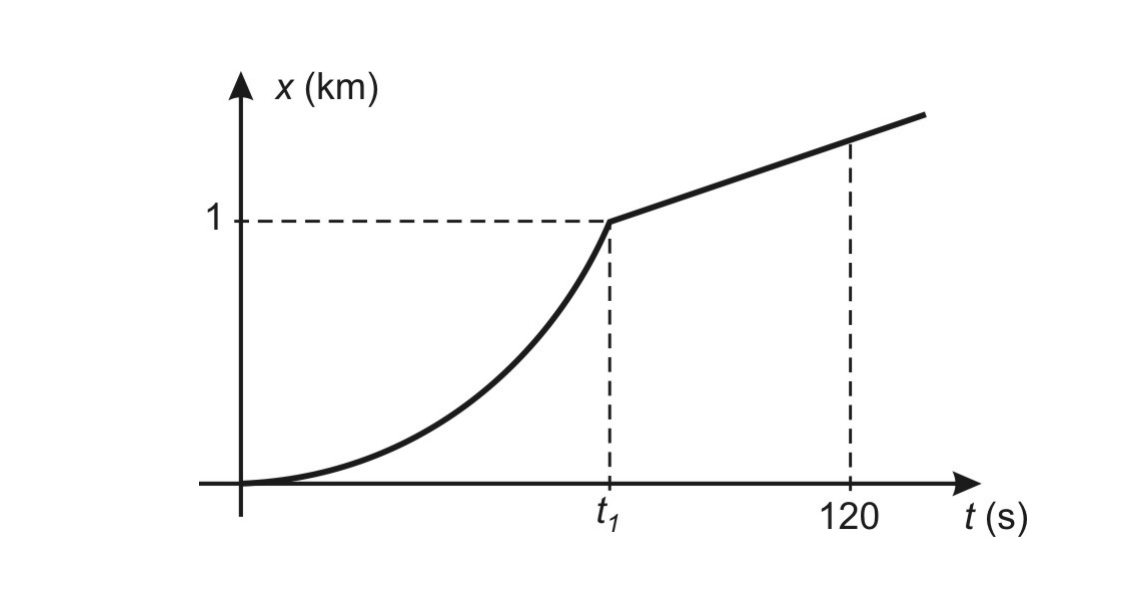
Do instante inicial do movimento, t = 0, até o tempo t₁, o caminhão, partindo do repouso, desloca-se em movimento retilíneo uniformemente variado. A partir desse tempo t₁, no entanto, o caminhão inicia a travessia de uma ponte retilínea de 380 metros de extensão mantendo velocidade constante até que a atravesse completamente no tempo t₂ = 120 s.
Considere que, durante a travessia, o caminhão emita um sinal sonoro de frequência constante igual a 160 Hz e que esse sinal se propague com velocidade de 340 m/s pelo ar, o qual se encontra em repouso em relação à terra.
Nessas condições, um observador parado no final da ponte ouvirá o sinal sonoro emitido pelo caminhão que se aproxima com uma frequência, em hertz, dada por
Uma determinada caixa é transportada em um caminhão que percorre, com velocidade escalar constante, uma estrada plana e horizontal. Em um determinado instante, o caminhão entra em uma curva circular de raio igual a 51,2 m, mantendo a mesma velocidade escalar. Sabendo-se que os coeficientes de atrito cinético e estático entre a caixa e o assoalho horizontal são, respectivamente, 0,4 e 0,5 e considerando que as dimensões do caminhão, em relação ao raio da curva, são desprezíveis e que a caixa esteja apoiada apenas no assoalho da carroceria, pode-se afirmar que a máxima velocidade, em m/s, que o caminhão poderá desenvolver, sem que a caixa escorregue éResolução comentada
Análise das alternativas
Na cidade de Macapá, no Amapá, Fernando envia uma mensagem via satélite para Maria na mesma cidade.
A mensagem é intermediada por um satélite geoestacionário, em órbita circular cujo centro coincide com o centro geométrico da Terra, e por uma operadora local de telecomunicação da seguinte forma: o sinal de informação parte do celular de Fernando direto para o satélite que instantaneamente retransmite para a operadora, que, da mesma forma, transmite para o satélite mais uma vez e, por fim, é retransmitido para o celular de Maria.
Considere que esse sinal percorra todo trajeto em linha reta e na velocidade da luz, c; que as dimensões da cidade sejam desprezíveis em relação à distância que separa o satélite da Terra, que este satélite esteja alinhado perpendicularmente à cidade que se encontra ao nível do mar e na linha do equador. Sendo, M, massa da Terra, T, período de rotação da Terra, Rᴛ, raio da Terra e G, a constante de gravitação universal, o intervalo de tempo entre a emissão do sinal no celular de Fernando e a recepção no celular de Maria, em função de c, M, T, G e Rᴛ é
Considere duas rampas A e B, respectivamente de massas 1 kg e 2 kg, em forma de quadrantes de circunferência de raios iguais a 10 m, apoiadas em um plano horizontal e sem atrito. Duas esferas 1 e 2 se encontram, respectivamente, no topo das rampas A e B e são abandonadas, do repouso, em um dado instante, conforme figura abaixo.
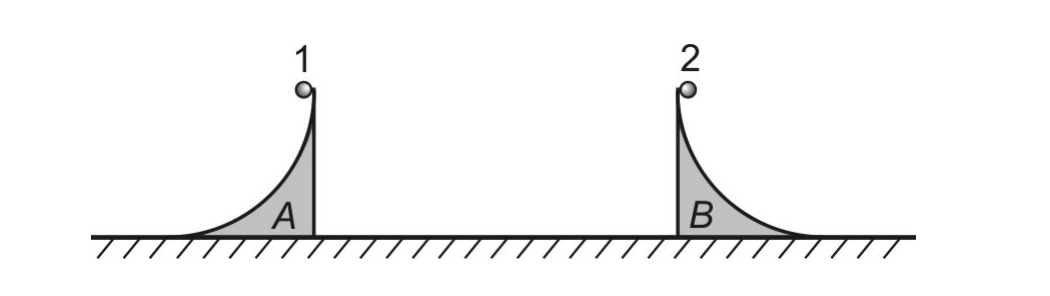
Quando as esferas perdem contato com as rampas, estas se movimentam conforme os gráficos de suas posições x, em metros, em função do tempo t, em segundos, abaixo representados.
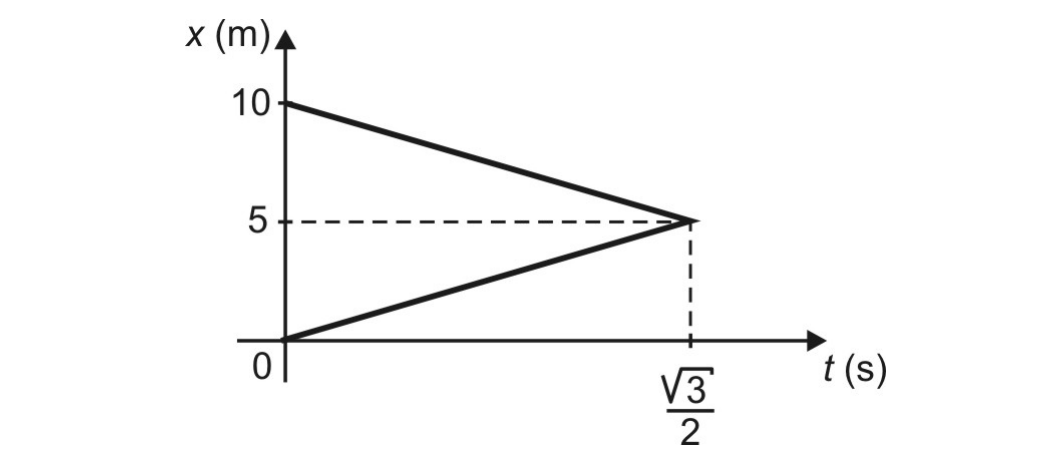
Desprezando qualquer tipo de atrito, a razão m₁/m₂ das massas m₁ e m₂ das esferas 1 e 2, respectivamente, é
A figura abaixo representa um macaco hidráulico constituído de dois pistões A e B de raios Rᴀ = 60 cm e Rʙ = 240 cm, respectivamente. Esse dispositivo será utilizado para elevar a uma altura de 2 m, em relação à posição inicial, um veículo de massa igual a 1 tonelada devido à aplicação de uma força F⃗. Despreze as massas dos pistões, todos os atritos e considere que o líquido seja incompressível.
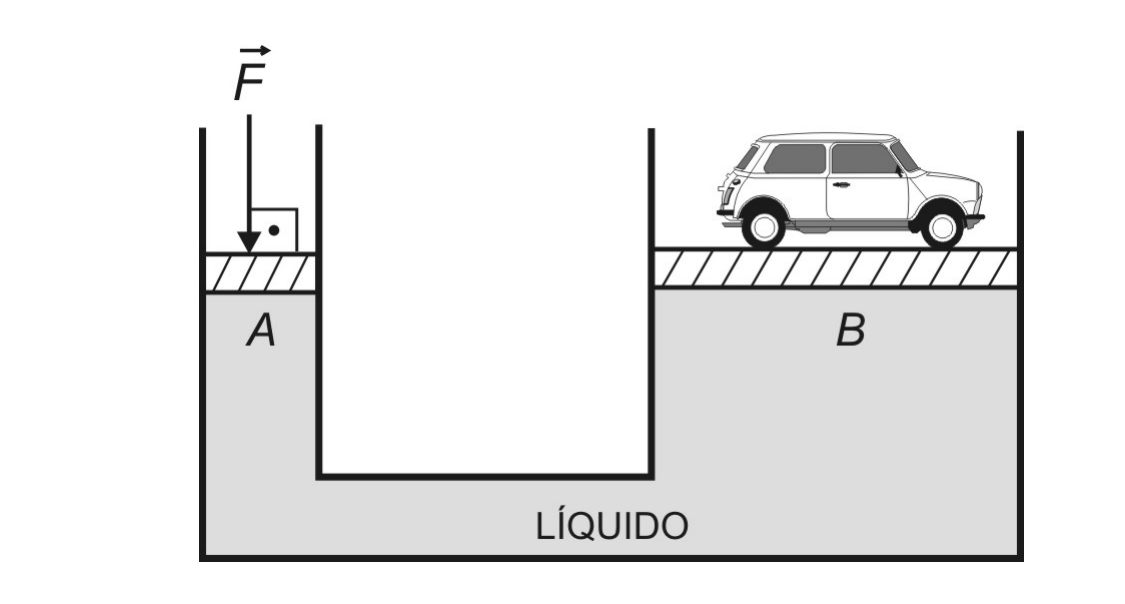
Nessas condições, o fator de multiplicação de força deste macaco hidráulico e o trabalho, em joules, realizado pela força F⃗, aplicada sobre o pistão de menor área, ao levantar o veículo bem lentamente e com velocidade constante, são, respectivamente,
Com relação à dilatação dos sólidos e líquidos isotrópicos, analise as proposições a seguir e dê como resposta a soma dos números associados às afirmações corretas.
(01) Um recipiente com dilatação desprezível contém certa massa de água na temperatura de 1 °C, quando é, então, aquecido lentamente, sofrendo uma variação de temperatura de 6 °C. Nesse caso, o volume da água primeiro aumenta e depois diminui.
(02) Quando se aquece uma placa metálica que apresenta um orifício, verifica-se que, com a dilatação da placa, a área do orifício aumenta.
(03) Quando um frasco completamente cheio de líquido é aquecido, este transborda um pouco. O volume de líquido transbordado mede a dilatação absoluta do líquido.
(04) O vidro pirex apresenta maior resistência ao choque térmico do que o vidro comum porque tem menor coeficiente de dilatação térmica do que o vidro comum.
(05) Sob pressão normal, quando uma massa de água é aquecida de 0 °C até 100 °C sua densidade sempre aumenta.
(06) Ao se elevar a temperatura de um sistema constituído por três barras retas e idênticas de ferro interligadas de modo a formarem um triângulo isósceles, os ângulos internos desse triângulo não se alteram.Resolução comentada
Análise das alternativas
Em um recipiente termicamente isolado de capacidade térmica 40,0 cal/°C e na temperatura de 25 °C são colocados 600 g de gelo a −10 °C e uma garrafa parcialmente cheia, contendo 2,0 L de refrigerante também a 25 °C, sob pressão normal.
Considerando a garrafa com capacidade térmica desprezível e o refrigerante com características semelhantes às da água, isto é, calor específico na fase líquida 1,0 cal/g °C e na fase sólida 0,5 cal/g °C, calor latente de fusão de 80,0 cal/g °C bem como densidade absoluta na fase líquida igual a 1,0 g/cm³, a temperatura final de equilíbrio térmico do sistema, em °C, éResolução comentada
Análise das alternativas
Uma amostra de n mols de gás ideal sofre as transformações AB (isovolumétrica), BC (isobárica) e CD (isotérmica) conforme representação no diagrama pressão (p) x volume (V), mostrado a seguir.
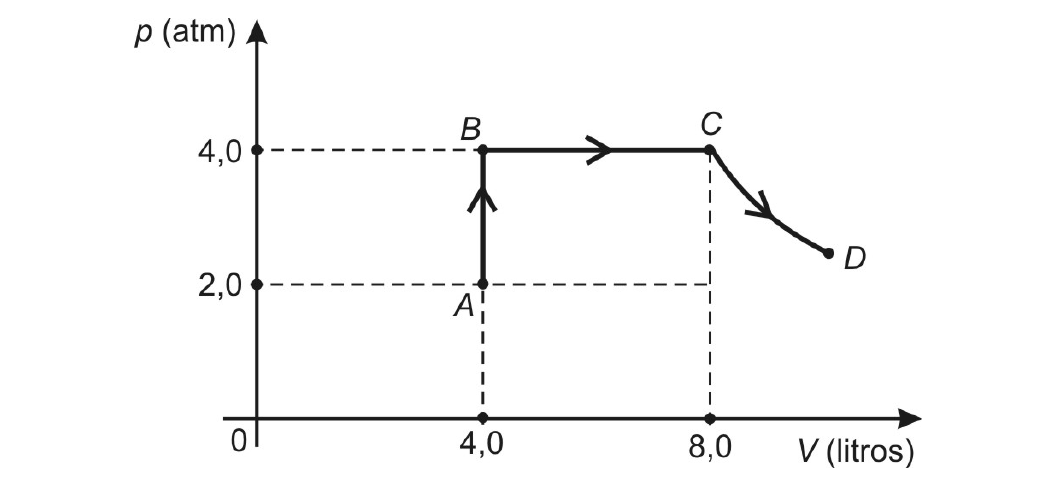
Sabendo-se que a temperatura do gás no estado A é 27 °C, pode-se afirmar que a temperatura dele, em °C, no estado D é
Uma onda estacionária é estabelecida em uma corda homogênea de comprimento 2π m, presa pelas extremidades, A e B, conforme figura abaixo.
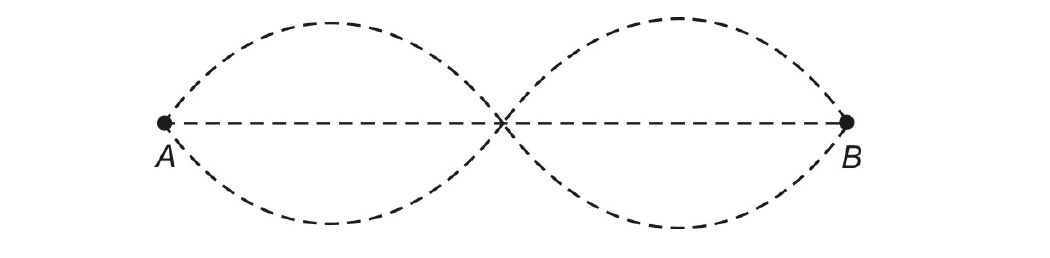
Considere que a corda esteja submetida a uma tensão de 10 N e que sua densidade linear de massa seja igual a 0,1 kg/m.
Nessas condições, a opção que apresenta um sistema massa-mola ideal, de constante elástica k, em N/m e massa m, em kg, que oscila em movimento harmônico simples na vertical com a mesma frequência da onda estacionária considerada é
Um corpo luminoso de massa 1 kg é acoplado a uma mola ideal de constante elástica 100 N/m e colocado à meia distância entre uma lente esférica delgada convergente L e um espelho esférico côncavo gaussiano E, de distâncias focais respectivamente iguais a 10 cm e 60 cm, como mostra a figura abaixo.
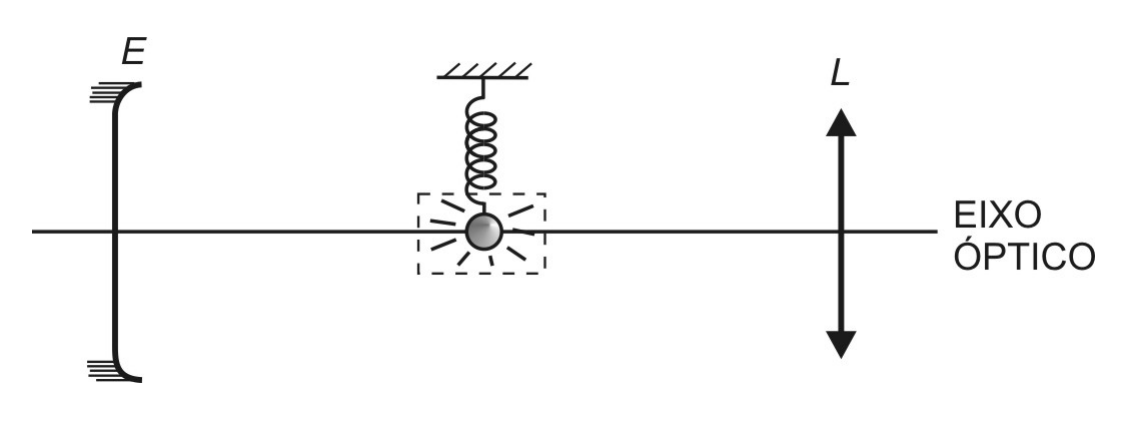
Considere que o corpo luminoso seja puxado verticalmente para baixo 1 cm a partir da posição em que ele se encontra em equilíbrio sobre o eixo óptico do sistema e, então, abandonado, passa a oscilar em movimento harmônico simples exclusivamente na vertical. A distância entre o centro de curvatura do espelho e o centro óptico da lente é 40 cm. Dessa forma, o corpo luminoso serve de objeto real para a lente e para o espelho que conjugam, cada um, apenas uma única imagem desse objeto luminoso oscilante.
Nessas condições, as funções horárias, no Sistema Internacional de Unidades (SI), que melhor descrevem os movimentos das imagens do corpo luminoso, respectivamente, conjugadas pela lente L e pelo espelho E, são
Uma pequenina esfera vazada, no ar, com carga elétrica igual a 1 µC e massa 10 g, é perpassada por um aro semicircular isolante, de extremidades A e B, situado num plano vertical.
Uma partícula carregada eletricamente com carga igual a 4 µC é fixada por meio de um suporte isolante, no centro C do aro, que tem raio R igual a 60 cm, conforme ilustra a figura abaixo.
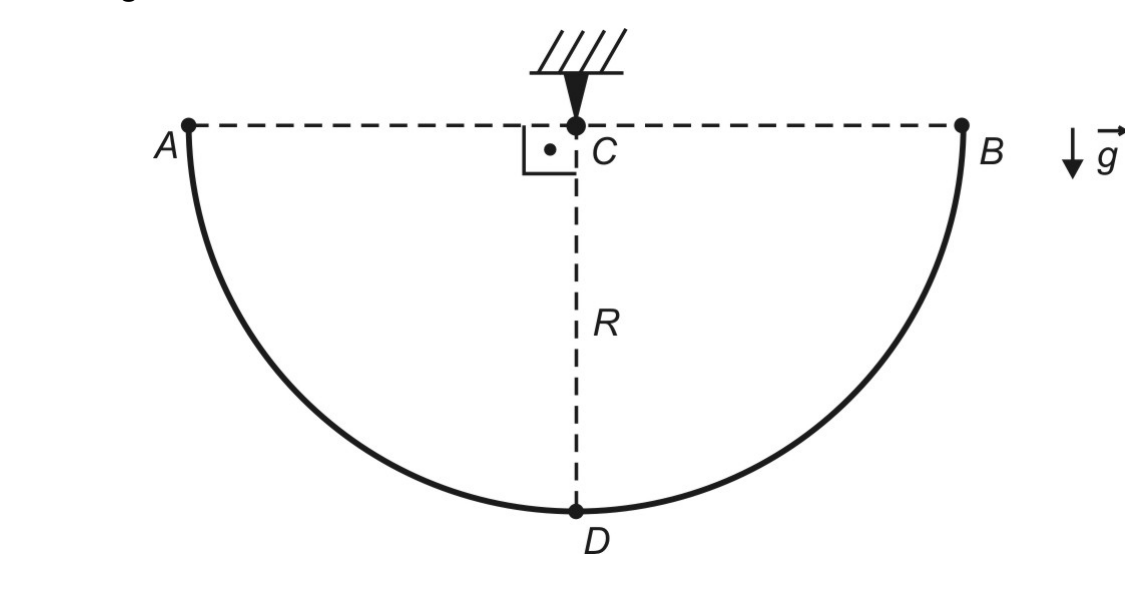
Despreze quaisquer forças dissipativas e considere a aceleração da gravidade constante.
Ao abandonar a esfera, a partir do repouso, na extremidade A, pode-se afirmar que a intensidade da reação normal, em newtons, exercida pelo aro sobre ela no ponto mais baixo (ponto D) de sua trajetória é igual a
Em um chuveiro elétrico, submetido a uma tensão elétrica constante de 110 V, são dispostas quatro resistências ôhmicas, conforme figura abaixo.
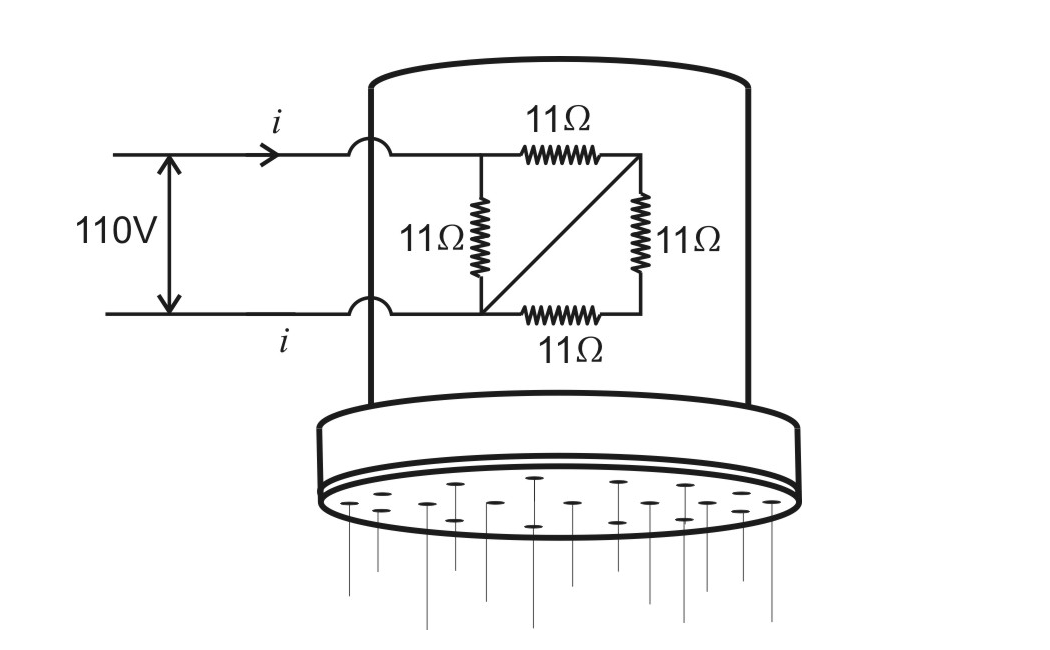
Faz-se passar pelas resistências um fluxo de água, a uma mesma temperatura, com uma vazão constante de 1,32 litros por minuto.
Considere que a água tenha densidade de 1,0 g/cm³ e calor específico de 1,0 cal/g °C, que 1 cal = 4 J e que toda energia elétrica fornecida ao chuveiro seja convertida em calor para aquecer, homogeneamente, a água.
Nessas condições, a variação de temperatura da água, em °C, ao passar pelas resistências é
Texto-base:
Texto-base:
Texto-base:
Texto-base:
Texto-base:
Texto-base:
Texto-base:
Texto-base:
Nas questões de Física, quando necessário, use g = 10 m/s²
Nas questões de Física, quando necessário, use g = 10 m/s²
Nas questões de Física, quando necessário, use g = 10 m/s²
Nas questões de Física, quando necessário, use g = 10 m/s²
Nas questões de Física, quando necessário, use g = 10 m/s²
Nas questões de Física, quando necessário, use g = 10 m/s²
Nas questões de Física, quando necessário, use g = 10 m/s²
Nas questões de Física, quando necessário, use g = 10 m/s²
Nas questões de Física, quando necessário, use g = 10 m/s²
Nas questões de Física, quando necessário, use g = 10 m/s²
Nas questões de Física, quando necessário, use g = 10 m/s²
Nas questões de Física, quando necessário, use g = 10 m/s²