← Voltar para a lista de provas Academia da Força Aérea (AFA) — Comando da Aeronáutica · Cadete — Cursos de Formação de Oficiais Aviadores, Intendentes e de Infantaria (CFOAV/CFOINT/CFOINF) 65 questões nesta prova · página 2 de 4 · 63 com gabarito Gabarito disponível Tratando cada par de mesmo número como bloco, temos 2³ · 7! = 8 · 7!. As bolas de mesmo número (amarela e verde 1, 2 e 3) formam 3 blocos de 2 bolas, cada um com 2 ordens internas, o que dá 2³ = 8. Com as 4 bolas restantes, há 7 elementos a permutar, ou seja, 7!. Total: 8 · 7!. B: esquece as ordens internas dos blocos. C: 5·4! não corresponde ao raciocínio de blocos. D: 10! ignora a restrição. Referência: Análise combinatória: permutações com elementos juntos. Resolução comentada do VaiConcursos. Gabarito disponível Pela lei da probabilidade total, P = 23/81. Se a rosa transferida tem espinhos (5/9), B passa a ter 3 rosas com espinhos em 9, e a chance é 3/9. Se não tem (4/9), B passa a ter 2 com espinhos em 9, e a chance é 2/9. Logo P = (5/9)(3/9) + (4/9)(2/9) = 15/81 + 8/81 = 23/81. A (8/81) e B (15/81) consideram apenas um dos casos. C (18/81) não corresponde a nenhum cálculo correto. Referência: Probabilidade total. Resolução comentada do VaiConcursos. Gabarito disponível Gabarito disponível P pertence à circunferência de diâmetro AB, centro (3, −1) e raio √2. PA e PB são catetos, então o ângulo em P é reto e P está na circunferência de diâmetro AB, com A e B excluídos. O centro é (3, −1) e o raio é √2. O maior x é, portanto, 3 + √2. A: errada, pois os pontos são equidistantes de (3, −1), não de (2, −1). C: errada, pois o menor y é −1 − √2 ≈ −2,41, maior que −3. D: errada, pois x varia entre 3 − √2 e 3 + √2, e 0 não está nesse intervalo. Referência: Geometria analítica: circunferência e ângulo inscrito em semicircunferência. Resolução comentada do VaiConcursos. Questão anulada Gabarito disponível Gabarito disponível Gabarito disponível É preciso f(x) > 0 para todo x real, o que dá m > 2/3. A composta é h(g(f(x))) = √(1/f(x)), definida em ℝ quando f(x) > 0 para todo x. Isso exige m > 0 e discriminante negativo: (m+2)² − 4m(m+2) < 0, ou seja, (m+2)(2−3m) 2/3 ou m 0, resulta m > 2/3. B, C e D: contêm valores de m (como m = 0 ou m negativo) para os quais f deixa de ser sempre positiva, então o domínio não é ℝ. Referência: Composição de funções e sinal da função quadrática. Resolução comentada do VaiConcursos. Gabarito disponível A raiz de g é x = logₐ(−b), que é negativa. Como b 1. g(x) = 0 exige aˣ = −b, logo x = logₐ(−b). Como 0 < a 1, esse logaritmo é negativo. B: errada, pois aˣ é decrescente, e −b − aˣ é crescente, mas com o módulo g decresce até a raiz e depois cresce, então não é crescente em todo o domínio. C: errada, pois g cresce sem limite quando x → +∞ e não tem máximo. D: errada, pois o módulo faz g assumir o mesmo valor em dois pontos distintos, então não é injetora. Referência: Função exponencial e modular. Resolução comentada do VaiConcursos. Gabarito disponível A função se simplifica para a constante 2, portanto não é injetora. Temos f(x) = (sen3x·cosx − cos3x·senx)/(senx·cosx) = sen2x/(senx·cosx) = 2, com senx ≠ 0 e cosx ≠ 0, ou seja, x ≠ kπ/2. Sendo constante, f não é injetora, o que torna falsa a afirmação C. A: verdadeira, porque o domínio exige senx ≠ 0 e cosx ≠ 0, isto é, x ≠ kπ/2. B: verdadeira, porque uma função constante é par. D: verdadeira, porque a imagem é {2}. Referência: Trigonometria: seno da diferença e arco duplo. Resolução comentada do VaiConcursos. Gabarito disponível Gabarito disponível Gabarito disponível Na Rússia, poucos recebem o status de "amigo", o que indica o valor e o respeito dessa relação. O texto diz que, na Rússia, poucas pessoas recebem o título de amigo, mas essas amizades compensam em intensidade o que lhes falta em número. Logo, o status de "friend" revela grande consideração e respeito, como diz a alternativa D. A: o texto não diz que é impossível achar um melhor amigo na Rússia. B: não há relação com autoridade reconhecida. C: o texto fala de poucos amigos e intensos, não de muitos amigos nem de desconfiança. Referência: Interpretação de texto (inglês): parágrafos 2 e 3. Resolução comentada do VaiConcursos. Gabarito disponível "Have no" equivale à negativa com auxiliar: "do not have any". Na forma negativa do verbo "have" como verbo principal, usa-se "do not have any" no lugar de "have no". A alternativa D preserva o sentido. A: a ordem "do have not" é incorreta. B: falta o auxiliar "do". C: "haven't any" é uma forma britânica possível, mas a banca considera D a mais adequada e padrão. Referência: Gramática (inglês): forma negativa com verbo auxiliar. Resolução comentada do VaiConcursos. Gabarito disponível O primeiro parágrafo faz um esboço geral de como funcionam as amizades. O parágrafo introduz os tipos de relação (amigos, melhores amigos, arqui-inimigos) e diz que é difícil compará-los, mas fácil contrastá-los. Ele apresenta o tema de forma geral, como um esboço ("outline"), o que corresponde à alternativa C. A: o texto não compara tarefas de indivíduos. B: o texto não diz que a amizade é regida pela quantidade de amigos. D: o texto diz que é possível contrastar facilmente os tipos, não que não se distingam arqui-inimigos. Referência: Interpretação de texto (inglês): parágrafo 1. Resolução comentada do VaiConcursos. Gabarito disponível "Socially crippling conditions" se refere à síndrome de Asperger e ao autismo. A frase anterior cita crianças com síndrome de Asperger e autismo, que têm dificuldade de formar amizades. "Conditions like these" retoma essas condições. A alternativa B está correta. A: faculdade e universidade são mencionadas em outro contexto (duração das amizades). C: as amizades pós-ensino médio não são "condições". D: pesquisadores e amigos não são condições sociais incapacitantes. Referência: Referência textual (inglês): referente de "conditions like these". Resolução comentada do VaiConcursos. Gabarito disponível Gabarito disponível O genitivo "Americans' dependence on family" equivale a "the dependence of Americans on family". O genitivo possessivo "Americans' dependence" indica a dependência que pertence aos americanos, e a forma com "of" é "the dependence of Americans on family". A alternativa D mantém o sentido e a regência ("dependence on"). A: inverte o sentido, pois seria a dependência da família em relação aos americanos. B: tem estrutura inadequada e perde a ideia de dependência "on family". C: usa "of family's" de modo agramatical e altera a preposição. Referência: Gramática (inglês): caso genitivo (possessive case). Resolução comentada do VaiConcursos. Gabarito disponível O último parágrafo conclui que, apesar das diferenças, todos temos todos os tipos de amigos na vida. O parágrafo diz que amigos, melhores amigos e arqui-inimigos têm algumas semelhanças, mas são mais diferentes. Termina com "Nonetheless we all have every single type in our lives". A alternativa D expressa essa ideia. A: errada, porque o texto não diz que todo ser humano é igual em muitos aspectos. B: errada, porque o texto afirma que temos todos os tipos, não apenas amigos e arqui-inimigos. C: errada, porque o texto não afirma que amigos são iguais nem que diferem quando estão juntos. Referência: Interpretação de texto (inglês): último parágrafo. Resolução comentada do VaiConcursos. Gabarito disponível Os parágrafos 4 e 5 dizem que os amigos genuínos estão em declínio em vários países. O 4º parágrafo afirma que a maioria dos países citados (Rússia, Ásia, Oriente Médio) e os EUA sofrem um declínio nas amizades genuínas ("genuine friendships"). A alternativa C resume isso. A: errada, porque o estudo fala de perda de qualidade E de quantidade, e a alternativa contrapõe os dois com "despite". B: errada, porque a dependência da família subiu para 80% e a do cônjuge para 9%, então a da família é bem maior. D: errada, porque o texto diz que a amizade é uma forma de respeito, "not born out of fear or superiority". Referência: Interpretação de texto (inglês): parágrafos 4 e 5 do texto. Resolução comentada do VaiConcursos.EPCAR — Exame de Admissão ao CFOAV/CFOINT/CFOINF 2016 — Língua Portuguesa, Matemática, Língua Inglesa, Física e Redação — Versão A
A quantidade de formas distintas de se enfileirar essas 10 bolas de modo que as bolas de mesmo número fiquem juntas éResolução comentada
Análise das alternativas
Retira-se, aleatoriamente, uma rosa do vaso A e coloca-se em B. Em seguida, retira-se uma rosa de B.
A probabilidade de essa rosa retirada de B ter espinhos éResolução comentada
Análise das alternativas

Sabe-se que 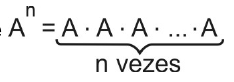
Então, o determinante da matriz S = A + A² + A³ + ... + A¹¹
é igual a
É correto afirmar que, no plano cartesiano, os pontos P(x, y) são tais queResolução comentada
Análise das alternativas
I) ( ) A distância entre o vértice e o foco da parábola y² + 4x − 4 = 0 é igual a 1 unidade de comprimento.
II) ( ) Numa hipérbole equilátera, as assíntotas são perpendiculares entre si.
III) ( ) A equação 2x² + y² − 4x − 4y + 4 = 0 representa uma elipse que tem um dos focos no ponto P(1, 4)
A sequência correta é
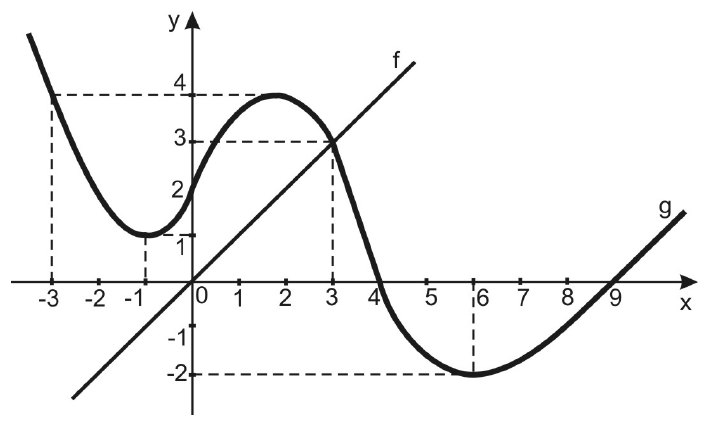
Sobre essas funções, é correto afirmar que
O Sr. Luiz, que cobra uma parte fixa pelo orçamento mais uma parte que depende da quantidade de metros de fio requerida pelo serviço. O valor total do seu serviço está descrito no seguinte gráfico:
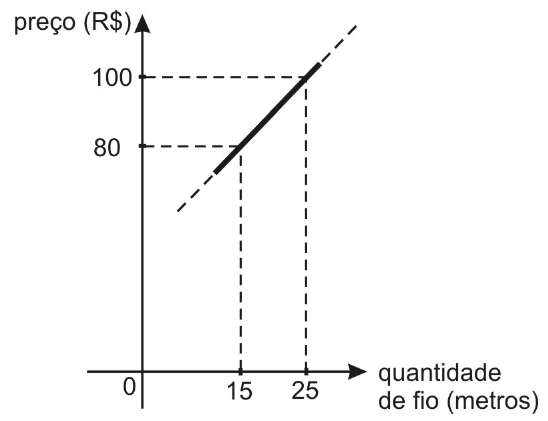
Já o Sr. José cobra, apenas, R$ 4,50 por metro de fio utilizado e não cobra a parte fixa pelo orçamento.
Com relação às informações acima, é correto afirmar que
f(x) = mx² − (m + 2)x + (m + 2)
g(x) = 1/x
h(x) = √x
Para que a função composta h o g o f(x) tenha domínio D = ℝ, deve-se terResolução comentada
Análise das alternativas
Sobre a função real g definida por g(x) = |−b − f(x)| com b ∈ ]−∞, −1[, é correto afirmar queResolução comentada
Análise das alternativas
Sobre f é FALSO afirmar queResolução comentada
Análise das alternativas
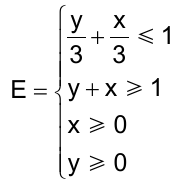
O volume do sólido gerado, se E efetuar uma rotação de 270° em torno do eixo Ox em unidades de volume, é igual a
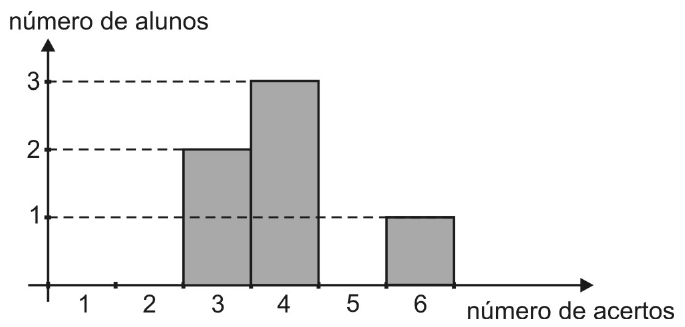
Os demais alunos fizeram a avaliação B e todos tiveram 4 acertos.
Assim, o desvio padrão obtido a partir do gráfico acima ficou reduzido à metade ao ser apurado o resultado da turma inteira.
Essa turma do cursinho de inglês tem
Directions: Answer questions 33 to 48 according to the text.
TEXT
THE RELATIONSHIP BETWEEN FRIENDS AND TYPES OF FRIENDSHIP
Everyone has at least one best friend, some
maybe even more. There are also those people who are
just friends and also arch-enemies. People may think
that just because they are your friends it means that they
[5] are your best friend. The thing is, even though they are
your friend, the relationship between a best friend and a
friend is different. Either way regardless of arch-
enemies, friends or best friends, there are not many
ways to compare any of these different types of friends,
[10] but you can easily contrast them from one another.
Arch-enemies often know more about each
other than two friends. In a comparison of personal
relationships, friendship is considered to be closer than
association, although a wide range of degrees of
[15] intimacy exists in friendships, arch-enemies, and
associations. Friendship and association can be thought
of as spanning across the same continuum. The study of
friendship is included in the fields of sociology, social
psychology, anthropology, philosophy, and zoology.
[20] Even animals have familiars! Various academic theories
of friendship have been proposed, among which are
social exchange theory, equity theory, relational
dialectics, and attachment styles. In Russia, one typically
bestows very few people the status of “friend”.
[25] These friendships, however, make up in
intensity what they lack in number. Friends are entitled
to call each other by their first names alone, and to use
diminutives. A customary example of polite behavior is
addressing "acquaintances" by full first name plus their
[30] patronymic. These could include relationships which
elsewhere would be qualified as real friendships, such
as workplace relationships of long standing, or neighbors
with whom one shares an occasional meal or a social
drink with.
[35] Also in the Middle East and Central Asia, male
friendships, while less restricted than in Russia, tend to
be reserved and respectable in nature. They may use
nicknames and diminutive forms of their first names. In
countries like India, it is believed in some parts that
[40] friendship is a form of respect, not born out of fear or
superiority. Friends are people who are equal in most
standards, but still respect each other regardless of their
attributes or shortcomings. Most of the countries
previously mentioned (Russia, Asia, and even the Middle
[45] East) and even our own nation are suffering a decline in
genuine friendships.
According to a study documented in the June
2006 issue of the Journal American Sociological Review,
Americans are thought to be suffering a loss in the
[50] quality and quantity of close friendships since at least
1985. The study’s results state that twenty-five percent
of Americans have no close confidants, and the average
total number of confidants per citizen has dropped from
four to two. According to the study, Americans'
[55] dependence on family as a safety net went up from fifty-
seven percent to eighty percent; Americans dependence
on a partner or spouse went up from five percent to nine
percent.
Recent studies have found a link between fewer
[60] friendships, especially in quality, and psychological and
physiological regression. In the sequence of the
emotional development of the individual, friendships
come after parental bonding and before the pair bonding
engaged in at the approach of maturity. In the
[65] intervening period between the end of early childhood
and the onset of full adulthood, friendships are often the
most important relationships in the emotional life of the
adolescent, and are often more intense than
relationships experienced later in life.
[70] Unfortunately, making friends seems to trouble
many of people. Having no friends can be emotionally
damaging for all ages, from young children to full grown
adults. A study performed by researchers from Purdue
University found that post-secondary-education
[75] friendships, college and university last longer than the
friendships before it. Children with Asperger syndrome
and autism usually have some difficulty forming
friendships. Socially crippling conditions like these are
just one way that the social world is so difficult to thrive
[80] in. This does not mean that they are not able to form
friendships, however. With time, moderation and proper
instruction, they are able to form friendships after
realizing their own strengths and weaknesses.
There is a number of theories that attempt to
[85] explain the link, including that; Good friends encourage
their friends to lead more healthy lifestyles; Good friends
encourage their friends to seek help and access
services, when needed; Good friends enhance their
friend’s coping skills in dealing with illness and other
[90] health problems; and/or Good friends actually affect
physiological pathways that are protective of health.
Regardless of what we think, we can clearly see that
there are some ways that friends, best friends and arch-
enemies are the same, but in the end they are clearly
[95] more different. Nonetheless we all have every single
type in our lives.
(Adapted from: http://www.ukessays.com/essays/philosophy/the-relationship-between-friends-and-types-of-friendship-philosophy-essay.php)
“In Russia, one typically bestows very few people the status of ‘friend’ ” (lines 23-24) means thatResolução comentada
Análise das alternativas
Directions: Answer questions 33 to 48 according to the text.
TEXT
THE RELATIONSHIP BETWEEN FRIENDS AND TYPES OF FRIENDSHIP
Everyone has at least one best friend, some
maybe even more. There are also those people who are
just friends and also arch-enemies. People may think
that just because they are your friends it means that they
[5] are your best friend. The thing is, even though they are
your friend, the relationship between a best friend and a
friend is different. Either way regardless of arch-
enemies, friends or best friends, there are not many
ways to compare any of these different types of friends,
[10] but you can easily contrast them from one another.
Arch-enemies often know more about each
other than two friends. In a comparison of personal
relationships, friendship is considered to be closer than
association, although a wide range of degrees of
[15] intimacy exists in friendships, arch-enemies, and
associations. Friendship and association can be thought
of as spanning across the same continuum. The study of
friendship is included in the fields of sociology, social
psychology, anthropology, philosophy, and zoology.
[20] Even animals have familiars! Various academic theories
of friendship have been proposed, among which are
social exchange theory, equity theory, relational
dialectics, and attachment styles. In Russia, one typically
bestows very few people the status of “friend”.
[25] These friendships, however, make up in
intensity what they lack in number. Friends are entitled
to call each other by their first names alone, and to use
diminutives. A customary example of polite behavior is
addressing "acquaintances" by full first name plus their
[30] patronymic. These could include relationships which
elsewhere would be qualified as real friendships, such
as workplace relationships of long standing, or neighbors
with whom one shares an occasional meal or a social
drink with.
[35] Also in the Middle East and Central Asia, male
friendships, while less restricted than in Russia, tend to
be reserved and respectable in nature. They may use
nicknames and diminutive forms of their first names. In
countries like India, it is believed in some parts that
[40] friendship is a form of respect, not born out of fear or
superiority. Friends are people who are equal in most
standards, but still respect each other regardless of their
attributes or shortcomings. Most of the countries
previously mentioned (Russia, Asia, and even the Middle
[45] East) and even our own nation are suffering a decline in
genuine friendships.
According to a study documented in the June
2006 issue of the Journal American Sociological Review,
Americans are thought to be suffering a loss in the
[50] quality and quantity of close friendships since at least
1985. The study’s results state that twenty-five percent
of Americans have no close confidants, and the average
total number of confidants per citizen has dropped from
four to two. According to the study, Americans'
[55] dependence on family as a safety net went up from fifty-
seven percent to eighty percent; Americans dependence
on a partner or spouse went up from five percent to nine
percent.
Recent studies have found a link between fewer
[60] friendships, especially in quality, and psychological and
physiological regression. In the sequence of the
emotional development of the individual, friendships
come after parental bonding and before the pair bonding
engaged in at the approach of maturity. In the
[65] intervening period between the end of early childhood
and the onset of full adulthood, friendships are often the
most important relationships in the emotional life of the
adolescent, and are often more intense than
relationships experienced later in life.
[70] Unfortunately, making friends seems to trouble
many of people. Having no friends can be emotionally
damaging for all ages, from young children to full grown
adults. A study performed by researchers from Purdue
University found that post-secondary-education
[75] friendships, college and university last longer than the
friendships before it. Children with Asperger syndrome
and autism usually have some difficulty forming
friendships. Socially crippling conditions like these are
just one way that the social world is so difficult to thrive
[80] in. This does not mean that they are not able to form
friendships, however. With time, moderation and proper
instruction, they are able to form friendships after
realizing their own strengths and weaknesses.
There is a number of theories that attempt to
[85] explain the link, including that; Good friends encourage
their friends to lead more healthy lifestyles; Good friends
encourage their friends to seek help and access
services, when needed; Good friends enhance their
friend’s coping skills in dealing with illness and other
[90] health problems; and/or Good friends actually affect
physiological pathways that are protective of health.
Regardless of what we think, we can clearly see that
there are some ways that friends, best friends and arch-
enemies are the same, but in the end they are clearly
[95] more different. Nonetheless we all have every single
type in our lives.
(Adapted from: http://www.ukessays.com/essays/philosophy/the-relationship-between-friends-and-types-of-friendship-philosophy-essay.php)
Mark the option that shows the same meaning as in “Americans have no close confidants” (line 52).Resolução comentada
Análise das alternativas
Directions: Answer questions 33 to 48 according to the text.
TEXT
THE RELATIONSHIP BETWEEN FRIENDS AND TYPES OF FRIENDSHIP
Everyone has at least one best friend, some
maybe even more. There are also those people who are
just friends and also arch-enemies. People may think
that just because they are your friends it means that they
[5] are your best friend. The thing is, even though they are
your friend, the relationship between a best friend and a
friend is different. Either way regardless of arch-
enemies, friends or best friends, there are not many
ways to compare any of these different types of friends,
[10] but you can easily contrast them from one another.
Arch-enemies often know more about each
other than two friends. In a comparison of personal
relationships, friendship is considered to be closer than
association, although a wide range of degrees of
[15] intimacy exists in friendships, arch-enemies, and
associations. Friendship and association can be thought
of as spanning across the same continuum. The study of
friendship is included in the fields of sociology, social
psychology, anthropology, philosophy, and zoology.
[20] Even animals have familiars! Various academic theories
of friendship have been proposed, among which are
social exchange theory, equity theory, relational
dialectics, and attachment styles. In Russia, one typically
bestows very few people the status of “friend”.
[25] These friendships, however, make up in
intensity what they lack in number. Friends are entitled
to call each other by their first names alone, and to use
diminutives. A customary example of polite behavior is
addressing "acquaintances" by full first name plus their
[30] patronymic. These could include relationships which
elsewhere would be qualified as real friendships, such
as workplace relationships of long standing, or neighbors
with whom one shares an occasional meal or a social
drink with.
[35] Also in the Middle East and Central Asia, male
friendships, while less restricted than in Russia, tend to
be reserved and respectable in nature. They may use
nicknames and diminutive forms of their first names. In
countries like India, it is believed in some parts that
[40] friendship is a form of respect, not born out of fear or
superiority. Friends are people who are equal in most
standards, but still respect each other regardless of their
attributes or shortcomings. Most of the countries
previously mentioned (Russia, Asia, and even the Middle
[45] East) and even our own nation are suffering a decline in
genuine friendships.
According to a study documented in the June
2006 issue of the Journal American Sociological Review,
Americans are thought to be suffering a loss in the
[50] quality and quantity of close friendships since at least
1985. The study’s results state that twenty-five percent
of Americans have no close confidants, and the average
total number of confidants per citizen has dropped from
four to two. According to the study, Americans'
[55] dependence on family as a safety net went up from fifty-
seven percent to eighty percent; Americans dependence
on a partner or spouse went up from five percent to nine
percent.
Recent studies have found a link between fewer
[60] friendships, especially in quality, and psychological and
physiological regression. In the sequence of the
emotional development of the individual, friendships
come after parental bonding and before the pair bonding
engaged in at the approach of maturity. In the
[65] intervening period between the end of early childhood
and the onset of full adulthood, friendships are often the
most important relationships in the emotional life of the
adolescent, and are often more intense than
relationships experienced later in life.
[70] Unfortunately, making friends seems to trouble
many of people. Having no friends can be emotionally
damaging for all ages, from young children to full grown
adults. A study performed by researchers from Purdue
University found that post-secondary-education
[75] friendships, college and university last longer than the
friendships before it. Children with Asperger syndrome
and autism usually have some difficulty forming
friendships. Socially crippling conditions like these are
just one way that the social world is so difficult to thrive
[80] in. This does not mean that they are not able to form
friendships, however. With time, moderation and proper
instruction, they are able to form friendships after
realizing their own strengths and weaknesses.
There is a number of theories that attempt to
[85] explain the link, including that; Good friends encourage
their friends to lead more healthy lifestyles; Good friends
encourage their friends to seek help and access
services, when needed; Good friends enhance their
friend’s coping skills in dealing with illness and other
[90] health problems; and/or Good friends actually affect
physiological pathways that are protective of health.
Regardless of what we think, we can clearly see that
there are some ways that friends, best friends and arch-
enemies are the same, but in the end they are clearly
[95] more different. Nonetheless we all have every single
type in our lives.
(Adapted from: http://www.ukessays.com/essays/philosophy/the-relationship-between-friends-and-types-of-friendship-philosophy-essay.php)
The first paragraphResolução comentada
Análise das alternativas
Directions: Answer questions 33 to 48 according to the text.
TEXT
THE RELATIONSHIP BETWEEN FRIENDS AND TYPES OF FRIENDSHIP
Everyone has at least one best friend, some
maybe even more. There are also those people who are
just friends and also arch-enemies. People may think
that just because they are your friends it means that they
[5] are your best friend. The thing is, even though they are
your friend, the relationship between a best friend and a
friend is different. Either way regardless of arch-
enemies, friends or best friends, there are not many
ways to compare any of these different types of friends,
[10] but you can easily contrast them from one another.
Arch-enemies often know more about each
other than two friends. In a comparison of personal
relationships, friendship is considered to be closer than
association, although a wide range of degrees of
[15] intimacy exists in friendships, arch-enemies, and
associations. Friendship and association can be thought
of as spanning across the same continuum. The study of
friendship is included in the fields of sociology, social
psychology, anthropology, philosophy, and zoology.
[20] Even animals have familiars! Various academic theories
of friendship have been proposed, among which are
social exchange theory, equity theory, relational
dialectics, and attachment styles. In Russia, one typically
bestows very few people the status of “friend”.
[25] These friendships, however, make up in
intensity what they lack in number. Friends are entitled
to call each other by their first names alone, and to use
diminutives. A customary example of polite behavior is
addressing "acquaintances" by full first name plus their
[30] patronymic. These could include relationships which
elsewhere would be qualified as real friendships, such
as workplace relationships of long standing, or neighbors
with whom one shares an occasional meal or a social
drink with.
[35] Also in the Middle East and Central Asia, male
friendships, while less restricted than in Russia, tend to
be reserved and respectable in nature. They may use
nicknames and diminutive forms of their first names. In
countries like India, it is believed in some parts that
[40] friendship is a form of respect, not born out of fear or
superiority. Friends are people who are equal in most
standards, but still respect each other regardless of their
attributes or shortcomings. Most of the countries
previously mentioned (Russia, Asia, and even the Middle
[45] East) and even our own nation are suffering a decline in
genuine friendships.
According to a study documented in the June
2006 issue of the Journal American Sociological Review,
Americans are thought to be suffering a loss in the
[50] quality and quantity of close friendships since at least
1985. The study’s results state that twenty-five percent
of Americans have no close confidants, and the average
total number of confidants per citizen has dropped from
four to two. According to the study, Americans'
[55] dependence on family as a safety net went up from fifty-
seven percent to eighty percent; Americans dependence
on a partner or spouse went up from five percent to nine
percent.
Recent studies have found a link between fewer
[60] friendships, especially in quality, and psychological and
physiological regression. In the sequence of the
emotional development of the individual, friendships
come after parental bonding and before the pair bonding
engaged in at the approach of maturity. In the
[65] intervening period between the end of early childhood
and the onset of full adulthood, friendships are often the
most important relationships in the emotional life of the
adolescent, and are often more intense than
relationships experienced later in life.
[70] Unfortunately, making friends seems to trouble
many of people. Having no friends can be emotionally
damaging for all ages, from young children to full grown
adults. A study performed by researchers from Purdue
University found that post-secondary-education
[75] friendships, college and university last longer than the
friendships before it. Children with Asperger syndrome
and autism usually have some difficulty forming
friendships. Socially crippling conditions like these are
just one way that the social world is so difficult to thrive
[80] in. This does not mean that they are not able to form
friendships, however. With time, moderation and proper
instruction, they are able to form friendships after
realizing their own strengths and weaknesses.
There is a number of theories that attempt to
[85] explain the link, including that; Good friends encourage
their friends to lead more healthy lifestyles; Good friends
encourage their friends to seek help and access
services, when needed; Good friends enhance their
friend’s coping skills in dealing with illness and other
[90] health problems; and/or Good friends actually affect
physiological pathways that are protective of health.
Regardless of what we think, we can clearly see that
there are some ways that friends, best friends and arch-
enemies are the same, but in the end they are clearly
[95] more different. Nonetheless we all have every single
type in our lives.
(Adapted from: http://www.ukessays.com/essays/philosophy/the-relationship-between-friends-and-types-of-friendship-philosophy-essay.php)
“Socially crippling conditions” (line 78) refers toResolução comentada
Análise das alternativas
Directions: Answer questions 33 to 48 according to the text.
TEXT
THE RELATIONSHIP BETWEEN FRIENDS AND TYPES OF FRIENDSHIP
Everyone has at least one best friend, some
maybe even more. There are also those people who are
just friends and also arch-enemies. People may think
that just because they are your friends it means that they
[5] are your best friend. The thing is, even though they are
your friend, the relationship between a best friend and a
friend is different. Either way regardless of arch-
enemies, friends or best friends, there are not many
ways to compare any of these different types of friends,
[10] but you can easily contrast them from one another.
Arch-enemies often know more about each
other than two friends. In a comparison of personal
relationships, friendship is considered to be closer than
association, although a wide range of degrees of
[15] intimacy exists in friendships, arch-enemies, and
associations. Friendship and association can be thought
of as spanning across the same continuum. The study of
friendship is included in the fields of sociology, social
psychology, anthropology, philosophy, and zoology.
[20] Even animals have familiars! Various academic theories
of friendship have been proposed, among which are
social exchange theory, equity theory, relational
dialectics, and attachment styles. In Russia, one typically
bestows very few people the status of “friend”.
[25] These friendships, however, make up in
intensity what they lack in number. Friends are entitled
to call each other by their first names alone, and to use
diminutives. A customary example of polite behavior is
addressing "acquaintances" by full first name plus their
[30] patronymic. These could include relationships which
elsewhere would be qualified as real friendships, such
as workplace relationships of long standing, or neighbors
with whom one shares an occasional meal or a social
drink with.
[35] Also in the Middle East and Central Asia, male
friendships, while less restricted than in Russia, tend to
be reserved and respectable in nature. They may use
nicknames and diminutive forms of their first names. In
countries like India, it is believed in some parts that
[40] friendship is a form of respect, not born out of fear or
superiority. Friends are people who are equal in most
standards, but still respect each other regardless of their
attributes or shortcomings. Most of the countries
previously mentioned (Russia, Asia, and even the Middle
[45] East) and even our own nation are suffering a decline in
genuine friendships.
According to a study documented in the June
2006 issue of the Journal American Sociological Review,
Americans are thought to be suffering a loss in the
[50] quality and quantity of close friendships since at least
1985. The study’s results state that twenty-five percent
of Americans have no close confidants, and the average
total number of confidants per citizen has dropped from
four to two. According to the study, Americans'
[55] dependence on family as a safety net went up from fifty-
seven percent to eighty percent; Americans dependence
on a partner or spouse went up from five percent to nine
percent.
Recent studies have found a link between fewer
[60] friendships, especially in quality, and psychological and
physiological regression. In the sequence of the
emotional development of the individual, friendships
come after parental bonding and before the pair bonding
engaged in at the approach of maturity. In the
[65] intervening period between the end of early childhood
and the onset of full adulthood, friendships are often the
most important relationships in the emotional life of the
adolescent, and are often more intense than
relationships experienced later in life.
[70] Unfortunately, making friends seems to trouble
many of people. Having no friends can be emotionally
damaging for all ages, from young children to full grown
adults. A study performed by researchers from Purdue
University found that post-secondary-education
[75] friendships, college and university last longer than the
friendships before it. Children with Asperger syndrome
and autism usually have some difficulty forming
friendships. Socially crippling conditions like these are
just one way that the social world is so difficult to thrive
[80] in. This does not mean that they are not able to form
friendships, however. With time, moderation and proper
instruction, they are able to form friendships after
realizing their own strengths and weaknesses.
There is a number of theories that attempt to
[85] explain the link, including that; Good friends encourage
their friends to lead more healthy lifestyles; Good friends
encourage their friends to seek help and access
services, when needed; Good friends enhance their
friend’s coping skills in dealing with illness and other
[90] health problems; and/or Good friends actually affect
physiological pathways that are protective of health.
Regardless of what we think, we can clearly see that
there are some ways that friends, best friends and arch-
enemies are the same, but in the end they are clearly
[95] more different. Nonetheless we all have every single
type in our lives.
(Adapted from: http://www.ukessays.com/essays/philosophy/the-relationship-between-friends-and-types-of-friendship-philosophy-essay.php)

Directions: Answer questions 33 to 48 according to the text.
TEXT
THE RELATIONSHIP BETWEEN FRIENDS AND TYPES OF FRIENDSHIP
Everyone has at least one best friend, some
maybe even more. There are also those people who are
just friends and also arch-enemies. People may think
that just because they are your friends it means that they
[5] are your best friend. The thing is, even though they are
your friend, the relationship between a best friend and a
friend is different. Either way regardless of arch-
enemies, friends or best friends, there are not many
ways to compare any of these different types of friends,
[10] but you can easily contrast them from one another.
Arch-enemies often know more about each
other than two friends. In a comparison of personal
relationships, friendship is considered to be closer than
association, although a wide range of degrees of
[15] intimacy exists in friendships, arch-enemies, and
associations. Friendship and association can be thought
of as spanning across the same continuum. The study of
friendship is included in the fields of sociology, social
psychology, anthropology, philosophy, and zoology.
[20] Even animals have familiars! Various academic theories
of friendship have been proposed, among which are
social exchange theory, equity theory, relational
dialectics, and attachment styles. In Russia, one typically
bestows very few people the status of “friend”.
[25] These friendships, however, make up in
intensity what they lack in number. Friends are entitled
to call each other by their first names alone, and to use
diminutives. A customary example of polite behavior is
addressing "acquaintances" by full first name plus their
[30] patronymic. These could include relationships which
elsewhere would be qualified as real friendships, such
as workplace relationships of long standing, or neighbors
with whom one shares an occasional meal or a social
drink with.
[35] Also in the Middle East and Central Asia, male
friendships, while less restricted than in Russia, tend to
be reserved and respectable in nature. They may use
nicknames and diminutive forms of their first names. In
countries like India, it is believed in some parts that
[40] friendship is a form of respect, not born out of fear or
superiority. Friends are people who are equal in most
standards, but still respect each other regardless of their
attributes or shortcomings. Most of the countries
previously mentioned (Russia, Asia, and even the Middle
[45] East) and even our own nation are suffering a decline in
genuine friendships.
According to a study documented in the June
2006 issue of the Journal American Sociological Review,
Americans are thought to be suffering a loss in the
[50] quality and quantity of close friendships since at least
1985. The study’s results state that twenty-five percent
of Americans have no close confidants, and the average
total number of confidants per citizen has dropped from
four to two. According to the study, Americans'
[55] dependence on family as a safety net went up from fifty-
seven percent to eighty percent; Americans dependence
on a partner or spouse went up from five percent to nine
percent.
Recent studies have found a link between fewer
[60] friendships, especially in quality, and psychological and
physiological regression. In the sequence of the
emotional development of the individual, friendships
come after parental bonding and before the pair bonding
engaged in at the approach of maturity. In the
[65] intervening period between the end of early childhood
and the onset of full adulthood, friendships are often the
most important relationships in the emotional life of the
adolescent, and are often more intense than
relationships experienced later in life.
[70] Unfortunately, making friends seems to trouble
many of people. Having no friends can be emotionally
damaging for all ages, from young children to full grown
adults. A study performed by researchers from Purdue
University found that post-secondary-education
[75] friendships, college and university last longer than the
friendships before it. Children with Asperger syndrome
and autism usually have some difficulty forming
friendships. Socially crippling conditions like these are
just one way that the social world is so difficult to thrive
[80] in. This does not mean that they are not able to form
friendships, however. With time, moderation and proper
instruction, they are able to form friendships after
realizing their own strengths and weaknesses.
There is a number of theories that attempt to
[85] explain the link, including that; Good friends encourage
their friends to lead more healthy lifestyles; Good friends
encourage their friends to seek help and access
services, when needed; Good friends enhance their
friend’s coping skills in dealing with illness and other
[90] health problems; and/or Good friends actually affect
physiological pathways that are protective of health.
Regardless of what we think, we can clearly see that
there are some ways that friends, best friends and arch-
enemies are the same, but in the end they are clearly
[95] more different. Nonetheless we all have every single
type in our lives.
(Adapted from: http://www.ukessays.com/essays/philosophy/the-relationship-between-friends-and-types-of-friendship-philosophy-essay.php)
Mark the option which shows the same meaning as in “Americans' dependence on family” (lines 54-55).Resolução comentada
Análise das alternativas
Directions: Answer questions 33 to 48 according to the text.
TEXT
THE RELATIONSHIP BETWEEN FRIENDS AND TYPES OF FRIENDSHIP
Everyone has at least one best friend, some
maybe even more. There are also those people who are
just friends and also arch-enemies. People may think
that just because they are your friends it means that they
[5] are your best friend. The thing is, even though they are
your friend, the relationship between a best friend and a
friend is different. Either way regardless of arch-
enemies, friends or best friends, there are not many
ways to compare any of these different types of friends,
[10] but you can easily contrast them from one another.
Arch-enemies often know more about each
other than two friends. In a comparison of personal
relationships, friendship is considered to be closer than
association, although a wide range of degrees of
[15] intimacy exists in friendships, arch-enemies, and
associations. Friendship and association can be thought
of as spanning across the same continuum. The study of
friendship is included in the fields of sociology, social
psychology, anthropology, philosophy, and zoology.
[20] Even animals have familiars! Various academic theories
of friendship have been proposed, among which are
social exchange theory, equity theory, relational
dialectics, and attachment styles. In Russia, one typically
bestows very few people the status of “friend”.
[25] These friendships, however, make up in
intensity what they lack in number. Friends are entitled
to call each other by their first names alone, and to use
diminutives. A customary example of polite behavior is
addressing "acquaintances" by full first name plus their
[30] patronymic. These could include relationships which
elsewhere would be qualified as real friendships, such
as workplace relationships of long standing, or neighbors
with whom one shares an occasional meal or a social
drink with.
[35] Also in the Middle East and Central Asia, male
friendships, while less restricted than in Russia, tend to
be reserved and respectable in nature. They may use
nicknames and diminutive forms of their first names. In
countries like India, it is believed in some parts that
[40] friendship is a form of respect, not born out of fear or
superiority. Friends are people who are equal in most
standards, but still respect each other regardless of their
attributes or shortcomings. Most of the countries
previously mentioned (Russia, Asia, and even the Middle
[45] East) and even our own nation are suffering a decline in
genuine friendships.
According to a study documented in the June
2006 issue of the Journal American Sociological Review,
Americans are thought to be suffering a loss in the
[50] quality and quantity of close friendships since at least
1985. The study’s results state that twenty-five percent
of Americans have no close confidants, and the average
total number of confidants per citizen has dropped from
four to two. According to the study, Americans'
[55] dependence on family as a safety net went up from fifty-
seven percent to eighty percent; Americans dependence
on a partner or spouse went up from five percent to nine
percent.
Recent studies have found a link between fewer
[60] friendships, especially in quality, and psychological and
physiological regression. In the sequence of the
emotional development of the individual, friendships
come after parental bonding and before the pair bonding
engaged in at the approach of maturity. In the
[65] intervening period between the end of early childhood
and the onset of full adulthood, friendships are often the
most important relationships in the emotional life of the
adolescent, and are often more intense than
relationships experienced later in life.
[70] Unfortunately, making friends seems to trouble
many of people. Having no friends can be emotionally
damaging for all ages, from young children to full grown
adults. A study performed by researchers from Purdue
University found that post-secondary-education
[75] friendships, college and university last longer than the
friendships before it. Children with Asperger syndrome
and autism usually have some difficulty forming
friendships. Socially crippling conditions like these are
just one way that the social world is so difficult to thrive
[80] in. This does not mean that they are not able to form
friendships, however. With time, moderation and proper
instruction, they are able to form friendships after
realizing their own strengths and weaknesses.
There is a number of theories that attempt to
[85] explain the link, including that; Good friends encourage
their friends to lead more healthy lifestyles; Good friends
encourage their friends to seek help and access
services, when needed; Good friends enhance their
friend’s coping skills in dealing with illness and other
[90] health problems; and/or Good friends actually affect
physiological pathways that are protective of health.
Regardless of what we think, we can clearly see that
there are some ways that friends, best friends and arch-
enemies are the same, but in the end they are clearly
[95] more different. Nonetheless we all have every single
type in our lives.
(Adapted from: http://www.ukessays.com/essays/philosophy/the-relationship-between-friends-and-types-of-friendship-philosophy-essay.php)
According to the last paragraphResolução comentada
Análise das alternativas
Directions: Answer questions 33 to 48 according to the text.
TEXT
THE RELATIONSHIP BETWEEN FRIENDS AND TYPES OF FRIENDSHIP
Everyone has at least one best friend, some
maybe even more. There are also those people who are
just friends and also arch-enemies. People may think
that just because they are your friends it means that they
[5] are your best friend. The thing is, even though they are
your friend, the relationship between a best friend and a
friend is different. Either way regardless of arch-
enemies, friends or best friends, there are not many
ways to compare any of these different types of friends,
[10] but you can easily contrast them from one another.
Arch-enemies often know more about each
other than two friends. In a comparison of personal
relationships, friendship is considered to be closer than
association, although a wide range of degrees of
[15] intimacy exists in friendships, arch-enemies, and
associations. Friendship and association can be thought
of as spanning across the same continuum. The study of
friendship is included in the fields of sociology, social
psychology, anthropology, philosophy, and zoology.
[20] Even animals have familiars! Various academic theories
of friendship have been proposed, among which are
social exchange theory, equity theory, relational
dialectics, and attachment styles. In Russia, one typically
bestows very few people the status of “friend”.
[25] These friendships, however, make up in
intensity what they lack in number. Friends are entitled
to call each other by their first names alone, and to use
diminutives. A customary example of polite behavior is
addressing "acquaintances" by full first name plus their
[30] patronymic. These could include relationships which
elsewhere would be qualified as real friendships, such
as workplace relationships of long standing, or neighbors
with whom one shares an occasional meal or a social
drink with.
[35] Also in the Middle East and Central Asia, male
friendships, while less restricted than in Russia, tend to
be reserved and respectable in nature. They may use
nicknames and diminutive forms of their first names. In
countries like India, it is believed in some parts that
[40] friendship is a form of respect, not born out of fear or
superiority. Friends are people who are equal in most
standards, but still respect each other regardless of their
attributes or shortcomings. Most of the countries
previously mentioned (Russia, Asia, and even the Middle
[45] East) and even our own nation are suffering a decline in
genuine friendships.
According to a study documented in the June
2006 issue of the Journal American Sociological Review,
Americans are thought to be suffering a loss in the
[50] quality and quantity of close friendships since at least
1985. The study’s results state that twenty-five percent
of Americans have no close confidants, and the average
total number of confidants per citizen has dropped from
four to two. According to the study, Americans'
[55] dependence on family as a safety net went up from fifty-
seven percent to eighty percent; Americans dependence
on a partner or spouse went up from five percent to nine
percent.
Recent studies have found a link between fewer
[60] friendships, especially in quality, and psychological and
physiological regression. In the sequence of the
emotional development of the individual, friendships
come after parental bonding and before the pair bonding
engaged in at the approach of maturity. In the
[65] intervening period between the end of early childhood
and the onset of full adulthood, friendships are often the
most important relationships in the emotional life of the
adolescent, and are often more intense than
relationships experienced later in life.
[70] Unfortunately, making friends seems to trouble
many of people. Having no friends can be emotionally
damaging for all ages, from young children to full grown
adults. A study performed by researchers from Purdue
University found that post-secondary-education
[75] friendships, college and university last longer than the
friendships before it. Children with Asperger syndrome
and autism usually have some difficulty forming
friendships. Socially crippling conditions like these are
just one way that the social world is so difficult to thrive
[80] in. This does not mean that they are not able to form
friendships, however. With time, moderation and proper
instruction, they are able to form friendships after
realizing their own strengths and weaknesses.
There is a number of theories that attempt to
[85] explain the link, including that; Good friends encourage
their friends to lead more healthy lifestyles; Good friends
encourage their friends to seek help and access
services, when needed; Good friends enhance their
friend’s coping skills in dealing with illness and other
[90] health problems; and/or Good friends actually affect
physiological pathways that are protective of health.
Regardless of what we think, we can clearly see that
there are some ways that friends, best friends and arch-
enemies are the same, but in the end they are clearly
[95] more different. Nonetheless we all have every single
type in our lives.
(Adapted from: http://www.ukessays.com/essays/philosophy/the-relationship-between-friends-and-types-of-friendship-philosophy-essay.php)
According to the information in the fourth and fifth paragraphsResolução comentada
Análise das alternativas
Uma caixa contém 10 bolas das quais 3 são amarelas e numeradas de 1 a 3; 3 verdes numeradas de 1 a 3 e mais 4 bolas de outras cores todas distintas e sem numeração.
Em uma mesa há dois vasos com rosas. O vaso A contém 9 rosas das quais 5 tem espinhos e o vaso B contém 8 rosas sendo que exatamente 6 não tem espinhos.
Seja A a matriz
Considere os pontos A(4, −2), B(2, 0) e todos os pontos P(x, y), sendo x e y números reais, tais que os segmentos PA e PB são catetos de um mesmo triângulo retângulo.
Analise as proporções abaixo e escreva V para a (s) verdadeira (s) e F para a (s) falsa (s).
Considere as funções reais f: ℝ → ℝ e g: ℝ → ℝ cujos gráficos estão representados abaixo.
Para fazer uma instalação elétrica em sua residência, Otávio contactou dois eletricistas.
Considere as funções reais f, g e h tais que
Considere a função real f definida por f(x) = aˣ com a ∈ ]0, 1[
Considere a função real sobrejetora f: A → B definida por f(x) = sen 3x/sen x − cos 3x/cos x
Considere a região E do plano cartesiano dada por
Um cursinho de inglês avaliou uma turma completa sendo que parte dos alunos fez a avaliação A, cujo resultado está indicado no gráfico abaixo.
Texto-base:
Texto-base:
Texto-base:
Texto-base:
Texto-base:
Texto-base:
Texto-base:
Texto-base: