← Voltar para a lista de provas Comando da Aeronáutica — Escola de Especialistas de Aeronáutica · Curso de Formação de Sargentos (CFS-B 2017) — Aeronavegantes e Não-Aeronavegantes 96 questões nesta prova · página 2 de 5 · 91 com gabarito Gabarito disponível Gabarito disponível Gabarito disponível Crase diante de palavra feminina regida por preposição a. "Atribuir algo a alguém/algo" exige a preposição "a", e "má sorte" é feminino e admite artigo "a". Há, portanto, fusão (a + a = à). A) Não há crase antes de pronome possessivo masculino ("seu mestre"). C) "Voltar à casa" sem adjunto não tem artigo, então o correto é "voltamos a casa". D) Não há crase antes de numeral cardinal nem em expressão de tempo futuro ("daqui a quatro meses"). Referência: Crase – regras gerais Resolução comentada do VaiConcursos. Gabarito disponível Gabarito disponível Passiva do present perfect negativo: hasn't been created. A ativa "hasn't created" (present perfect) passa a "hasn't been created". O objeto "a market..." vira sujeito e o agente fica com "by". B) "hadn't been" está no past perfect. C) "isn't being" está no present continuous. D) "wasn't being" está no past continuous. Todos mudam o tempo verbal original. Referência: Passive voice – present perfect Resolução comentada do VaiConcursos. Gabarito disponível Gabarito disponível Passiva do present perfect: has/have been + particípio. A frase ativa está no present perfect ("have taken"). Na passiva, o objeto "her" vira sujeito ("She") e o verbo fica "has been taken". A) "was taken" está no simple past. B) "is being taken" está no present continuous. D) "had been taken" está no past perfect. Referência: Passive voice – present perfect Resolução comentada do VaiConcursos. Gabarito disponível Gabarito disponível Gabarito disponível Couch potato é quem passa muito tempo sentado, sem se exercitar. O texto define o couch potato como a pessoa que passa o tempo de lazer sentada, em geral vendo TV, e que não pratica exercício. Isso corresponde à alternativa D. A) O texto não menciona vício em internet. B) O texto diz que eles raramente comem comida saudável. C) O texto diz que eles não fazem exercícios fatigantes. Referência: Interpretação de texto em inglês Resolução comentada do VaiConcursos. Gabarito disponível For indica duração; on é usado com datas específicas. "For a few days" expressa o período de duração da estadia. Para datas com dia e mês usa-se "on" ("on May 1st"). A) in/at: "in" não indica duração nesse contexto e "at" não se usa com datas. B) "in May 1st" está errado, pois "in" só vai com o mês sozinho. C) "in a few days" teria sentido de "daqui a alguns dias", o que não é o caso. Referência: Prepositions of time: for, in, on, at Resolução comentada do VaiConcursos. Gabarito disponível Gabarito disponível Concordância do verbo to be com sujeito composto (Robert and I). O sujeito "Robert and I" é plural, equivale a "we". O verbo to be no presente que combina com ele é "are" ("Robert and I are going to elope"). A) "have" não forma o futuro com going to, que exige to be. B) "am" só concorda com "I" sozinho. D) "is" é singular e não concorda com o sujeito composto. Referência: Present continuous / be going to Resolução comentada do VaiConcursos. Gabarito disponível 'Get excited' equivale a 'become excited'. Em 'don't get excited', 'get' é verbo de mudança de estado, com sentido de 'tornar-se'. Por isso pode ser trocado por 'become'. B) 'Stay' indica permanência. C) 'Have' indica posse. D) 'Need' indica necessidade. Referência: Phrasal verbs e verbos de mudança de estado: get/become. Resolução comentada do VaiConcursos. Gabarito disponível 'Be going to' indica futuro/plano. 'We're going to Robben Island' faz parte do plano anunciado pela irmã ('going to elope'), ou seja, aponta para o futuro. Esse é o gabarito oficial (B). A) Não há marcação de passado. C) O presente seria a leitura literal de 'estamos indo', mas o contexto é o plano. D) Não é ação habitual. Referência: Futuro com 'be going to'. Resolução comentada do VaiConcursos. Gabarito disponível 'Mind' é seguido de verbo no gerúndio. O verbo 'mind' exige gerúndio (verb + -ing): 'I don't mind traveling alone'. A) 'Not travel' usa forma base, incorreta após 'mind'. C) 'To travel' é infinitivo e 'mind' não o aceita. D) 'Travels' é terceira pessoa e não cabe após 'mind'. Referência: Verbos seguidos de gerúndio. Resolução comentada do VaiConcursos. Gabarito disponível 'Slowly' é o único advérbio de uma palavra. Em 'Maria slowly opened her present', 'slowly' é um advérbio de modo com uma só palavra. A, B e C trazem expressões com preposição ('in a big Japanese restaurant', 'for my kitchen', 'in an amazing white house') e adjetivos, mas nenhum advérbio de uma palavra. Referência: Advérbios em inglês. Resolução comentada do VaiConcursos. Gabarito disponível Gabarito disponível O texto não diz que o motivo da demissão foi a insatisfação com a comida. Ele foi demitido por 'abandoning his plane', ou seja, por abandonar o avião, e não por estar insatisfeito com a comida. Por isso D é a falsa. A) O piloto estava 'less than pleased' com a comida. B) Ele saiu do aeroporto para buscar comida melhor. C) Foi demitido assim que voltou ('on the spot'). Referência: Interpretação de texto em inglês: questão do tipo 'except'. Resolução comentada do VaiConcursos. Gabarito disponível O ordinal de ninety é ninetieth. Os números terminados em -ty trocam o 'y' por 'ie' e acrescentam 'th': ninety → ninetieth. A) 'Ninth' é o ordinal de nine (9). B) 'Nineth' é grafia incorreta. D) 'Nineteenth' é o ordinal de nineteen (19). Referência: Números ordinais em inglês. Resolução comentada do VaiConcursos.EEAR — Exame de Admissão ao CFS-B 2017 — Aeronavegantes e Não-Aeronavegantes — Código da Prova 11 (Gabarito Oficial)
Resolução comentada
Análise das alternativas

Marque a opção que apresenta correta interpretação da tirinha da Mafalda, personagem presente no último quadrinho, de autoria do cartunista argentino Quino, em que Felipe, no primeiro quadrinho, mostra-se pensativo com a possibilidade de participar do serviço militar.
The expanding Hispanic population in the U.S. still hasn’t created a market for Spanish-language pictures.Resolução comentada
Análise das alternativas

‘They have taken her to the hospital.’Resolução comentada
Análise das alternativas
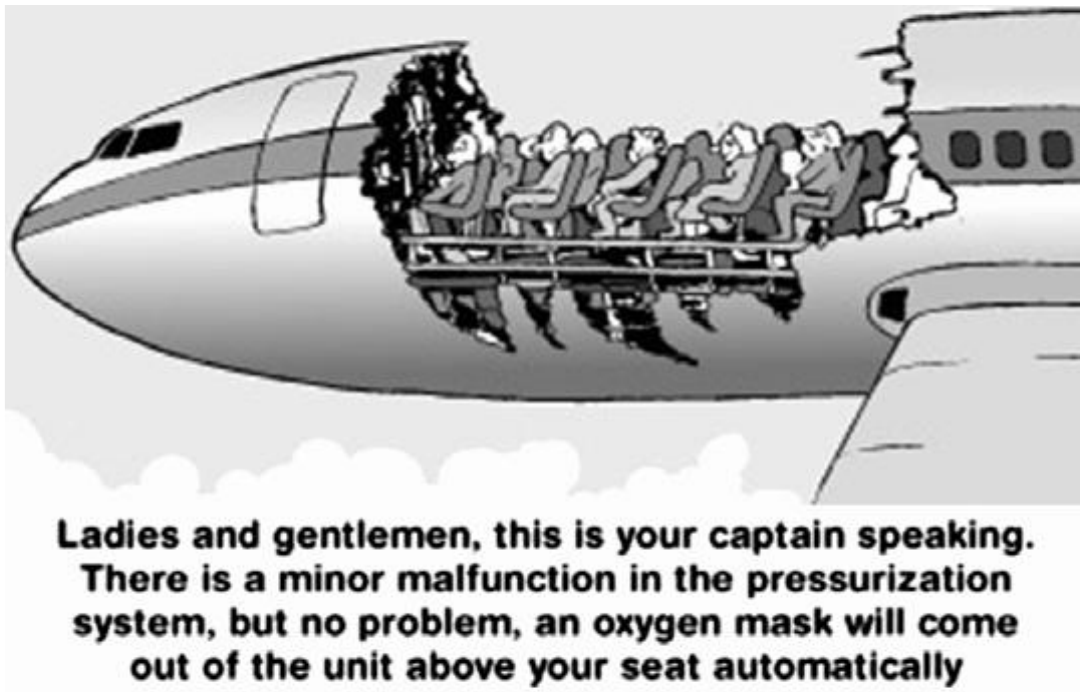
(Fonte: http:blog.flightstore.net)
According to the captain speech:
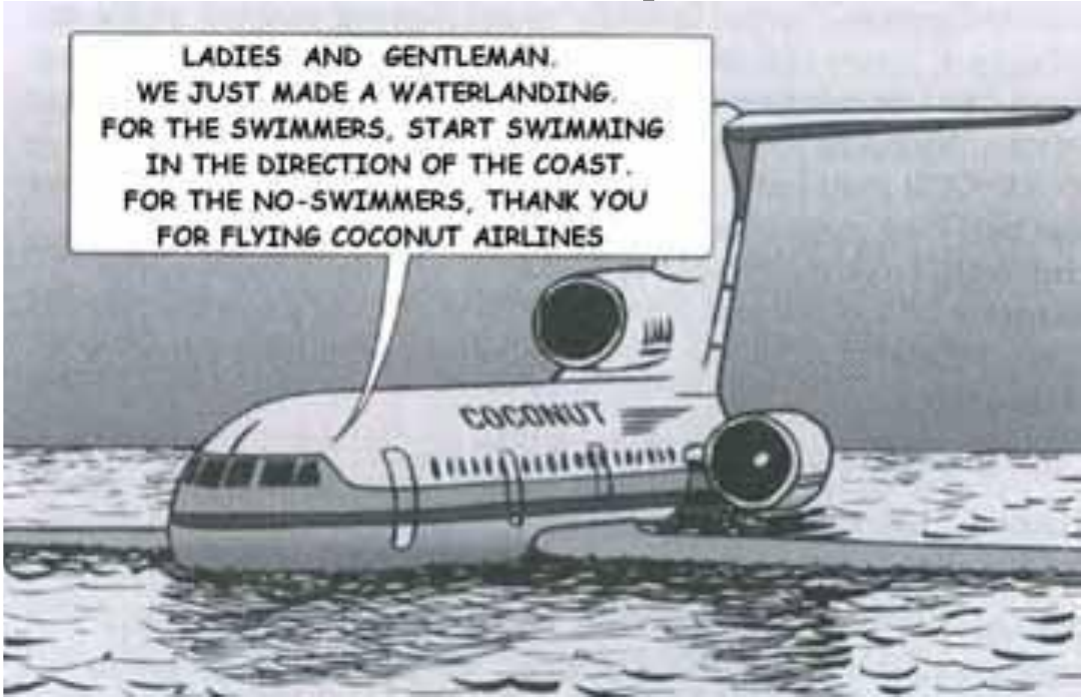
(Fonte: www.a320homecockpit.de)
According to the cartoon, the pilot
Are you a couch potato?
1 A couch potato is a person who spends leisure time passively
or idly sitting around, especially watching TV.
They don’t get involved in any kind of strenuous exercise.
As a matter of fact, they can’t stand any kind of physical
5 activity.
What’s more, they rarely eat healthy, nourishing food;
they’d rather have hamburgers, fires, soft drinks and that kind
of stuff.
(taken from http:inglesnapontadalingua)
GLOSSARY
strenuous: fatigante
nourishing food: comida nutritiva
Based on the text, couch potato is a personResolução comentada
Análise das alternativas
I stayed in London _ a few days during my vacation.
I came back to Brazil ____ May 1st.Resolução comentada
Análise das alternativas

1 Did you remember it’s April Fools Day today? My sister
loves playing jokes. At breakfast, she said, “Robert and
I _ going to elope! We’re going to Robben Island. It’s the
place where Nelson Mandela was in prison. My guidebook
5 say it is a “place forever connected with the fight for
freedom”. So, if you receive a phone call today about winning
the lottery or something, don’t get excited. It’s probably
an April Fools joke.
(taken from Stories worth reading)
GLOSSARY
to elope: fugir de casa secretamente para se casar.
Select the alternative that fills in the blank in the text.Resolução comentada
Análise das alternativas
1 Did you remember it’s April Fools Day today? My sister
loves playing jokes. At breakfast, she said, “Robert and
I _ going to elope! We’re going to Robben Island. It’s the
place where Nelson Mandela was in prison. My guidebook
5 say it is a “place forever connected with the fight for
freedom”. So, if you receive a phone call today about winning
the lottery or something, don’t get excited. It’s probably
an April Fools joke.
(taken from Stories worth reading)
GLOSSARY
to elope: fugir de casa secretamente para se casar.
The verb “get” (line 07), in the text, can be replaced byResolução comentada
Análise das alternativas
1 Did you remember it’s April Fools Day today? My sister
loves playing jokes. At breakfast, she said, “Robert and
I _ going to elope! We’re going to Robben Island. It’s the
place where Nelson Mandela was in prison. My guidebook
5 say it is a “place forever connected with the fight for
freedom”. So, if you receive a phone call today about winning
the lottery or something, don’t get excited. It’s probably
an April Fools joke.
(taken from Stories worth reading)
GLOSSARY
to elope: fugir de casa secretamente para se casar.
The sentence “We’re going to Robben Island” (line3), in the text, refers to theResolução comentada
Análise das alternativas
I don’t mind __________ alone, but I prefer to travel with my friends.Resolução comentada
Análise das alternativas
Resolução comentada
Análise das alternativas

(www.thehundreds.com)
Choose the correct alternative, according to the cartoon.
1 A pilot from Northwest Airlines flight was less than pleased
with the food which was to be served on the flight.
He decided to find some better food, so he left his aeroplane,
and then left the airport to find food even though he had
5 a plane to fly. The passengers were left to wait 90 minutes
until the pilot came back and when the pilot came back
he was fired on the spot for “abandoning his plane”.
(Adapted from www.flightglobal.com)
According to the text, all the alternatives are true, except:Resolução comentada
Análise das alternativas
1 A pilot from Northwest Airlines flight was less than pleased
with the food which was to be served on the flight.
He decided to find some better food, so he left his aeroplane,
and then left the airport to find food even though he had
5 a plane to fly. The passengers were left to wait 90 minutes
until the pilot came back and when the pilot came back
he was fired on the spot for “abandoning his plane”.
(Adapted from www.flightglobal.com)
The ordinal form for the number ninety (line 05), in the text, isResolução comentada
Análise das alternativas
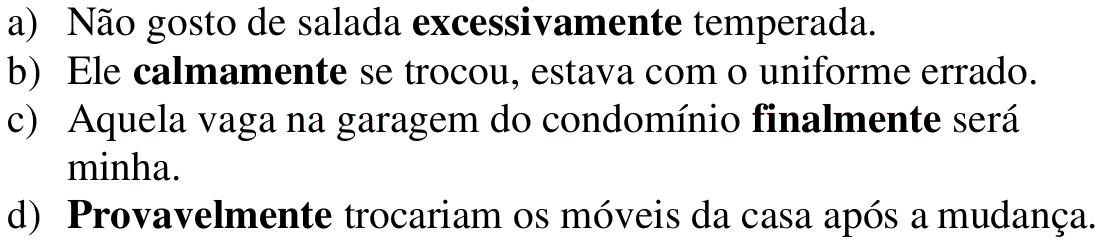
Em qual das alternativas abaixo o advérbio em destaque é classificado como advérbio de tempo?
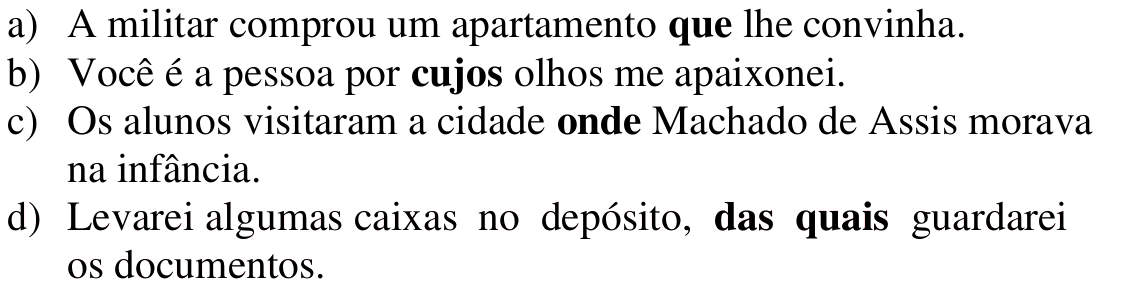
Em qual das alternativas o pronome destacado foi empregado incorretamente?
Assinale a alternativa em que o emprego do acento grave, indicador de crase, está correto.
Leia:
Choose the alternative that presents the passive voice of the sentence below.
In the sentence “I hardly ever watch TV at night.”, the expression in bold type is an adverb of
Choose the correct form for the passive voice of the following sentence.
Texto-base:
Texto-base:
Texto-base:
Choose the alternative that best completes the sentence below.
In the sentence “We mustn’t enter the party. It’s private”, the modal verb in bold type expresses
Texto-base:
Texto-base:
Texto-base:
Fill in the blank with the correct response according to grammar rules:
Choose the sentence that contains a one-word adverb.
Texto-base:
Texto-base:
Texto-base: