← Voltar para a lista de provas Escola Preparatória de Cadetes do Exército (EsPCEx) — Exército Brasileiro · Concurso de Admissão — Provas de Matemática, Geografia, História e Inglês 56 questões nesta prova · página 3 de 3 · 56 com gabarito Gabarito disponível Gabarito disponível Conflito mais longo e derrota militar do capitalismo na Guerra Fria: Vietnã. A Guerra do Vietnã durou cerca de duas décadas (c. 1955-1975) e terminou com a retirada dos EUA e a vitória do Vietnã do Norte comunista, uma derrota militar séria para o bloco capitalista. B) A Coreia (1950-53) foi mais curta e terminou em impasse, com a divisão mantida. C) A Guerra do Iraque (2003) é posterior à Guerra Fria. D) O Afeganistão teve intervenção soviética (1979-89), que foi derrota do bloco comunista. E) A Guerra do Pacífico (1879-83) é anterior e não tem relação com a Guerra Fria. Referência: História Contemporânea – Guerra Fria Resolução comentada do VaiConcursos. Gabarito disponível Evento do Estado Novo (1937-1945): participação da FEB na 2ª Guerra. O Estado Novo durou de 1937 a 1945, e a FEB foi enviada à Itália em 1944, dentro desse período. Os demais eventos ocorreram em outras fases da Era Vargas. A) A Revolução Constitucionalista foi em 1932, no Governo Provisório. B) O Ministério da Educação e Saúde foi criado em novembro de 1930, no Governo Provisório, e a alternativa o cita com essa data. C) A Intentona Comunista foi em 1935, no período constitucional. D) A Lei de Sindicalização é de 1931, no Governo Provisório. Referência: História do Brasil – Era Vargas Resolução comentada do VaiConcursos. Gabarito disponível Conflito messiânico e social do fim do séc. XIX: Guerra de Canudos. Canudos (1896-1897), no sertão da Bahia, foi liderada por Antônio Conselheiro e reuniu sertanejos pobres em torno de uma comunidade de caráter religioso messiânico e de contestação social ao latifúndio e à República. Foi destruída por expedições militares federais. A) Contestado (1912-1916) é do século XX, embora também messiânico. B) A Revolta da Armada (1893-94) foi uma revolta de militares da Marinha, sem caráter messiânico. C) A Revolta Federalista (1893-95) foi disputa política regional no Sul. D) A Revolta da Vacina (1904) é do século XX e foi motivada pela vacinação obrigatória. Referência: História do Brasil – Primeira República Resolução comentada do VaiConcursos. Gabarito disponível O parágrafo 1 informa quem estudou os grupos socialmente diversos. O parágrafo 1 diz que cientistas organizacionais, psicólogos, sociólogos, economistas e demógrafos pesquisaram a diversidade. Logo a pergunta "Who studied about socially diverse groups?" é respondida ali. A) O texto não informa os motivos dos pesquisadores. C) Não informa onde os estudos foram feitos. D) Não informa o método. E) Não informa o número de pessoas envolvidas. Referência: Leitura de texto em inglês: perguntas de informação explícita. Resolução comentada do VaiConcursos. Gabarito disponível "Yet" aqui tem valor adversativo, equivalente a "however". Na frase, "yet" contrasta com a ideia anterior de que a diversidade social é menos óbvia. Tem valor adversativo, como "however". B) "For" é conjunção explicativa. C) "Such as" introduz exemplos. D) "Thus" indica conclusão. E) "Because" indica causa. Referência: Conectivos em inglês: yet = however. Resolução comentada do VaiConcursos. Gabarito disponível A ciência mostra que a diversidade social funciona como a diversidade de especialização. O parágrafo 2 diz que é menos óbvio que a diversidade social funcione do mesmo modo que a de expertise, "yet the science shows that it does". Logo C está correta. A) O texto diz que a interação com diferentes nos torna melhores. B) Diz que os grupos homogêneos são menos inovadores. D) Afirma que perspectivas diferentes são benéficas, sem dizer que um gênero é melhor. E) Não compara a dificuldade dessas tarefas. Referência: Leitura de texto em inglês: Scientific American, How diversity makes us smarter. Resolução comentada do VaiConcursos. Gabarito disponível Gabarito disponível Gabarito disponível Gabarito disponível No texto, "lies in" significa "consistir em", como em B. No parágrafo 1, "the challenge lies in understanding..." quer dizer que o desafio consiste em compreender. Em B, "His skill lies in his ability..." tem o mesmo sentido de "consiste em". A) "Lies in the sun" significa deitar-se. D) "Lies in wait" é ficar à espreita. C) "She lies" significa mentir. E) "Lies over" é ser adiado. Referência: Vocabulário: verbo lie (lie in = consistir em). Resolução comentada do VaiConcursos. Gabarito disponível Do (com plural), are (passiva plural) e does (sujeito singular "role"). (1) Com "language communities" (plural) na pergunta, usa-se "do". (2) "Tensions" é plural em voz passiva, exigindo "are caused". (3) "What role does language play": "does" é o auxiliar com sujeito singular. A sequência é do, are, does. A) is e do não concordam com os sujeitos. B) Falha no terceiro espaço, pois "do" não concorda com "language". C) Falha em todas as lacunas. D) Falha na primeira, pois "are" não funciona como auxiliar em "interact". Referência: Gramática inglesa: auxiliares do/does e verbo to be na voz passiva. Resolução comentada do VaiConcursos. Gabarito disponível O texto trata a língua como ponto central para as operações militares em megacidades. O texto afirma que compreender o papel das línguas das comunidades é essencial para operar em megacidades. Isso mostra que a língua é uma grande preocupação militar, e o gabarito é C. A) O texto diz que as operações são similares às de outros ambientes urbanos, com fatores adicionais, não que esses ambientes sejam mais complexos. B) As nove línguas são citadas em Nova York, e não em cidades grandes em geral. D) O texto diz que língua, cultura e contexto regional vão além das identidades étnicas. E) O texto diz que as operações podem ser de combate "or otherwise". Referência: Leitura de texto em inglês: Military Review, jan/fev 2016. Resolução comentada do VaiConcursos. Gabarito disponível Gabarito disponível Gabarito disponívelEsPCEx 2017 — Concurso de Admissão — Provas de Matemática, Geografia, História e Inglês — Modelo D

I - Período do Terror
II - Segundo Estado
III - Primeiro Estado
IV - Jacobinos
V - Girondinos
VI - Comitê de Salvação Pública
Assinale a alternativa que apresenta as ideias relacionadas à Revolução Francesa e que estejam ligadas à imagem acima.Resolução comentada
Análise das alternativas
Resolução comentada
Análise das alternativas
Resolução comentada
Análise das alternativas
Leia o texto a seguir e responda às questões 45, 46 e 47.
How diversity makes us smarter
Decades of research by organizational scientists, psychologists, sociologists, economists and demographers show that socially diverse groups (that is, those with a diversity of race, ethnicity, gender and sexual orientation) are more innovative than homogeneous groups. It means being around people who are different from us makes us more creative, more diligent and more hardworking.
It seems obvious that a group of people with diverse individual expertise would be better than a homogeneous group at solving complex, non-routine problems. It is less obvious that social diversity should work in the same way – yet the science shows that it does. This is not only because people with different backgrounds bring new information. Simply interacting with individuals who are different forces group members to prepare better, to anticipate alternative viewpoints and to expect that reaching consensus will take effort.
Diversity of expertise confers benefits that are obvious – you would not think of building a new car without engineers, designers and quality-control experts – but what about social diversity? The same logic applies to social diversity. People who are different from one another in race, gender and other dimensions bring unique information and experiences to bear on the task at hand. A male and a female engineer might have perspectives as different from one another as an engineer and a physicist – and that is a good thing.
The fact is that if you want to build teams or organizations capable of innovating, you need diversity. Diversity enhances creativity. It encourages the search for novel information and perspectives, leading to better decision making and problem solving. Diversity can improve the bottom line of companies and lead to discoveries and breakthrough innovations. Even simply being exposed to diversity can change the way you think.
Adapted from http://www.scientificamerican.com/article/how-diversity-makes-us-smarter/
Which question below has its answer in paragraph 1?Resolução comentada
Análise das alternativas
Leia o texto a seguir e responda às questões 45, 46 e 47.
How diversity makes us smarter
Decades of research by organizational scientists, psychologists, sociologists, economists and demographers show that socially diverse groups (that is, those with a diversity of race, ethnicity, gender and sexual orientation) are more innovative than homogeneous groups. It means being around people who are different from us makes us more creative, more diligent and more hardworking.
It seems obvious that a group of people with diverse individual expertise would be better than a homogeneous group at solving complex, non-routine problems. It is less obvious that social diversity should work in the same way – yet the science shows that it does. This is not only because people with different backgrounds bring new information. Simply interacting with individuals who are different forces group members to prepare better, to anticipate alternative viewpoints and to expect that reaching consensus will take effort.
Diversity of expertise confers benefits that are obvious – you would not think of building a new car without engineers, designers and quality-control experts – but what about social diversity? The same logic applies to social diversity. People who are different from one another in race, gender and other dimensions bring unique information and experiences to bear on the task at hand. A male and a female engineer might have perspectives as different from one another as an engineer and a physicist – and that is a good thing.
The fact is that if you want to build teams or organizations capable of innovating, you need diversity. Diversity enhances creativity. It encourages the search for novel information and perspectives, leading to better decision making and problem solving. Diversity can improve the bottom line of companies and lead to discoveries and breakthrough innovations. Even simply being exposed to diversity can change the way you think.
Adapted from http://www.scientificamerican.com/article/how-diversity-makes-us-smarter/
Choose the alternative that correctly substitutes the word yet in the sentence “It is less obvious that social diversity should work in the same way – yet the science shows that it does.” (paragraph 2).Resolução comentada
Análise das alternativas
Leia o texto a seguir e responda às questões 45, 46 e 47.
How diversity makes us smarter
Decades of research by organizational scientists, psychologists, sociologists, economists and demographers show that socially diverse groups (that is, those with a diversity of race, ethnicity, gender and sexual orientation) are more innovative than homogeneous groups. It means being around people who are different from us makes us more creative, more diligent and more hardworking.
It seems obvious that a group of people with diverse individual expertise would be better than a homogeneous group at solving complex, non-routine problems. It is less obvious that social diversity should work in the same way – yet the science shows that it does. This is not only because people with different backgrounds bring new information. Simply interacting with individuals who are different forces group members to prepare better, to anticipate alternative viewpoints and to expect that reaching consensus will take effort.
Diversity of expertise confers benefits that are obvious – you would not think of building a new car without engineers, designers and quality-control experts – but what about social diversity? The same logic applies to social diversity. People who are different from one another in race, gender and other dimensions bring unique information and experiences to bear on the task at hand. A male and a female engineer might have perspectives as different from one another as an engineer and a physicist – and that is a good thing.
The fact is that if you want to build teams or organizations capable of innovating, you need diversity. Diversity enhances creativity. It encourages the search for novel information and perspectives, leading to better decision making and problem solving. Diversity can improve the bottom line of companies and lead to discoveries and breakthrough innovations. Even simply being exposed to diversity can change the way you think.
Adapted from http://www.scientificamerican.com/article/how-diversity-makes-us-smarter/
According to the text, choose the correct statement.Resolução comentada
Análise das alternativas
Leia o texto a seguir e responda às questões 48, 49 e 50.
A handwritten note from September 11
In moments of crisis, our first thoughts are usually to get in contact with the people we love. September 11, 2001, was a day when many people wanted to know that their loved ones were safe. At 9:37 a.m., the Pentagon was attacked by terrorists who crashed an airplane into the western side of the building.
Many people tried using the mobile phones that existed then, but few were successful. Franklin and Daria Gaillard (Frank and Chip) were both members of the Air Force and worked at the Pentagon. They worked in different parts of the building and had a previous agreement that they would meet at their car in the parking lot if there were any emergency.
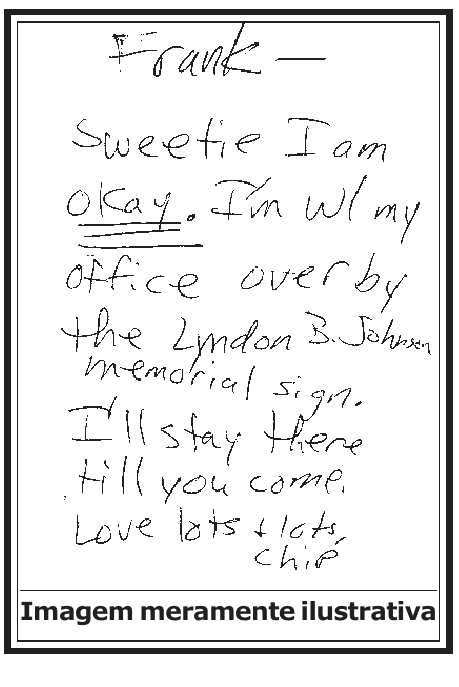
Daria was the first to arrive at the car and wrote a note to Franklin saying “Frank - Sweetie I am okay. I’m w/ my office over by the Lyndon B. Johnson Memorial Sign. I’ll stay there till you come. Love lots & lots, Chip.” Frank found the note and was able to locate his wife in the aftermath of the attack.
What makes this story so interesting is the handwritten note. Today, in our digital culture, we have a variety of ways to let people know that we are safe. Text messages, voicemail, and different forms of social media can be used to get the information out to loved ones. In 2001, when these attacks __________(1), the cellular network was still growing and was not as robust as it is today.
This letter is just one of the many objects that The National Museum of American History __________(2) since 2001. To learn more, visit our online exhibition September 11th: Bearing Witness to History.
Adapted from http://americanhistory.si.edu/blog/handwritten-note-september-11-2001
According to the text, choose the correct statement.
Leia o texto a seguir e responda às questões 48, 49 e 50.
A handwritten note from September 11
In moments of crisis, our first thoughts are usually to get in contact with the people we love. September 11, 2001, was a day when many people wanted to know that their loved ones were safe. At 9:37 a.m., the Pentagon was attacked by terrorists who crashed an airplane into the western side of the building.
Many people tried using the mobile phones that existed then, but few were successful. Franklin and Daria Gaillard (Frank and Chip) were both members of the Air Force and worked at the Pentagon. They worked in different parts of the building and had a previous agreement that they would meet at their car in the parking lot if there were any emergency.
Daria was the first to arrive at the car and wrote a note to Franklin saying “Frank - Sweetie I am okay. I’m w/ my office over by the Lyndon B. Johnson Memorial Sign. I’ll stay there till you come. Love lots & lots, Chip.” Frank found the note and was able to locate his wife in the aftermath of the attack.
What makes this story so interesting is the handwritten note. Today, in our digital culture, we have a variety of ways to let people know that we are safe. Text messages, voicemail, and different forms of social media can be used to get the information out to loved ones. In 2001, when these attacks __________(1), the cellular network was still growing and was not as robust as it is today.
This letter is just one of the many objects that The National Museum of American History __________(2) since 2001. To learn more, visit our online exhibition September 11th: Bearing Witness to History.
Adapted from http://americanhistory.si.edu/blog/handwritten-note-september-11-2001
In the sentence “the cellular network... was not as robust as it is today” (paragraph 4), the word robust means
Leia o texto a seguir e responda às questões 48, 49 e 50.
A handwritten note from September 11
In moments of crisis, our first thoughts are usually to get in contact with the people we love. September 11, 2001, was a day when many people wanted to know that their loved ones were safe. At 9:37 a.m., the Pentagon was attacked by terrorists who crashed an airplane into the western side of the building.
Many people tried using the mobile phones that existed then, but few were successful. Franklin and Daria Gaillard (Frank and Chip) were both members of the Air Force and worked at the Pentagon. They worked in different parts of the building and had a previous agreement that they would meet at their car in the parking lot if there were any emergency.
Daria was the first to arrive at the car and wrote a note to Franklin saying “Frank - Sweetie I am okay. I’m w/ my office over by the Lyndon B. Johnson Memorial Sign. I’ll stay there till you come. Love lots & lots, Chip.” Frank found the note and was able to locate his wife in the aftermath of the attack.
What makes this story so interesting is the handwritten note. Today, in our digital culture, we have a variety of ways to let people know that we are safe. Text messages, voicemail, and different forms of social media can be used to get the information out to loved ones. In 2001, when these attacks __________(1), the cellular network was still growing and was not as robust as it is today.
This letter is just one of the many objects that The National Museum of American History __________(2) since 2001. To learn more, visit our online exhibition September 11th: Bearing Witness to History.
Adapted from http://americanhistory.si.edu/blog/handwritten-note-september-11-2001
Choose the alternative containing the correct verb tenses to complete gaps (1) and (2) in paragraphs 4 and 5 respectively.
Leia o texto a seguir e responda às questões 51, 52 e 53.
Military operations in megacities
A linguistic perspective
The challenge of conducting future military operations within megacities (cities with populations over ten million) lies in understanding the dynamic and multidimensional complexities of these urban areas. Military operations in megacities, whether combat-oriented or otherwise, will be similar to those in other urban environments, but will be complicated by factors unique to the megacity environment.
First and foremost, megacities are largely multilingual. While this can be said of large cities in general, the scale of multilingualism in megacities magnifies its effects. For instance, in New York City (NYC) – a metropolitan megacity of over eighteen million people – nine foreign languages are spoken by communities of one hundred thousand or larger. Language also plays a role in determining one’s identity and the language community in which one decides to live. For example, the majority of Russian speakers in NYC tend to live in south Brooklyn and Staten Island, while Chinese speakers tend to cluster in Manhattan and Sunset Park. In megacities, language, culture, and regional context go hand in hand and often reach beyond ethnic identities.
In order to fully understand the context of a megacity, we must understand the role of the languages used in its communities. How _____(1) language communities interact in megacities? What tensions ______(2) caused by multiple language communities in urban space? What role ______(3) language play in the power structures (government or otherwise) of megacities?
Adapted from Military Review – Jan/Feb 2016
Choose the statement in which the word lies is used with the same meaning as in paragraph 1.Resolução comentada
Análise das alternativas
Leia o texto a seguir e responda às questões 51, 52 e 53.
Military operations in megacities
A linguistic perspective
The challenge of conducting future military operations within megacities (cities with populations over ten million) lies in understanding the dynamic and multidimensional complexities of these urban areas. Military operations in megacities, whether combat-oriented or otherwise, will be similar to those in other urban environments, but will be complicated by factors unique to the megacity environment.
First and foremost, megacities are largely multilingual. While this can be said of large cities in general, the scale of multilingualism in megacities magnifies its effects. For instance, in New York City (NYC) – a metropolitan megacity of over eighteen million people – nine foreign languages are spoken by communities of one hundred thousand or larger. Language also plays a role in determining one’s identity and the language community in which one decides to live. For example, the majority of Russian speakers in NYC tend to live in south Brooklyn and Staten Island, while Chinese speakers tend to cluster in Manhattan and Sunset Park. In megacities, language, culture, and regional context go hand in hand and often reach beyond ethnic identities.
In order to fully understand the context of a megacity, we must understand the role of the languages used in its communities. How _____(1) language communities interact in megacities? What tensions ______(2) caused by multiple language communities in urban space? What role ______(3) language play in the power structures (government or otherwise) of megacities?
Adapted from Military Review – Jan/Feb 2016
Choose the alternative containing the correct words to respectively complete gaps (1), (2) and (3) in paragraph 3.Resolução comentada
Análise das alternativas
Leia o texto a seguir e responda às questões 51, 52 e 53.
Military operations in megacities
A linguistic perspective
The challenge of conducting future military operations within megacities (cities with populations over ten million) lies in understanding the dynamic and multidimensional complexities of these urban areas. Military operations in megacities, whether combat-oriented or otherwise, will be similar to those in other urban environments, but will be complicated by factors unique to the megacity environment.
First and foremost, megacities are largely multilingual. While this can be said of large cities in general, the scale of multilingualism in megacities magnifies its effects. For instance, in New York City (NYC) – a metropolitan megacity of over eighteen million people – nine foreign languages are spoken by communities of one hundred thousand or larger. Language also plays a role in determining one’s identity and the language community in which one decides to live. For example, the majority of Russian speakers in NYC tend to live in south Brooklyn and Staten Island, while Chinese speakers tend to cluster in Manhattan and Sunset Park. In megacities, language, culture, and regional context go hand in hand and often reach beyond ethnic identities.
In order to fully understand the context of a megacity, we must understand the role of the languages used in its communities. How _____(1) language communities interact in megacities? What tensions ______(2) caused by multiple language communities in urban space? What role ______(3) language play in the power structures (government or otherwise) of megacities?
Adapted from Military Review – Jan/Feb 2016
According to the text, choose the correct statement.Resolução comentada
Análise das alternativas
Leia o texto a seguir e responda às questões 54, 55 e 56.
Woman who rescued Nigerian ‘witch-child’ beats Obama and Pope Francis to top list of world’s most inspiring people
A woman who rescued a two-year-old boy who had been cast out by his own community for being a “witch-child” has been recognised in an international list of the most inspiring people of the year. Anja Ringgren Lovén, a Danish care worker who rescued the young Nigerian boy back in February 2016, beat the likes of Pope Francis, Barack Obama and the Dalai Lama to top the list of 100 inspiring individuals compiled by German-language OOOM Magazine.
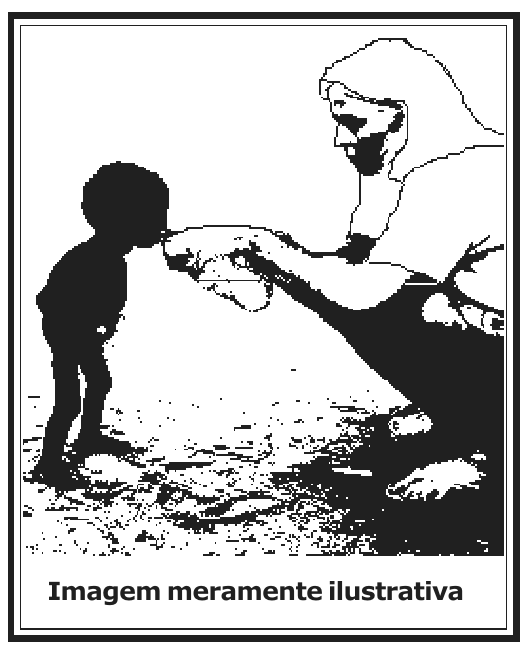
An image of Ms Lovén giving the two-year-old boy (now called Hope) some water was shared around the world, and served to highlight the work she was doing to help orphan children in Nigeria. Witch accusations is a growing problem in many African countries, especially in Nigeria, where Anja’s charity African Children’s Aid Education and Development Foundation cares for other children like Hope.
“When she saw the starving child, she acted like a human being and became an inspiration for millions,” said Georg Kindel, OOOM’s editor-in-chief, who led the jury that chose the list. Speaking today about the experience, she said: “He was the size of a little baby, my whole body froze. I was thinking of my own son when I saw the boy. For me it was clear at that moment that I would fight with all my strength for him to survive.”
Adapted from http://www.independent.co.uk/news/people/worlds-most-inspiring-person-2016-ooom-anja-ringgren-loven-nigeria-witch-child-a7460976.html
Choose the best alternative that correctly substitutes the word highlight in the sentence “... served to highlight the work she was doing to help orphan children in Nigeria.” (paragraph 2).
Leia o texto a seguir e responda às questões 54, 55 e 56.
Woman who rescued Nigerian ‘witch-child’ beats Obama and Pope Francis to top list of world’s most inspiring people
A woman who rescued a two-year-old boy who had been cast out by his own community for being a “witch-child” has been recognised in an international list of the most inspiring people of the year. Anja Ringgren Lovén, a Danish care worker who rescued the young Nigerian boy back in February 2016, beat the likes of Pope Francis, Barack Obama and the Dalai Lama to top the list of 100 inspiring individuals compiled by German-language OOOM Magazine.
An image of Ms Lovén giving the two-year-old boy (now called Hope) some water was shared around the world, and served to highlight the work she was doing to help orphan children in Nigeria. Witch accusations is a growing problem in many African countries, especially in Nigeria, where Anja’s charity African Children’s Aid Education and Development Foundation cares for other children like Hope.
“When she saw the starving child, she acted like a human being and became an inspiration for millions,” said Georg Kindel, OOOM’s editor-in-chief, who led the jury that chose the list. Speaking today about the experience, she said: “He was the size of a little baby, my whole body froze. I was thinking of my own son when I saw the boy. For me it was clear at that moment that I would fight with all my strength for him to survive.”
Adapted from http://www.independent.co.uk/news/people/worlds-most-inspiring-person-2016-ooom-anja-ringgren-loven-nigeria-witch-child-a7460976.html
When Ms Lovén says: “... my whole body froze.” (paragraph 3), she means
Leia o texto a seguir e responda às questões 54, 55 e 56.
Woman who rescued Nigerian ‘witch-child’ beats Obama and Pope Francis to top list of world’s most inspiring people
A woman who rescued a two-year-old boy who had been cast out by his own community for being a “witch-child” has been recognised in an international list of the most inspiring people of the year. Anja Ringgren Lovén, a Danish care worker who rescued the young Nigerian boy back in February 2016, beat the likes of Pope Francis, Barack Obama and the Dalai Lama to top the list of 100 inspiring individuals compiled by German-language OOOM Magazine.
An image of Ms Lovén giving the two-year-old boy (now called Hope) some water was shared around the world, and served to highlight the work she was doing to help orphan children in Nigeria. Witch accusations is a growing problem in many African countries, especially in Nigeria, where Anja’s charity African Children’s Aid Education and Development Foundation cares for other children like Hope.
“When she saw the starving child, she acted like a human being and became an inspiration for millions,” said Georg Kindel, OOOM’s editor-in-chief, who led the jury that chose the list. Speaking today about the experience, she said: “He was the size of a little baby, my whole body froze. I was thinking of my own son when I saw the boy. For me it was clear at that moment that I would fight with all my strength for him to survive.”
Adapted from http://www.independent.co.uk/news/people/worlds-most-inspiring-person-2016-ooom-anja-ringgren-loven-nigeria-witch-child-a7460976.html
According to the text, read the statements and choose the correct alternative.
I – Hope’s community didn’t want him because of a superstition.
II – Ms Lovén started helping orphan children after she met Hope.
III – Anja’s foundation cares for poor parents who have many children.
IV – George Kindel was the only person who voted for Ms Lovén.
V – Ms Lovén has a child of her own and it’s a boy.
O barrete frígio ou barrete da liberdade, constante da imagem ao lado, é uma espécie de touca ou carapuça, originariamente utilizada pelos moradores da Frígia (antiga região da Ásia Menor, onde hoje está situada a Turquia). Foi adotado, na cor vermelha, pelos republicanos franceses que lutaram pela tomada e queda da Bastilha em 1789, que culminou com a instalação da Primeira República Francesa em 1793. As ideias a seguir também estão relacionadas com a Revolução Francesa.
Após a 2ª Guerra Mundial, iniciou-se um período de fortes tensões políticas que duraram até 1989, conhecido como “Guerra Fria”. Durante esse período, diversos conflitos foram travados, realçando a disputa entre o comunismo e o capitalismo. Dentre esses conflitos, o de maior duração, que representou uma séria derrota militar para o capitalismo, foi a
O Estado Novo foi um período da chamada “Era Vargas”, em que o presidente tinha os mais amplos poderes. Das alternativas abaixo, aponte aquela que corresponde a um evento ocorrido durante o Estado Novo.
O conflito ocorrido no final do Século XIX, caracterizado pelo caráter messiânico (religioso) e de contestação social, foi a
Texto-base:
Texto-base:
Texto-base:
Texto-base:
Texto-base:
Texto-base:
Texto-base:
Texto-base:
Texto-base:
Texto-base:
Texto-base:
Texto-base: