← Voltar para a lista de provas Comando da Aeronáutica — Academia da Força Aérea (CFOAV, CFOINT e CFOINF) · Exame de Admissão aos Cursos de Formação de Oficiais Aviadores, Intendentes e de Infantaria (CFOAV, CFOINT e CFOINF) 2018 65 questões nesta prova · página 3 de 4 · 60 com gabarito Gabarito disponível O present perfect não indica um passado sem relação com o presente. 'Has impacted' está no present perfect, que liga uma ação passada ao presente, com efeitos que continuam. Afirmar que é uma situação passada sem relação com o presente é, portanto, incorreto. A) Correta: 'negatively' indica resultado insatisfatório. B) Correta: 'due to' e 'because of' têm o mesmo sentido. D) Correta: 'land degradation' é a deterioração da qualidade do solo por ações humanas. Referência: Present perfect; locuções de causa (due to / because of). Resolução comentada do VaiConcursos. Gabarito disponível Gabarito disponível Preços sobem e investimentos em agricultura diminuem por causa da crise. A frase diz que a crise financeira levou ao aumento dos preços dos alimentos ('increase in food prices') e à redução dos investimentos agrícolas ('reduced investments'). Isso corresponde à alternativa D. A) Errada: os investimentos não aumentaram. B) Errada: os preços subiram, não ficaram menores. C) Errada: os investimentos diminuíram, não se tornaram mais comuns. Referência: Interpretação de trecho; 'lead to' (levar a). Resolução comentada do VaiConcursos. Gabarito disponível São exemplos de impactos negativos da escassez de alimentos. O texto afirma que 'Food shortage has far reaching long and short term negative impacts which include starvation, malnutrition, increased mortality and political unrest'. Esses itens são, portanto, impactos negativos da escassez. B) Errada: são consequências, não causas. C) e D) Errada: medidas emergenciais ou de longo prazo são as formas de enfrentar o problema, não os itens listados. Referência: Parágrafo introdutório do texto. Resolução comentada do VaiConcursos. Gabarito disponível Entre os efeitos de longo prazo está o aumento dos preços dos alimentos. Na seção 'long term effects', o texto diz: 'These include increase in the price of food...'. Logo, o aumento do preço dos alimentos é o efeito de longo prazo. A) e C) Errada: desnutrição, fome, inanição e morte são efeitos de curto prazo. D) Errada: as mudanças climáticas aparecem como causa da escassez, não como efeito de longo prazo. Referência: Seção 'Effects of food shortage'. Resolução comentada do VaiConcursos. Gabarito disponível Investir em energia limpa é uma ideia razoável para reduzir efeitos ambientais adversos. O trecho final defende o investimento em energia limpa (solar, nuclear, geotérmica) porque ela não causa efeitos adversos ao ambiente. Isso é apresentado como solução, ou seja, uma ideia razoável para reduzir esses efeitos. A) Errada: é apresentada como solução, não como a pior. B) Errada: o objetivo é reduzir as emissões de gases, não aumentá-las. D) Errada: a instabilidade política é efeito do aumento dos preços dos alimentos, não relacionada à energia limpa. Referência: Seção 'Solution to problem of food shortage'. Resolução comentada do VaiConcursos. Gabarito disponível 'They' retoma as fontes de energia limpa citadas (solar, nuclear, geotérmica). A frase diz 'invest in clean energy such as solar, nuclear, and geothermal power... because they don't have adverse effects on the environment'. O sujeito de 'don't have adverse effects' são as formas de energia limpa listadas, ou seja, 'some kinds of clean energy'. A) Errada: 'adverse effects' é o objeto de 'have', não o sujeito. B) Errada: 'homes and industries' indica o local de uso da energia, não quem não causa efeitos adversos. C) Errada: 'geothermal power' é só uma das três fontes e o pronome plural se refere a todas. Referência: Referência pronominal (pronomes pessoais). Resolução comentada do VaiConcursos. Gabarito disponível A conclusão é lógica e objetiva. A conclusão retoma de forma resumida as ideias do texto: as causas são conhecidas e podem ser resolvidas com medidas adequadas, sendo as causas ambientais controláveis por legislação. É um fechamento coerente (logical) e direto (sharp). B) Errada: não é sem sentido nem desgastada. C) Errada: não é polêmica. D) Errada: é curta, sem excesso nem repetição. Referência: Interpretação de texto em inglês: parágrafo 'Conclusion'. Resolução comentada do VaiConcursos. Gabarito disponível Gabarito disponível Gabarito disponível Gabarito disponível Gabarito disponível Gabarito disponível Gabarito disponível Gabarito disponível Gabarito disponível Gabarito disponível Gabarito disponível Questão anuladaEPCAR — Exame de Admissão aos CFOAV, CFOINT e CFOINF 2018 — Língua Portuguesa, Matemática, Língua Inglesa, Física e Redação — Versão A
Directions: Read the text below and answer questions 33 to 48 according to it.
TEXT
FOOD SHORTAGE CAUSES, EFFECTS AND SOLUTIONS
Food shortage is a serious problem facing the
world and is prevalent in sub-Saharan Africa. The
scarcity of food is caused by economic, environmental
and social factors such as crop failure, overpopulation
5 and poor government policies are the main cause of food
scarcity in most countries. Environmental factors
determine the kind of crops to be produced in a given
place, economic factors determine the buying and
production capacity and socio-political factors determine
10 distribution of food to the masses. Food shortage has far
reaching long and short term negative impacts which
include starvation, malnutrition, increased mortality and
political unrest¹. There is need to collectively address the
issue of food insecurity using both emergency and long
15 term measures.
Causes of food shortages
There are a number of social factors causing
food shortages. The rate of population increase is higher
than increase in food production. The world is consuming
20 more than it is producing, leading to decline in food stock
and storage level and increased food prices due to
soaring² demand. Increased population has led to
clearing of agricultural land for human settlement
reducing agricultural production (Kamdor, 2007).
25 Overcrowding of population in a given place results in
urbanization of previously rich agricultural fields.
Destruction of forests for human settlement, particularly
tropical rain forest has led to climatic changes, such as
prolonged droughts and desertification. Population
30 increase means more pollution as people use more fuel
in cars, industry, domestic cooking. The resultant effect
is increased air and water pollution which affect the
climate and food production.
Environmental factors have greatly contributed
35 to food shortage. Climatic change has reduced
agricultural production. The change in climate is majorly
caused by human activities and to some small extent
natural activities. Increased combustion of fossil fuels
due to increasing population through power plant, motor
40 transport and mining of coal and oil emits green house
gases which have continued to affect world climate.
Deforestation of tropical forest due to human pressure
has changed climatic patterns and rainfall seasons, and
led to desertification which cannot support a crop
45 production. Land degradation due to increased human
activities has impacted negatively on agricultural
production (Kamdor, 2007). Natural disasters such as
floods, tropical storms and prolonged droughts are on the
increase and have devastating impacts on food security
50 particularly in developing countries. There are several
economic factors that contribute to food shortage.
Economic factors affect the ability of farmers to engage
in agricultural production. Poverty situation in developing
nations have reduced their capacity to produce food, as
55 most farmers cannot afford seed and fertilizers. They use
poor farming methods that cannot yield³ enough, even
substantial use. Investments in agricultural research and
developing are very low in developing nations. Recent
global financial crisis have led to increase in food prices
60 and reduced investments in agriculture by individuals
and governments in developed nations resulting in
reduced food production.
Effects of food shortage
There are a number of short term effects of food
65 shortage. The impact on children, mothers and elderly
are very evident as seen in malnutrition and hunger
related deaths. Children succumb to hunger within short
period as they cannot stand long period of starvation and
they die even before the arrival of emergency
70 assistance.
There are also long term effects of food
shortage. These include increase in the price of food as
a result demand and supply forces. Increasing cost of
food production due to the increase in fuel prices coupled
75 with persistent drought in grain producing regions has
contributed to the increase in the price of food in the
world. Increase in oil price led to increase in the price of
fertilizers, transportation of food and also industrial
agriculture. Increasing food prices culminated in political
80 instability and social unrest in several nations across the
globe in 2007, in countries of Mexico, Cameroon, Brazil,
Burkina Faso, Pakistan, Egypt and Bangladesh among
other nations (Kamdor, 2007).
Solution to problem of food shortage
85 There are some solutions to the problem of food
shortage. There is need to reduce production of carbon
emissions and pollution to reduce the resultant climatic
change through concerted and individual efforts. There
is need to invest in clean energy such as solar, nuclear,
90 and geothermal power in homes and industries, because
they don’t have adverse effects on the environment
(Kamdor, 2007). Rich nations should help poor nations to
develop and use clean and renewable energy in order to
stabilize green house emissions into the atmosphere
95 (Watson, nd). Government need to work in consultation
with climatic bodies, World Bank and the UN to engage
in projects aimed at promoting green environment.
Conclusion
Causes of food shortage are well known and
100 can be solved if appropriate measures to solve the
problem are taken and effectively implemented.
Environmental causes of food shortages are changes in
climatic and pollution due to human activities such
overgrazing⁴ and deforestation which can be controlled
105 through legislation.
(Adapted from http://www.paypervids.com/food-shortage-causes-effects-solutions/Acesso em:14 fev 2017)
Glossary:
1. unrest – disagreement or fighting between different groups of people
2. soaring – something that increases rapidly above the usual level
3. yield – to supply or produce something such as profit or an amount or food
4. overgrazing – excessive use of land where animals feed on grass
In the sentence “land degradation due to increased human activities has impacted negatively on agricultural production” (lines 45 to 47) it is INCORRECT to state thatResolução comentada
Análise das alternativas
Directions: Read the text below and answer questions 33 to 48 according to it.
TEXT
FOOD SHORTAGE CAUSES, EFFECTS AND SOLUTIONS
Food shortage is a serious problem facing the
world and is prevalent in sub-Saharan Africa. The
scarcity of food is caused by economic, environmental
and social factors such as crop failure, overpopulation
5 and poor government policies are the main cause of food
scarcity in most countries. Environmental factors
determine the kind of crops to be produced in a given
place, economic factors determine the buying and
production capacity and socio-political factors determine
10 distribution of food to the masses. Food shortage has far
reaching long and short term negative impacts which
include starvation, malnutrition, increased mortality and
political unrest¹. There is need to collectively address the
issue of food insecurity using both emergency and long
15 term measures.
Causes of food shortages
There are a number of social factors causing
food shortages. The rate of population increase is higher
than increase in food production. The world is consuming
20 more than it is producing, leading to decline in food stock
and storage level and increased food prices due to
soaring² demand. Increased population has led to
clearing of agricultural land for human settlement
reducing agricultural production (Kamdor, 2007).
25 Overcrowding of population in a given place results in
urbanization of previously rich agricultural fields.
Destruction of forests for human settlement, particularly
tropical rain forest has led to climatic changes, such as
prolonged droughts and desertification. Population
30 increase means more pollution as people use more fuel
in cars, industry, domestic cooking. The resultant effect
is increased air and water pollution which affect the
climate and food production.
Environmental factors have greatly contributed
35 to food shortage. Climatic change has reduced
agricultural production. The change in climate is majorly
caused by human activities and to some small extent
natural activities. Increased combustion of fossil fuels
due to increasing population through power plant, motor
40 transport and mining of coal and oil emits green house
gases which have continued to affect world climate.
Deforestation of tropical forest due to human pressure
has changed climatic patterns and rainfall seasons, and
led to desertification which cannot support a crop
45 production. Land degradation due to increased human
activities has impacted negatively on agricultural
production (Kamdor, 2007). Natural disasters such as
floods, tropical storms and prolonged droughts are on the
increase and have devastating impacts on food security
50 particularly in developing countries. There are several
economic factors that contribute to food shortage.
Economic factors affect the ability of farmers to engage
in agricultural production. Poverty situation in developing
nations have reduced their capacity to produce food, as
55 most farmers cannot afford seed and fertilizers. They use
poor farming methods that cannot yield³ enough, even
substantial use. Investments in agricultural research and
developing are very low in developing nations. Recent
global financial crisis have led to increase in food prices
60 and reduced investments in agriculture by individuals
and governments in developed nations resulting in
reduced food production.
Effects of food shortage
There are a number of short term effects of food
65 shortage. The impact on children, mothers and elderly
are very evident as seen in malnutrition and hunger
related deaths. Children succumb to hunger within short
period as they cannot stand long period of starvation and
they die even before the arrival of emergency
70 assistance.
There are also long term effects of food
shortage. These include increase in the price of food as
a result demand and supply forces. Increasing cost of
food production due to the increase in fuel prices coupled
75 with persistent drought in grain producing regions has
contributed to the increase in the price of food in the
world. Increase in oil price led to increase in the price of
fertilizers, transportation of food and also industrial
agriculture. Increasing food prices culminated in political
80 instability and social unrest in several nations across the
globe in 2007, in countries of Mexico, Cameroon, Brazil,
Burkina Faso, Pakistan, Egypt and Bangladesh among
other nations (Kamdor, 2007).
Solution to problem of food shortage
85 There are some solutions to the problem of food
shortage. There is need to reduce production of carbon
emissions and pollution to reduce the resultant climatic
change through concerted and individual efforts. There
is need to invest in clean energy such as solar, nuclear,
90 and geothermal power in homes and industries, because
they don’t have adverse effects on the environment
(Kamdor, 2007). Rich nations should help poor nations to
develop and use clean and renewable energy in order to
stabilize green house emissions into the atmosphere
95 (Watson, nd). Government need to work in consultation
with climatic bodies, World Bank and the UN to engage
in projects aimed at promoting green environment.
Conclusion
Causes of food shortage are well known and
100 can be solved if appropriate measures to solve the
problem are taken and effectively implemented.
Environmental causes of food shortages are changes in
climatic and pollution due to human activities such
overgrazing⁴ and deforestation which can be controlled
105 through legislation.
(Adapted from http://www.paypervids.com/food-shortage-causes-effects-solutions/Acesso em:14 fev 2017)
Glossary:
1. unrest – disagreement or fighting between different groups of people
2. soaring – something that increases rapidly above the usual level
3. yield – to supply or produce something such as profit or an amount or food
4. overgrazing – excessive use of land where animals feed on grass
In “poverty situation in developing nations have reduced their capacity to produce food, as most farmers cannot afford seed and fertilizers” (lines 53 to 55), the underlined word means
 Enunciado com o termo destacado (sublinhado) conforme o original.
Directions: Read the text below and answer questions 33 to 48 according to it.
TEXT
FOOD SHORTAGE CAUSES, EFFECTS AND SOLUTIONS
Food shortage is a serious problem facing the
world and is prevalent in sub-Saharan Africa. The
scarcity of food is caused by economic, environmental
and social factors such as crop failure, overpopulation
5 and poor government policies are the main cause of food
scarcity in most countries. Environmental factors
determine the kind of crops to be produced in a given
place, economic factors determine the buying and
production capacity and socio-political factors determine
10 distribution of food to the masses. Food shortage has far
reaching long and short term negative impacts which
include starvation, malnutrition, increased mortality and
political unrest¹. There is need to collectively address the
issue of food insecurity using both emergency and long
15 term measures.
Causes of food shortages
There are a number of social factors causing
food shortages. The rate of population increase is higher
than increase in food production. The world is consuming
20 more than it is producing, leading to decline in food stock
and storage level and increased food prices due to
soaring² demand. Increased population has led to
clearing of agricultural land for human settlement
reducing agricultural production (Kamdor, 2007).
25 Overcrowding of population in a given place results in
urbanization of previously rich agricultural fields.
Destruction of forests for human settlement, particularly
tropical rain forest has led to climatic changes, such as
prolonged droughts and desertification. Population
30 increase means more pollution as people use more fuel
in cars, industry, domestic cooking. The resultant effect
is increased air and water pollution which affect the
climate and food production.
Environmental factors have greatly contributed
35 to food shortage. Climatic change has reduced
agricultural production. The change in climate is majorly
caused by human activities and to some small extent
natural activities. Increased combustion of fossil fuels
due to increasing population through power plant, motor
40 transport and mining of coal and oil emits green house
gases which have continued to affect world climate.
Deforestation of tropical forest due to human pressure
has changed climatic patterns and rainfall seasons, and
led to desertification which cannot support a crop
45 production. Land degradation due to increased human
activities has impacted negatively on agricultural
production (Kamdor, 2007). Natural disasters such as
floods, tropical storms and prolonged droughts are on the
increase and have devastating impacts on food security
50 particularly in developing countries. There are several
economic factors that contribute to food shortage.
Economic factors affect the ability of farmers to engage
in agricultural production. Poverty situation in developing
nations have reduced their capacity to produce food, as
55 most farmers cannot afford seed and fertilizers. They use
poor farming methods that cannot yield³ enough, even
substantial use. Investments in agricultural research and
developing are very low in developing nations. Recent
global financial crisis have led to increase in food prices
60 and reduced investments in agriculture by individuals
and governments in developed nations resulting in
reduced food production.
Effects of food shortage
There are a number of short term effects of food
65 shortage. The impact on children, mothers and elderly
are very evident as seen in malnutrition and hunger
related deaths. Children succumb to hunger within short
period as they cannot stand long period of starvation and
they die even before the arrival of emergency
70 assistance.
There are also long term effects of food
shortage. These include increase in the price of food as
a result demand and supply forces. Increasing cost of
food production due to the increase in fuel prices coupled
75 with persistent drought in grain producing regions has
contributed to the increase in the price of food in the
world. Increase in oil price led to increase in the price of
fertilizers, transportation of food and also industrial
agriculture. Increasing food prices culminated in political
80 instability and social unrest in several nations across the
globe in 2007, in countries of Mexico, Cameroon, Brazil,
Burkina Faso, Pakistan, Egypt and Bangladesh among
other nations (Kamdor, 2007).
Solution to problem of food shortage
85 There are some solutions to the problem of food
shortage. There is need to reduce production of carbon
emissions and pollution to reduce the resultant climatic
change through concerted and individual efforts. There
is need to invest in clean energy such as solar, nuclear,
90 and geothermal power in homes and industries, because
they don’t have adverse effects on the environment
(Kamdor, 2007). Rich nations should help poor nations to
develop and use clean and renewable energy in order to
stabilize green house emissions into the atmosphere
95 (Watson, nd). Government need to work in consultation
with climatic bodies, World Bank and the UN to engage
in projects aimed at promoting green environment.
Conclusion
Causes of food shortage are well known and
100 can be solved if appropriate measures to solve the
problem are taken and effectively implemented.
Environmental causes of food shortages are changes in
climatic and pollution due to human activities such
overgrazing⁴ and deforestation which can be controlled
105 through legislation.
(Adapted from http://www.paypervids.com/food-shortage-causes-effects-solutions/Acesso em:14 fev 2017)
Glossary:
1. unrest – disagreement or fighting between different groups of people
2. soaring – something that increases rapidly above the usual level
3. yield – to supply or produce something such as profit or an amount or food
4. overgrazing – excessive use of land where animals feed on grass
The sentence “recent global financial crisis have led to increase in food prices and reduced investments in agriculture” (lines 58 to 60) states thatResolução comentada
Análise das alternativas
Directions: Read the text below and answer questions 33 to 48 according to it.
TEXT
FOOD SHORTAGE CAUSES, EFFECTS AND SOLUTIONS
Food shortage is a serious problem facing the
world and is prevalent in sub-Saharan Africa. The
scarcity of food is caused by economic, environmental
and social factors such as crop failure, overpopulation
5 and poor government policies are the main cause of food
scarcity in most countries. Environmental factors
determine the kind of crops to be produced in a given
place, economic factors determine the buying and
production capacity and socio-political factors determine
10 distribution of food to the masses. Food shortage has far
reaching long and short term negative impacts which
include starvation, malnutrition, increased mortality and
political unrest¹. There is need to collectively address the
issue of food insecurity using both emergency and long
15 term measures.
Causes of food shortages
There are a number of social factors causing
food shortages. The rate of population increase is higher
than increase in food production. The world is consuming
20 more than it is producing, leading to decline in food stock
and storage level and increased food prices due to
soaring² demand. Increased population has led to
clearing of agricultural land for human settlement
reducing agricultural production (Kamdor, 2007).
25 Overcrowding of population in a given place results in
urbanization of previously rich agricultural fields.
Destruction of forests for human settlement, particularly
tropical rain forest has led to climatic changes, such as
prolonged droughts and desertification. Population
30 increase means more pollution as people use more fuel
in cars, industry, domestic cooking. The resultant effect
is increased air and water pollution which affect the
climate and food production.
Environmental factors have greatly contributed
35 to food shortage. Climatic change has reduced
agricultural production. The change in climate is majorly
caused by human activities and to some small extent
natural activities. Increased combustion of fossil fuels
due to increasing population through power plant, motor
40 transport and mining of coal and oil emits green house
gases which have continued to affect world climate.
Deforestation of tropical forest due to human pressure
has changed climatic patterns and rainfall seasons, and
led to desertification which cannot support a crop
45 production. Land degradation due to increased human
activities has impacted negatively on agricultural
production (Kamdor, 2007). Natural disasters such as
floods, tropical storms and prolonged droughts are on the
increase and have devastating impacts on food security
50 particularly in developing countries. There are several
economic factors that contribute to food shortage.
Economic factors affect the ability of farmers to engage
in agricultural production. Poverty situation in developing
nations have reduced their capacity to produce food, as
55 most farmers cannot afford seed and fertilizers. They use
poor farming methods that cannot yield³ enough, even
substantial use. Investments in agricultural research and
developing are very low in developing nations. Recent
global financial crisis have led to increase in food prices
60 and reduced investments in agriculture by individuals
and governments in developed nations resulting in
reduced food production.
Effects of food shortage
There are a number of short term effects of food
65 shortage. The impact on children, mothers and elderly
are very evident as seen in malnutrition and hunger
related deaths. Children succumb to hunger within short
period as they cannot stand long period of starvation and
they die even before the arrival of emergency
70 assistance.
There are also long term effects of food
shortage. These include increase in the price of food as
a result demand and supply forces. Increasing cost of
food production due to the increase in fuel prices coupled
75 with persistent drought in grain producing regions has
contributed to the increase in the price of food in the
world. Increase in oil price led to increase in the price of
fertilizers, transportation of food and also industrial
agriculture. Increasing food prices culminated in political
80 instability and social unrest in several nations across the
globe in 2007, in countries of Mexico, Cameroon, Brazil,
Burkina Faso, Pakistan, Egypt and Bangladesh among
other nations (Kamdor, 2007).
Solution to problem of food shortage
85 There are some solutions to the problem of food
shortage. There is need to reduce production of carbon
emissions and pollution to reduce the resultant climatic
change through concerted and individual efforts. There
is need to invest in clean energy such as solar, nuclear,
90 and geothermal power in homes and industries, because
they don’t have adverse effects on the environment
(Kamdor, 2007). Rich nations should help poor nations to
develop and use clean and renewable energy in order to
stabilize green house emissions into the atmosphere
95 (Watson, nd). Government need to work in consultation
with climatic bodies, World Bank and the UN to engage
in projects aimed at promoting green environment.
Conclusion
Causes of food shortage are well known and
100 can be solved if appropriate measures to solve the
problem are taken and effectively implemented.
Environmental causes of food shortages are changes in
climatic and pollution due to human activities such
overgrazing⁴ and deforestation which can be controlled
105 through legislation.
(Adapted from http://www.paypervids.com/food-shortage-causes-effects-solutions/Acesso em:14 fev 2017)
Glossary:
1. unrest – disagreement or fighting between different groups of people
2. soaring – something that increases rapidly above the usual level
3. yield – to supply or produce something such as profit or an amount or food
4. overgrazing – excessive use of land where animals feed on grass
Starvation, malnutrition, increased mortality and political unrest are mentioned in the text as examples ofResolução comentada
Análise das alternativas
Directions: Read the text below and answer questions 33 to 48 according to it.
TEXT
FOOD SHORTAGE CAUSES, EFFECTS AND SOLUTIONS
Food shortage is a serious problem facing the
world and is prevalent in sub-Saharan Africa. The
scarcity of food is caused by economic, environmental
and social factors such as crop failure, overpopulation
5 and poor government policies are the main cause of food
scarcity in most countries. Environmental factors
determine the kind of crops to be produced in a given
place, economic factors determine the buying and
production capacity and socio-political factors determine
10 distribution of food to the masses. Food shortage has far
reaching long and short term negative impacts which
include starvation, malnutrition, increased mortality and
political unrest¹. There is need to collectively address the
issue of food insecurity using both emergency and long
15 term measures.
Causes of food shortages
There are a number of social factors causing
food shortages. The rate of population increase is higher
than increase in food production. The world is consuming
20 more than it is producing, leading to decline in food stock
and storage level and increased food prices due to
soaring² demand. Increased population has led to
clearing of agricultural land for human settlement
reducing agricultural production (Kamdor, 2007).
25 Overcrowding of population in a given place results in
urbanization of previously rich agricultural fields.
Destruction of forests for human settlement, particularly
tropical rain forest has led to climatic changes, such as
prolonged droughts and desertification. Population
30 increase means more pollution as people use more fuel
in cars, industry, domestic cooking. The resultant effect
is increased air and water pollution which affect the
climate and food production.
Environmental factors have greatly contributed
35 to food shortage. Climatic change has reduced
agricultural production. The change in climate is majorly
caused by human activities and to some small extent
natural activities. Increased combustion of fossil fuels
due to increasing population through power plant, motor
40 transport and mining of coal and oil emits green house
gases which have continued to affect world climate.
Deforestation of tropical forest due to human pressure
has changed climatic patterns and rainfall seasons, and
led to desertification which cannot support a crop
45 production. Land degradation due to increased human
activities has impacted negatively on agricultural
production (Kamdor, 2007). Natural disasters such as
floods, tropical storms and prolonged droughts are on the
increase and have devastating impacts on food security
50 particularly in developing countries. There are several
economic factors that contribute to food shortage.
Economic factors affect the ability of farmers to engage
in agricultural production. Poverty situation in developing
nations have reduced their capacity to produce food, as
55 most farmers cannot afford seed and fertilizers. They use
poor farming methods that cannot yield³ enough, even
substantial use. Investments in agricultural research and
developing are very low in developing nations. Recent
global financial crisis have led to increase in food prices
60 and reduced investments in agriculture by individuals
and governments in developed nations resulting in
reduced food production.
Effects of food shortage
There are a number of short term effects of food
65 shortage. The impact on children, mothers and elderly
are very evident as seen in malnutrition and hunger
related deaths. Children succumb to hunger within short
period as they cannot stand long period of starvation and
they die even before the arrival of emergency
70 assistance.
There are also long term effects of food
shortage. These include increase in the price of food as
a result demand and supply forces. Increasing cost of
food production due to the increase in fuel prices coupled
75 with persistent drought in grain producing regions has
contributed to the increase in the price of food in the
world. Increase in oil price led to increase in the price of
fertilizers, transportation of food and also industrial
agriculture. Increasing food prices culminated in political
80 instability and social unrest in several nations across the
globe in 2007, in countries of Mexico, Cameroon, Brazil,
Burkina Faso, Pakistan, Egypt and Bangladesh among
other nations (Kamdor, 2007).
Solution to problem of food shortage
85 There are some solutions to the problem of food
shortage. There is need to reduce production of carbon
emissions and pollution to reduce the resultant climatic
change through concerted and individual efforts. There
is need to invest in clean energy such as solar, nuclear,
90 and geothermal power in homes and industries, because
they don’t have adverse effects on the environment
(Kamdor, 2007). Rich nations should help poor nations to
develop and use clean and renewable energy in order to
stabilize green house emissions into the atmosphere
95 (Watson, nd). Government need to work in consultation
with climatic bodies, World Bank and the UN to engage
in projects aimed at promoting green environment.
Conclusion
Causes of food shortage are well known and
100 can be solved if appropriate measures to solve the
problem are taken and effectively implemented.
Environmental causes of food shortages are changes in
climatic and pollution due to human activities such
overgrazing⁴ and deforestation which can be controlled
105 through legislation.
(Adapted from http://www.paypervids.com/food-shortage-causes-effects-solutions/Acesso em:14 fev 2017)
Glossary:
1. unrest – disagreement or fighting between different groups of people
2. soaring – something that increases rapidly above the usual level
3. yield – to supply or produce something such as profit or an amount or food
4. overgrazing – excessive use of land where animals feed on grass
The scarcity of food may lead to long term effects such asResolução comentada
Análise das alternativas
Directions: Read the text below and answer questions 33 to 48 according to it.
TEXT
FOOD SHORTAGE CAUSES, EFFECTS AND SOLUTIONS
Food shortage is a serious problem facing the
world and is prevalent in sub-Saharan Africa. The
scarcity of food is caused by economic, environmental
and social factors such as crop failure, overpopulation
5 and poor government policies are the main cause of food
scarcity in most countries. Environmental factors
determine the kind of crops to be produced in a given
place, economic factors determine the buying and
production capacity and socio-political factors determine
10 distribution of food to the masses. Food shortage has far
reaching long and short term negative impacts which
include starvation, malnutrition, increased mortality and
political unrest¹. There is need to collectively address the
issue of food insecurity using both emergency and long
15 term measures.
Causes of food shortages
There are a number of social factors causing
food shortages. The rate of population increase is higher
than increase in food production. The world is consuming
20 more than it is producing, leading to decline in food stock
and storage level and increased food prices due to
soaring² demand. Increased population has led to
clearing of agricultural land for human settlement
reducing agricultural production (Kamdor, 2007).
25 Overcrowding of population in a given place results in
urbanization of previously rich agricultural fields.
Destruction of forests for human settlement, particularly
tropical rain forest has led to climatic changes, such as
prolonged droughts and desertification. Population
30 increase means more pollution as people use more fuel
in cars, industry, domestic cooking. The resultant effect
is increased air and water pollution which affect the
climate and food production.
Environmental factors have greatly contributed
35 to food shortage. Climatic change has reduced
agricultural production. The change in climate is majorly
caused by human activities and to some small extent
natural activities. Increased combustion of fossil fuels
due to increasing population through power plant, motor
40 transport and mining of coal and oil emits green house
gases which have continued to affect world climate.
Deforestation of tropical forest due to human pressure
has changed climatic patterns and rainfall seasons, and
led to desertification which cannot support a crop
45 production. Land degradation due to increased human
activities has impacted negatively on agricultural
production (Kamdor, 2007). Natural disasters such as
floods, tropical storms and prolonged droughts are on the
increase and have devastating impacts on food security
50 particularly in developing countries. There are several
economic factors that contribute to food shortage.
Economic factors affect the ability of farmers to engage
in agricultural production. Poverty situation in developing
nations have reduced their capacity to produce food, as
55 most farmers cannot afford seed and fertilizers. They use
poor farming methods that cannot yield³ enough, even
substantial use. Investments in agricultural research and
developing are very low in developing nations. Recent
global financial crisis have led to increase in food prices
60 and reduced investments in agriculture by individuals
and governments in developed nations resulting in
reduced food production.
Effects of food shortage
There are a number of short term effects of food
65 shortage. The impact on children, mothers and elderly
are very evident as seen in malnutrition and hunger
related deaths. Children succumb to hunger within short
period as they cannot stand long period of starvation and
they die even before the arrival of emergency
70 assistance.
There are also long term effects of food
shortage. These include increase in the price of food as
a result demand and supply forces. Increasing cost of
food production due to the increase in fuel prices coupled
75 with persistent drought in grain producing regions has
contributed to the increase in the price of food in the
world. Increase in oil price led to increase in the price of
fertilizers, transportation of food and also industrial
agriculture. Increasing food prices culminated in political
80 instability and social unrest in several nations across the
globe in 2007, in countries of Mexico, Cameroon, Brazil,
Burkina Faso, Pakistan, Egypt and Bangladesh among
other nations (Kamdor, 2007).
Solution to problem of food shortage
85 There are some solutions to the problem of food
shortage. There is need to reduce production of carbon
emissions and pollution to reduce the resultant climatic
change through concerted and individual efforts. There
is need to invest in clean energy such as solar, nuclear,
90 and geothermal power in homes and industries, because
they don’t have adverse effects on the environment
(Kamdor, 2007). Rich nations should help poor nations to
develop and use clean and renewable energy in order to
stabilize green house emissions into the atmosphere
95 (Watson, nd). Government need to work in consultation
with climatic bodies, World Bank and the UN to engage
in projects aimed at promoting green environment.
Conclusion
Causes of food shortage are well known and
100 can be solved if appropriate measures to solve the
problem are taken and effectively implemented.
Environmental causes of food shortages are changes in
climatic and pollution due to human activities such
overgrazing⁴ and deforestation which can be controlled
105 through legislation.
(Adapted from http://www.paypervids.com/food-shortage-causes-effects-solutions/Acesso em:14 fev 2017)
Glossary:
1. unrest – disagreement or fighting between different groups of people
2. soaring – something that increases rapidly above the usual level
3. yield – to supply or produce something such as profit or an amount or food
4. overgrazing – excessive use of land where animals feed on grass
Investing in clean energy is consideredResolução comentada
Análise das alternativas
Directions: Read the text below and answer questions 33 to 48 according to it.
TEXT
FOOD SHORTAGE CAUSES, EFFECTS AND SOLUTIONS
Food shortage is a serious problem facing the
world and is prevalent in sub-Saharan Africa. The
scarcity of food is caused by economic, environmental
and social factors such as crop failure, overpopulation
5 and poor government policies are the main cause of food
scarcity in most countries. Environmental factors
determine the kind of crops to be produced in a given
place, economic factors determine the buying and
production capacity and socio-political factors determine
10 distribution of food to the masses. Food shortage has far
reaching long and short term negative impacts which
include starvation, malnutrition, increased mortality and
political unrest¹. There is need to collectively address the
issue of food insecurity using both emergency and long
15 term measures.
Causes of food shortages
There are a number of social factors causing
food shortages. The rate of population increase is higher
than increase in food production. The world is consuming
20 more than it is producing, leading to decline in food stock
and storage level and increased food prices due to
soaring² demand. Increased population has led to
clearing of agricultural land for human settlement
reducing agricultural production (Kamdor, 2007).
25 Overcrowding of population in a given place results in
urbanization of previously rich agricultural fields.
Destruction of forests for human settlement, particularly
tropical rain forest has led to climatic changes, such as
prolonged droughts and desertification. Population
30 increase means more pollution as people use more fuel
in cars, industry, domestic cooking. The resultant effect
is increased air and water pollution which affect the
climate and food production.
Environmental factors have greatly contributed
35 to food shortage. Climatic change has reduced
agricultural production. The change in climate is majorly
caused by human activities and to some small extent
natural activities. Increased combustion of fossil fuels
due to increasing population through power plant, motor
40 transport and mining of coal and oil emits green house
gases which have continued to affect world climate.
Deforestation of tropical forest due to human pressure
has changed climatic patterns and rainfall seasons, and
led to desertification which cannot support a crop
45 production. Land degradation due to increased human
activities has impacted negatively on agricultural
production (Kamdor, 2007). Natural disasters such as
floods, tropical storms and prolonged droughts are on the
increase and have devastating impacts on food security
50 particularly in developing countries. There are several
economic factors that contribute to food shortage.
Economic factors affect the ability of farmers to engage
in agricultural production. Poverty situation in developing
nations have reduced their capacity to produce food, as
55 most farmers cannot afford seed and fertilizers. They use
poor farming methods that cannot yield³ enough, even
substantial use. Investments in agricultural research and
developing are very low in developing nations. Recent
global financial crisis have led to increase in food prices
60 and reduced investments in agriculture by individuals
and governments in developed nations resulting in
reduced food production.
Effects of food shortage
There are a number of short term effects of food
65 shortage. The impact on children, mothers and elderly
are very evident as seen in malnutrition and hunger
related deaths. Children succumb to hunger within short
period as they cannot stand long period of starvation and
they die even before the arrival of emergency
70 assistance.
There are also long term effects of food
shortage. These include increase in the price of food as
a result demand and supply forces. Increasing cost of
food production due to the increase in fuel prices coupled
75 with persistent drought in grain producing regions has
contributed to the increase in the price of food in the
world. Increase in oil price led to increase in the price of
fertilizers, transportation of food and also industrial
agriculture. Increasing food prices culminated in political
80 instability and social unrest in several nations across the
globe in 2007, in countries of Mexico, Cameroon, Brazil,
Burkina Faso, Pakistan, Egypt and Bangladesh among
other nations (Kamdor, 2007).
Solution to problem of food shortage
85 There are some solutions to the problem of food
shortage. There is need to reduce production of carbon
emissions and pollution to reduce the resultant climatic
change through concerted and individual efforts. There
is need to invest in clean energy such as solar, nuclear,
90 and geothermal power in homes and industries, because
they don’t have adverse effects on the environment
(Kamdor, 2007). Rich nations should help poor nations to
develop and use clean and renewable energy in order to
stabilize green house emissions into the atmosphere
95 (Watson, nd). Government need to work in consultation
with climatic bodies, World Bank and the UN to engage
in projects aimed at promoting green environment.
Conclusion
Causes of food shortage are well known and
100 can be solved if appropriate measures to solve the
problem are taken and effectively implemented.
Environmental causes of food shortages are changes in
climatic and pollution due to human activities such
overgrazing⁴ and deforestation which can be controlled
105 through legislation.
(Adapted from http://www.paypervids.com/food-shortage-causes-effects-solutions/Acesso em:14 fev 2017)
Glossary:
1. unrest – disagreement or fighting between different groups of people
2. soaring – something that increases rapidly above the usual level
3. yield – to supply or produce something such as profit or an amount or food
4. overgrazing – excessive use of land where animals feed on grass
The personal pronoun “they” (line 91) refers toResolução comentada
Análise das alternativas
Directions: Read the text below and answer questions 33 to 48 according to it.
TEXT
FOOD SHORTAGE CAUSES, EFFECTS AND SOLUTIONS
Food shortage is a serious problem facing the
world and is prevalent in sub-Saharan Africa. The
scarcity of food is caused by economic, environmental
and social factors such as crop failure, overpopulation
5 and poor government policies are the main cause of food
scarcity in most countries. Environmental factors
determine the kind of crops to be produced in a given
place, economic factors determine the buying and
production capacity and socio-political factors determine
10 distribution of food to the masses. Food shortage has far
reaching long and short term negative impacts which
include starvation, malnutrition, increased mortality and
political unrest¹. There is need to collectively address the
issue of food insecurity using both emergency and long
15 term measures.
Causes of food shortages
There are a number of social factors causing
food shortages. The rate of population increase is higher
than increase in food production. The world is consuming
20 more than it is producing, leading to decline in food stock
and storage level and increased food prices due to
soaring² demand. Increased population has led to
clearing of agricultural land for human settlement
reducing agricultural production (Kamdor, 2007).
25 Overcrowding of population in a given place results in
urbanization of previously rich agricultural fields.
Destruction of forests for human settlement, particularly
tropical rain forest has led to climatic changes, such as
prolonged droughts and desertification. Population
30 increase means more pollution as people use more fuel
in cars, industry, domestic cooking. The resultant effect
is increased air and water pollution which affect the
climate and food production.
Environmental factors have greatly contributed
35 to food shortage. Climatic change has reduced
agricultural production. The change in climate is majorly
caused by human activities and to some small extent
natural activities. Increased combustion of fossil fuels
due to increasing population through power plant, motor
40 transport and mining of coal and oil emits green house
gases which have continued to affect world climate.
Deforestation of tropical forest due to human pressure
has changed climatic patterns and rainfall seasons, and
led to desertification which cannot support a crop
45 production. Land degradation due to increased human
activities has impacted negatively on agricultural
production (Kamdor, 2007). Natural disasters such as
floods, tropical storms and prolonged droughts are on the
increase and have devastating impacts on food security
50 particularly in developing countries. There are several
economic factors that contribute to food shortage.
Economic factors affect the ability of farmers to engage
in agricultural production. Poverty situation in developing
nations have reduced their capacity to produce food, as
55 most farmers cannot afford seed and fertilizers. They use
poor farming methods that cannot yield³ enough, even
substantial use. Investments in agricultural research and
developing are very low in developing nations. Recent
global financial crisis have led to increase in food prices
60 and reduced investments in agriculture by individuals
and governments in developed nations resulting in
reduced food production.
Effects of food shortage
There are a number of short term effects of food
65 shortage. The impact on children, mothers and elderly
are very evident as seen in malnutrition and hunger
related deaths. Children succumb to hunger within short
period as they cannot stand long period of starvation and
they die even before the arrival of emergency
70 assistance.
There are also long term effects of food
shortage. These include increase in the price of food as
a result demand and supply forces. Increasing cost of
food production due to the increase in fuel prices coupled
75 with persistent drought in grain producing regions has
contributed to the increase in the price of food in the
world. Increase in oil price led to increase in the price of
fertilizers, transportation of food and also industrial
agriculture. Increasing food prices culminated in political
80 instability and social unrest in several nations across the
globe in 2007, in countries of Mexico, Cameroon, Brazil,
Burkina Faso, Pakistan, Egypt and Bangladesh among
other nations (Kamdor, 2007).
Solution to problem of food shortage
85 There are some solutions to the problem of food
shortage. There is need to reduce production of carbon
emissions and pollution to reduce the resultant climatic
change through concerted and individual efforts. There
is need to invest in clean energy such as solar, nuclear,
90 and geothermal power in homes and industries, because
they don’t have adverse effects on the environment
(Kamdor, 2007). Rich nations should help poor nations to
develop and use clean and renewable energy in order to
stabilize green house emissions into the atmosphere
95 (Watson, nd). Government need to work in consultation
with climatic bodies, World Bank and the UN to engage
in projects aimed at promoting green environment.
Conclusion
Causes of food shortage are well known and
100 can be solved if appropriate measures to solve the
problem are taken and effectively implemented.
Environmental causes of food shortages are changes in
climatic and pollution due to human activities such
overgrazing⁴ and deforestation which can be controlled
105 through legislation.
(Adapted from http://www.paypervids.com/food-shortage-causes-effects-solutions/Acesso em:14 fev 2017)
Glossary:
1. unrest – disagreement or fighting between different groups of people
2. soaring – something that increases rapidly above the usual level
3. yield – to supply or produce something such as profit or an amount or food
4. overgrazing – excessive use of land where animals feed on grass
The text conclusion seems to beResolução comentada
Análise das alternativas
• Aceleração da gravidade: g = 10 m/s²;
• sen 19° = cos 71° = 0,3;
• sen 71°= cos 19° = 0,9;
• Velocidade da luz no vácuo: c = 3,0 · 10⁸ m/s ;
• Constante de Planck: h = 6,6 · 10⁻³⁴ J.s;
• 1eV = 1,6 · 10⁻¹⁹ J;
• Potencial elétrico no infinito: zero.
O gráfico seguinte representa a velocidade escalar v de uma partícula em movimento retilíneo.
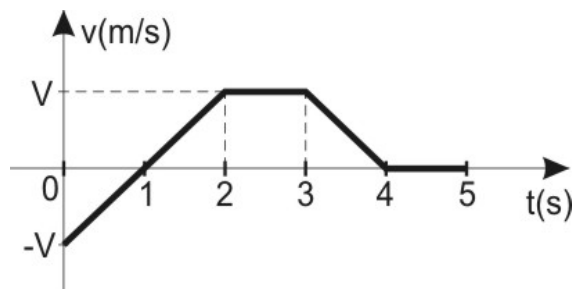
Considerando que, em t = 0, a partícula está na origem dos espaços (S₀ = 0), o gráfico que melhor representa a posição (S) dessa partícula até o instante t = 5 s é
• Aceleração da gravidade: g = 10 m/s²;
• sen 19° = cos 71° = 0,3;
• sen 71°= cos 19° = 0,9;
• Velocidade da luz no vácuo: c = 3,0 · 10⁸ m/s ;
• Constante de Planck: h = 6,6 · 10⁻³⁴ J.s;
• 1eV = 1,6 · 10⁻¹⁹ J;
• Potencial elétrico no infinito: zero.
Uma partícula é abandonada sobre um plano inclinado, a partir do repouso no ponto A, de altura h, como indicado pela figura (fora de escala). Após descer o plano inclinado, a partícula se move horizontalmente até atingir o ponto B. As forças de resistência ao movimento de A até B são desprezíveis. A partir do ponto B, a partícula então cai, livre da ação de resistência do ar, em um poço de profundidade igual a 3h e diâmetro x. Ela colide com o chão do fundo do poço e sobe, em uma nova trajetória parabólica até atingir o ponto C, o mais alto dessa nova trajetória.
Na colisão com o fundo do poço a partícula perde 50% de sua energia mecânica. Finalmente, do ponto C ao ponto D, a partícula move-se horizontalmente experimentando atrito com a superfície. Após percorrer a distância entre C e D, igual a 3h, a partícula atinge o repouso.
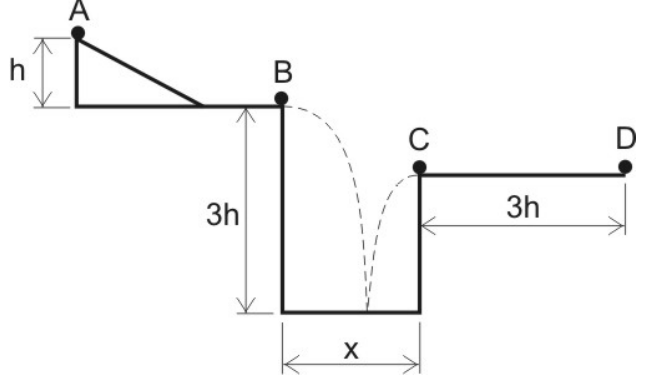
Considerando que os pontos B e C estão na borda do poço, que o coeficiente de atrito dinâmico entre a partícula e o trecho CD é igual a 0,5 e que durante a colisão com o fundo do poço a partícula não desliza, a razão entre o diâmetro do poço e a altura de onde foi abandonada a partícula, x/h, vale
• Aceleração da gravidade: g = 10 m/s²;
• sen 19° = cos 71° = 0,3;
• sen 71°= cos 19° = 0,9;
• Velocidade da luz no vácuo: c = 3,0 · 10⁸ m/s ;
• Constante de Planck: h = 6,6 · 10⁻³⁴ J.s;
• 1eV = 1,6 · 10⁻¹⁹ J;
• Potencial elétrico no infinito: zero.
Em muitos problemas de física desprezam-se as forças de resistência ao movimento. Entretanto, sabe-se que, na prática, essas forças são significativas e muitas vezes desempenham um papel determinante.
Por exemplo, “no automobilismo, os veículos comumente possuem dispositivos aerodinâmicos implementados, os quais têm a função de contribuir para o aumento da ‘Downforce’, uma força vertical, inversa à sustentação, que busca incrementar a aderência dos pneus ao asfalto através de um acréscimo na carga normal, permitindo que o veículo possa realizar as curvas com uma velocidade maior do que o faria sem estes dispositivos”.
(Trecho retirado da monografia intitulada “Sistema ativo de redução de arrasto aerodinâmico por atuador aplicado a um protótipo de fórmula SAE”, de autoria de Danilo Barbosa Porto, apresentada na Escola de Engenharia de São Carlos, da Universidade de São Paulo, em 2016).
Para avaliar o papel da “Downforce”, considere um carro de Fórmula 1, de massa M, realizando uma curva em determinada pista plana. Ao se desprezar completamente os efeitos produzidos pelo seu movimento em relação ao ar, mas considerando o atrito entre pneus e o asfalto, o carro consegue fazer a curva, sem derrapar, a uma velocidade máxima V. Porém, ao levar em conta, especificamente, a atuação da “Downforce” D (desconsiderando a força de arrasto) a velocidade máxima V' do carro, nessa mesma curva, muda em função de D. Nessas condições, o gráfico que melhor representa a relação V'/V em função de D é
• Aceleração da gravidade: g = 10 m/s²;
• sen 19° = cos 71° = 0,3;
• sen 71°= cos 19° = 0,9;
• Velocidade da luz no vácuo: c = 3,0 · 10⁸ m/s ;
• Constante de Planck: h = 6,6 · 10⁻³⁴ J.s;
• 1eV = 1,6 · 10⁻¹⁹ J;
• Potencial elétrico no infinito: zero.
Um corpo M de dimensões desprezíveis e massa 10 kg movimentando-se em uma dimensão, inicialmente com velocidade V⃗, vai sucessivamente colidindo inelasticamente com N partículas m, todas de mesma massa 1 kg, e com velocidades de módulo v = 20 m/s, que também se movimentam em uma dimensão de acordo com a Figura 1, a seguir.
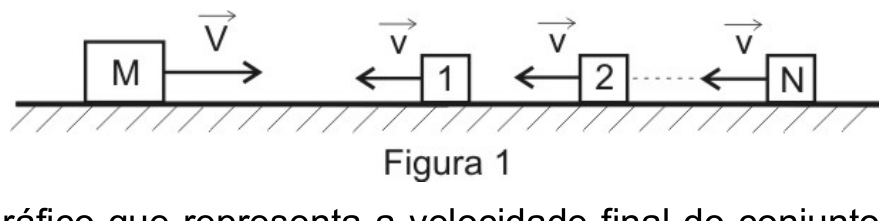
O gráfico que representa a velocidade final do conjunto vf após cada colisão em função do número de partículas N é apresentado na Figura 2, a seguir.
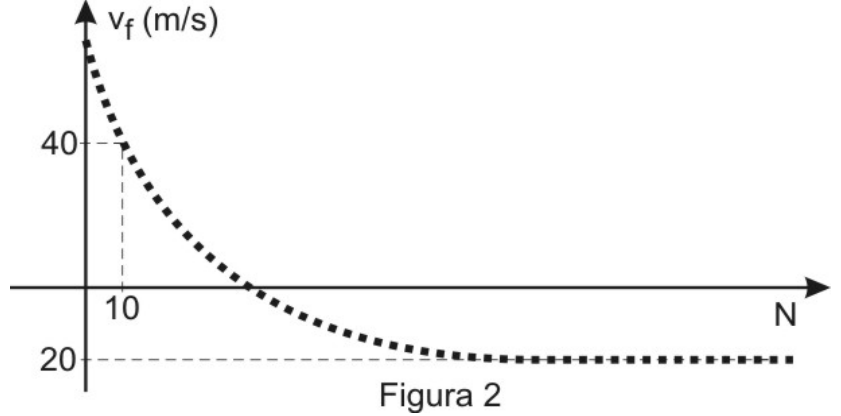
Desconsiderando as forças de atrito e a resistência do ar sobre o corpo e as partículas, a colisão de ordem N₀ na qual a velocidade do corpo resultante (corpo M + N₀ partículas m) se anula, é,
• Aceleração da gravidade: g = 10 m/s²;
• sen 19° = cos 71° = 0,3;
• sen 71°= cos 19° = 0,9;
• Velocidade da luz no vácuo: c = 3,0 · 10⁸ m/s ;
• Constante de Planck: h = 6,6 · 10⁻³⁴ J.s;
• 1eV = 1,6 · 10⁻¹⁹ J;
• Potencial elétrico no infinito: zero.
Uma rampa, homogênea, de massa m e comprimento L, é inicialmente colocada na horizontal. A extremidade A, dessa rampa, encontra-se acoplada a uma articulação sem atrito. Na extremidade B está sentado, em repouso, um garoto, também de massa m. Essa extremidade B está presa ao chão, por um fio ideal, e ao teto, por uma mola ideal, de constante elástica k, conforme ilustra a Figura 1.
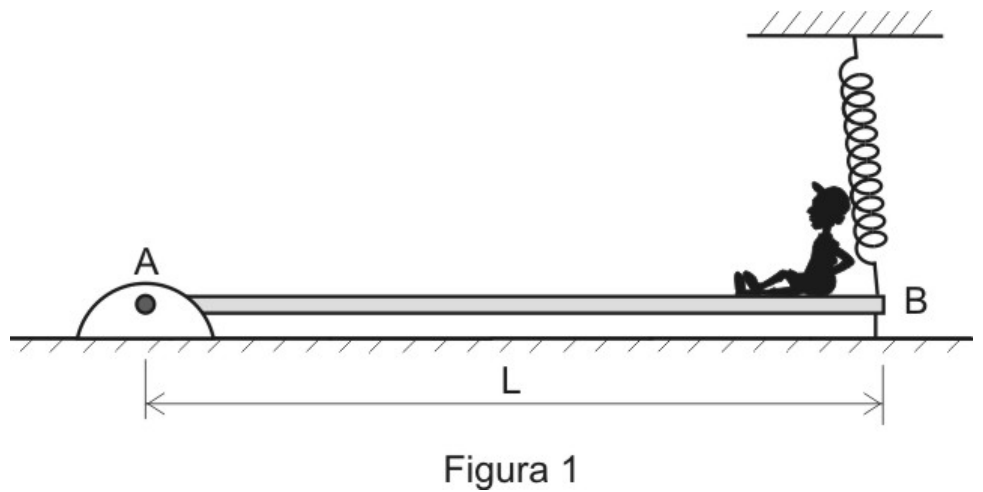
Em um determinado instante o garoto corta o fio. A mola, que está inicialmente deformada de um valor Δx, passa a erguer lentamente a extremidade B da rampa, fazendo com que o garoto escorregue, sem atrito e sem perder o contato com a rampa, até a extremidade A, conforme Figura 2.
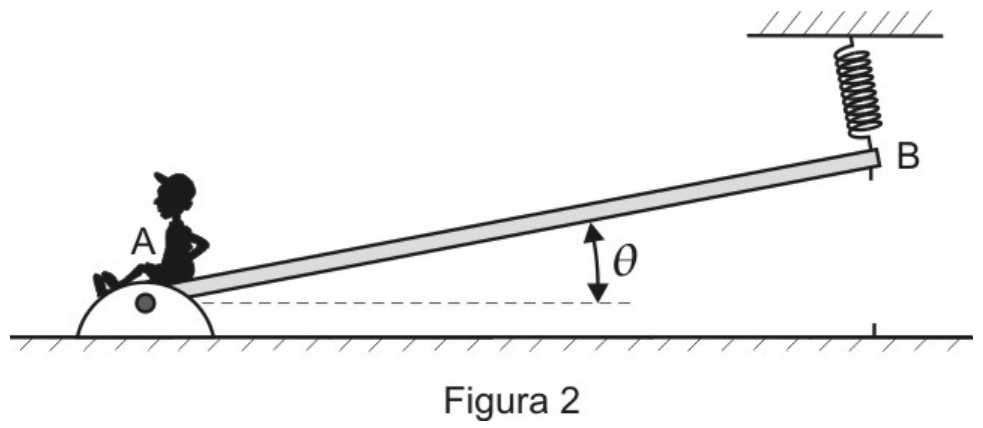
Quando o garoto, que neste caso deve ser tratado como partícula, atinge a extremidade A, a mola se encontra em seu comprimento natural (sem deformação) e a rampa estará em repouso e inclinada de um ângulo θ. Considerando g o módulo da aceleração da gravidade local, nessas condições, a velocidade do garoto em A, vale
• Aceleração da gravidade: g = 10 m/s²;
• sen 19° = cos 71° = 0,3;
• sen 71°= cos 19° = 0,9;
• Velocidade da luz no vácuo: c = 3,0 · 10⁸ m/s ;
• Constante de Planck: h = 6,6 · 10⁻³⁴ J.s;
• 1eV = 1,6 · 10⁻¹⁹ J;
• Potencial elétrico no infinito: zero.
Dois recipientes A e B, contendo o mesmo volume de água, são colocados separadamente sobre duas balanças I e II, respectivamente, conforme indicado na figura a seguir.
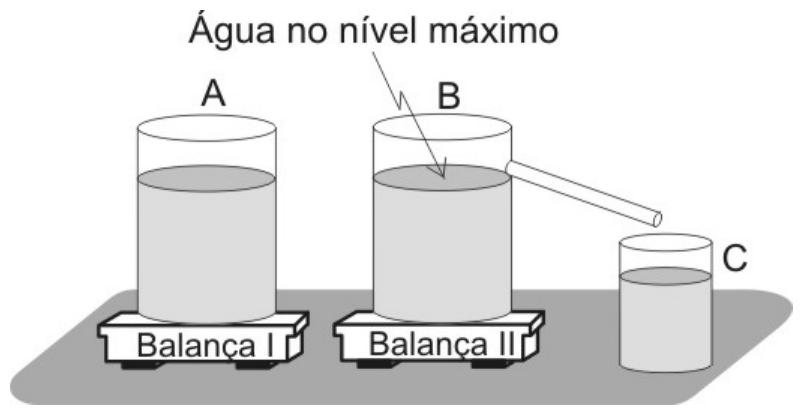
A única diferença entre os recipientes A e B está no fato de que B possui um “ladrão” que permite que a água escoe para um outro recipiente C, localizado fora das balanças.
Em seguida, mergulha-se, lentamente, sem girar e com velocidade constante, por meio de um fio ideal, em cada recipiente, um cilindro metálico, maciço, de material não homogêneo, de tal forma que o seu eixo sempre se mantém na vertical. Os cilindros vão imergindo na água, sem provocar variação de temperatura e sem encostar nas paredes e nos fundos dos recipientes, de tal forma que os líquidos, nos recipientes A e B, sempre estarão em equilíbrio hidrostático no momento da leitura nas balanças.
O gráfico que melhor representa a leitura L das balanças I e II, respectivamente, LI e LII, em função da altura h submersa de cada cilindro é
• Aceleração da gravidade: g = 10 m/s²;
• sen 19° = cos 71° = 0,3;
• sen 71°= cos 19° = 0,9;
• Velocidade da luz no vácuo: c = 3,0 · 10⁸ m/s ;
• Constante de Planck: h = 6,6 · 10⁻³⁴ J.s;
• 1eV = 1,6 · 10⁻¹⁹ J;
• Potencial elétrico no infinito: zero.
Considere dois tubos cilíndricos (1 e 2), verticais, idênticos e feitos do mesmo material, contendo um mesmo líquido em equilíbrio até a altura de 50,0 cm, conforme figura a seguir.
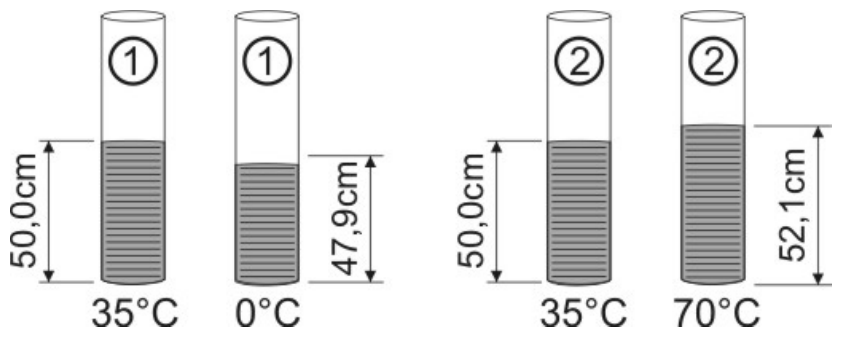
As temperaturas nos dois tubos são inicialmente iguais e de valor 35 °C. O tubo 1 é resfriado até 0 °C, enquanto o tubo 2 é aquecido até 70 °C, e a altura do líquido em cada tubo passa a ser o valor indicado na figura. Sabendo-se que o coeficiente de dilatação térmica dos tubos é desprezível quando comparado com o do líquido, o coeficiente de dilatação volumétrica do líquido, considerado constante, é, em °C⁻¹,
• Aceleração da gravidade: g = 10 m/s²;
• sen 19° = cos 71° = 0,3;
• sen 71°= cos 19° = 0,9;
• Velocidade da luz no vácuo: c = 3,0 · 10⁸ m/s ;
• Constante de Planck: h = 6,6 · 10⁻³⁴ J.s;
• 1eV = 1,6 · 10⁻¹⁹ J;
• Potencial elétrico no infinito: zero.
Um sistema gasoso constituído por n mols de um gás perfeito passa do estado x para o estado y por meio dos processos distintos 1 e 2 mostrados no esquema a seguir.
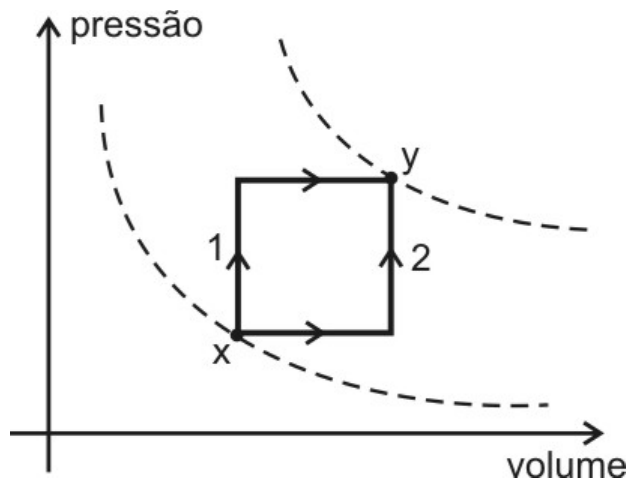
Se no processo 2 o sistema realiza um trabalho de 200 J e absorve uma quantidade de calor de 500 J, é correto afirmar que
• Aceleração da gravidade: g = 10 m/s²;
• sen 19° = cos 71° = 0,3;
• sen 71°= cos 19° = 0,9;
• Velocidade da luz no vácuo: c = 3,0 · 10⁸ m/s ;
• Constante de Planck: h = 6,6 · 10⁻³⁴ J.s;
• 1eV = 1,6 · 10⁻¹⁹ J;
• Potencial elétrico no infinito: zero.
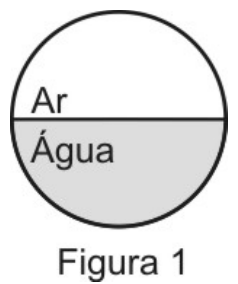
Um recipiente vazio, perfeitamente transparente, no formato de uma lente esférica delgada gaussiana, de raio a, é preenchido com água límpida e cristalina até a metade de sua capacidade (Figura 1).
Essa lente é então fixada a uma determinada distância de uma fotografia quadrada de lado 3a (Figura 2), tendo seus centros geométricos alinhados (Figura 3).
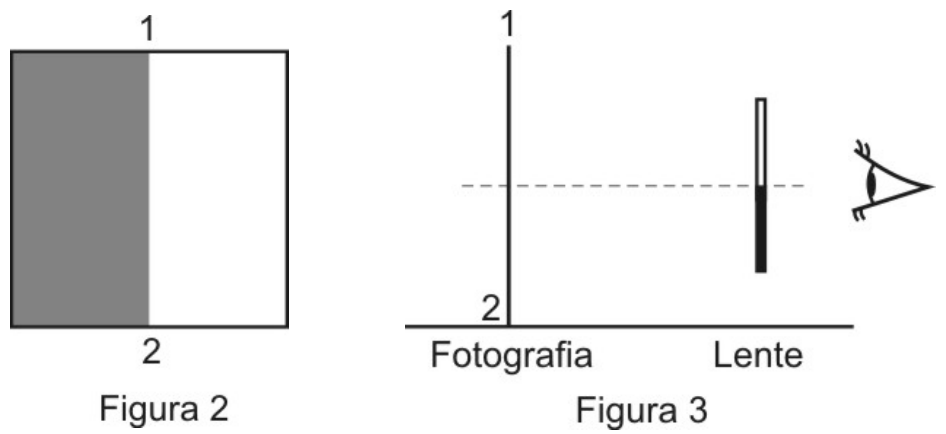
Considerando que o sistema lente-fotografia esteja imerso no ar, um observador na posição O (Figura 3), poderá observar, dentre as opções abaixo, a imagem da situação apresentada, como sendo
• Aceleração da gravidade: g = 10 m/s²;
• sen 19° = cos 71° = 0,3;
• sen 71°= cos 19° = 0,9;
• Velocidade da luz no vácuo: c = 3,0 · 10⁸ m/s ;
• Constante de Planck: h = 6,6 · 10⁻³⁴ J.s;
• 1eV = 1,6 · 10⁻¹⁹ J;
• Potencial elétrico no infinito: zero.
COMO A HIPERMETROPIA ACONTECE NA INFÂNCIA:
É muito comum bebês e crianças apresentarem algum tipo de erro refrativo, e a hipermetropia é o caso mais constante. Isso porque este tipo de ametropia (erro de refração) pode se manifestar desde a fase de recém-nascido. A hipermetropia é um erro de refração caracterizado pelo modo em que o olho, menor do que o normal, foca a imagem atrás da retina. Consequentemente, isso faz com que a visão de longe seja melhor do que a de perto. (...)
De acordo com a Dra. Liana, existem alguns fatores que podem influenciar a incidência de hipermetropia em crianças, como o ambiente, a etnia e, principalmente, a genética. “As formas leves e moderadas, com até seis dioptrias, são passadas de geração para geração (autossômica dominante). Já a hipermetropia elevada é herdada dos pais (autossômica recessiva)”, explicou a especialista.
A médica ainda relatou a importância em identificar, prematuramente, o comportamento hipermétrope da criança, caso contrário, esse problema pode afetar a rotina visual e funcional delas. “A falta de correção da hipermetropia pode dificultar o processo de aprendizado, e ainda pode reduzir, ou limitar, o desenvolvimento nas atividades da criança. Em alguns casos, pode ser responsável por repetência, evasão escolar e dificuldade na socialização, requerendo ações de identificação e tratamento”, concluiu a Dra. Liana.
Os sintomas relacionados à hipermetropia, além da dificuldade de enxergar de perto, variam entre: dores de cabeça, fadiga ocular e dificuldade de concentração em leitura.(...)
O tratamento utilizado para corrigir este tipo de anomalia é realizado através da cirurgia refrativa. O uso de óculos (com lentes esféricas) ou lentes de contato corretivas é considerado método convencional, que pode solucionar o problema visual do hipermétrope.
(Disponível em:www.cbo.net.br/novo/publicacao/revista_vejabem. Acesso em: 18 fev. 2017.)
De acordo com o texto acima, a hipermetropia pode ser corrigida com o uso de lentes esféricas. Dessa maneira, uma lente corretiva, delgada e gaussiana, de vergência igual a +2 di, conforme figura a seguir, é utilizada para projetar, num anteparo colocado a uma distância p′ da lente, a imagem de um corpo luminoso que oscila em movimento harmônico simples (MHS). A equação que descreve o movimento oscilatório desse corpo é y = (0,1) sen [4t + π/2].
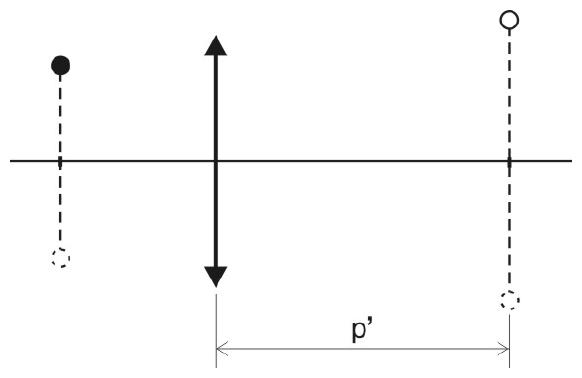
Considere que a equação que descreve a oscilação projetada no anteparo é dada por y' = (0,5) sen [4t + 3π/2] (SI).
Nessas condições, a distância p′, em cm, é
• Aceleração da gravidade: g = 10 m/s²;
• sen 19° = cos 71° = 0,3;
• sen 71°= cos 19° = 0,9;
• Velocidade da luz no vácuo: c = 3,0 · 10⁸ m/s ;
• Constante de Planck: h = 6,6 · 10⁻³⁴ J.s;
• 1eV = 1,6 · 10⁻¹⁹ J;
• Potencial elétrico no infinito: zero.
Uma fonte sonora A, em repouso, emite um sinal sonoro de frequência constante fA = 100 Hz. Um sensor S desloca-se com velocidade constante VS = 80 m/s, em relação à Terra, sobre um plano perfeitamente retilíneo, em direção à fonte sonora, como mostra a Figura 1.
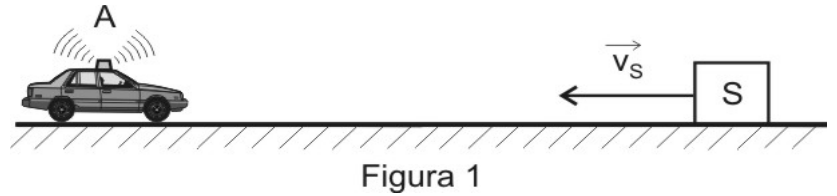
O sensor registra a frequência aparente devido à sua movimentação em relação à fonte sonora e a reenvia para um laboratório onde um sistema de caixas sonoras, acopladas a três tubos sonoros, de comprimentos L₁, L₂ e L₃, reproduz essa frequência aparente fazendo com que as colunas de ar desses tubos vibrem produzindo os harmônicos apresentados na Figura 2.
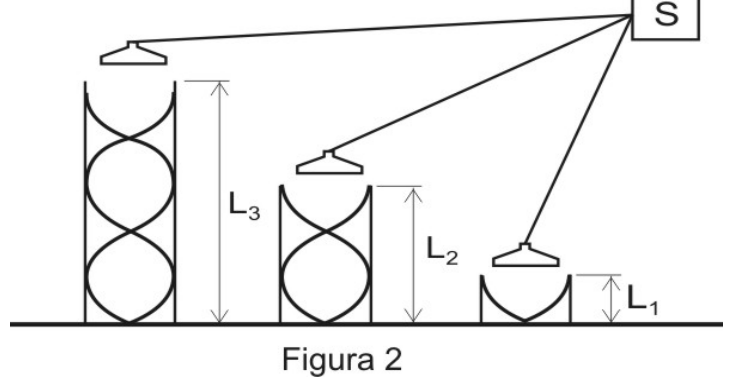
Considere que o sensor se movimenta em um local onde a velocidade do som é constante e igual a 320 m/s, que os tubos sonoros possuam diâmetros muito menores do que seus respectivos comprimentos e que a velocidade do som no interior desses tubos seja também constante e igual a 320 m/s. Considere também que a fonte A e o ar estejam em repouso em relação à Terra. Nessas condições, é correto afirmar que os comprimentos L₁, L₂ e L₃, respectivamente, em metros, são
• Aceleração da gravidade: g = 10 m/s²;
• sen 19° = cos 71° = 0,3;
• sen 71°= cos 19° = 0,9;
• Velocidade da luz no vácuo: c = 3,0 · 10⁸ m/s ;
• Constante de Planck: h = 6,6 · 10⁻³⁴ J.s;
• 1eV = 1,6 · 10⁻¹⁹ J;
• Potencial elétrico no infinito: zero.
Três cargas elétricas pontuais, q₁, q₂ e q₃, estão fixas de tal forma que os segmentos de reta que unem cada par de carga formam um triângulo equilátero com o plano na vertical, conforme ilustra a figura a seguir.
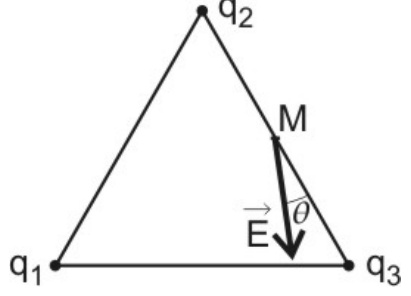
M é o ponto médio do segmento que une q₂ e q₃. A carga elétrica q₂ é positiva e igual a Q, enquanto que q₁ e q₃ são desconhecidas.Verifica-se que o vetor campo elétrico E⃗ no ponto M, gerado por estas três cargas, forma com o lado que une q₂ e q₃ um ângulo θ de 19° e está apontado para baixo. Sabendo-se, ainda, que a força elétrica de interação entre as cargas q₁ e q₂ é menor que a força elétrica entre q₂ e q₃, é correto afirmar que
Texto-base:
Texto-base:
Texto-base:
Texto-base:
Texto-base:
Texto-base:
Texto-base:
Texto-base:
Nas questões de Física, quando necessário, use:
Nas questões de Física, quando necessário, use:
Nas questões de Física, quando necessário, use:
Nas questões de Física, quando necessário, use:
Nas questões de Física, quando necessário, use:
Nas questões de Física, quando necessário, use:
Nas questões de Física, quando necessário, use:
Nas questões de Física, quando necessário, use:
Nas questões de Física, quando necessário, use:
Nas questões de Física, quando necessário, use:
Nas questões de Física, quando necessário, use:
Nas questões de Física, quando necessário, use: