← Voltar para a lista de provas Comando da Aeronáutica · Exame de Admissão aos CFOAV, CFOINT e CFOINF 2019 65 questões nesta prova · página 2 de 4 · 62 com gabarito Gabarito disponível Com base entre 0 e 1, logₐ(x²−3) ≥ 0 equivale a 0 < x²−3 ≤ 1. A raiz exige logₐ(x² − 3) ≥ 0. Como 0 < a < 1, o logaritmo é decrescente, então 0 < x² − 3 ≤ 1, isto é, 3 < x² ≤ 4. Daí √3 < |x| ≤ 2, o que dá [−2, −√3[ ∪ ]√3, 2].
A e B ignoram a condição x² > 3 (o logaritmando deve ser positivo). C esqueceria o limite superior e trataria a base como maior que 1. Só a D respeita as duas condições. Referência: Função logarítmica com base entre 0 e 1 e domínio de raiz quadrada. Resolução comentada do VaiConcursos. Gabarito disponível A reta r é a mediatriz de AB (y = x − 6). A corda mede 2√6 ≈ 4,9. Se A e B são simétricos em relação a r, então r é a mediatriz de AB. O ponto médio é (4, −2) e o coeficiente angular de AB é −1, logo r tem coeficiente 1 e equação y = x − 6. A circunferência é (x − 6)² + (y − 2)² = 8, com centro (6, 2) e raio 2√2. A distância do centro à reta x − y − 6 = 0 é |6 − 2 − 6|/√2 = √2. A corda mede n = 2√(8 − 2) = 2√6 ≈ 4,9, que pertence a [4, 5[. B, C e D indicam valores menores que 4, incompatíveis com 2√6 ≈ 4,9. Referência: Geometria analítica: mediatriz, distância ponto-reta e corda da circunferência. Resolução comentada do VaiConcursos. Gabarito disponível Gabarito disponível Gabarito disponível A tangência de A(x) com o eixo x dá a = 2. Com isso, P(x) = x⁶ − 26x³ − 27 e as três afirmativas são verdadeiras. A tangência exige discriminante nulo: 16 − 8a = 0, logo a = 2. Então P(x) = x⁶ − 26x³ − 27 = (x³ − 27)(x³ + 1), e P(−1) = 0, como exigido. Raízes reais: 3 e −1, dois pontos no eixo, então a 1ª é V. As raízes de menor módulo (x³ = −1) têm módulo 1 e formam um triângulo equilátero inscrito na circunferência unitária, de lado √3 e perímetro 3√3, então a 2ª é V. Em x³ = 27 as raízes não reais somam −3 (a soma das três é 0 e a real é 3). Em x³ = −1 elas somam 1 (a soma das três é 0 e a real é −1). Total: −3 + 1 = −2, então a 3ª é V. B, C e D contêm pelo menos um F, mas as três afirmativas são verdadeiras. Só A (V–V–V) está correta. Referência: Polinômios: discriminante, fatoração e raízes complexas da unidade. Resolução comentada do VaiConcursos. Gabarito disponível Combinatória com extremidades fixadas e dois blocos: 72 · 12 · 9! = 864 · 9!. Os alunos com menção honrosa ficam numa única ordem fixa, o que dá 1 modo. Nas pontas da fila de medalhistas vão 2 alunos do 2º esquadrão, em 9·8 = 72 modos. No meio ficam 12 alunos: 7 do 2º esquadrão, o bloco dos 2 do 1º e o bloco dos 3 do 3º. São 7 + 2 = 9 unidades, permutadas de 9! modos. Dentro dos blocos há 2! · 3! = 12 permutações. Total: 72 · 12 · 9! = 864 · 9!. A, B e C omitem algum fator: a permutação interna dos blocos (2! · 3! = 12) ou a escolha ordenada dos alunos das extremidades (72). Só a D inclui todos. Referência: Princípio multiplicativo e permutações com agrupamentos (blocos). Resolução comentada do VaiConcursos. Gabarito disponível Gabarito disponível Os focos da elipse estão dentro dela, então a circunferência de diâmetro F₁F₂ não a toca. A afirmação incorreta é a D. Em x²/36 + y²/32 = 1, c² = 36 − 32 = 4, logo F₁ e F₂ são (±2, 0). A circunferência λ de diâmetro F₁F₂ é x² + y² = 4. A hipérbole equilátera β tem eixo real de extremidades (±2, 0), logo x² − y² = 4. A menor distância da elipse à origem é b = √32 > 2, então a circunferência λ fica toda no interior da elipse e α ∩ λ = ∅. Portanto, afirmar α ∩ λ ≠ ∅ é incorreto. A) Verdadeira: α ∩ λ = ∅, portanto a interseção tripla também é vazia. B) Verdadeira: de x² + y² = 4 e x² − y² = 4 obtém-se y = 0 e x = ±2, isto é, {F₁, F₂}. C) Verdadeira: x²/36 + (x² − 4)/32 = 1 dá x² = 324/17 e y² = 256/17, ambos positivos, o que resulta em 4 pontos distintos. D) Incorreta, é o gabarito, porque α ∩ λ é vazia. Referência: Geometria analítica: elipse, hipérbole equilátera e circunferência. Resolução comentada do VaiConcursos. Gabarito disponível Gabarito disponível Gabarito disponível A probabilidade de a soma ser 12 em três lançamentos de um dado de 6 faces é 25/216 ≈ 11,6%. Há 6³ = 216 resultados equiprováveis. As combinações com soma 12 são: permutações de {1,5,6}: 6; {2,4,6}: 6; {2,5,5}: 3; {3,3,6}: 3; {3,4,5}: 6; {4,4,4}: 1, totalizando 25. Logo P = 25/216 ≈ 11,57%, valor entre 11% e 13%. A) 11,57% não é menor que 3%. B) Está acima de 10%. D) Está abaixo de 13%. Referência: Probabilidade: espaço amostral equiprovável. Resolução comentada do VaiConcursos. Gabarito disponível Gabarito disponível A mensagem de Jung é que enfrentar e conhecer nosso lado oculto nos faz crescer. A seção 'Shadow confrontation' diz que precisamos confrontar e entender nossa natureza oculta para crescer como seres humanos. A alternativa A parafraseia essa ideia. B) O texto não diz que somos condicionados a esperar mais dos heróis. C) Não há estudo sobre sermos ou não 'fiends'. D) O texto não diz que heróis dominam o mundo; aliás, afirma que 'good guys don't ache to dominate'. Referência: Texto: 'Shadow confrontation'. Resolução comentada do VaiConcursos. Gabarito disponível 'More than meets the eye' não significa estar consciente do que está ao redor. A expressão indica que algo é mais complexo ou envolve mais do que parece à primeira vista. B, 'estar consciente do que o rodeia', não tem relação com isso, então é a incorreta. A, C e D expressam a ideia de maior complexidade, que é o sentido da expressão. Referência: Expressão idiomática 'more than meets the eye'. Resolução comentada do VaiConcursos. Gabarito disponível Gabarito disponível A pergunta em discurso indireto vira 'asked if... was healthy'. No discurso indireto, perguntas sim/não usam 'asked if/whether', com ordem de frase afirmativa e recuo do tempo verbal (is → was). D faz isso corretamente. A) 'replied' não introduz a pergunta e mantém aspas, ou seja, não é indireto. B e C) Transformam a pergunta em afirmação e alteram o tempo/sentido. Referência: Reported speech: yes/no questions. Resolução comentada do VaiConcursos. Gabarito disponível Para Freud, o id indisciplinado (princípio do prazer) é contido pela sociedade. O texto diz que o id busca o prazer, 'born to be bad but held back by society'. Isso corresponde a 'the undisciplined principle controlled by society'. A) Pavlov/Skinner falam de aprendizado e reforço, não de conhecimento consciente. B) Jung fala de enfrentar o lado oculto, não de escondê-lo. D) Maslow trata da carência dessas necessidades, não da falta de necessidade. Referência: Texto: 'Wish fulfillment'. Resolução comentada do VaiConcursos. Gabarito disponível Apenas D tem a forma interrogativa gramaticalmente correta. Quando 'what' ou 'who' é o sujeito, não se usa auxiliar, e o verbo vai na 3ª pessoa do singular: 'What drives...?'. Assim, D está correta. A) Após 'does' o verbo fica sem 's': 'intrigue'. B e C) 'Who' como sujeito exige o verbo no singular: 'runs'/'exists'. Referência: Interrogative forms: subject questions. Resolução comentada do VaiConcursos. Gabarito disponível Gabarito disponível 'People who haven't met basic needs will have difficulty maturing' equivale a 'unless people fulfill basic needs, maturing won't be easy'. Quem não supre as necessidades básicas terá dificuldade para amadurecer. 'Unless' equivale a 'if not'. C expressa isso corretamente. A) Inverte causa e consequência. B) Muda o sujeito (o próprio Maslow). D) 'Unless... won't have difficulty' diz o oposto. Referência: Conditionals: unless = if not. Resolução comentada do VaiConcursos.Comando da Aeronáutica — Exame de Admissão aos CFOAV, CFOINT e CFOINF 2019 — Língua Portuguesa, Matemática, Língua Inglesa, Física e Redação — Versão A
Resolução comentada
Análise das alternativas
Se essa reta r determina na circunferência x² + y² − 12x − 4y + 32 = 0 uma corda que mede n unidades de comprimento, então n pertence ao intervaloResolução comentada
Análise das alternativas
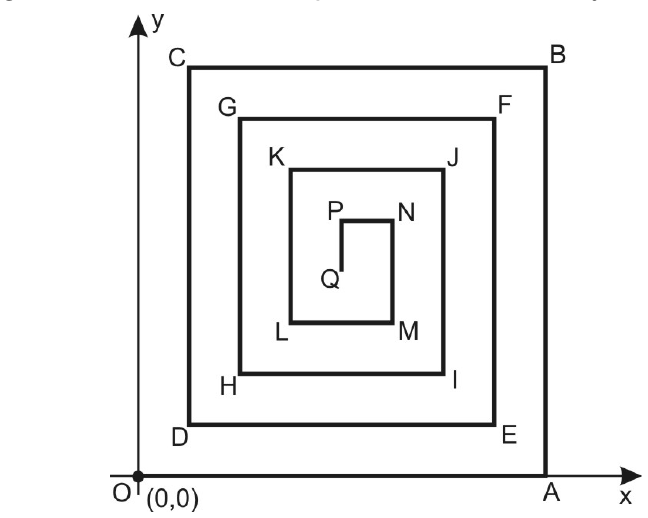
Sabe-se que:
• os comprimentos de segmentos consecutivos da poligonal, que começa na origem O(0, 0) e termina em Q, formam uma progressão aritmética decrescente de razão r e primeiro termo a₁, em que (−1/15 < r < 0);
• dois comprimentos consecutivos da poligonal são sempre perpendiculares;
• O̅A̅ = a₁, A̅B̅ = a₂, B̅C̅ = a₃, e, assim sucessivamente, até P̅Q̅ = a₁₆
Suponha que uma formiga parta da origem O(0, 0), e percorra a trajetória descrita pela poligonal até chegar ao ponto Q
Com base nas informações acima, analise as proposições abaixo.
I. Se a₁ = 1 e r = −1/16, então a distância d percorrida pela formiga até chegar ao ponto Q é tal que d = (17/2)a₁
II. Quando a formiga estiver na posição do ponto L(x, y), então x = −6r
III. Se a₁ = 1, então de A até C, a formiga percorrerá a distância d = 2 + 3r
Quanto a veracidade das proposições, tem-se
Inicialmente, começaram vendendo cada bombom por R$ 4,00. Assim, perceberam que vendiam, em média, 50 bombons por dia.
A partir dos conhecimentos que os alunos tinham sobre função, estimaram que para cada 5 centavos de desconto no preço de cada bombom (não podendo conceder mais que 70 descontos), seria possível vender 5 bombons a mais por dia.
Considere:
• p o preço de cada bombom;
• n o número de bombons vendidos, em média, por dia;
• x ∈ IN o número de reduções de 5 centavos concedidas no preço unitário de cada bombom; e
• y a arrecadação diária com a venda dos bombons.
Com base nessas informações, analise as proposições abaixo.
(02) O gráfico que expressa n em função de p está contido no segmento A̅B̅ do gráfico abaixo.
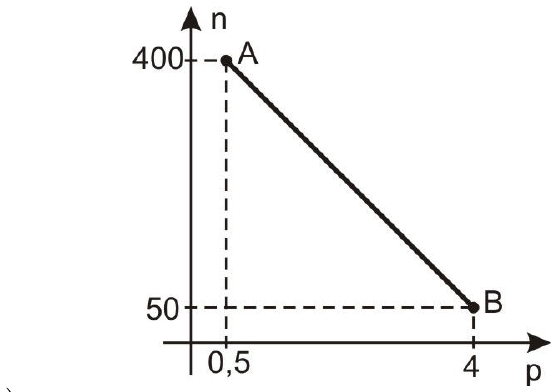
(04) A maior arrecadação diária possível com a venda dos bombons, considerando os descontos de 5 centavos, ocorre quando concederem 35 descontos de 5 centavos.
(08) Se forem concedidos 20 descontos de 5 centavos, serão vendidos mais de 100 bombons por dia.
A soma das proposições verdadeiras é igual a
Sabendo também que, graficamente, A(x) tangencia o eixo O⃡x, analise as afirmativas abaixo e escreva V para verdadeira e F para falsa.
( ) O gráfico de P(x) corta o eixo O⃡x em dois pontos.
( ) Os afixos das raízes de P(x) que possuem menor módulo formam um triângulo cujo perímetro mede 3√3 unidades de comprimento.
( ) A soma das raízes imaginárias de P(x) é igual a −2
A sequência correta éResolução comentada
Análise das alternativas
Desses alunos, 14 ganharam medalhas, sendo 3 alunos do 3º esquadrão, 9 do 2º esquadrão e 2 do 1º esquadrão.
Os demais receberam menção honrosa, sendo 2 alunos do 3º esquadrão, 4 do 2º esquadrão e 2 do 1º esquadrão.
Para homenagear os alunos premiados, fez-se uma fotografia para ser publicada pela Nascentv em uma rede social.
Admitindo-se que, na fotografia, os alunos que receberam menção honrosa ficaram agachados, sempre numa única ordem, sem alteração de posição entre eles, à frente de uma fila na qual se posicionaram os alunos medalhistas, de modo que, nesta fila:
• as duas extremidades foram ocupadas somente por alunos do 2º esquadrão que receberam medalha;
• os alunos do 1º esquadrão, que receberam medalha, ficaram um ao lado do outro; e
• os alunos do 3º esquadrão, que receberam medalha, ficaram, também, um ao lado do outro.
Marque a alternativa que contém o número de fotografias distintas possíveis que poderiam ter sido feitas.Resolução comentada
Análise das alternativas
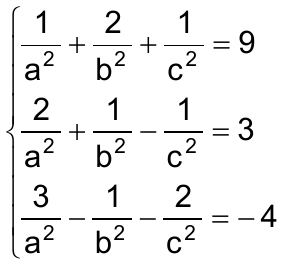
Sabendo-se que a, b e c são números reais não nulos, é INCORRETO afirmar que
É INCORRETO afirmar queResolução comentada
Análise das alternativas

Se o determinante do produto matricial AB é um número real positivo ou nulo, então os valores de x, no ciclo trigonométrico, que satisfazem essa condição estão representados em
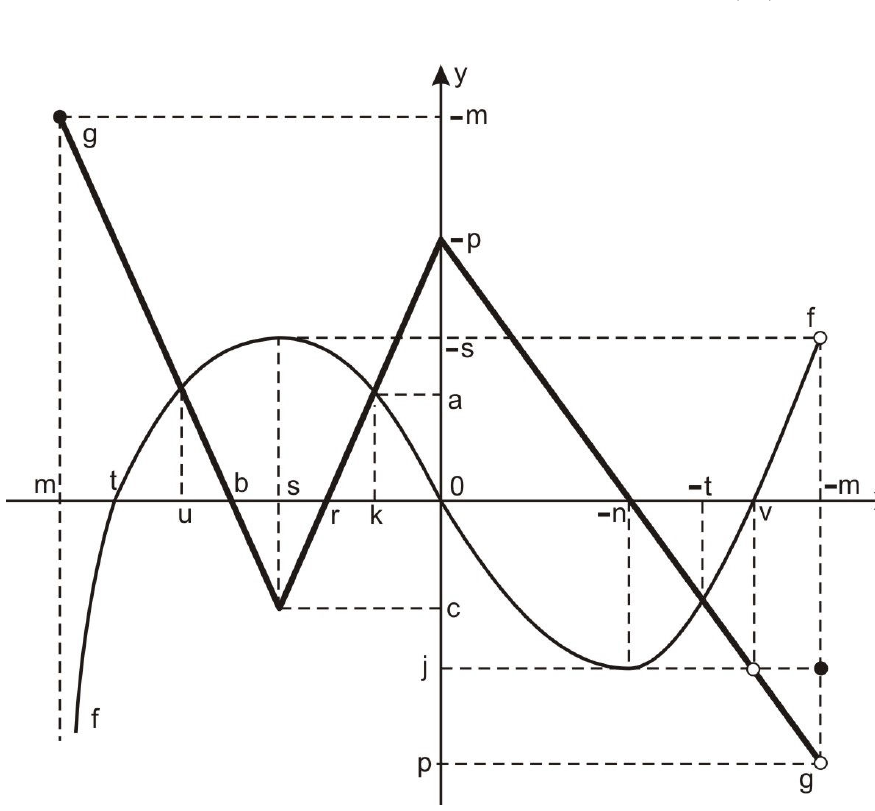
Nas afirmativas abaixo, escreva V para verdadeira e F para falsa.
( ) O conjunto imagem da função g é dado por Im(g) = ]p, −m]
( ) A função h definida por h(x) = f(x) · g(x) assume valores não negativos somente se x ∈ [t, b] ∪ [r, 0]
( ) A função j definida por j(x) = g(x) − p é maior que zero para todo x ∈ ([m, −m[ − {v})
A sequência correta é
Ainda que proibidos, bancas de alguns desses jogos são comumente encontradas em festas populares Brasil afora.
Exemplo desses jogos é aquele em que o jogador tem 1 bolinha para lançar sobre uma rampa, levemente inclinada, e deverá acertar uma das “casinhas” numeradas de 1 a 6
Geralmente, o dono da banca de jogo impõe condições para que o jogador ganhe um prêmio.
Suponha que uma condição de sorte seja, desconsiderando quaisquer outras influências, lançar a bolinha três vezes sucessivas de modo que, ao final dos três lançamentos, seja observado que a soma dos números das casinhas é igual a 12
Desse modo, a probabilidade de se ter sorte nesse jogo éResolução comentada
Análise das alternativas
Inicialmente, partiu-se de um cubo sólido de volume igual a 19683 cm³
Do interior desse cubo, retirou-se, sem perda de material, um sólido formado por dois troncos de pirâmide idênticos e um prisma reto, como mostra o esquema da figura a seguir.
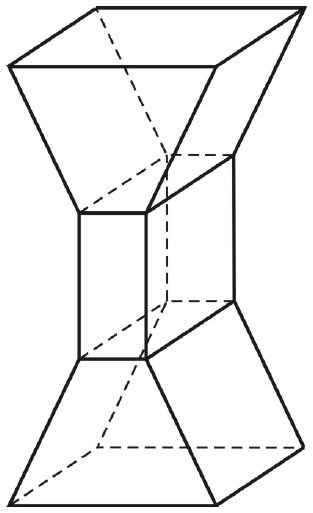
Sabe-se que:
• as bases maiores dos troncos estão contidas em faces opostas do cubo;
• as bases dos troncos são quadradas;
• a diagonal da base maior de cada tronco está contida na diagonal da face do cubo que a contém e mede a sua terça parte;
• a diagonal da base menor de cada tronco mede a terça parte da diagonal da base maior do tronco; e
• os troncos e o prisma têm alturas iguais.
Assim, o volume do objeto de decoração obtido da diferença entre o volume do cubo e o volume do sólido esquematizado na figura acima, em cm³, é um número do intervalo
Directions: Answer questions 33 to 48 according to the text.
TEXT
WHY DO SUPERVILLAINS FASCINATE US? A
PSYCHOLOGICAL PERSPECTIVE
Why are we fascinated by supervillains? Posing
the question is much like asking why evil itself intrigues
us, but there's much more to our continued interest in
supervillains than meets the eye.
5 Not only do Lex Luthor, Dracula and the Red Skull
run unconstrained by conventional morality, they exist
outside the limits of reality itself. Their evil, even at its
most realistic, retains a touch of the unreal.
But is our fascination with fantastic fiends¹
10 healthy? From a psychological perspective, views vary
on what drives our enduring interest in superhuman bad
guys.
Shadow confrontation: Psychiatrist Carl Jung
believed we need to confront and understand our own
15 hidden nature to grow as human beings. Healthy
confrontation with our shadow selves can unearth new
strengths (e.g., Bruce Wayne creating his Dark Knight
persona to fight crime), whereas unhealthy attempts at
confrontation may involve dwelling on or unleashing the
20 worst parts of ourselves.
Wish fulfillment: Sigmund Freud viewed human
nature as inherently antisocial, biologically driven by the
undisciplined id's pleasure principle to get what we
want when we want it – born to be bad but held back by
25 society. Even if the psyche fully develops its ego
(source of self-control) and superego (conscience),
Freudians say the id still dwells² underneath, and it
wishes for many selfish things – so it would love to be
supervillainous.
30 Hierarchy of needs: Humanistic psychologist
Abraham Maslow held that people who haven't met
their most basic needs will have difficulty maturing. If
starved for food, you're unlikely to feel secure. If
starved for love and companionship, you'll have trouble
35 building self-esteem. People who dwell on their deficits
may envy and resent others who have more than they
do. Some people who are unable to overcome social
shortcomings fantasize about obtaining any means,
good or bad, to satisfy every need and greed.
40 Conditioning: Ivan Pavlov would say we can learn
to associate supervillains with other things we value –
like entertainment, strength, freedom or the heroes
themselves. Behaviorist B.F. Skinner would likely argue
that we can find it reinforcing to watch or read about
45 supervillains, but without knowing what's reinforcing
about them, that's a bit like saying it's rewarding
because it's rewarding.
Our Motivations for Seeking Out Supervillains
Throughout history, humans have been captivated
50 by stories of heroes facing off against superhuman
foes³. But what specific rewards, needs, wishes and
dark dreams do supervillains satisfy?
Freedom: Superpowered characters enjoy
freedoms the rest of us don't. Nobody can arrest
55 Superman unless he lets them (at least not without
kryptonite handcuffs). As much time as supervillains
spend locked up, they seem to escape as often as they
please, to run unconstrained by rules and regulations.
Cosplayers who dress like Wonder Woman and
60 Captain America can't do any crazy thing that crosses
their minds without seeming to mock and insult our
heroes, whereas those dressed as villains get to go
wild. Supervillainy feels liberating.
Power: Maybe you envy the power these evil
65 characters wield⁴. While that's also a reason to adore
superheroes, good guys don't ache to dominate.
Stories like Watchmen and Kingdom Come show how
heroes become menaces⁵ when they try to take over.
So when dreaming of superpowers, maybe you relate
70 to characters who dream of power as well, from the
Scarecrow (who controls individuals' fears) to Doctor
Doom (who's perpetually out to dominate the world).
Better villain than victim: Physiologically, anger
activates us and feels better than anxiety or fear. One
75 who feels victimized and cannot figure out constructive
ways to stand up, be strong or become heroic might
twist the need for self-assertion into destruction.
Alternately, a healthy person simply might focus on how
all characters assert themselves in any given story.
80 Better villain equals better hero: A hero only
appears as heroic as the challenge he or she must
overcome. Great heroes require great villains. Without
supercriminals, the world's finest heroes seem like
overpowered brutes nabbing thugs⁶ unworthy of them.
85 Through myths, legends and lore across time, we have
needed heroes who rise to the occasion, overcome
great odds⁷ and take down giants.
Facing our fears: Instead of dreading the
darkness, you might reduce that dread by shining a
90 light and seeing what's out there. Fiction can help us
feel empowered and enlightened without literally
8 9
traipsing into mob hangouts⁸ and poorly lit alleyways⁹.
Exploring the unknown: Our need to challenge
the unknown has driven the human race to cover the
95 globe. This powerful curiosity makes us wonder about
everything that baffles¹⁰ us, including the world's worst
fiends. Knowledge is power, or at least feels like it.
When gritty details repulse us, exploring evil through the
filter of fiction can help us contemplate humanity's
100 worst without turning away or dwelling almost
voyeuristically on real human tragedy. Even when the
fiction is about improbable people doing impossible
things, the story's fantastic nature reassures us that this
cannot happen – and therefore we don't have to turn
105 away.
Supervillains' Ultimate Purpose
In the end, our interest in supervillains can be
healthy or unhealthy. Even the more maladaptive
reasons for such fascination tend to arise from
110 motivations that were originally healthy and natural –
frustrated drives that went the wrong way.
Remember, though, that superheroic fiction
ultimately begins and ends with the heroes. Comic book
writers and artists create supervillains, who move in and
115 out as guest stars and supporting cast, first and
foremost to reveal how heroic the comics' stars can be.
(Adapted from https://www.wired.com/2012/07/why-do-supervillains-fascinate-us/)
Glossary:
1. fiend – an evil and cruel person
2. to dwell – remain
3. foe – an enemy
4. to wield – influence, use power
5. menace – threat
6. to nab thugs – arrest criminals
7. odds – probability
8. to traipse into mob hangouts – walk among places where gangs, criminals meet
9. poorly lit alleyways – narrow road or path with little light
10. to baffle – confuse somebody completely
One of the messages below is mentioned in the text. Mark it.Resolução comentada
Análise das alternativas
Directions: Answer questions 33 to 48 according to the text.
TEXT
WHY DO SUPERVILLAINS FASCINATE US? A
PSYCHOLOGICAL PERSPECTIVE
Why are we fascinated by supervillains? Posing
the question is much like asking why evil itself intrigues
us, but there's much more to our continued interest in
supervillains than meets the eye.
5 Not only do Lex Luthor, Dracula and the Red Skull
run unconstrained by conventional morality, they exist
outside the limits of reality itself. Their evil, even at its
most realistic, retains a touch of the unreal.
But is our fascination with fantastic fiends¹
10 healthy? From a psychological perspective, views vary
on what drives our enduring interest in superhuman bad
guys.
Shadow confrontation: Psychiatrist Carl Jung
believed we need to confront and understand our own
15 hidden nature to grow as human beings. Healthy
confrontation with our shadow selves can unearth new
strengths (e.g., Bruce Wayne creating his Dark Knight
persona to fight crime), whereas unhealthy attempts at
confrontation may involve dwelling on or unleashing the
20 worst parts of ourselves.
Wish fulfillment: Sigmund Freud viewed human
nature as inherently antisocial, biologically driven by the
undisciplined id's pleasure principle to get what we
want when we want it – born to be bad but held back by
25 society. Even if the psyche fully develops its ego
(source of self-control) and superego (conscience),
Freudians say the id still dwells² underneath, and it
wishes for many selfish things – so it would love to be
supervillainous.
30 Hierarchy of needs: Humanistic psychologist
Abraham Maslow held that people who haven't met
their most basic needs will have difficulty maturing. If
starved for food, you're unlikely to feel secure. If
starved for love and companionship, you'll have trouble
35 building self-esteem. People who dwell on their deficits
may envy and resent others who have more than they
do. Some people who are unable to overcome social
shortcomings fantasize about obtaining any means,
good or bad, to satisfy every need and greed.
40 Conditioning: Ivan Pavlov would say we can learn
to associate supervillains with other things we value –
like entertainment, strength, freedom or the heroes
themselves. Behaviorist B.F. Skinner would likely argue
that we can find it reinforcing to watch or read about
45 supervillains, but without knowing what's reinforcing
about them, that's a bit like saying it's rewarding
because it's rewarding.
Our Motivations for Seeking Out Supervillains
Throughout history, humans have been captivated
50 by stories of heroes facing off against superhuman
foes³. But what specific rewards, needs, wishes and
dark dreams do supervillains satisfy?
Freedom: Superpowered characters enjoy
freedoms the rest of us don't. Nobody can arrest
55 Superman unless he lets them (at least not without
kryptonite handcuffs). As much time as supervillains
spend locked up, they seem to escape as often as they
please, to run unconstrained by rules and regulations.
Cosplayers who dress like Wonder Woman and
60 Captain America can't do any crazy thing that crosses
their minds without seeming to mock and insult our
heroes, whereas those dressed as villains get to go
wild. Supervillainy feels liberating.
Power: Maybe you envy the power these evil
65 characters wield⁴. While that's also a reason to adore
superheroes, good guys don't ache to dominate.
Stories like Watchmen and Kingdom Come show how
heroes become menaces⁵ when they try to take over.
So when dreaming of superpowers, maybe you relate
70 to characters who dream of power as well, from the
Scarecrow (who controls individuals' fears) to Doctor
Doom (who's perpetually out to dominate the world).
Better villain than victim: Physiologically, anger
activates us and feels better than anxiety or fear. One
75 who feels victimized and cannot figure out constructive
ways to stand up, be strong or become heroic might
twist the need for self-assertion into destruction.
Alternately, a healthy person simply might focus on how
all characters assert themselves in any given story.
80 Better villain equals better hero: A hero only
appears as heroic as the challenge he or she must
overcome. Great heroes require great villains. Without
supercriminals, the world's finest heroes seem like
overpowered brutes nabbing thugs⁶ unworthy of them.
85 Through myths, legends and lore across time, we have
needed heroes who rise to the occasion, overcome
great odds⁷ and take down giants.
Facing our fears: Instead of dreading the
darkness, you might reduce that dread by shining a
90 light and seeing what's out there. Fiction can help us
feel empowered and enlightened without literally
8 9
traipsing into mob hangouts⁸ and poorly lit alleyways⁹.
Exploring the unknown: Our need to challenge
the unknown has driven the human race to cover the
95 globe. This powerful curiosity makes us wonder about
everything that baffles¹⁰ us, including the world's worst
fiends. Knowledge is power, or at least feels like it.
When gritty details repulse us, exploring evil through the
filter of fiction can help us contemplate humanity's
100 worst without turning away or dwelling almost
voyeuristically on real human tragedy. Even when the
fiction is about improbable people doing impossible
things, the story's fantastic nature reassures us that this
cannot happen – and therefore we don't have to turn
105 away.
Supervillains' Ultimate Purpose
In the end, our interest in supervillains can be
healthy or unhealthy. Even the more maladaptive
reasons for such fascination tend to arise from
110 motivations that were originally healthy and natural –
frustrated drives that went the wrong way.
Remember, though, that superheroic fiction
ultimately begins and ends with the heroes. Comic book
writers and artists create supervillains, who move in and
115 out as guest stars and supporting cast, first and
foremost to reveal how heroic the comics' stars can be.
(Adapted from https://www.wired.com/2012/07/why-do-supervillains-fascinate-us/)
Glossary:
1. fiend – an evil and cruel person
2. to dwell – remain
3. foe – an enemy
4. to wield – influence, use power
5. menace – threat
6. to nab thugs – arrest criminals
7. odds – probability
8. to traipse into mob hangouts – walk among places where gangs, criminals meet
9. poorly lit alleyways – narrow road or path with little light
10. to baffle – confuse somebody completely
Mark the INCORRECT alternative.
“[…] there's much more to our continued interest in supervillains than meets the eye.” (lines 3 and 4)
If there’s more to something than meets the eye, it means thatResolução comentada
Análise das alternativas
Directions: Answer questions 33 to 48 according to the text.
TEXT
WHY DO SUPERVILLAINS FASCINATE US? A
PSYCHOLOGICAL PERSPECTIVE
Why are we fascinated by supervillains? Posing
the question is much like asking why evil itself intrigues
us, but there's much more to our continued interest in
supervillains than meets the eye.
5 Not only do Lex Luthor, Dracula and the Red Skull
run unconstrained by conventional morality, they exist
outside the limits of reality itself. Their evil, even at its
most realistic, retains a touch of the unreal.
But is our fascination with fantastic fiends¹
10 healthy? From a psychological perspective, views vary
on what drives our enduring interest in superhuman bad
guys.
Shadow confrontation: Psychiatrist Carl Jung
believed we need to confront and understand our own
15 hidden nature to grow as human beings. Healthy
confrontation with our shadow selves can unearth new
strengths (e.g., Bruce Wayne creating his Dark Knight
persona to fight crime), whereas unhealthy attempts at
confrontation may involve dwelling on or unleashing the
20 worst parts of ourselves.
Wish fulfillment: Sigmund Freud viewed human
nature as inherently antisocial, biologically driven by the
undisciplined id's pleasure principle to get what we
want when we want it – born to be bad but held back by
25 society. Even if the psyche fully develops its ego
(source of self-control) and superego (conscience),
Freudians say the id still dwells² underneath, and it
wishes for many selfish things – so it would love to be
supervillainous.
30 Hierarchy of needs: Humanistic psychologist
Abraham Maslow held that people who haven't met
their most basic needs will have difficulty maturing. If
starved for food, you're unlikely to feel secure. If
starved for love and companionship, you'll have trouble
35 building self-esteem. People who dwell on their deficits
may envy and resent others who have more than they
do. Some people who are unable to overcome social
shortcomings fantasize about obtaining any means,
good or bad, to satisfy every need and greed.
40 Conditioning: Ivan Pavlov would say we can learn
to associate supervillains with other things we value –
like entertainment, strength, freedom or the heroes
themselves. Behaviorist B.F. Skinner would likely argue
that we can find it reinforcing to watch or read about
45 supervillains, but without knowing what's reinforcing
about them, that's a bit like saying it's rewarding
because it's rewarding.
Our Motivations for Seeking Out Supervillains
Throughout history, humans have been captivated
50 by stories of heroes facing off against superhuman
foes³. But what specific rewards, needs, wishes and
dark dreams do supervillains satisfy?
Freedom: Superpowered characters enjoy
freedoms the rest of us don't. Nobody can arrest
55 Superman unless he lets them (at least not without
kryptonite handcuffs). As much time as supervillains
spend locked up, they seem to escape as often as they
please, to run unconstrained by rules and regulations.
Cosplayers who dress like Wonder Woman and
60 Captain America can't do any crazy thing that crosses
their minds without seeming to mock and insult our
heroes, whereas those dressed as villains get to go
wild. Supervillainy feels liberating.
Power: Maybe you envy the power these evil
65 characters wield⁴. While that's also a reason to adore
superheroes, good guys don't ache to dominate.
Stories like Watchmen and Kingdom Come show how
heroes become menaces⁵ when they try to take over.
So when dreaming of superpowers, maybe you relate
70 to characters who dream of power as well, from the
Scarecrow (who controls individuals' fears) to Doctor
Doom (who's perpetually out to dominate the world).
Better villain than victim: Physiologically, anger
activates us and feels better than anxiety or fear. One
75 who feels victimized and cannot figure out constructive
ways to stand up, be strong or become heroic might
twist the need for self-assertion into destruction.
Alternately, a healthy person simply might focus on how
all characters assert themselves in any given story.
80 Better villain equals better hero: A hero only
appears as heroic as the challenge he or she must
overcome. Great heroes require great villains. Without
supercriminals, the world's finest heroes seem like
overpowered brutes nabbing thugs⁶ unworthy of them.
85 Through myths, legends and lore across time, we have
needed heroes who rise to the occasion, overcome
great odds⁷ and take down giants.
Facing our fears: Instead of dreading the
darkness, you might reduce that dread by shining a
90 light and seeing what's out there. Fiction can help us
feel empowered and enlightened without literally
8 9
traipsing into mob hangouts⁸ and poorly lit alleyways⁹.
Exploring the unknown: Our need to challenge
the unknown has driven the human race to cover the
95 globe. This powerful curiosity makes us wonder about
everything that baffles¹⁰ us, including the world's worst
fiends. Knowledge is power, or at least feels like it.
When gritty details repulse us, exploring evil through the
filter of fiction can help us contemplate humanity's
100 worst without turning away or dwelling almost
voyeuristically on real human tragedy. Even when the
fiction is about improbable people doing impossible
things, the story's fantastic nature reassures us that this
cannot happen – and therefore we don't have to turn
105 away.
Supervillains' Ultimate Purpose
In the end, our interest in supervillains can be
healthy or unhealthy. Even the more maladaptive
reasons for such fascination tend to arise from
110 motivations that were originally healthy and natural –
frustrated drives that went the wrong way.
Remember, though, that superheroic fiction
ultimately begins and ends with the heroes. Comic book
writers and artists create supervillains, who move in and
115 out as guest stars and supporting cast, first and
foremost to reveal how heroic the comics' stars can be.
(Adapted from https://www.wired.com/2012/07/why-do-supervillains-fascinate-us/)
Glossary:
1. fiend – an evil and cruel person
2. to dwell – remain
3. foe – an enemy
4. to wield – influence, use power
5. menace – threat
6. to nab thugs – arrest criminals
7. odds – probability
8. to traipse into mob hangouts – walk among places where gangs, criminals meet
9. poorly lit alleyways – narrow road or path with little light
10. to baffle – confuse somebody completely

The highlighted word from the sentence above is used
Directions: Answer questions 33 to 48 according to the text.
TEXT
WHY DO SUPERVILLAINS FASCINATE US? A
PSYCHOLOGICAL PERSPECTIVE
Why are we fascinated by supervillains? Posing
the question is much like asking why evil itself intrigues
us, but there's much more to our continued interest in
supervillains than meets the eye.
5 Not only do Lex Luthor, Dracula and the Red Skull
run unconstrained by conventional morality, they exist
outside the limits of reality itself. Their evil, even at its
most realistic, retains a touch of the unreal.
But is our fascination with fantastic fiends¹
10 healthy? From a psychological perspective, views vary
on what drives our enduring interest in superhuman bad
guys.
Shadow confrontation: Psychiatrist Carl Jung
believed we need to confront and understand our own
15 hidden nature to grow as human beings. Healthy
confrontation with our shadow selves can unearth new
strengths (e.g., Bruce Wayne creating his Dark Knight
persona to fight crime), whereas unhealthy attempts at
confrontation may involve dwelling on or unleashing the
20 worst parts of ourselves.
Wish fulfillment: Sigmund Freud viewed human
nature as inherently antisocial, biologically driven by the
undisciplined id's pleasure principle to get what we
want when we want it – born to be bad but held back by
25 society. Even if the psyche fully develops its ego
(source of self-control) and superego (conscience),
Freudians say the id still dwells² underneath, and it
wishes for many selfish things – so it would love to be
supervillainous.
30 Hierarchy of needs: Humanistic psychologist
Abraham Maslow held that people who haven't met
their most basic needs will have difficulty maturing. If
starved for food, you're unlikely to feel secure. If
starved for love and companionship, you'll have trouble
35 building self-esteem. People who dwell on their deficits
may envy and resent others who have more than they
do. Some people who are unable to overcome social
shortcomings fantasize about obtaining any means,
good or bad, to satisfy every need and greed.
40 Conditioning: Ivan Pavlov would say we can learn
to associate supervillains with other things we value –
like entertainment, strength, freedom or the heroes
themselves. Behaviorist B.F. Skinner would likely argue
that we can find it reinforcing to watch or read about
45 supervillains, but without knowing what's reinforcing
about them, that's a bit like saying it's rewarding
because it's rewarding.
Our Motivations for Seeking Out Supervillains
Throughout history, humans have been captivated
50 by stories of heroes facing off against superhuman
foes³. But what specific rewards, needs, wishes and
dark dreams do supervillains satisfy?
Freedom: Superpowered characters enjoy
freedoms the rest of us don't. Nobody can arrest
55 Superman unless he lets them (at least not without
kryptonite handcuffs). As much time as supervillains
spend locked up, they seem to escape as often as they
please, to run unconstrained by rules and regulations.
Cosplayers who dress like Wonder Woman and
60 Captain America can't do any crazy thing that crosses
their minds without seeming to mock and insult our
heroes, whereas those dressed as villains get to go
wild. Supervillainy feels liberating.
Power: Maybe you envy the power these evil
65 characters wield⁴. While that's also a reason to adore
superheroes, good guys don't ache to dominate.
Stories like Watchmen and Kingdom Come show how
heroes become menaces⁵ when they try to take over.
So when dreaming of superpowers, maybe you relate
70 to characters who dream of power as well, from the
Scarecrow (who controls individuals' fears) to Doctor
Doom (who's perpetually out to dominate the world).
Better villain than victim: Physiologically, anger
activates us and feels better than anxiety or fear. One
75 who feels victimized and cannot figure out constructive
ways to stand up, be strong or become heroic might
twist the need for self-assertion into destruction.
Alternately, a healthy person simply might focus on how
all characters assert themselves in any given story.
80 Better villain equals better hero: A hero only
appears as heroic as the challenge he or she must
overcome. Great heroes require great villains. Without
supercriminals, the world's finest heroes seem like
overpowered brutes nabbing thugs⁶ unworthy of them.
85 Through myths, legends and lore across time, we have
needed heroes who rise to the occasion, overcome
great odds⁷ and take down giants.
Facing our fears: Instead of dreading the
darkness, you might reduce that dread by shining a
90 light and seeing what's out there. Fiction can help us
feel empowered and enlightened without literally
8 9
traipsing into mob hangouts⁸ and poorly lit alleyways⁹.
Exploring the unknown: Our need to challenge
the unknown has driven the human race to cover the
95 globe. This powerful curiosity makes us wonder about
everything that baffles¹⁰ us, including the world's worst
fiends. Knowledge is power, or at least feels like it.
When gritty details repulse us, exploring evil through the
filter of fiction can help us contemplate humanity's
100 worst without turning away or dwelling almost
voyeuristically on real human tragedy. Even when the
fiction is about improbable people doing impossible
things, the story's fantastic nature reassures us that this
cannot happen – and therefore we don't have to turn
105 away.
Supervillains' Ultimate Purpose
In the end, our interest in supervillains can be
healthy or unhealthy. Even the more maladaptive
reasons for such fascination tend to arise from
110 motivations that were originally healthy and natural –
frustrated drives that went the wrong way.
Remember, though, that superheroic fiction
ultimately begins and ends with the heroes. Comic book
writers and artists create supervillains, who move in and
115 out as guest stars and supporting cast, first and
foremost to reveal how heroic the comics' stars can be.
(Adapted from https://www.wired.com/2012/07/why-do-supervillains-fascinate-us/)
Glossary:
1. fiend – an evil and cruel person
2. to dwell – remain
3. foe – an enemy
4. to wield – influence, use power
5. menace – threat
6. to nab thugs – arrest criminals
7. odds – probability
8. to traipse into mob hangouts – walk among places where gangs, criminals meet
9. poorly lit alleyways – narrow road or path with little light
10. to baffle – confuse somebody completely
Mark the alternative which has the sentence below correctly reported.
“[…] is our fascination with fantastic fiends healthy?” (lines 9 and 10)
The authorResolução comentada
Análise das alternativas
Directions: Answer questions 33 to 48 according to the text.
TEXT
WHY DO SUPERVILLAINS FASCINATE US? A
PSYCHOLOGICAL PERSPECTIVE
Why are we fascinated by supervillains? Posing
the question is much like asking why evil itself intrigues
us, but there's much more to our continued interest in
supervillains than meets the eye.
5 Not only do Lex Luthor, Dracula and the Red Skull
run unconstrained by conventional morality, they exist
outside the limits of reality itself. Their evil, even at its
most realistic, retains a touch of the unreal.
But is our fascination with fantastic fiends¹
10 healthy? From a psychological perspective, views vary
on what drives our enduring interest in superhuman bad
guys.
Shadow confrontation: Psychiatrist Carl Jung
believed we need to confront and understand our own
15 hidden nature to grow as human beings. Healthy
confrontation with our shadow selves can unearth new
strengths (e.g., Bruce Wayne creating his Dark Knight
persona to fight crime), whereas unhealthy attempts at
confrontation may involve dwelling on or unleashing the
20 worst parts of ourselves.
Wish fulfillment: Sigmund Freud viewed human
nature as inherently antisocial, biologically driven by the
undisciplined id's pleasure principle to get what we
want when we want it – born to be bad but held back by
25 society. Even if the psyche fully develops its ego
(source of self-control) and superego (conscience),
Freudians say the id still dwells² underneath, and it
wishes for many selfish things – so it would love to be
supervillainous.
30 Hierarchy of needs: Humanistic psychologist
Abraham Maslow held that people who haven't met
their most basic needs will have difficulty maturing. If
starved for food, you're unlikely to feel secure. If
starved for love and companionship, you'll have trouble
35 building self-esteem. People who dwell on their deficits
may envy and resent others who have more than they
do. Some people who are unable to overcome social
shortcomings fantasize about obtaining any means,
good or bad, to satisfy every need and greed.
40 Conditioning: Ivan Pavlov would say we can learn
to associate supervillains with other things we value –
like entertainment, strength, freedom or the heroes
themselves. Behaviorist B.F. Skinner would likely argue
that we can find it reinforcing to watch or read about
45 supervillains, but without knowing what's reinforcing
about them, that's a bit like saying it's rewarding
because it's rewarding.
Our Motivations for Seeking Out Supervillains
Throughout history, humans have been captivated
50 by stories of heroes facing off against superhuman
foes³. But what specific rewards, needs, wishes and
dark dreams do supervillains satisfy?
Freedom: Superpowered characters enjoy
freedoms the rest of us don't. Nobody can arrest
55 Superman unless he lets them (at least not without
kryptonite handcuffs). As much time as supervillains
spend locked up, they seem to escape as often as they
please, to run unconstrained by rules and regulations.
Cosplayers who dress like Wonder Woman and
60 Captain America can't do any crazy thing that crosses
their minds without seeming to mock and insult our
heroes, whereas those dressed as villains get to go
wild. Supervillainy feels liberating.
Power: Maybe you envy the power these evil
65 characters wield⁴. While that's also a reason to adore
superheroes, good guys don't ache to dominate.
Stories like Watchmen and Kingdom Come show how
heroes become menaces⁵ when they try to take over.
So when dreaming of superpowers, maybe you relate
70 to characters who dream of power as well, from the
Scarecrow (who controls individuals' fears) to Doctor
Doom (who's perpetually out to dominate the world).
Better villain than victim: Physiologically, anger
activates us and feels better than anxiety or fear. One
75 who feels victimized and cannot figure out constructive
ways to stand up, be strong or become heroic might
twist the need for self-assertion into destruction.
Alternately, a healthy person simply might focus on how
all characters assert themselves in any given story.
80 Better villain equals better hero: A hero only
appears as heroic as the challenge he or she must
overcome. Great heroes require great villains. Without
supercriminals, the world's finest heroes seem like
overpowered brutes nabbing thugs⁶ unworthy of them.
85 Through myths, legends and lore across time, we have
needed heroes who rise to the occasion, overcome
great odds⁷ and take down giants.
Facing our fears: Instead of dreading the
darkness, you might reduce that dread by shining a
90 light and seeing what's out there. Fiction can help us
feel empowered and enlightened without literally
8 9
traipsing into mob hangouts⁸ and poorly lit alleyways⁹.
Exploring the unknown: Our need to challenge
the unknown has driven the human race to cover the
95 globe. This powerful curiosity makes us wonder about
everything that baffles¹⁰ us, including the world's worst
fiends. Knowledge is power, or at least feels like it.
When gritty details repulse us, exploring evil through the
filter of fiction can help us contemplate humanity's
100 worst without turning away or dwelling almost
voyeuristically on real human tragedy. Even when the
fiction is about improbable people doing impossible
things, the story's fantastic nature reassures us that this
cannot happen – and therefore we don't have to turn
105 away.
Supervillains' Ultimate Purpose
In the end, our interest in supervillains can be
healthy or unhealthy. Even the more maladaptive
reasons for such fascination tend to arise from
110 motivations that were originally healthy and natural –
frustrated drives that went the wrong way.
Remember, though, that superheroic fiction
ultimately begins and ends with the heroes. Comic book
writers and artists create supervillains, who move in and
115 out as guest stars and supporting cast, first and
foremost to reveal how heroic the comics' stars can be.
(Adapted from https://www.wired.com/2012/07/why-do-supervillains-fascinate-us/)
Glossary:
1. fiend – an evil and cruel person
2. to dwell – remain
3. foe – an enemy
4. to wield – influence, use power
5. menace – threat
6. to nab thugs – arrest criminals
7. odds – probability
8. to traipse into mob hangouts – walk among places where gangs, criminals meet
9. poorly lit alleyways – narrow road or path with little light
10. to baffle – confuse somebody completely
According to what drives people’s interest in supervillains, the text mentionsResolução comentada
Análise das alternativas
Directions: Answer questions 33 to 48 according to the text.
TEXT
WHY DO SUPERVILLAINS FASCINATE US? A
PSYCHOLOGICAL PERSPECTIVE
Why are we fascinated by supervillains? Posing
the question is much like asking why evil itself intrigues
us, but there's much more to our continued interest in
supervillains than meets the eye.
5 Not only do Lex Luthor, Dracula and the Red Skull
run unconstrained by conventional morality, they exist
outside the limits of reality itself. Their evil, even at its
most realistic, retains a touch of the unreal.
But is our fascination with fantastic fiends¹
10 healthy? From a psychological perspective, views vary
on what drives our enduring interest in superhuman bad
guys.
Shadow confrontation: Psychiatrist Carl Jung
believed we need to confront and understand our own
15 hidden nature to grow as human beings. Healthy
confrontation with our shadow selves can unearth new
strengths (e.g., Bruce Wayne creating his Dark Knight
persona to fight crime), whereas unhealthy attempts at
confrontation may involve dwelling on or unleashing the
20 worst parts of ourselves.
Wish fulfillment: Sigmund Freud viewed human
nature as inherently antisocial, biologically driven by the
undisciplined id's pleasure principle to get what we
want when we want it – born to be bad but held back by
25 society. Even if the psyche fully develops its ego
(source of self-control) and superego (conscience),
Freudians say the id still dwells² underneath, and it
wishes for many selfish things – so it would love to be
supervillainous.
30 Hierarchy of needs: Humanistic psychologist
Abraham Maslow held that people who haven't met
their most basic needs will have difficulty maturing. If
starved for food, you're unlikely to feel secure. If
starved for love and companionship, you'll have trouble
35 building self-esteem. People who dwell on their deficits
may envy and resent others who have more than they
do. Some people who are unable to overcome social
shortcomings fantasize about obtaining any means,
good or bad, to satisfy every need and greed.
40 Conditioning: Ivan Pavlov would say we can learn
to associate supervillains with other things we value –
like entertainment, strength, freedom or the heroes
themselves. Behaviorist B.F. Skinner would likely argue
that we can find it reinforcing to watch or read about
45 supervillains, but without knowing what's reinforcing
about them, that's a bit like saying it's rewarding
because it's rewarding.
Our Motivations for Seeking Out Supervillains
Throughout history, humans have been captivated
50 by stories of heroes facing off against superhuman
foes³. But what specific rewards, needs, wishes and
dark dreams do supervillains satisfy?
Freedom: Superpowered characters enjoy
freedoms the rest of us don't. Nobody can arrest
55 Superman unless he lets them (at least not without
kryptonite handcuffs). As much time as supervillains
spend locked up, they seem to escape as often as they
please, to run unconstrained by rules and regulations.
Cosplayers who dress like Wonder Woman and
60 Captain America can't do any crazy thing that crosses
their minds without seeming to mock and insult our
heroes, whereas those dressed as villains get to go
wild. Supervillainy feels liberating.
Power: Maybe you envy the power these evil
65 characters wield⁴. While that's also a reason to adore
superheroes, good guys don't ache to dominate.
Stories like Watchmen and Kingdom Come show how
heroes become menaces⁵ when they try to take over.
So when dreaming of superpowers, maybe you relate
70 to characters who dream of power as well, from the
Scarecrow (who controls individuals' fears) to Doctor
Doom (who's perpetually out to dominate the world).
Better villain than victim: Physiologically, anger
activates us and feels better than anxiety or fear. One
75 who feels victimized and cannot figure out constructive
ways to stand up, be strong or become heroic might
twist the need for self-assertion into destruction.
Alternately, a healthy person simply might focus on how
all characters assert themselves in any given story.
80 Better villain equals better hero: A hero only
appears as heroic as the challenge he or she must
overcome. Great heroes require great villains. Without
supercriminals, the world's finest heroes seem like
overpowered brutes nabbing thugs⁶ unworthy of them.
85 Through myths, legends and lore across time, we have
needed heroes who rise to the occasion, overcome
great odds⁷ and take down giants.
Facing our fears: Instead of dreading the
darkness, you might reduce that dread by shining a
90 light and seeing what's out there. Fiction can help us
feel empowered and enlightened without literally
8 9
traipsing into mob hangouts⁸ and poorly lit alleyways⁹.
Exploring the unknown: Our need to challenge
the unknown has driven the human race to cover the
95 globe. This powerful curiosity makes us wonder about
everything that baffles¹⁰ us, including the world's worst
fiends. Knowledge is power, or at least feels like it.
When gritty details repulse us, exploring evil through the
filter of fiction can help us contemplate humanity's
100 worst without turning away or dwelling almost
voyeuristically on real human tragedy. Even when the
fiction is about improbable people doing impossible
things, the story's fantastic nature reassures us that this
cannot happen – and therefore we don't have to turn
105 away.
Supervillains' Ultimate Purpose
In the end, our interest in supervillains can be
healthy or unhealthy. Even the more maladaptive
reasons for such fascination tend to arise from
110 motivations that were originally healthy and natural –
frustrated drives that went the wrong way.
Remember, though, that superheroic fiction
ultimately begins and ends with the heroes. Comic book
writers and artists create supervillains, who move in and
115 out as guest stars and supporting cast, first and
foremost to reveal how heroic the comics' stars can be.
(Adapted from https://www.wired.com/2012/07/why-do-supervillains-fascinate-us/)
Glossary:
1. fiend – an evil and cruel person
2. to dwell – remain
3. foe – an enemy
4. to wield – influence, use power
5. menace – threat
6. to nab thugs – arrest criminals
7. odds – probability
8. to traipse into mob hangouts – walk among places where gangs, criminals meet
9. poorly lit alleyways – narrow road or path with little light
10. to baffle – confuse somebody completely
The sentences below are used in the interrogative form.
Mark the one that is grammatically correct.Resolução comentada
Análise das alternativas
Directions: Answer questions 33 to 48 according to the text.
TEXT
WHY DO SUPERVILLAINS FASCINATE US? A
PSYCHOLOGICAL PERSPECTIVE
Why are we fascinated by supervillains? Posing
the question is much like asking why evil itself intrigues
us, but there's much more to our continued interest in
supervillains than meets the eye.
5 Not only do Lex Luthor, Dracula and the Red Skull
run unconstrained by conventional morality, they exist
outside the limits of reality itself. Their evil, even at its
most realistic, retains a touch of the unreal.
But is our fascination with fantastic fiends¹
10 healthy? From a psychological perspective, views vary
on what drives our enduring interest in superhuman bad
guys.
Shadow confrontation: Psychiatrist Carl Jung
believed we need to confront and understand our own
15 hidden nature to grow as human beings. Healthy
confrontation with our shadow selves can unearth new
strengths (e.g., Bruce Wayne creating his Dark Knight
persona to fight crime), whereas unhealthy attempts at
confrontation may involve dwelling on or unleashing the
20 worst parts of ourselves.
Wish fulfillment: Sigmund Freud viewed human
nature as inherently antisocial, biologically driven by the
undisciplined id's pleasure principle to get what we
want when we want it – born to be bad but held back by
25 society. Even if the psyche fully develops its ego
(source of self-control) and superego (conscience),
Freudians say the id still dwells² underneath, and it
wishes for many selfish things – so it would love to be
supervillainous.
30 Hierarchy of needs: Humanistic psychologist
Abraham Maslow held that people who haven't met
their most basic needs will have difficulty maturing. If
starved for food, you're unlikely to feel secure. If
starved for love and companionship, you'll have trouble
35 building self-esteem. People who dwell on their deficits
may envy and resent others who have more than they
do. Some people who are unable to overcome social
shortcomings fantasize about obtaining any means,
good or bad, to satisfy every need and greed.
40 Conditioning: Ivan Pavlov would say we can learn
to associate supervillains with other things we value –
like entertainment, strength, freedom or the heroes
themselves. Behaviorist B.F. Skinner would likely argue
that we can find it reinforcing to watch or read about
45 supervillains, but without knowing what's reinforcing
about them, that's a bit like saying it's rewarding
because it's rewarding.
Our Motivations for Seeking Out Supervillains
Throughout history, humans have been captivated
50 by stories of heroes facing off against superhuman
foes³. But what specific rewards, needs, wishes and
dark dreams do supervillains satisfy?
Freedom: Superpowered characters enjoy
freedoms the rest of us don't. Nobody can arrest
55 Superman unless he lets them (at least not without
kryptonite handcuffs). As much time as supervillains
spend locked up, they seem to escape as often as they
please, to run unconstrained by rules and regulations.
Cosplayers who dress like Wonder Woman and
60 Captain America can't do any crazy thing that crosses
their minds without seeming to mock and insult our
heroes, whereas those dressed as villains get to go
wild. Supervillainy feels liberating.
Power: Maybe you envy the power these evil
65 characters wield⁴. While that's also a reason to adore
superheroes, good guys don't ache to dominate.
Stories like Watchmen and Kingdom Come show how
heroes become menaces⁵ when they try to take over.
So when dreaming of superpowers, maybe you relate
70 to characters who dream of power as well, from the
Scarecrow (who controls individuals' fears) to Doctor
Doom (who's perpetually out to dominate the world).
Better villain than victim: Physiologically, anger
activates us and feels better than anxiety or fear. One
75 who feels victimized and cannot figure out constructive
ways to stand up, be strong or become heroic might
twist the need for self-assertion into destruction.
Alternately, a healthy person simply might focus on how
all characters assert themselves in any given story.
80 Better villain equals better hero: A hero only
appears as heroic as the challenge he or she must
overcome. Great heroes require great villains. Without
supercriminals, the world's finest heroes seem like
overpowered brutes nabbing thugs⁶ unworthy of them.
85 Through myths, legends and lore across time, we have
needed heroes who rise to the occasion, overcome
great odds⁷ and take down giants.
Facing our fears: Instead of dreading the
darkness, you might reduce that dread by shining a
90 light and seeing what's out there. Fiction can help us
feel empowered and enlightened without literally
8 9
traipsing into mob hangouts⁸ and poorly lit alleyways⁹.
Exploring the unknown: Our need to challenge
the unknown has driven the human race to cover the
95 globe. This powerful curiosity makes us wonder about
everything that baffles¹⁰ us, including the world's worst
fiends. Knowledge is power, or at least feels like it.
When gritty details repulse us, exploring evil through the
filter of fiction can help us contemplate humanity's
100 worst without turning away or dwelling almost
voyeuristically on real human tragedy. Even when the
fiction is about improbable people doing impossible
things, the story's fantastic nature reassures us that this
cannot happen – and therefore we don't have to turn
105 away.
Supervillains' Ultimate Purpose
In the end, our interest in supervillains can be
healthy or unhealthy. Even the more maladaptive
reasons for such fascination tend to arise from
110 motivations that were originally healthy and natural –
frustrated drives that went the wrong way.
Remember, though, that superheroic fiction
ultimately begins and ends with the heroes. Comic book
writers and artists create supervillains, who move in and
115 out as guest stars and supporting cast, first and
foremost to reveal how heroic the comics' stars can be.
(Adapted from https://www.wired.com/2012/07/why-do-supervillains-fascinate-us/)
Glossary:
1. fiend – an evil and cruel person
2. to dwell – remain
3. foe – an enemy
4. to wield – influence, use power
5. menace – threat
6. to nab thugs – arrest criminals
7. odds – probability
8. to traipse into mob hangouts – walk among places where gangs, criminals meet
9. poorly lit alleyways – narrow road or path with little light
10. to baffle – confuse somebody completely
Mark the option in which the underlined word makes it clear that the subject and the object are the same.
Directions: Answer questions 33 to 48 according to the text.
TEXT
WHY DO SUPERVILLAINS FASCINATE US? A
PSYCHOLOGICAL PERSPECTIVE
Why are we fascinated by supervillains? Posing
the question is much like asking why evil itself intrigues
us, but there's much more to our continued interest in
supervillains than meets the eye.
5 Not only do Lex Luthor, Dracula and the Red Skull
run unconstrained by conventional morality, they exist
outside the limits of reality itself. Their evil, even at its
most realistic, retains a touch of the unreal.
But is our fascination with fantastic fiends¹
10 healthy? From a psychological perspective, views vary
on what drives our enduring interest in superhuman bad
guys.
Shadow confrontation: Psychiatrist Carl Jung
believed we need to confront and understand our own
15 hidden nature to grow as human beings. Healthy
confrontation with our shadow selves can unearth new
strengths (e.g., Bruce Wayne creating his Dark Knight
persona to fight crime), whereas unhealthy attempts at
confrontation may involve dwelling on or unleashing the
20 worst parts of ourselves.
Wish fulfillment: Sigmund Freud viewed human
nature as inherently antisocial, biologically driven by the
undisciplined id's pleasure principle to get what we
want when we want it – born to be bad but held back by
25 society. Even if the psyche fully develops its ego
(source of self-control) and superego (conscience),
Freudians say the id still dwells² underneath, and it
wishes for many selfish things – so it would love to be
supervillainous.
30 Hierarchy of needs: Humanistic psychologist
Abraham Maslow held that people who haven't met
their most basic needs will have difficulty maturing. If
starved for food, you're unlikely to feel secure. If
starved for love and companionship, you'll have trouble
35 building self-esteem. People who dwell on their deficits
may envy and resent others who have more than they
do. Some people who are unable to overcome social
shortcomings fantasize about obtaining any means,
good or bad, to satisfy every need and greed.
40 Conditioning: Ivan Pavlov would say we can learn
to associate supervillains with other things we value –
like entertainment, strength, freedom or the heroes
themselves. Behaviorist B.F. Skinner would likely argue
that we can find it reinforcing to watch or read about
45 supervillains, but without knowing what's reinforcing
about them, that's a bit like saying it's rewarding
because it's rewarding.
Our Motivations for Seeking Out Supervillains
Throughout history, humans have been captivated
50 by stories of heroes facing off against superhuman
foes³. But what specific rewards, needs, wishes and
dark dreams do supervillains satisfy?
Freedom: Superpowered characters enjoy
freedoms the rest of us don't. Nobody can arrest
55 Superman unless he lets them (at least not without
kryptonite handcuffs). As much time as supervillains
spend locked up, they seem to escape as often as they
please, to run unconstrained by rules and regulations.
Cosplayers who dress like Wonder Woman and
60 Captain America can't do any crazy thing that crosses
their minds without seeming to mock and insult our
heroes, whereas those dressed as villains get to go
wild. Supervillainy feels liberating.
Power: Maybe you envy the power these evil
65 characters wield⁴. While that's also a reason to adore
superheroes, good guys don't ache to dominate.
Stories like Watchmen and Kingdom Come show how
heroes become menaces⁵ when they try to take over.
So when dreaming of superpowers, maybe you relate
70 to characters who dream of power as well, from the
Scarecrow (who controls individuals' fears) to Doctor
Doom (who's perpetually out to dominate the world).
Better villain than victim: Physiologically, anger
activates us and feels better than anxiety or fear. One
75 who feels victimized and cannot figure out constructive
ways to stand up, be strong or become heroic might
twist the need for self-assertion into destruction.
Alternately, a healthy person simply might focus on how
all characters assert themselves in any given story.
80 Better villain equals better hero: A hero only
appears as heroic as the challenge he or she must
overcome. Great heroes require great villains. Without
supercriminals, the world's finest heroes seem like
overpowered brutes nabbing thugs⁶ unworthy of them.
85 Through myths, legends and lore across time, we have
needed heroes who rise to the occasion, overcome
great odds⁷ and take down giants.
Facing our fears: Instead of dreading the
darkness, you might reduce that dread by shining a
90 light and seeing what's out there. Fiction can help us
feel empowered and enlightened without literally
8 9
traipsing into mob hangouts⁸ and poorly lit alleyways⁹.
Exploring the unknown: Our need to challenge
the unknown has driven the human race to cover the
95 globe. This powerful curiosity makes us wonder about
everything that baffles¹⁰ us, including the world's worst
fiends. Knowledge is power, or at least feels like it.
When gritty details repulse us, exploring evil through the
filter of fiction can help us contemplate humanity's
100 worst without turning away or dwelling almost
voyeuristically on real human tragedy. Even when the
fiction is about improbable people doing impossible
things, the story's fantastic nature reassures us that this
cannot happen – and therefore we don't have to turn
105 away.
Supervillains' Ultimate Purpose
In the end, our interest in supervillains can be
healthy or unhealthy. Even the more maladaptive
reasons for such fascination tend to arise from
110 motivations that were originally healthy and natural –
frustrated drives that went the wrong way.
Remember, though, that superheroic fiction
ultimately begins and ends with the heroes. Comic book
writers and artists create supervillains, who move in and
115 out as guest stars and supporting cast, first and
foremost to reveal how heroic the comics' stars can be.
(Adapted from https://www.wired.com/2012/07/why-do-supervillains-fascinate-us/)
Glossary:
1. fiend – an evil and cruel person
2. to dwell – remain
3. foe – an enemy
4. to wield – influence, use power
5. menace – threat
6. to nab thugs – arrest criminals
7. odds – probability
8. to traipse into mob hangouts – walk among places where gangs, criminals meet
9. poorly lit alleyways – narrow road or path with little light
10. to baffle – confuse somebody completely
The sentence “[…] Abraham Maslow held that people who haven't met their most basic needs will have difficulty maturing.” (lines 31 and 32) means the psychologist believes thatResolução comentada
Análise das alternativas
O domínio mais amplo da função real f definida por f(x) = √(logₐ(x² − 3)), em que a ∈ ]0, 1[, é
Considere no plano cartesiano os pontos A(2, 0) e B(6, −4) que são simétricos em relação à reta r
Considere, no plano cartesiano, a figura abaixo, em que os segmentos horizontais são paralelos ao eixo O⃡x e os segmentos verticais são paralelos ao eixo O⃡y
Para angariar fundos para a formatura, os alunos do 3º ano do CPCAR vendem bombons no horário do intervalo das aulas.
Considere a ∈ IR e os polinômios P(x) = (a/2)x⁶ − 26x³ − 27 e A(x) = 2x² + 4x + a, tais que seus gráficos se intersectam em um único ponto de ordenada nula.
No ano de 2017, 22 alunos da EPCAR foram premiados na Olimpíada Brasileira de Matemática das Escolas Públicas (OBMEP).
Considere o sistema abaixo
No plano cartesiano, os focos F₁ e F₂ da elipse α: x²/36 + y²/32 = 1 são pontos diametralmente opostos da circunferência λ e coincidem com as extremidades do eixo real de uma hipérbole equilátera β
Considere as matrizes
Considere no plano cartesiano abaixo representadas as funções reais f : ]m, −m] → IR e g : [m, −m[ − {v} → IR
Pela legislação brasileira, atualmente, os ditos “Jogos de Azar” estão proibidos. Tais jogos são, na maioria das vezes, sustentados pelas perdas dos jogadores que financiam os que vão ter sorte. Esses jogos têm por condição de existência que, na diferença entre as probabilidades de sorte e azar, predomine o azar.
Um objeto de decoração foi elaborado a partir de sólidos utilizados na rotina de estudos de um estudante de matemática.
Texto-base:
Texto-base:
Texto-base:
Texto-base:
Texto-base:
Texto-base:
Texto-base:
Texto-base: