← Voltar para a lista de provas Escola Preparatória de Cadetes do Ar (EPCAR) — Comando da Aeronáutica · Exame de Admissão ao CPCAR 2019 (Curso Preparatório de Cadetes do Ar) 49 questões nesta prova · página 2 de 3 · 46 com gabarito Gabarito disponível Gabarito disponível Gabarito disponível Gabarito disponível Gabarito disponível Divisão proporcional das despesas. O total é 22 500. Divide-se na proporção 30:20 = 3:2, o que dá 13 500 para a FOX e 9 000 para a GOLF. Logo a FOX deveria ter pago mais de 10 000. A) A GOLF deveria pagar 9 000, não mais de 10 000. B) A FOX pagou 12 000 contra 13 500, ou seja, cerca de 11,1% a menos, e não 10%. C) A GOLF pagou 1 500 a mais (10 500 − 9 000), que não é maior que 1 800. Referência: Divisão em partes diretamente proporcionais. Resolução comentada do VaiConcursos. Gabarito disponível Relações de Girard com raízes deslocadas em 8 unidades. As raízes de (II) são α+8 e β+8, e o produto delas é 15. Logo αβ + 8(α+β) + 64 = 15. Como αβ = 15 e α+β = b, obtém-se b = −8. Então α = −5 e β = −3, e as raízes de (II) são 3 e 5, com k = −8. Assim b³ − k = −512 + 8 = −504, que é negativo. B) |α−β| = 2, não 1. C) As raízes de (II) são 3 e 5, ambas primas. D) α²−β² = 25−9 = 16, que não divide 8. Referência: Equação do 2º grau: soma e produto das raízes. Resolução comentada do VaiConcursos. Gabarito disponível Volume do baú, densidade e peso total. As dimensões são 50 cm × 30 cm × 40 cm = 60 000 cm³ = 60 L. A substância ocupa 90%, ou seja, 54 L, e pesa 54 × 1,5 = 81 kg. O total é x = 81 + 20 = 101, que é primo. A) 101 é ímpar. B) 101 é ímpar, mas não é menor que 100. D) 101 não é divisível por 7. C) está correta, pois 101 é primo. Referência: Unidades de medida, volume do paralelepípedo e números primos. Resolução comentada do VaiConcursos. Questão anulada Gabarito disponível Gabarito disponível Gabarito disponível Gabarito disponível Probabilidades sucessivas de acerto em 8 caixas. As escolhas alternam A, B, A, B, A, B, A, B, com 8, 7, 6, 5, 4, 3, 2 e 1 caixas restantes. As probabilidades de B são 1/7 (≈14,3%), 1/5 (20%), 1/3 (≈33,3%) e 1 (100%). A 3ª maior é 20%. A) A maior probabilidade de A foi 1/2 = 50%, que é maior que 40%. B) A 3ª escolha de A (5ª jogada) teve 1/4 = 25%, fora do intervalo de 15% a 17%. C) A razão não é sempre 2: por exemplo, 1/7 contra 1/8 e 1 contra 1/2 não guardam essa relação. Referência: Probabilidade condicional e espaço amostral reduzido. Resolução comentada do VaiConcursos. Gabarito disponível Conceito de escravidão no texto. O texto trata a escravidão como prática de exploração em que pessoas são forçadas a trabalhar, controladas e tratadas como propriedade. Isso corresponde a 'a atividade de ter escravos'. A) Descreve o 'sweatshop', não a escravidão em si. B) 'Slaves who hardly work' contradiz o texto, em que escravos são forçados a trabalhar. C) Fala de algo que alguém possui legalmente, mas o texto trata de exploração ilegal e abusiva, não de propriedade legal. Referência: Interpretação de texto, com base no texto 'What is modern slavery?'. Resolução comentada do VaiConcursos. Gabarito disponível Concordância do verbo 'to continue' com o sujeito. Na alternativa A, o sujeito singular 'Slavery' pede 'continues' (3ª pessoa do singular, com -s) seguido de 'to exist', infinitivo com 'to'. Por isso a frase está correta. B) 'forms' é plural e exige 'continue', não 'continues'. C) 'Poverty' é singular e exige 'continues'; além disso, 'continue afflicting' fica sem o -s. D) 'forms' é plural e exige 'are continuing', não 'is continuing'. Referência: Subject-verb agreement (concordância sujeito-verbo) no Present Simple e no Present Continuous. Resolução comentada do VaiConcursos. Gabarito disponível Gabarito disponível 'Goods' = mercadorias, itens para venda. Em 'producing goods sold globally', 'goods' significa mercadorias, produtos vendidos mundialmente, ou seja, 'items for sale'. A) 'Nice, pleasant' seria o sentido de 'good' como adjetivo. C) 'Purchase' é compra. D) 'Trade' é comércio, não o produto. Referência: Vocabulário em contexto. Resolução comentada do VaiConcursos. Gabarito disponível A escravidão moderna explora pessoas vulneráveis, não as encoraja. O texto mostra que as formas modernas de escravidão exploram pessoas indefesas e vulneráveis, e não as 'encorajam'. Portanto, B é incorreta. A) e D) Correto: o texto diz que a escravidão continua hoje em todos os países. C) Correto: o problema ainda não acabou. Referência: Texto, linhas 1-3. Resolução comentada do VaiConcursos. Gabarito disponível O texto diz que são necessárias medidas para acabar com a escravidão. O texto cita a Anti-Slavery Charter, com medidas abrangentes que precisam ser tomadas para acabar com a escravidão no mundo, o que corresponde à afirmação D. A) e B) Não há essas afirmações no texto, que fala de governo e autoridades como preocupados com o assunto. C) O texto diz que a escravidão continua, mas tem formas modernas. Referência: Texto, linhas 83-87. Resolução comentada do VaiConcursos. Gabarito disponível Propriedades caras compradas e vendidas não são mencionadas. As linhas 15-23 falam de trabalho forçado, controle abusivo e pessoas tratadas como 'property', ou seja, mercadoria. Não falam de propriedades caras sendo compradas e vendidas. A) Mencionado: 'forced to work'. B) Mencionado: 'owned or controlled by an employer'. D) Mencionado de forma implícita: desumanização e restrição de liberdade. Referência: Texto, linhas 15 a 23. Resolução comentada do VaiConcursos. Gabarito disponível Possessivo concorda com o possuidor: 'a girl... her'. O possessivo em inglês concorda com o possuidor. 'A girl' pede 'her', portanto 'a girl who has her marriage forced' está correta. A) 'Employee' exigiria his/her, e não 'its'. B) 'Children' pede 'their', não 'his'. D) 'People' pede 'their', não 'your'. Referência: Possessive adjectives. Resolução comentada do VaiConcursos.EPCAR — Exame de Admissão ao CPCAR 2019 — Língua Portuguesa, Matemática, Língua Inglesa e Redação — Versão A
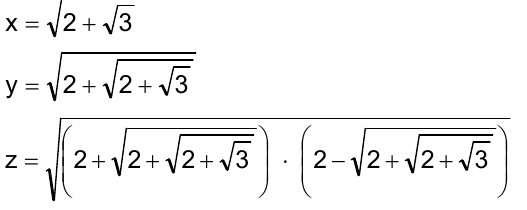
Simplificando a expressão 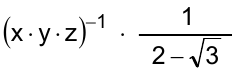 , obtém-se
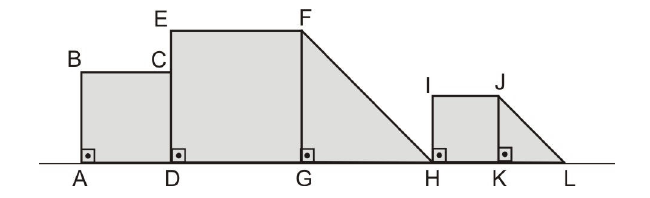
Sabe-se que:
• ABCD é um quadrado cuja medida do lado é x
• DEFG é um quadrado cuja medida do lado é x√2
• FGH é um triângulo retângulo isósceles.
• HIJK é um quadrado cuja medida do lado é a metade da medida do lado do quadrado DEFG
• JKL é um triângulo semelhante ao triângulo FGH
Considere o polinômio 
Se a e b (a > b) são as raízes da equação P(x) = 0, então é FALSO afirmar que
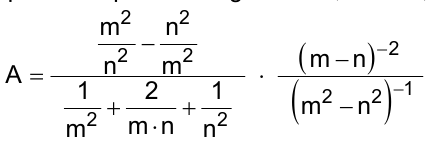
Nesse conjunto, uma expressão algébrica equivalente a A é
Para ajudar na organização da “venda”, Gabriel aplicou conhecimentos de matemática básica. Assim, ele pegou os quatro sacos de café que ficavam à frente do balcão, pesou-os e etiquetou-os conforme ilustra a Figura (1), em kg
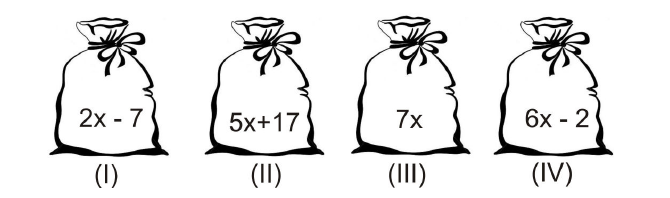
Figura (1) – Peso, em kg, dos sacos de café.
Em seguida, com o total de peso que obteve, retirou ou colocou, em kg, café em cada saco, e anotou numa folha de papel como mostra a Figura (2)
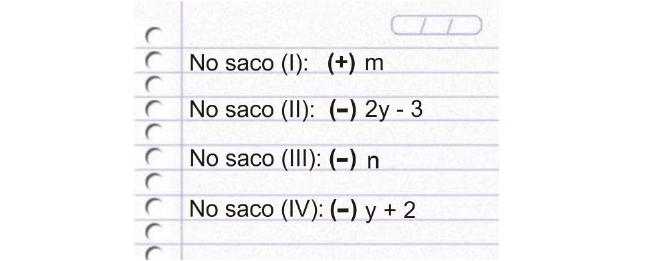
Figura (2) – Anotação de troca de peso, em kg, entre os sacos de café.
Na Figura (2), o símbolo de (+) indica que aquele saco recebeu alguns quilogramas de café, descrito logo à frente do símbolo, bem como o de (−) indica que dele foram retirados alguns quilogramas de café, também descrito logo à frente do símbolo.
Para não perder as contas, Gabriel anotou, também, que:
• o produto da quantidade retirada do saco (II) pela quantidade retirada do saco (IV), em kg, é igual a 165
• depois de acrescentar ou retirar café nos sacos, todos passaram a ter a mesma quantidade, em kg
Dessa forma, sendo {x, y, m, n} ⊂ IN*, é correto afirmar que
Antes de viajar, decidiram dividir todas as despesas entre as turmas de forma diretamente proporcional ao número de alunos de cada turma.
Pagaram todas as despesas, mas não pagaram de forma proporcional. A turma FOX pagou 12 000 reais e a turma GOLF pagou 10 500 reais.
Tendo como base o que as turmas haviam combinado em relação às despesas da viagem, é correto afirmar queResolução comentada
Análise das alternativas
(I) x² − bx + 15 = 0 (b ∈ IR) cujas raízes são os números reais α e β (α < β)
(II) x² + kx + 15 = 0 (k ∈ IR)
Sabe-se que as raízes da equação (I) são, cada uma, 8 unidades menores do que as raízes da equação (II)
Com base nessas informações, marque a opção correta.Resolução comentada
Análise das alternativas
O baú contém uma substância homogênea que pesa 1,5 kg por litro e que ocupa o espaço correspondente a 90% do volume de um paralelepípedo reto retângulo de espessura desprezível e que possui as dimensões externas do baú.
Se o peso total do baú e da substância, em kg, é igual a x, então, pode-se dizer que x é um número naturalResolução comentada
Análise das alternativas
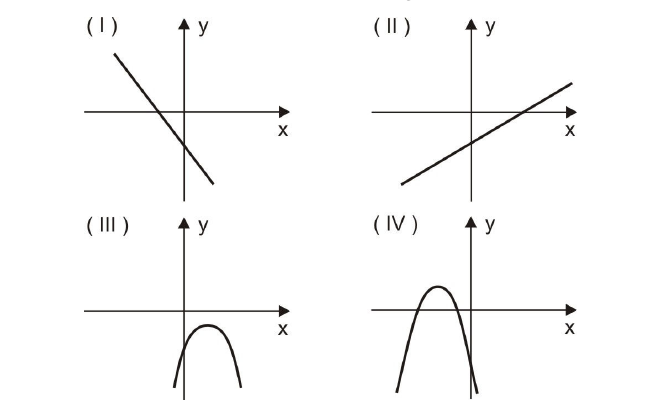
Os gráficos acima foram obtidos a partir das seguintes leis, na variável x:
(I) y = mx + n
(II) y = −px − q
(III) y = ax² − bx + c
(IV) y = −rx² + sx + t
em que os coeficientes a, b, c, r, s, t, m, n, p e q são números reais não nulos.
Esse professor, apresentou os dados acima a uma turma de 9º ano e pediu-lhes que classificassem as afirmativas abaixo em V (verdadeira) ou F (falsa).
( ) m · n · b · c > 0
( ) (p · q)/(a · t · s) < 0
( ) s² + 4 · r · t > 0
A sequência correta que os alunos deveriam ter obtido é
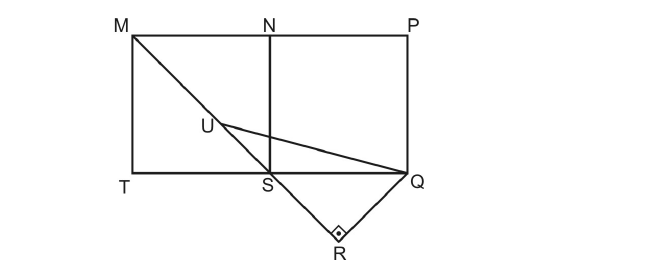
Sabe-se que:
• MNST e NPQS são quadrados
• 
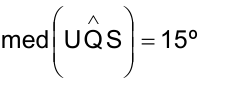
• 
• os pontos M, U, S e R estão alinhados.
Sejam A₁ a área do triângulo SRQ e A₂ a área do triângulo URQ, ambas em cm²
O valor de A₁/A₂ é
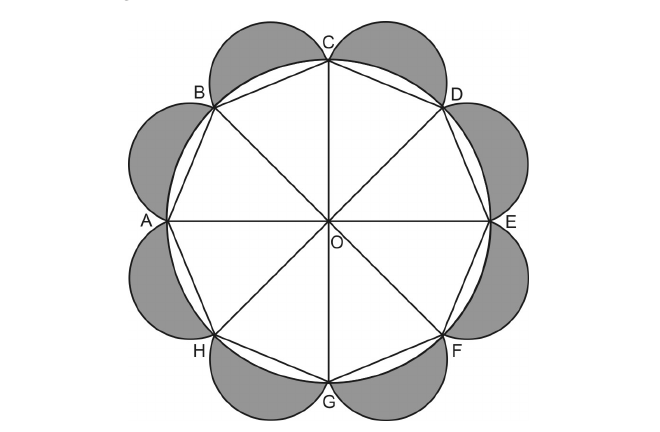
Considere que:
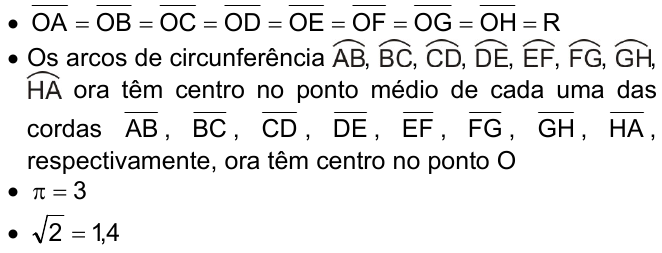
A área hachurada no croqui, em função da medida R, é igual a
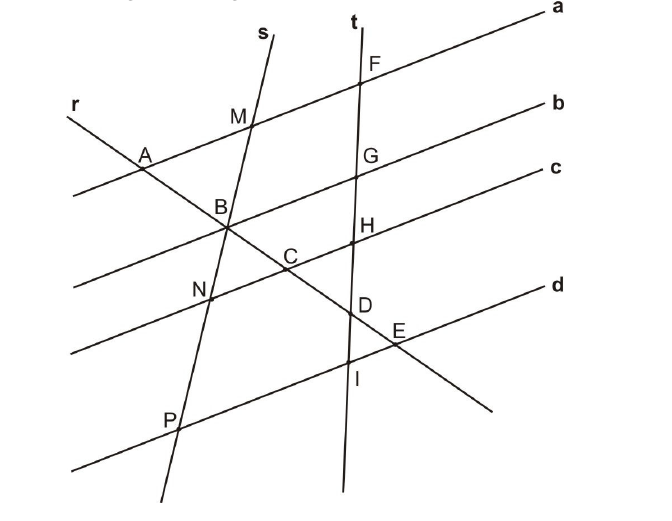
Nela, as retas a, b, c e d são paralelas e são interceptadas pelas retas transversais r, s e t
Assim, as medidas dos segmentos, em cm, são:
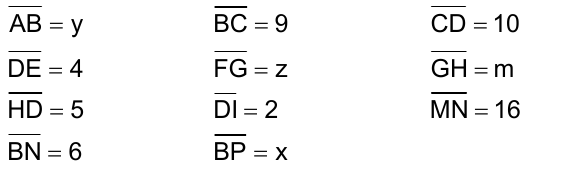
A soma  , em cm, é dada por um número divisível por
Foram colocadas 8 caixas e em apenas uma encontrava-se o tal objeto desejado. Ganhava o desafio aquela dupla que apontasse a caixa na qual estivesse o objeto.
Sabe-se que, na competição, as duplas alternariam na escolha da caixa e, caso a dupla errasse, a caixa seria eliminada.
Sorteada a ordem de competição, a dupla A fez a 1ª escolha e errou. A 2ª escolha foi feita pela dupla B que também errou. No entanto, a dupla B foi a vencedora do desafio, o que só aconteceu na última caixa restante.
Em relação à probabilidade de cada dupla ser vencedora do desafio no momento de escolha da caixa, é correto afirmar que aResolução comentada
Análise das alternativas
Directions: Answer questions 33 to 48 according to the text.
TEXT
WHAT IS MODERN SLAVERY?
Slavery did not end with abolition in the 19th
century. Slavery continues today and harms people in
every country in the world.
Women forced into prostitution. People forced to
5 work in agriculture, domestic work and factories.
Children in sweatshops¹ producing goods sold globally.
Entire families forced to work for nothing to pay off
generational debts. Girls forced to marry older men.
There are estimated 40.3 million people in modern
10 slavery around the world, including:
• 10 million children
• 24.9 million people in forced labour
• 15.4 million people in forced marriage
• 4.8 million people in forced sexual exploitation
15 Someone is in slavery if they are:
• forced to work – through coercion, or mental or
physical threat;
• owned or controlled by an ’employer’, through
mental or physical abuse or the threat of abuse;
20 • dehumanised, treated as a commodity or bought
and sold as ‘property’;
• physically constrained or have restrictions placed
on their freedom of movement.
Slavery has been a disgraceful aspect of human
25 society for most of human history. However, Anti-
Slavery International has refused to accept that this
bloody status quo should be allowed to persist (Aidan
McQuade, former director).
Forms of modern slavery
30 Purposes of exploitation² can range from forced
prostitution and forced labour to forced marriage and
forced organ removal. Here are the most common
forms of modern slavery.
• Forced labour – any work or services which people
35 are forced to do against their will³ under the threat
of some form of punishment.
• Debt bondage or bonded labour – the world’s most
widespread form of slavery, when people borrow
money they cannot repay and are required to work
40 to pay off the debt, then losing control over the
conditions of both their employment and the debt.
• Human trafficking– involves transporting, recruiting
or harbouring people for the purpose of exploitation,
using violence, threats or coercion.
45 • Descent-based slavery – where people are born
into slavery because their ancestors were captured
and enslaved; they remain in slavery by descent.
• Child slavery – many people often confuse child
slavery with child labour, but it is much worse.
50 Whilst⁴ child labour is harmful for children and
hinders⁵ their education and development, child
slavery occurs when a child is exploited for
someone else’s gain. It can include child trafficking,
child soldiers, child marriage and child domestic
55 slavery.
• Forced and early marriage – when someone is
married against their will and cannot leave the
marriage. Most child marriages can be considered
slavery.
60 Many forms of slavery have more than one element
listed above. For example, human trafficking often
involves advance payment for travel and a job abroad,
using money often borrowed from the traffickers. Then,
the debt contributes to control of the victims. Once they
65 arrive, victims cannot leave until they pay off their debt.
Many people think that slavery happens only
overseas, in developing countries. In fact, no country is
free from modern slavery, even Britain. The
Government estimates that there are tens of thousands
70 people in modern slavery in the UK.
Modern slavery can affect people of any age,
gender or race. However, contrary to a common
misconception⁶ that everyone can be a victim of
slavery, some groups of people are much more
75 vulnerable to slavery than others.
People who live in poverty⁷ and have limited
opportunities for decent work are more vulnerable to
accepting deceptive job offers that can turn exploitative.
People who are discriminated against on the basis of
80 race, caste, or gender are also more likely to be
enslaved. Slavery is also more likely to occur where the
rule of law is weaker and corruption is rife.
Anti-Slavery International believes that we have to
tackle⁸ the root causes of slavery in order to end
85 slavery for good. That’s why we published our Anti-
Slavery Charter, listing comprehensive measures that
need to be taken to end slavery across the world.
(Adapted from https://www.antislavery.org/slavery-today/modern-slavery/)
Glossary:
1. sweatshop – a factory where workers are paid very little and work many hours in very bad conditions
2. exploitation – abuse, manipulation
3. will – wish, desire
4. whilst – while
5. to hinder – obstruct, stop
6. misconception – wrong idea/ impression
7. poverty – the condition of being extremely poor
8. to tackle – attack
The concept of slavery worked in the text isResolução comentada
Análise das alternativas
Directions: Answer questions 33 to 48 according to the text.
TEXT
WHAT IS MODERN SLAVERY?
Slavery did not end with abolition in the 19th
century. Slavery continues today and harms people in
every country in the world.
Women forced into prostitution. People forced to
5 work in agriculture, domestic work and factories.
Children in sweatshops¹ producing goods sold globally.
Entire families forced to work for nothing to pay off
generational debts. Girls forced to marry older men.
There are estimated 40.3 million people in modern
10 slavery around the world, including:
• 10 million children
• 24.9 million people in forced labour
• 15.4 million people in forced marriage
• 4.8 million people in forced sexual exploitation
15 Someone is in slavery if they are:
• forced to work – through coercion, or mental or
physical threat;
• owned or controlled by an ’employer’, through
mental or physical abuse or the threat of abuse;
20 • dehumanised, treated as a commodity or bought
and sold as ‘property’;
• physically constrained or have restrictions placed
on their freedom of movement.
Slavery has been a disgraceful aspect of human
25 society for most of human history. However, Anti-
Slavery International has refused to accept that this
bloody status quo should be allowed to persist (Aidan
McQuade, former director).
Forms of modern slavery
30 Purposes of exploitation² can range from forced
prostitution and forced labour to forced marriage and
forced organ removal. Here are the most common
forms of modern slavery.
• Forced labour – any work or services which people
35 are forced to do against their will³ under the threat
of some form of punishment.
• Debt bondage or bonded labour – the world’s most
widespread form of slavery, when people borrow
money they cannot repay and are required to work
40 to pay off the debt, then losing control over the
conditions of both their employment and the debt.
• Human trafficking– involves transporting, recruiting
or harbouring people for the purpose of exploitation,
using violence, threats or coercion.
45 • Descent-based slavery – where people are born
into slavery because their ancestors were captured
and enslaved; they remain in slavery by descent.
• Child slavery – many people often confuse child
slavery with child labour, but it is much worse.
50 Whilst⁴ child labour is harmful for children and
hinders⁵ their education and development, child
slavery occurs when a child is exploited for
someone else’s gain. It can include child trafficking,
child soldiers, child marriage and child domestic
55 slavery.
• Forced and early marriage – when someone is
married against their will and cannot leave the
marriage. Most child marriages can be considered
slavery.
60 Many forms of slavery have more than one element
listed above. For example, human trafficking often
involves advance payment for travel and a job abroad,
using money often borrowed from the traffickers. Then,
the debt contributes to control of the victims. Once they
65 arrive, victims cannot leave until they pay off their debt.
Many people think that slavery happens only
overseas, in developing countries. In fact, no country is
free from modern slavery, even Britain. The
Government estimates that there are tens of thousands
70 people in modern slavery in the UK.
Modern slavery can affect people of any age,
gender or race. However, contrary to a common
misconception⁶ that everyone can be a victim of
slavery, some groups of people are much more
75 vulnerable to slavery than others.
People who live in poverty⁷ and have limited
opportunities for decent work are more vulnerable to
accepting deceptive job offers that can turn exploitative.
People who are discriminated against on the basis of
80 race, caste, or gender are also more likely to be
enslaved. Slavery is also more likely to occur where the
rule of law is weaker and corruption is rife.
Anti-Slavery International believes that we have to
tackle⁸ the root causes of slavery in order to end
85 slavery for good. That’s why we published our Anti-
Slavery Charter, listing comprehensive measures that
need to be taken to end slavery across the world.
(Adapted from https://www.antislavery.org/slavery-today/modern-slavery/)
Glossary:
1. sweatshop – a factory where workers are paid very little and work many hours in very bad conditions
2. exploitation – abuse, manipulation
3. will – wish, desire
4. whilst – while
5. to hinder – obstruct, stop
6. misconception – wrong idea/ impression
7. poverty – the condition of being extremely poor
8. to tackle – attack
Mark the alternative in which the verb “to continue” (line 2) is applied in the sentence correctly.Resolução comentada
Análise das alternativas
Directions: Answer questions 33 to 48 according to the text.
TEXT
WHAT IS MODERN SLAVERY?
Slavery did not end with abolition in the 19th
century. Slavery continues today and harms people in
every country in the world.
Women forced into prostitution. People forced to
5 work in agriculture, domestic work and factories.
Children in sweatshops¹ producing goods sold globally.
Entire families forced to work for nothing to pay off
generational debts. Girls forced to marry older men.
There are estimated 40.3 million people in modern
10 slavery around the world, including:
• 10 million children
• 24.9 million people in forced labour
• 15.4 million people in forced marriage
• 4.8 million people in forced sexual exploitation
15 Someone is in slavery if they are:
• forced to work – through coercion, or mental or
physical threat;
• owned or controlled by an ’employer’, through
mental or physical abuse or the threat of abuse;
20 • dehumanised, treated as a commodity or bought
and sold as ‘property’;
• physically constrained or have restrictions placed
on their freedom of movement.
Slavery has been a disgraceful aspect of human
25 society for most of human history. However, Anti-
Slavery International has refused to accept that this
bloody status quo should be allowed to persist (Aidan
McQuade, former director).
Forms of modern slavery
30 Purposes of exploitation² can range from forced
prostitution and forced labour to forced marriage and
forced organ removal. Here are the most common
forms of modern slavery.
• Forced labour – any work or services which people
35 are forced to do against their will³ under the threat
of some form of punishment.
• Debt bondage or bonded labour – the world’s most
widespread form of slavery, when people borrow
money they cannot repay and are required to work
40 to pay off the debt, then losing control over the
conditions of both their employment and the debt.
• Human trafficking– involves transporting, recruiting
or harbouring people for the purpose of exploitation,
using violence, threats or coercion.
45 • Descent-based slavery – where people are born
into slavery because their ancestors were captured
and enslaved; they remain in slavery by descent.
• Child slavery – many people often confuse child
slavery with child labour, but it is much worse.
50 Whilst⁴ child labour is harmful for children and
hinders⁵ their education and development, child
slavery occurs when a child is exploited for
someone else’s gain. It can include child trafficking,
child soldiers, child marriage and child domestic
55 slavery.
• Forced and early marriage – when someone is
married against their will and cannot leave the
marriage. Most child marriages can be considered
slavery.
60 Many forms of slavery have more than one element
listed above. For example, human trafficking often
involves advance payment for travel and a job abroad,
using money often borrowed from the traffickers. Then,
the debt contributes to control of the victims. Once they
65 arrive, victims cannot leave until they pay off their debt.
Many people think that slavery happens only
overseas, in developing countries. In fact, no country is
free from modern slavery, even Britain. The
Government estimates that there are tens of thousands
70 people in modern slavery in the UK.
Modern slavery can affect people of any age,
gender or race. However, contrary to a common
misconception⁶ that everyone can be a victim of
slavery, some groups of people are much more
75 vulnerable to slavery than others.
People who live in poverty⁷ and have limited
opportunities for decent work are more vulnerable to
accepting deceptive job offers that can turn exploitative.
People who are discriminated against on the basis of
80 race, caste, or gender are also more likely to be
enslaved. Slavery is also more likely to occur where the
rule of law is weaker and corruption is rife.
Anti-Slavery International believes that we have to
tackle⁸ the root causes of slavery in order to end
85 slavery for good. That’s why we published our Anti-
Slavery Charter, listing comprehensive measures that
need to be taken to end slavery across the world.
(Adapted from https://www.antislavery.org/slavery-today/modern-slavery/)
Glossary:
1. sweatshop – a factory where workers are paid very little and work many hours in very bad conditions
2. exploitation – abuse, manipulation
3. will – wish, desire
4. whilst – while
5. to hinder – obstruct, stop
6. misconception – wrong idea/ impression
7. poverty – the condition of being extremely poor
8. to tackle – attack

Directions: Answer questions 33 to 48 according to the text.
TEXT
WHAT IS MODERN SLAVERY?
Slavery did not end with abolition in the 19th
century. Slavery continues today and harms people in
every country in the world.
Women forced into prostitution. People forced to
5 work in agriculture, domestic work and factories.
Children in sweatshops¹ producing goods sold globally.
Entire families forced to work for nothing to pay off
generational debts. Girls forced to marry older men.
There are estimated 40.3 million people in modern
10 slavery around the world, including:
• 10 million children
• 24.9 million people in forced labour
• 15.4 million people in forced marriage
• 4.8 million people in forced sexual exploitation
15 Someone is in slavery if they are:
• forced to work – through coercion, or mental or
physical threat;
• owned or controlled by an ’employer’, through
mental or physical abuse or the threat of abuse;
20 • dehumanised, treated as a commodity or bought
and sold as ‘property’;
• physically constrained or have restrictions placed
on their freedom of movement.
Slavery has been a disgraceful aspect of human
25 society for most of human history. However, Anti-
Slavery International has refused to accept that this
bloody status quo should be allowed to persist (Aidan
McQuade, former director).
Forms of modern slavery
30 Purposes of exploitation² can range from forced
prostitution and forced labour to forced marriage and
forced organ removal. Here are the most common
forms of modern slavery.
• Forced labour – any work or services which people
35 are forced to do against their will³ under the threat
of some form of punishment.
• Debt bondage or bonded labour – the world’s most
widespread form of slavery, when people borrow
money they cannot repay and are required to work
40 to pay off the debt, then losing control over the
conditions of both their employment and the debt.
• Human trafficking– involves transporting, recruiting
or harbouring people for the purpose of exploitation,
using violence, threats or coercion.
45 • Descent-based slavery – where people are born
into slavery because their ancestors were captured
and enslaved; they remain in slavery by descent.
• Child slavery – many people often confuse child
slavery with child labour, but it is much worse.
50 Whilst⁴ child labour is harmful for children and
hinders⁵ their education and development, child
slavery occurs when a child is exploited for
someone else’s gain. It can include child trafficking,
child soldiers, child marriage and child domestic
55 slavery.
• Forced and early marriage – when someone is
married against their will and cannot leave the
marriage. Most child marriages can be considered
slavery.
60 Many forms of slavery have more than one element
listed above. For example, human trafficking often
involves advance payment for travel and a job abroad,
using money often borrowed from the traffickers. Then,
the debt contributes to control of the victims. Once they
65 arrive, victims cannot leave until they pay off their debt.
Many people think that slavery happens only
overseas, in developing countries. In fact, no country is
free from modern slavery, even Britain. The
Government estimates that there are tens of thousands
70 people in modern slavery in the UK.
Modern slavery can affect people of any age,
gender or race. However, contrary to a common
misconception⁶ that everyone can be a victim of
slavery, some groups of people are much more
75 vulnerable to slavery than others.
People who live in poverty⁷ and have limited
opportunities for decent work are more vulnerable to
accepting deceptive job offers that can turn exploitative.
People who are discriminated against on the basis of
80 race, caste, or gender are also more likely to be
enslaved. Slavery is also more likely to occur where the
rule of law is weaker and corruption is rife.
Anti-Slavery International believes that we have to
tackle⁸ the root causes of slavery in order to end
85 slavery for good. That’s why we published our Anti-
Slavery Charter, listing comprehensive measures that
need to be taken to end slavery across the world.
(Adapted from https://www.antislavery.org/slavery-today/modern-slavery/)
Glossary:
1. sweatshop – a factory where workers are paid very little and work many hours in very bad conditions
2. exploitation – abuse, manipulation
3. will – wish, desire
4. whilst – while
5. to hinder – obstruct, stop
6. misconception – wrong idea/ impression
7. poverty – the condition of being extremely poor
8. to tackle – attack
The word “goods” (line 6) means in the textResolução comentada
Análise das alternativas
Directions: Answer questions 33 to 48 according to the text.
TEXT
WHAT IS MODERN SLAVERY?
Slavery did not end with abolition in the 19th
century. Slavery continues today and harms people in
every country in the world.
Women forced into prostitution. People forced to
5 work in agriculture, domestic work and factories.
Children in sweatshops¹ producing goods sold globally.
Entire families forced to work for nothing to pay off
generational debts. Girls forced to marry older men.
There are estimated 40.3 million people in modern
10 slavery around the world, including:
• 10 million children
• 24.9 million people in forced labour
• 15.4 million people in forced marriage
• 4.8 million people in forced sexual exploitation
15 Someone is in slavery if they are:
• forced to work – through coercion, or mental or
physical threat;
• owned or controlled by an ’employer’, through
mental or physical abuse or the threat of abuse;
20 • dehumanised, treated as a commodity or bought
and sold as ‘property’;
• physically constrained or have restrictions placed
on their freedom of movement.
Slavery has been a disgraceful aspect of human
25 society for most of human history. However, Anti-
Slavery International has refused to accept that this
bloody status quo should be allowed to persist (Aidan
McQuade, former director).
Forms of modern slavery
30 Purposes of exploitation² can range from forced
prostitution and forced labour to forced marriage and
forced organ removal. Here are the most common
forms of modern slavery.
• Forced labour – any work or services which people
35 are forced to do against their will³ under the threat
of some form of punishment.
• Debt bondage or bonded labour – the world’s most
widespread form of slavery, when people borrow
money they cannot repay and are required to work
40 to pay off the debt, then losing control over the
conditions of both their employment and the debt.
• Human trafficking– involves transporting, recruiting
or harbouring people for the purpose of exploitation,
using violence, threats or coercion.
45 • Descent-based slavery – where people are born
into slavery because their ancestors were captured
and enslaved; they remain in slavery by descent.
• Child slavery – many people often confuse child
slavery with child labour, but it is much worse.
50 Whilst⁴ child labour is harmful for children and
hinders⁵ their education and development, child
slavery occurs when a child is exploited for
someone else’s gain. It can include child trafficking,
child soldiers, child marriage and child domestic
55 slavery.
• Forced and early marriage – when someone is
married against their will and cannot leave the
marriage. Most child marriages can be considered
slavery.
60 Many forms of slavery have more than one element
listed above. For example, human trafficking often
involves advance payment for travel and a job abroad,
using money often borrowed from the traffickers. Then,
the debt contributes to control of the victims. Once they
65 arrive, victims cannot leave until they pay off their debt.
Many people think that slavery happens only
overseas, in developing countries. In fact, no country is
free from modern slavery, even Britain. The
Government estimates that there are tens of thousands
70 people in modern slavery in the UK.
Modern slavery can affect people of any age,
gender or race. However, contrary to a common
misconception⁶ that everyone can be a victim of
slavery, some groups of people are much more
75 vulnerable to slavery than others.
People who live in poverty⁷ and have limited
opportunities for decent work are more vulnerable to
accepting deceptive job offers that can turn exploitative.
People who are discriminated against on the basis of
80 race, caste, or gender are also more likely to be
enslaved. Slavery is also more likely to occur where the
rule of law is weaker and corruption is rife.
Anti-Slavery International believes that we have to
tackle⁸ the root causes of slavery in order to end
85 slavery for good. That’s why we published our Anti-
Slavery Charter, listing comprehensive measures that
need to be taken to end slavery across the world.
(Adapted from https://www.antislavery.org/slavery-today/modern-slavery/)
Glossary:
1. sweatshop – a factory where workers are paid very little and work many hours in very bad conditions
2. exploitation – abuse, manipulation
3. will – wish, desire
4. whilst – while
5. to hinder – obstruct, stop
6. misconception – wrong idea/ impression
7. poverty – the condition of being extremely poor
8. to tackle – attack
Mark the INCORRECT statement according to the text.Resolução comentada
Análise das alternativas
Directions: Answer questions 33 to 48 according to the text.
TEXT
WHAT IS MODERN SLAVERY?
Slavery did not end with abolition in the 19th
century. Slavery continues today and harms people in
every country in the world.
Women forced into prostitution. People forced to
5 work in agriculture, domestic work and factories.
Children in sweatshops¹ producing goods sold globally.
Entire families forced to work for nothing to pay off
generational debts. Girls forced to marry older men.
There are estimated 40.3 million people in modern
10 slavery around the world, including:
• 10 million children
• 24.9 million people in forced labour
• 15.4 million people in forced marriage
• 4.8 million people in forced sexual exploitation
15 Someone is in slavery if they are:
• forced to work – through coercion, or mental or
physical threat;
• owned or controlled by an ’employer’, through
mental or physical abuse or the threat of abuse;
20 • dehumanised, treated as a commodity or bought
and sold as ‘property’;
• physically constrained or have restrictions placed
on their freedom of movement.
Slavery has been a disgraceful aspect of human
25 society for most of human history. However, Anti-
Slavery International has refused to accept that this
bloody status quo should be allowed to persist (Aidan
McQuade, former director).
Forms of modern slavery
30 Purposes of exploitation² can range from forced
prostitution and forced labour to forced marriage and
forced organ removal. Here are the most common
forms of modern slavery.
• Forced labour – any work or services which people
35 are forced to do against their will³ under the threat
of some form of punishment.
• Debt bondage or bonded labour – the world’s most
widespread form of slavery, when people borrow
money they cannot repay and are required to work
40 to pay off the debt, then losing control over the
conditions of both their employment and the debt.
• Human trafficking– involves transporting, recruiting
or harbouring people for the purpose of exploitation,
using violence, threats or coercion.
45 • Descent-based slavery – where people are born
into slavery because their ancestors were captured
and enslaved; they remain in slavery by descent.
• Child slavery – many people often confuse child
slavery with child labour, but it is much worse.
50 Whilst⁴ child labour is harmful for children and
hinders⁵ their education and development, child
slavery occurs when a child is exploited for
someone else’s gain. It can include child trafficking,
child soldiers, child marriage and child domestic
55 slavery.
• Forced and early marriage – when someone is
married against their will and cannot leave the
marriage. Most child marriages can be considered
slavery.
60 Many forms of slavery have more than one element
listed above. For example, human trafficking often
involves advance payment for travel and a job abroad,
using money often borrowed from the traffickers. Then,
the debt contributes to control of the victims. Once they
65 arrive, victims cannot leave until they pay off their debt.
Many people think that slavery happens only
overseas, in developing countries. In fact, no country is
free from modern slavery, even Britain. The
Government estimates that there are tens of thousands
70 people in modern slavery in the UK.
Modern slavery can affect people of any age,
gender or race. However, contrary to a common
misconception⁶ that everyone can be a victim of
slavery, some groups of people are much more
75 vulnerable to slavery than others.
People who live in poverty⁷ and have limited
opportunities for decent work are more vulnerable to
accepting deceptive job offers that can turn exploitative.
People who are discriminated against on the basis of
80 race, caste, or gender are also more likely to be
enslaved. Slavery is also more likely to occur where the
rule of law is weaker and corruption is rife.
Anti-Slavery International believes that we have to
tackle⁸ the root causes of slavery in order to end
85 slavery for good. That’s why we published our Anti-
Slavery Charter, listing comprehensive measures that
need to be taken to end slavery across the world.
(Adapted from https://www.antislavery.org/slavery-today/modern-slavery/)
Glossary:
1. sweatshop – a factory where workers are paid very little and work many hours in very bad conditions
2. exploitation – abuse, manipulation
3. will – wish, desire
4. whilst – while
5. to hinder – obstruct, stop
6. misconception – wrong idea/ impression
7. poverty – the condition of being extremely poor
8. to tackle – attack
One of the statements below is according to the text. Mark it.Resolução comentada
Análise das alternativas
Directions: Answer questions 33 to 48 according to the text.
TEXT
WHAT IS MODERN SLAVERY?
Slavery did not end with abolition in the 19th
century. Slavery continues today and harms people in
every country in the world.
Women forced into prostitution. People forced to
5 work in agriculture, domestic work and factories.
Children in sweatshops¹ producing goods sold globally.
Entire families forced to work for nothing to pay off
generational debts. Girls forced to marry older men.
There are estimated 40.3 million people in modern
10 slavery around the world, including:
• 10 million children
• 24.9 million people in forced labour
• 15.4 million people in forced marriage
• 4.8 million people in forced sexual exploitation
15 Someone is in slavery if they are:
• forced to work – through coercion, or mental or
physical threat;
• owned or controlled by an ’employer’, through
mental or physical abuse or the threat of abuse;
20 • dehumanised, treated as a commodity or bought
and sold as ‘property’;
• physically constrained or have restrictions placed
on their freedom of movement.
Slavery has been a disgraceful aspect of human
25 society for most of human history. However, Anti-
Slavery International has refused to accept that this
bloody status quo should be allowed to persist (Aidan
McQuade, former director).
Forms of modern slavery
30 Purposes of exploitation² can range from forced
prostitution and forced labour to forced marriage and
forced organ removal. Here are the most common
forms of modern slavery.
• Forced labour – any work or services which people
35 are forced to do against their will³ under the threat
of some form of punishment.
• Debt bondage or bonded labour – the world’s most
widespread form of slavery, when people borrow
money they cannot repay and are required to work
40 to pay off the debt, then losing control over the
conditions of both their employment and the debt.
• Human trafficking– involves transporting, recruiting
or harbouring people for the purpose of exploitation,
using violence, threats or coercion.
45 • Descent-based slavery – where people are born
into slavery because their ancestors were captured
and enslaved; they remain in slavery by descent.
• Child slavery – many people often confuse child
slavery with child labour, but it is much worse.
50 Whilst⁴ child labour is harmful for children and
hinders⁵ their education and development, child
slavery occurs when a child is exploited for
someone else’s gain. It can include child trafficking,
child soldiers, child marriage and child domestic
55 slavery.
• Forced and early marriage – when someone is
married against their will and cannot leave the
marriage. Most child marriages can be considered
slavery.
60 Many forms of slavery have more than one element
listed above. For example, human trafficking often
involves advance payment for travel and a job abroad,
using money often borrowed from the traffickers. Then,
the debt contributes to control of the victims. Once they
65 arrive, victims cannot leave until they pay off their debt.
Many people think that slavery happens only
overseas, in developing countries. In fact, no country is
free from modern slavery, even Britain. The
Government estimates that there are tens of thousands
70 people in modern slavery in the UK.
Modern slavery can affect people of any age,
gender or race. However, contrary to a common
misconception⁶ that everyone can be a victim of
slavery, some groups of people are much more
75 vulnerable to slavery than others.
People who live in poverty⁷ and have limited
opportunities for decent work are more vulnerable to
accepting deceptive job offers that can turn exploitative.
People who are discriminated against on the basis of
80 race, caste, or gender are also more likely to be
enslaved. Slavery is also more likely to occur where the
rule of law is weaker and corruption is rife.
Anti-Slavery International believes that we have to
tackle⁸ the root causes of slavery in order to end
85 slavery for good. That’s why we published our Anti-
Slavery Charter, listing comprehensive measures that
need to be taken to end slavery across the world.
(Adapted from https://www.antislavery.org/slavery-today/modern-slavery/)
Glossary:
1. sweatshop – a factory where workers are paid very little and work many hours in very bad conditions
2. exploitation – abuse, manipulation
3. will – wish, desire
4. whilst – while
5. to hinder – obstruct, stop
6. misconception – wrong idea/ impression
7. poverty – the condition of being extremely poor
8. to tackle – attack
Mark the option that is NOT mentioned by the author (lines 15 to 23).Resolução comentada
Análise das alternativas
Directions: Answer questions 33 to 48 according to the text.
TEXT
WHAT IS MODERN SLAVERY?
Slavery did not end with abolition in the 19th
century. Slavery continues today and harms people in
every country in the world.
Women forced into prostitution. People forced to
5 work in agriculture, domestic work and factories.
Children in sweatshops¹ producing goods sold globally.
Entire families forced to work for nothing to pay off
generational debts. Girls forced to marry older men.
There are estimated 40.3 million people in modern
10 slavery around the world, including:
• 10 million children
• 24.9 million people in forced labour
• 15.4 million people in forced marriage
• 4.8 million people in forced sexual exploitation
15 Someone is in slavery if they are:
• forced to work – through coercion, or mental or
physical threat;
• owned or controlled by an ’employer’, through
mental or physical abuse or the threat of abuse;
20 • dehumanised, treated as a commodity or bought
and sold as ‘property’;
• physically constrained or have restrictions placed
on their freedom of movement.
Slavery has been a disgraceful aspect of human
25 society for most of human history. However, Anti-
Slavery International has refused to accept that this
bloody status quo should be allowed to persist (Aidan
McQuade, former director).
Forms of modern slavery
30 Purposes of exploitation² can range from forced
prostitution and forced labour to forced marriage and
forced organ removal. Here are the most common
forms of modern slavery.
• Forced labour – any work or services which people
35 are forced to do against their will³ under the threat
of some form of punishment.
• Debt bondage or bonded labour – the world’s most
widespread form of slavery, when people borrow
money they cannot repay and are required to work
40 to pay off the debt, then losing control over the
conditions of both their employment and the debt.
• Human trafficking– involves transporting, recruiting
or harbouring people for the purpose of exploitation,
using violence, threats or coercion.
45 • Descent-based slavery – where people are born
into slavery because their ancestors were captured
and enslaved; they remain in slavery by descent.
• Child slavery – many people often confuse child
slavery with child labour, but it is much worse.
50 Whilst⁴ child labour is harmful for children and
hinders⁵ their education and development, child
slavery occurs when a child is exploited for
someone else’s gain. It can include child trafficking,
child soldiers, child marriage and child domestic
55 slavery.
• Forced and early marriage – when someone is
married against their will and cannot leave the
marriage. Most child marriages can be considered
slavery.
60 Many forms of slavery have more than one element
listed above. For example, human trafficking often
involves advance payment for travel and a job abroad,
using money often borrowed from the traffickers. Then,
the debt contributes to control of the victims. Once they
65 arrive, victims cannot leave until they pay off their debt.
Many people think that slavery happens only
overseas, in developing countries. In fact, no country is
free from modern slavery, even Britain. The
Government estimates that there are tens of thousands
70 people in modern slavery in the UK.
Modern slavery can affect people of any age,
gender or race. However, contrary to a common
misconception⁶ that everyone can be a victim of
slavery, some groups of people are much more
75 vulnerable to slavery than others.
People who live in poverty⁷ and have limited
opportunities for decent work are more vulnerable to
accepting deceptive job offers that can turn exploitative.
People who are discriminated against on the basis of
80 race, caste, or gender are also more likely to be
enslaved. Slavery is also more likely to occur where the
rule of law is weaker and corruption is rife.
Anti-Slavery International believes that we have to
tackle⁸ the root causes of slavery in order to end
85 slavery for good. That’s why we published our Anti-
Slavery Charter, listing comprehensive measures that
need to be taken to end slavery across the world.
(Adapted from https://www.antislavery.org/slavery-today/modern-slavery/)
Glossary:
1. sweatshop – a factory where workers are paid very little and work many hours in very bad conditions
2. exploitation – abuse, manipulation
3. will – wish, desire
4. whilst – while
5. to hinder – obstruct, stop
6. misconception – wrong idea/ impression
7. poverty – the condition of being extremely poor
8. to tackle – attack
Considering the use of possessive adjectives, mark the alternative that completes the sentence below correctly
Modern slavery includesResolução comentada
Análise das alternativas
Considere os números reais x, y e z, tais que:
Considere a figura abaixo.
Considere o conjunto de todos os valores de m e n para os quais a expressão algébrica A, abaixo, está definida.
Gabriel, depois de uma longa temporada de dedicação aos estudos, foi descansar na casa de seus avós, no interior. Lá chegando, percebeu que muitas coisas de sua infância ainda permaneciam intocáveis. Exemplo disso foi a “venda” de seu avô... uma verdadeira bagunça!
As turmas FOX e GOLF do CPCAR 2018, que possuem 30 e 20 alunos, respectivamente, combinaram viajar para uma casa de praia num feriado que aconteceu no mês de junho de 2018.
Considere as equações:
Um baú em forma de paralelepípedo reto retângulo pesa 20 kg e tem como medidas externas 50 cm de altura e 3 dm por 400 mm de base.
Um professor de matemática, ao utilizar um programa de computador, obteve a sequência de gráficos abaixo.
Considere a figura a seguir.
Um artista plástico providenciou uma peça de decoração com características matemáticas conforme representado no croqui a seguir.
Observe a figura a seguir:
Numa competição matemática entre as esquadrilhas do Esquadrão Phoenix, atual 1º esquadrão do CPCAR, havia um desafio entre as duas duplas A e B finalistas. Tal desafio consistia em escolher uma caixa na qual poderia haver um objeto escondido.
Texto-base:
Texto-base:
Texto-base:
Texto-base:
Texto-base:
Texto-base:
Texto-base:
Texto-base: