← Voltar para a lista de provas Escola Preparatória de Cadetes do Ar (EPCAR) — Comando da Aeronáutica · Exame de Admissão ao CPCAR 2022 (Curso Preparatório de Cadetes do Ar) 49 questões nesta prova · página 1 de 3 · 48 com gabarito Gabarito disponível Segundo o texto, vício é o que causa dano sério e desequilíbrio nas atividades diárias. O texto afirma que, se não causa dano sério nem prejudica o funcionamento diário, não é vício, e a criança que larga o jogo e se interessa por outras atividades não é viciada. Assim, vício implica ignorar atividades importantes e perder o equilíbrio da rotina. B) Errada: uma hora por dia é citada como benéfica, não como vício. C) Errada: pais entram em pânico quando o jogo vem à custa de estudar, mas isso não define vício. D) Errada: o texto diz que a pesquisa sugere que o jogo, por si só, não causa vício. Referência: Texto, linhas 14-21. Resolução comentada do VaiConcursos. Gabarito disponível A frase afirmativa com "are" pede a tag "aren't they". A oração principal é "Many parents are concerned", afirmativa e com o verbo to be no presente. A tag deve ser negativa, concordar com o verbo e retomar o sujeito plural "parents" com o pronome "they": "aren't they?". A) Errada: "isn't it" concorda com sujeito singular. B) Errada: "doesn't it" usa auxiliar e pronome incorretos. C) Errada: "don't they" usa o auxiliar do, mas a frase tem o verbo to be. Referência: Question tags. Resolução comentada do VaiConcursos. Gabarito disponível "Furthermore" equivale a "in addition". "Furthermore" é um conectivo de adição, usado para acrescentar uma informação à anterior. "In addition" tem o mesmo valor. A) Errada: "nonetheless" expressa contraste. B) Errada: "meanwhile" expressa simultaneidade. D) Errada: "though" expressa concessão ou contraste. Referência: Linking words: adição (furthermore, moreover, in addition). Resolução comentada do VaiConcursos. Gabarito disponível A única estrutura em voz passiva é "kids are told". A voz passiva usa o verbo to be mais o particípio passado, e o sujeito sofre a ação. Em "kids are told what to do", o sujeito "kids" recebe a ação de dizer. B) Errada: "have been avoiding" é present perfect continuous, na voz ativa. C) Errada: "has to do with" está na voz ativa. D) Errada: "aren't getting" é present continuous, na voz ativa; "getting" não é particípio passivo aqui. Referência: Voz passiva (to be + particípio passado). Resolução comentada do VaiConcursos. Gabarito disponível "Taken the world by storm" significa ter se tornado popular. A expressão idiomática indica que algo conquistou o mundo rapidamente e fez enorme sucesso. Por isso, "has become popular" é o sentido mais próximo. A) Errada: nada indica que o jogo foi criticado. B) Correta. C) Errada: a expressão não trata de efeito negativo. D) Errada: "subestimado" não é o sentido da expressão. Referência: Texto, linhas 3-4. Resolução comentada do VaiConcursos. Gabarito disponível Gabarito disponível Segundo Przybylski, o jogo moderado traz benefícios e não causa dano. O estudo citado mostra que cerca de uma hora por dia melhora o bem-estar psicológico, e só o excesso (mais de três horas) se associa a menos bem-estar. Logo, não há prejuízo em jogar com moderação. A) Errada: mais de três horas por dia está associado a menos bem-estar, e o texto não fala em melhora de habilidades. B) Errada: o estudo não fala em jogar mais do que se quer. D) Errada: o jogo tem efeito, positivo se moderado e negativo se excessivo. Referência: Texto, linhas 29-34. Resolução comentada do VaiConcursos. Gabarito disponível O autor questiona por que as crianças preferem os videogames a outras atividades. No trecho das linhas 35 a 41, o autor diz que a pergunta central é o que há de tão especial nos jogos para que milhões de crianças os prefiram como passatempo, e por que é tão difícil largá-los. Isso corresponde a "wonders why kids prefer playing video games to other activities". A) Errada: o texto diz que as crianças evitam as tarefas domésticas há séculos. B) Errada: a escola é descrita como a antítese de competência, autonomia e pertencimento, então não motiva o bastante. C) Errada: o texto diz que os transtornos de jogo costumam vir com condições preexistentes, não das redes sociais. Referência: Texto: Psychology Today (adaptado), linhas 35-41. Resolução comentada do VaiConcursos. Gabarito disponível 'Off limits' significa proibido ou não permitido. No trecho, socializar no mundo real é 'often inconvenient or off limits', ou seja, muitas vezes inconveniente ou proibido. A expressão indica algo vetado, equivalente a 'not allowed'. A) 'Illegal' sugere crime, o que é mais forte do que o sentido da expressão. B) Correta. C) 'Uncertain' significa incerto. D) 'Possible' é o oposto do sentido. Referência: Vocabulário em contexto (texto sobre Fortnite, Psychology Today). Resolução comentada do VaiConcursos. Gabarito disponível Gabarito disponível Gabarito disponível Gabarito disponível Gabarito disponível Gabarito disponível Gabarito disponível Gabarito disponível Gabarito disponível Os preços de revenda diferem em R$ 3.050, mais de R$ 3.000. Seja x o custo da 1ª moto e y o da 2ª, com x + y = 27000. Pelo lucro, 0,10x − 0,05y = 750, o que dá x = 14000 e y = 13000. As revendas foram 15400 e 12350, e a diferença é 3050. A) A 2ª foi revendida por 12350, menos de 12400. B) A 1ª custou 1000 a mais, não 1050. C) O lucro de 750 sobre 27000 é cerca de 2,78%, acima de 2,5%. D) Correta. Referência: Porcentagem, lucro e prejuízo. Resolução comentada do VaiConcursos. Gabarito disponível Gabarito disponívelEPCAR — Exame de Admissão ao CPCAR 2022 — Língua Inglesa, Matemática, Língua Portuguesa e Redação — Versão A
TEXT
Many parents are concerned with their child’s
seemingly obsessive video game play. Fortnite, the
most recent gaming phenomenon, has taken the world
by storm and has parents asking if the shooter game is
5 okay for kids. The short answer is yes, Fortnite is
generally fine. Furthermore, parents can breathe easier
knowing that research suggests gaming (on its own)
does not cause disorders like addiction.
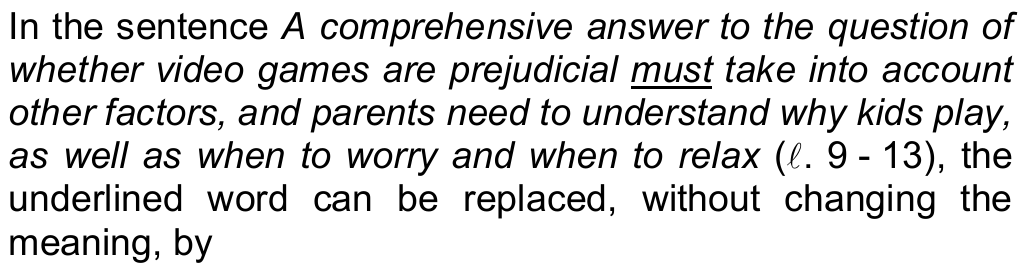
However, there’s more to the story. A
10 comprehensive answer to the question of whether video
games are prejudicial must take into account other
factors, and parents need to understand why kids play,
as well as when to worry and when to relax.
The word “addiction” gets tossed around quite
15 a bit these days, but if it isn’t causing serious harm and
disorder to daily function, it isn’t an addiction. Parents
may worry that their kids are addicted, but if the children
can pull themselves away from a game to join the family
for a conversation over dinner and shows interest in
20 other activities, like sports or socializing with friends,
then they are not addicted.
Generally, parents panic when their kid’s video
game playing comes at the expense of doing other
things, like studying or helping around the house. But
25 let’s be honest, kids have been avoiding these activities
for ages. Equally true is the fact that parents have been
complaining about their unhelpful children well before the
first video game was plugged into its socket.
In fact, moderate video game play has been
30 shown to be beneficial. A study conducted at Oxford by
Dr. Andrew Przybylski revealed that playing about one
hour per day improved psychological well-being, while
when taken to an extreme, playing over three hours per
day, was correlated with less well-being.
35 The real question should be what is it about
the special attraction of gaming that makes it the
preferred pastime of so many millions of kids? What
makes it so difficult for even non-addicted kids to step
away from video games sometimes? The answer has to
40 do with the way games address basic psychological
needs.
Fortnite, like any well-designed video game,
satisfies what we are all looking for. According to Drs.
Edward Deci and Richard Ryan, people need three
45 things to flourish. We look for competence — the need
for mastery, progression, achievement, and growth. We
seek autonomy — the need for volition and freedom of
control over our choice. And finally, we look for
relatedness — the need to feel like we matter to others,
50 and that others matter to us. Unfortunately, when
considering the state of modern childhood, many kids
aren’t getting enough of these three essential elements.
School, where kids spend most of their waking
hours, is in many ways the antithesis of a place where
55 kids feel competence, autonomy, and relatedness.
There, kids are told what to do, where to be, what to
think, what to wear, and what to eat. While some argue
that discipline and control provide structure, it’s clear
why teachers and students might struggle with
60 motivation in the classroom.
Gamers feel competence when they practice
strengths to reach their goals. In a game, players have
the autonomy to call the shots, do what they want, and
experiment with creative strategies to solve problems.
65 Games are also social outlets where players can feel
relatedness. In Fortnite, for example, players often
meet in the virtual environment to chat and socialize,
because doing so in the real world is often inconvenient
or off limits.
70 Of course, none of this is to say video games
are a good substitution — quite the opposite. No game
can give a child the feeling of competence that comes
from accomplishing a difficult task or learning a new
skill on their own accord. Fortnite can’t compete with
75 the exhilaration that comes from the autonomy of
exploring reality, where a child is free to ask questions
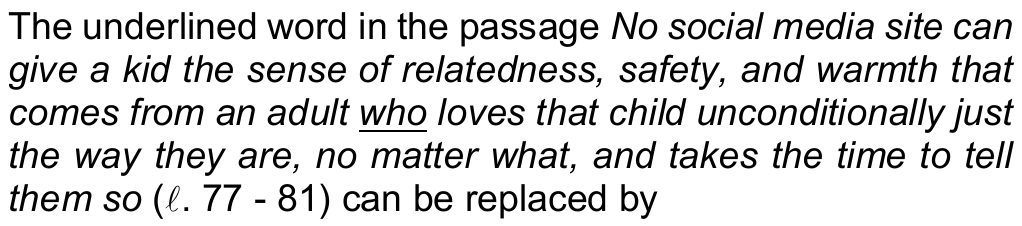
and unlock mysteries in the real world. No social media
site can give a kid the sense of relatedness, safety, and
warmth that comes from an adult who loves that child
80 unconditionally just the way they are, no matter what,
and takes the time to tell them so.
Some kids suffer from gaming disorders, but
such dependencies are often combined with preexisting
conditions, including problems with impulse control. For
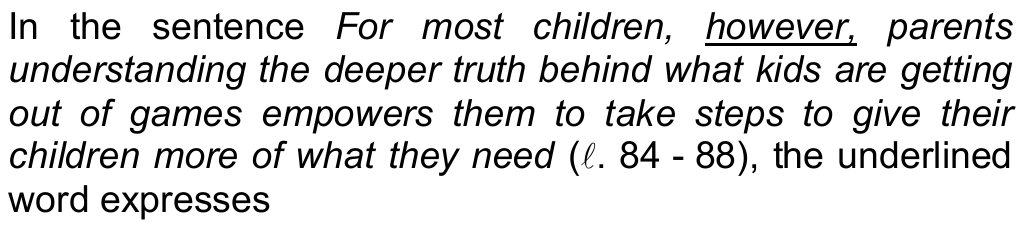
85 most children, however, parents understanding the
deeper truth behind what kids are getting out of games
empowers them to take steps to give their children
more of what they need. Video games are this
generation’s outlet, and some kids use them as a tool to
90 escape the same way some of us use our own flavor of
dissociative devices to tune out reality for a while.
(Adapted from https://www.psychologytoday.com. Access on March 25th, 2021)
Glossary:
1. to toss around – to discuss possibilities or new ideas
2. to step away – to not become involved with something
3. to flourish – to grow or develop successfully
4. volition – the power to make your own decision
5. exhilaration – excitement and happiness
6. to call the shots – to be in position to decide
7. outlet – a way in which emotions, energy or abilities can be expressed or made use of
8. to tune out – to stop paying attention to something or someone
According to the text, an addictionResolução comentada
Análise das alternativas
TEXT
Many parents are concerned with their child’s
seemingly obsessive video game play. Fortnite, the
most recent gaming phenomenon, has taken the world
by storm and has parents asking if the shooter game is
5 okay for kids. The short answer is yes, Fortnite is
generally fine. Furthermore, parents can breathe easier
knowing that research suggests gaming (on its own)
does not cause disorders like addiction.
However, there’s more to the story. A
10 comprehensive answer to the question of whether video
games are prejudicial must take into account other
factors, and parents need to understand why kids play,
as well as when to worry and when to relax.
The word “addiction” gets tossed around quite
15 a bit these days, but if it isn’t causing serious harm and
disorder to daily function, it isn’t an addiction. Parents
may worry that their kids are addicted, but if the children
can pull themselves away from a game to join the family
for a conversation over dinner and shows interest in
20 other activities, like sports or socializing with friends,
then they are not addicted.
Generally, parents panic when their kid’s video
game playing comes at the expense of doing other
things, like studying or helping around the house. But
25 let’s be honest, kids have been avoiding these activities
for ages. Equally true is the fact that parents have been
complaining about their unhelpful children well before the
first video game was plugged into its socket.
In fact, moderate video game play has been
30 shown to be beneficial. A study conducted at Oxford by
Dr. Andrew Przybylski revealed that playing about one
hour per day improved psychological well-being, while
when taken to an extreme, playing over three hours per
day, was correlated with less well-being.
35 The real question should be what is it about
the special attraction of gaming that makes it the
preferred pastime of so many millions of kids? What
makes it so difficult for even non-addicted kids to step
away from video games sometimes? The answer has to
40 do with the way games address basic psychological
needs.
Fortnite, like any well-designed video game,
satisfies what we are all looking for. According to Drs.
Edward Deci and Richard Ryan, people need three
45 things to flourish. We look for competence — the need
for mastery, progression, achievement, and growth. We
seek autonomy — the need for volition and freedom of
control over our choice. And finally, we look for
relatedness — the need to feel like we matter to others,
50 and that others matter to us. Unfortunately, when
considering the state of modern childhood, many kids
aren’t getting enough of these three essential elements.
School, where kids spend most of their waking
hours, is in many ways the antithesis of a place where
55 kids feel competence, autonomy, and relatedness.
There, kids are told what to do, where to be, what to
think, what to wear, and what to eat. While some argue
that discipline and control provide structure, it’s clear
why teachers and students might struggle with
60 motivation in the classroom.
Gamers feel competence when they practice
strengths to reach their goals. In a game, players have
the autonomy to call the shots, do what they want, and
experiment with creative strategies to solve problems.
65 Games are also social outlets where players can feel
relatedness. In Fortnite, for example, players often
meet in the virtual environment to chat and socialize,
because doing so in the real world is often inconvenient
or off limits.
70 Of course, none of this is to say video games
are a good substitution — quite the opposite. No game
can give a child the feeling of competence that comes
from accomplishing a difficult task or learning a new
skill on their own accord. Fortnite can’t compete with
75 the exhilaration that comes from the autonomy of
exploring reality, where a child is free to ask questions
and unlock mysteries in the real world. No social media
site can give a kid the sense of relatedness, safety, and
warmth that comes from an adult who loves that child
80 unconditionally just the way they are, no matter what,
and takes the time to tell them so.
Some kids suffer from gaming disorders, but
such dependencies are often combined with preexisting
conditions, including problems with impulse control. For
85 most children, however, parents understanding the
deeper truth behind what kids are getting out of games
empowers them to take steps to give their children
more of what they need. Video games are this
generation’s outlet, and some kids use them as a tool to
90 escape the same way some of us use our own flavor of
dissociative devices to tune out reality for a while.
(Adapted from https://www.psychologytoday.com. Access on March 25th, 2021)
Glossary:
1. to toss around – to discuss possibilities or new ideas
2. to step away – to not become involved with something
3. to flourish – to grow or develop successfully
4. volition – the power to make your own decision
5. exhilaration – excitement and happiness
6. to call the shots – to be in position to decide
7. outlet – a way in which emotions, energy or abilities can be expressed or made use of
8. to tune out – to stop paying attention to something or someone
Mark the alternative that shows the appropriate question tag for the sentence.
Many parents are concerned with their child’s seemingly obsessive video game play, ______?Resolução comentada
Análise das alternativas
TEXT
Many parents are concerned with their child’s
seemingly obsessive video game play. Fortnite, the
most recent gaming phenomenon, has taken the world
by storm and has parents asking if the shooter game is
5 okay for kids. The short answer is yes, Fortnite is
generally fine. Furthermore, parents can breathe easier
knowing that research suggests gaming (on its own)
does not cause disorders like addiction.
However, there’s more to the story. A
10 comprehensive answer to the question of whether video
games are prejudicial must take into account other
factors, and parents need to understand why kids play,
as well as when to worry and when to relax.
The word “addiction” gets tossed around quite
15 a bit these days, but if it isn’t causing serious harm and
disorder to daily function, it isn’t an addiction. Parents
may worry that their kids are addicted, but if the children
can pull themselves away from a game to join the family
for a conversation over dinner and shows interest in
20 other activities, like sports or socializing with friends,
then they are not addicted.
Generally, parents panic when their kid’s video
game playing comes at the expense of doing other
things, like studying or helping around the house. But
25 let’s be honest, kids have been avoiding these activities
for ages. Equally true is the fact that parents have been
complaining about their unhelpful children well before the
first video game was plugged into its socket.
In fact, moderate video game play has been
30 shown to be beneficial. A study conducted at Oxford by
Dr. Andrew Przybylski revealed that playing about one
hour per day improved psychological well-being, while
when taken to an extreme, playing over three hours per
day, was correlated with less well-being.
35 The real question should be what is it about
the special attraction of gaming that makes it the
preferred pastime of so many millions of kids? What
makes it so difficult for even non-addicted kids to step
away from video games sometimes? The answer has to
40 do with the way games address basic psychological
needs.
Fortnite, like any well-designed video game,
satisfies what we are all looking for. According to Drs.
Edward Deci and Richard Ryan, people need three
45 things to flourish. We look for competence — the need
for mastery, progression, achievement, and growth. We
seek autonomy — the need for volition and freedom of
control over our choice. And finally, we look for
relatedness — the need to feel like we matter to others,
50 and that others matter to us. Unfortunately, when
considering the state of modern childhood, many kids
aren’t getting enough of these three essential elements.
School, where kids spend most of their waking
hours, is in many ways the antithesis of a place where
55 kids feel competence, autonomy, and relatedness.
There, kids are told what to do, where to be, what to
think, what to wear, and what to eat. While some argue
that discipline and control provide structure, it’s clear
why teachers and students might struggle with
60 motivation in the classroom.
Gamers feel competence when they practice
strengths to reach their goals. In a game, players have
the autonomy to call the shots, do what they want, and
experiment with creative strategies to solve problems.
65 Games are also social outlets where players can feel
relatedness. In Fortnite, for example, players often
meet in the virtual environment to chat and socialize,
because doing so in the real world is often inconvenient
or off limits.
70 Of course, none of this is to say video games
are a good substitution — quite the opposite. No game
can give a child the feeling of competence that comes
from accomplishing a difficult task or learning a new
skill on their own accord. Fortnite can’t compete with
75 the exhilaration that comes from the autonomy of
exploring reality, where a child is free to ask questions
and unlock mysteries in the real world. No social media
site can give a kid the sense of relatedness, safety, and
warmth that comes from an adult who loves that child
80 unconditionally just the way they are, no matter what,
and takes the time to tell them so.
Some kids suffer from gaming disorders, but
such dependencies are often combined with preexisting
conditions, including problems with impulse control. For
85 most children, however, parents understanding the
deeper truth behind what kids are getting out of games
empowers them to take steps to give their children
more of what they need. Video games are this
generation’s outlet, and some kids use them as a tool to
90 escape the same way some of us use our own flavor of
dissociative devices to tune out reality for a while.
(Adapted from https://www.psychologytoday.com. Access on March 25th, 2021)
Glossary:
1. to toss around – to discuss possibilities or new ideas
2. to step away – to not become involved with something
3. to flourish – to grow or develop successfully
4. volition – the power to make your own decision
5. exhilaration – excitement and happiness
6. to call the shots – to be in position to decide
7. outlet – a way in which emotions, energy or abilities can be expressed or made use of
8. to tune out – to stop paying attention to something or someone
The word furthermore (ℓ. 6) could be replaced, without changing the meaning, byResolução comentada
Análise das alternativas
TEXT
Many parents are concerned with their child’s
seemingly obsessive video game play. Fortnite, the
most recent gaming phenomenon, has taken the world
by storm and has parents asking if the shooter game is
5 okay for kids. The short answer is yes, Fortnite is
generally fine. Furthermore, parents can breathe easier
knowing that research suggests gaming (on its own)
does not cause disorders like addiction.
However, there’s more to the story. A
10 comprehensive answer to the question of whether video
games are prejudicial must take into account other
factors, and parents need to understand why kids play,
as well as when to worry and when to relax.
The word “addiction” gets tossed around quite
15 a bit these days, but if it isn’t causing serious harm and
disorder to daily function, it isn’t an addiction. Parents
may worry that their kids are addicted, but if the children
can pull themselves away from a game to join the family
for a conversation over dinner and shows interest in
20 other activities, like sports or socializing with friends,
then they are not addicted.
Generally, parents panic when their kid’s video
game playing comes at the expense of doing other
things, like studying or helping around the house. But
25 let’s be honest, kids have been avoiding these activities
for ages. Equally true is the fact that parents have been
complaining about their unhelpful children well before the
first video game was plugged into its socket.
In fact, moderate video game play has been
30 shown to be beneficial. A study conducted at Oxford by
Dr. Andrew Przybylski revealed that playing about one
hour per day improved psychological well-being, while
when taken to an extreme, playing over three hours per
day, was correlated with less well-being.
35 The real question should be what is it about
the special attraction of gaming that makes it the
preferred pastime of so many millions of kids? What
makes it so difficult for even non-addicted kids to step
away from video games sometimes? The answer has to
40 do with the way games address basic psychological
needs.
Fortnite, like any well-designed video game,
satisfies what we are all looking for. According to Drs.
Edward Deci and Richard Ryan, people need three
45 things to flourish. We look for competence — the need
for mastery, progression, achievement, and growth. We
seek autonomy — the need for volition and freedom of
control over our choice. And finally, we look for
relatedness — the need to feel like we matter to others,
50 and that others matter to us. Unfortunately, when
considering the state of modern childhood, many kids
aren’t getting enough of these three essential elements.
School, where kids spend most of their waking
hours, is in many ways the antithesis of a place where
55 kids feel competence, autonomy, and relatedness.
There, kids are told what to do, where to be, what to
think, what to wear, and what to eat. While some argue
that discipline and control provide structure, it’s clear
why teachers and students might struggle with
60 motivation in the classroom.
Gamers feel competence when they practice
strengths to reach their goals. In a game, players have
the autonomy to call the shots, do what they want, and
experiment with creative strategies to solve problems.
65 Games are also social outlets where players can feel
relatedness. In Fortnite, for example, players often
meet in the virtual environment to chat and socialize,
because doing so in the real world is often inconvenient
or off limits.
70 Of course, none of this is to say video games
are a good substitution — quite the opposite. No game
can give a child the feeling of competence that comes
from accomplishing a difficult task or learning a new
skill on their own accord. Fortnite can’t compete with
75 the exhilaration that comes from the autonomy of
exploring reality, where a child is free to ask questions
and unlock mysteries in the real world. No social media
site can give a kid the sense of relatedness, safety, and
warmth that comes from an adult who loves that child
80 unconditionally just the way they are, no matter what,
and takes the time to tell them so.
Some kids suffer from gaming disorders, but
such dependencies are often combined with preexisting
conditions, including problems with impulse control. For
85 most children, however, parents understanding the
deeper truth behind what kids are getting out of games
empowers them to take steps to give their children
more of what they need. Video games are this
generation’s outlet, and some kids use them as a tool to
90 escape the same way some of us use our own flavor of
dissociative devices to tune out reality for a while.
(Adapted from https://www.psychologytoday.com. Access on March 25th, 2021)
Glossary:
1. to toss around – to discuss possibilities or new ideas
2. to step away – to not become involved with something
3. to flourish – to grow or develop successfully
4. volition – the power to make your own decision
5. exhilaration – excitement and happiness
6. to call the shots – to be in position to decide
7. outlet – a way in which emotions, energy or abilities can be expressed or made use of
8. to tune out – to stop paying attention to something or someone
Mark the option that shows a structure in the passive voice.Resolução comentada
Análise das alternativas
TEXT
Many parents are concerned with their child’s
seemingly obsessive video game play. Fortnite, the
most recent gaming phenomenon, has taken the world
by storm and has parents asking if the shooter game is
5 okay for kids. The short answer is yes, Fortnite is
generally fine. Furthermore, parents can breathe easier
knowing that research suggests gaming (on its own)
does not cause disorders like addiction.
However, there’s more to the story. A
10 comprehensive answer to the question of whether video
games are prejudicial must take into account other
factors, and parents need to understand why kids play,
as well as when to worry and when to relax.
The word “addiction” gets tossed around quite
15 a bit these days, but if it isn’t causing serious harm and
disorder to daily function, it isn’t an addiction. Parents
may worry that their kids are addicted, but if the children
can pull themselves away from a game to join the family
for a conversation over dinner and shows interest in
20 other activities, like sports or socializing with friends,
then they are not addicted.
Generally, parents panic when their kid’s video
game playing comes at the expense of doing other
things, like studying or helping around the house. But
25 let’s be honest, kids have been avoiding these activities
for ages. Equally true is the fact that parents have been
complaining about their unhelpful children well before the
first video game was plugged into its socket.
In fact, moderate video game play has been
30 shown to be beneficial. A study conducted at Oxford by
Dr. Andrew Przybylski revealed that playing about one
hour per day improved psychological well-being, while
when taken to an extreme, playing over three hours per
day, was correlated with less well-being.
35 The real question should be what is it about
the special attraction of gaming that makes it the
preferred pastime of so many millions of kids? What
makes it so difficult for even non-addicted kids to step
away from video games sometimes? The answer has to
40 do with the way games address basic psychological
needs.
Fortnite, like any well-designed video game,
satisfies what we are all looking for. According to Drs.
Edward Deci and Richard Ryan, people need three
45 things to flourish. We look for competence — the need
for mastery, progression, achievement, and growth. We
seek autonomy — the need for volition and freedom of
control over our choice. And finally, we look for
relatedness — the need to feel like we matter to others,
50 and that others matter to us. Unfortunately, when
considering the state of modern childhood, many kids
aren’t getting enough of these three essential elements.
School, where kids spend most of their waking
hours, is in many ways the antithesis of a place where
55 kids feel competence, autonomy, and relatedness.
There, kids are told what to do, where to be, what to
think, what to wear, and what to eat. While some argue
that discipline and control provide structure, it’s clear
why teachers and students might struggle with
60 motivation in the classroom.
Gamers feel competence when they practice
strengths to reach their goals. In a game, players have
the autonomy to call the shots, do what they want, and
experiment with creative strategies to solve problems.
65 Games are also social outlets where players can feel
relatedness. In Fortnite, for example, players often
meet in the virtual environment to chat and socialize,
because doing so in the real world is often inconvenient
or off limits.
70 Of course, none of this is to say video games
are a good substitution — quite the opposite. No game
can give a child the feeling of competence that comes
from accomplishing a difficult task or learning a new
skill on their own accord. Fortnite can’t compete with
75 the exhilaration that comes from the autonomy of
exploring reality, where a child is free to ask questions
and unlock mysteries in the real world. No social media
site can give a kid the sense of relatedness, safety, and
warmth that comes from an adult who loves that child
80 unconditionally just the way they are, no matter what,
and takes the time to tell them so.
Some kids suffer from gaming disorders, but
such dependencies are often combined with preexisting
conditions, including problems with impulse control. For
85 most children, however, parents understanding the
deeper truth behind what kids are getting out of games
empowers them to take steps to give their children
more of what they need. Video games are this
generation’s outlet, and some kids use them as a tool to
90 escape the same way some of us use our own flavor of
dissociative devices to tune out reality for a while.
(Adapted from https://www.psychologytoday.com. Access on March 25th, 2021)
Glossary:
1. to toss around – to discuss possibilities or new ideas
2. to step away – to not become involved with something
3. to flourish – to grow or develop successfully
4. volition – the power to make your own decision
5. exhilaration – excitement and happiness
6. to call the shots – to be in position to decide
7. outlet – a way in which emotions, energy or abilities can be expressed or made use of
8. to tune out – to stop paying attention to something or someone
The phrase has taken the world by storm (ℓ. 3 - 4) is closest in meaning toResolução comentada
Análise das alternativas
TEXT
Many parents are concerned with their child’s
seemingly obsessive video game play. Fortnite, the
most recent gaming phenomenon, has taken the world
by storm and has parents asking if the shooter game is
5 okay for kids. The short answer is yes, Fortnite is
generally fine. Furthermore, parents can breathe easier
knowing that research suggests gaming (on its own)
does not cause disorders like addiction.
However, there’s more to the story. A
10 comprehensive answer to the question of whether video
games are prejudicial must take into account other
factors, and parents need to understand why kids play,
as well as when to worry and when to relax.
The word “addiction” gets tossed around quite
15 a bit these days, but if it isn’t causing serious harm and
disorder to daily function, it isn’t an addiction. Parents
may worry that their kids are addicted, but if the children
can pull themselves away from a game to join the family
for a conversation over dinner and shows interest in
20 other activities, like sports or socializing with friends,
then they are not addicted.
Generally, parents panic when their kid’s video
game playing comes at the expense of doing other
things, like studying or helping around the house. But
25 let’s be honest, kids have been avoiding these activities
for ages. Equally true is the fact that parents have been
complaining about their unhelpful children well before the
first video game was plugged into its socket.
In fact, moderate video game play has been
30 shown to be beneficial. A study conducted at Oxford by
Dr. Andrew Przybylski revealed that playing about one
hour per day improved psychological well-being, while
when taken to an extreme, playing over three hours per
day, was correlated with less well-being.
35 The real question should be what is it about
the special attraction of gaming that makes it the
preferred pastime of so many millions of kids? What
makes it so difficult for even non-addicted kids to step
away from video games sometimes? The answer has to
40 do with the way games address basic psychological
needs.
Fortnite, like any well-designed video game,
satisfies what we are all looking for. According to Drs.
Edward Deci and Richard Ryan, people need three
45 things to flourish. We look for competence — the need
for mastery, progression, achievement, and growth. We
seek autonomy — the need for volition and freedom of
control over our choice. And finally, we look for
relatedness — the need to feel like we matter to others,
50 and that others matter to us. Unfortunately, when
considering the state of modern childhood, many kids
aren’t getting enough of these three essential elements.
School, where kids spend most of their waking
hours, is in many ways the antithesis of a place where
55 kids feel competence, autonomy, and relatedness.
There, kids are told what to do, where to be, what to
think, what to wear, and what to eat. While some argue
that discipline and control provide structure, it’s clear
why teachers and students might struggle with
60 motivation in the classroom.
Gamers feel competence when they practice
strengths to reach their goals. In a game, players have
the autonomy to call the shots, do what they want, and
experiment with creative strategies to solve problems.
65 Games are also social outlets where players can feel
relatedness. In Fortnite, for example, players often
meet in the virtual environment to chat and socialize,
because doing so in the real world is often inconvenient
or off limits.
70 Of course, none of this is to say video games
are a good substitution — quite the opposite. No game
can give a child the feeling of competence that comes
from accomplishing a difficult task or learning a new
skill on their own accord. Fortnite can’t compete with
75 the exhilaration that comes from the autonomy of
exploring reality, where a child is free to ask questions
and unlock mysteries in the real world. No social media
site can give a kid the sense of relatedness, safety, and
warmth that comes from an adult who loves that child
80 unconditionally just the way they are, no matter what,
and takes the time to tell them so.
Some kids suffer from gaming disorders, but
such dependencies are often combined with preexisting
conditions, including problems with impulse control. For
85 most children, however, parents understanding the
deeper truth behind what kids are getting out of games
empowers them to take steps to give their children
more of what they need. Video games are this
generation’s outlet, and some kids use them as a tool to
90 escape the same way some of us use our own flavor of
dissociative devices to tune out reality for a while.
(Adapted from https://www.psychologytoday.com. Access on March 25th, 2021)
Glossary:
1. to toss around – to discuss possibilities or new ideas
2. to step away – to not become involved with something
3. to flourish – to grow or develop successfully
4. volition – the power to make your own decision
5. exhilaration – excitement and happiness
6. to call the shots – to be in position to decide
7. outlet – a way in which emotions, energy or abilities can be expressed or made use of
8. to tune out – to stop paying attention to something or someone
TEXT
Many parents are concerned with their child’s
seemingly obsessive video game play. Fortnite, the
most recent gaming phenomenon, has taken the world
by storm and has parents asking if the shooter game is
5 okay for kids. The short answer is yes, Fortnite is
generally fine. Furthermore, parents can breathe easier
knowing that research suggests gaming (on its own)
does not cause disorders like addiction.
However, there’s more to the story. A
10 comprehensive answer to the question of whether video
games are prejudicial must take into account other
factors, and parents need to understand why kids play,
as well as when to worry and when to relax.
The word “addiction” gets tossed around quite
15 a bit these days, but if it isn’t causing serious harm and
disorder to daily function, it isn’t an addiction. Parents
may worry that their kids are addicted, but if the children
can pull themselves away from a game to join the family
for a conversation over dinner and shows interest in
20 other activities, like sports or socializing with friends,
then they are not addicted.
Generally, parents panic when their kid’s video
game playing comes at the expense of doing other
things, like studying or helping around the house. But
25 let’s be honest, kids have been avoiding these activities
for ages. Equally true is the fact that parents have been
complaining about their unhelpful children well before the
first video game was plugged into its socket.
In fact, moderate video game play has been
30 shown to be beneficial. A study conducted at Oxford by
Dr. Andrew Przybylski revealed that playing about one
hour per day improved psychological well-being, while
when taken to an extreme, playing over three hours per
day, was correlated with less well-being.
35 The real question should be what is it about
the special attraction of gaming that makes it the
preferred pastime of so many millions of kids? What
makes it so difficult for even non-addicted kids to step
away from video games sometimes? The answer has to
40 do with the way games address basic psychological
needs.
Fortnite, like any well-designed video game,
satisfies what we are all looking for. According to Drs.
Edward Deci and Richard Ryan, people need three
45 things to flourish. We look for competence — the need
for mastery, progression, achievement, and growth. We
seek autonomy — the need for volition and freedom of
control over our choice. And finally, we look for
relatedness — the need to feel like we matter to others,
50 and that others matter to us. Unfortunately, when
considering the state of modern childhood, many kids
aren’t getting enough of these three essential elements.
School, where kids spend most of their waking
hours, is in many ways the antithesis of a place where
55 kids feel competence, autonomy, and relatedness.
There, kids are told what to do, where to be, what to
think, what to wear, and what to eat. While some argue
that discipline and control provide structure, it’s clear
why teachers and students might struggle with
60 motivation in the classroom.
Gamers feel competence when they practice
strengths to reach their goals. In a game, players have
the autonomy to call the shots, do what they want, and
experiment with creative strategies to solve problems.
65 Games are also social outlets where players can feel
relatedness. In Fortnite, for example, players often
meet in the virtual environment to chat and socialize,
because doing so in the real world is often inconvenient
or off limits.
70 Of course, none of this is to say video games
are a good substitution — quite the opposite. No game
can give a child the feeling of competence that comes
from accomplishing a difficult task or learning a new
skill on their own accord. Fortnite can’t compete with
75 the exhilaration that comes from the autonomy of
exploring reality, where a child is free to ask questions
and unlock mysteries in the real world. No social media
site can give a kid the sense of relatedness, safety, and
warmth that comes from an adult who loves that child
80 unconditionally just the way they are, no matter what,
and takes the time to tell them so.
Some kids suffer from gaming disorders, but
such dependencies are often combined with preexisting
conditions, including problems with impulse control. For
85 most children, however, parents understanding the
deeper truth behind what kids are getting out of games
empowers them to take steps to give their children
more of what they need. Video games are this
generation’s outlet, and some kids use them as a tool to
90 escape the same way some of us use our own flavor of
dissociative devices to tune out reality for a while.
(Adapted from https://www.psychologytoday.com. Access on March 25th, 2021)
Glossary:
1. to toss around – to discuss possibilities or new ideas
2. to step away – to not become involved with something
3. to flourish – to grow or develop successfully
4. volition – the power to make your own decision
5. exhilaration – excitement and happiness
6. to call the shots – to be in position to decide
7. outlet – a way in which emotions, energy or abilities can be expressed or made use of
8. to tune out – to stop paying attention to something or someone
According to Dr. Andrew Przybylski,Resolução comentada
Análise das alternativas
TEXT
Many parents are concerned with their child’s
seemingly obsessive video game play. Fortnite, the
most recent gaming phenomenon, has taken the world
by storm and has parents asking if the shooter game is
5 okay for kids. The short answer is yes, Fortnite is
generally fine. Furthermore, parents can breathe easier
knowing that research suggests gaming (on its own)
does not cause disorders like addiction.
However, there’s more to the story. A
10 comprehensive answer to the question of whether video
games are prejudicial must take into account other
factors, and parents need to understand why kids play,
as well as when to worry and when to relax.
The word “addiction” gets tossed around quite
15 a bit these days, but if it isn’t causing serious harm and
disorder to daily function, it isn’t an addiction. Parents
may worry that their kids are addicted, but if the children
can pull themselves away from a game to join the family
for a conversation over dinner and shows interest in
20 other activities, like sports or socializing with friends,
then they are not addicted.
Generally, parents panic when their kid’s video
game playing comes at the expense of doing other
things, like studying or helping around the house. But
25 let’s be honest, kids have been avoiding these activities
for ages. Equally true is the fact that parents have been
complaining about their unhelpful children well before the
first video game was plugged into its socket.
In fact, moderate video game play has been
30 shown to be beneficial. A study conducted at Oxford by
Dr. Andrew Przybylski revealed that playing about one
hour per day improved psychological well-being, while
when taken to an extreme, playing over three hours per
day, was correlated with less well-being.
35 The real question should be what is it about
the special attraction of gaming that makes it the
preferred pastime of so many millions of kids? What
makes it so difficult for even non-addicted kids to step
away from video games sometimes? The answer has to
40 do with the way games address basic psychological
needs.
Fortnite, like any well-designed video game,
satisfies what we are all looking for. According to Drs.
Edward Deci and Richard Ryan, people need three
45 things to flourish. We look for competence — the need
for mastery, progression, achievement, and growth. We
seek autonomy — the need for volition and freedom of
control over our choice. And finally, we look for
relatedness — the need to feel like we matter to others,
50 and that others matter to us. Unfortunately, when
considering the state of modern childhood, many kids
aren’t getting enough of these three essential elements.
School, where kids spend most of their waking
hours, is in many ways the antithesis of a place where
55 kids feel competence, autonomy, and relatedness.
There, kids are told what to do, where to be, what to
think, what to wear, and what to eat. While some argue
that discipline and control provide structure, it’s clear
why teachers and students might struggle with
60 motivation in the classroom.
Gamers feel competence when they practice
strengths to reach their goals. In a game, players have
the autonomy to call the shots, do what they want, and
experiment with creative strategies to solve problems.
65 Games are also social outlets where players can feel
relatedness. In Fortnite, for example, players often
meet in the virtual environment to chat and socialize,
because doing so in the real world is often inconvenient
or off limits.
70 Of course, none of this is to say video games
are a good substitution — quite the opposite. No game
can give a child the feeling of competence that comes
from accomplishing a difficult task or learning a new
skill on their own accord. Fortnite can’t compete with
75 the exhilaration that comes from the autonomy of
exploring reality, where a child is free to ask questions
and unlock mysteries in the real world. No social media
site can give a kid the sense of relatedness, safety, and
warmth that comes from an adult who loves that child
80 unconditionally just the way they are, no matter what,
and takes the time to tell them so.
Some kids suffer from gaming disorders, but
such dependencies are often combined with preexisting
conditions, including problems with impulse control. For
85 most children, however, parents understanding the
deeper truth behind what kids are getting out of games
empowers them to take steps to give their children
more of what they need. Video games are this
generation’s outlet, and some kids use them as a tool to
90 escape the same way some of us use our own flavor of
dissociative devices to tune out reality for a while.
(Adapted from https://www.psychologytoday.com. Access on March 25th, 2021)
Glossary:
1. to toss around – to discuss possibilities or new ideas
2. to step away – to not become involved with something
3. to flourish – to grow or develop successfully
4. volition – the power to make your own decision
5. exhilaration – excitement and happiness
6. to call the shots – to be in position to decide
7. outlet – a way in which emotions, energy or abilities can be expressed or made use of
8. to tune out – to stop paying attention to something or someone
The author of the textResolução comentada
Análise das alternativas
TEXT
Many parents are concerned with their child’s
seemingly obsessive video game play. Fortnite, the
most recent gaming phenomenon, has taken the world
by storm and has parents asking if the shooter game is
5 okay for kids. The short answer is yes, Fortnite is
generally fine. Furthermore, parents can breathe easier
knowing that research suggests gaming (on its own)
does not cause disorders like addiction.
However, there’s more to the story. A
10 comprehensive answer to the question of whether video
games are prejudicial must take into account other
factors, and parents need to understand why kids play,
as well as when to worry and when to relax.
The word “addiction” gets tossed around quite
15 a bit these days, but if it isn’t causing serious harm and
disorder to daily function, it isn’t an addiction. Parents
may worry that their kids are addicted, but if the children
can pull themselves away from a game to join the family
for a conversation over dinner and shows interest in
20 other activities, like sports or socializing with friends,
then they are not addicted.
Generally, parents panic when their kid’s video
game playing comes at the expense of doing other
things, like studying or helping around the house. But
25 let’s be honest, kids have been avoiding these activities
for ages. Equally true is the fact that parents have been
complaining about their unhelpful children well before the
first video game was plugged into its socket.
In fact, moderate video game play has been
30 shown to be beneficial. A study conducted at Oxford by
Dr. Andrew Przybylski revealed that playing about one
hour per day improved psychological well-being, while
when taken to an extreme, playing over three hours per
day, was correlated with less well-being.
35 The real question should be what is it about
the special attraction of gaming that makes it the
preferred pastime of so many millions of kids? What
makes it so difficult for even non-addicted kids to step
away from video games sometimes? The answer has to
40 do with the way games address basic psychological
needs.
Fortnite, like any well-designed video game,
satisfies what we are all looking for. According to Drs.
Edward Deci and Richard Ryan, people need three
45 things to flourish. We look for competence — the need
for mastery, progression, achievement, and growth. We
seek autonomy — the need for volition and freedom of
control over our choice. And finally, we look for
relatedness — the need to feel like we matter to others,
50 and that others matter to us. Unfortunately, when
considering the state of modern childhood, many kids
aren’t getting enough of these three essential elements.
School, where kids spend most of their waking
hours, is in many ways the antithesis of a place where
55 kids feel competence, autonomy, and relatedness.
There, kids are told what to do, where to be, what to
think, what to wear, and what to eat. While some argue
that discipline and control provide structure, it’s clear
why teachers and students might struggle with
60 motivation in the classroom.
Gamers feel competence when they practice
strengths to reach their goals. In a game, players have
the autonomy to call the shots, do what they want, and
experiment with creative strategies to solve problems.
65 Games are also social outlets where players can feel
relatedness. In Fortnite, for example, players often
meet in the virtual environment to chat and socialize,
because doing so in the real world is often inconvenient
or off limits.
70 Of course, none of this is to say video games
are a good substitution — quite the opposite. No game
can give a child the feeling of competence that comes
from accomplishing a difficult task or learning a new
skill on their own accord. Fortnite can’t compete with
75 the exhilaration that comes from the autonomy of
exploring reality, where a child is free to ask questions
and unlock mysteries in the real world. No social media
site can give a kid the sense of relatedness, safety, and
warmth that comes from an adult who loves that child
80 unconditionally just the way they are, no matter what,
and takes the time to tell them so.
Some kids suffer from gaming disorders, but
such dependencies are often combined with preexisting
conditions, including problems with impulse control. For
85 most children, however, parents understanding the
deeper truth behind what kids are getting out of games
empowers them to take steps to give their children
more of what they need. Video games are this
generation’s outlet, and some kids use them as a tool to
90 escape the same way some of us use our own flavor of
dissociative devices to tune out reality for a while.
(Adapted from https://www.psychologytoday.com. Access on March 25th, 2021)
Glossary:
1. to toss around – to discuss possibilities or new ideas
2. to step away – to not become involved with something
3. to flourish – to grow or develop successfully
4. volition – the power to make your own decision
5. exhilaration – excitement and happiness
6. to call the shots – to be in position to decide
7. outlet – a way in which emotions, energy or abilities can be expressed or made use of
8. to tune out – to stop paying attention to something or someone
The phrase off limits (ℓ. 69) is closest in meaning toResolução comentada
Análise das alternativas
TEXT
Many parents are concerned with their child’s
seemingly obsessive video game play. Fortnite, the
most recent gaming phenomenon, has taken the world
by storm and has parents asking if the shooter game is
5 okay for kids. The short answer is yes, Fortnite is
generally fine. Furthermore, parents can breathe easier
knowing that research suggests gaming (on its own)
does not cause disorders like addiction.
However, there’s more to the story. A
10 comprehensive answer to the question of whether video
games are prejudicial must take into account other
factors, and parents need to understand why kids play,
as well as when to worry and when to relax.
The word “addiction” gets tossed around quite
15 a bit these days, but if it isn’t causing serious harm and
disorder to daily function, it isn’t an addiction. Parents
may worry that their kids are addicted, but if the children
can pull themselves away from a game to join the family
for a conversation over dinner and shows interest in
20 other activities, like sports or socializing with friends,
then they are not addicted.
Generally, parents panic when their kid’s video
game playing comes at the expense of doing other
things, like studying or helping around the house. But
25 let’s be honest, kids have been avoiding these activities
for ages. Equally true is the fact that parents have been
complaining about their unhelpful children well before the
first video game was plugged into its socket.
In fact, moderate video game play has been
30 shown to be beneficial. A study conducted at Oxford by
Dr. Andrew Przybylski revealed that playing about one
hour per day improved psychological well-being, while
when taken to an extreme, playing over three hours per
day, was correlated with less well-being.
35 The real question should be what is it about
the special attraction of gaming that makes it the
preferred pastime of so many millions of kids? What
makes it so difficult for even non-addicted kids to step
away from video games sometimes? The answer has to
40 do with the way games address basic psychological
needs.
Fortnite, like any well-designed video game,
satisfies what we are all looking for. According to Drs.
Edward Deci and Richard Ryan, people need three
45 things to flourish. We look for competence — the need
for mastery, progression, achievement, and growth. We
seek autonomy — the need for volition and freedom of
control over our choice. And finally, we look for
relatedness — the need to feel like we matter to others,
50 and that others matter to us. Unfortunately, when
considering the state of modern childhood, many kids
aren’t getting enough of these three essential elements.
School, where kids spend most of their waking
hours, is in many ways the antithesis of a place where
55 kids feel competence, autonomy, and relatedness.
There, kids are told what to do, where to be, what to
think, what to wear, and what to eat. While some argue
that discipline and control provide structure, it’s clear
why teachers and students might struggle with
60 motivation in the classroom.
Gamers feel competence when they practice
strengths to reach their goals. In a game, players have
the autonomy to call the shots, do what they want, and
experiment with creative strategies to solve problems.
65 Games are also social outlets where players can feel
relatedness. In Fortnite, for example, players often
meet in the virtual environment to chat and socialize,
because doing so in the real world is often inconvenient
or off limits.
70 Of course, none of this is to say video games
are a good substitution — quite the opposite. No game
can give a child the feeling of competence that comes
from accomplishing a difficult task or learning a new
skill on their own accord. Fortnite can’t compete with
75 the exhilaration that comes from the autonomy of
exploring reality, where a child is free to ask questions
and unlock mysteries in the real world. No social media
site can give a kid the sense of relatedness, safety, and
warmth that comes from an adult who loves that child
80 unconditionally just the way they are, no matter what,
and takes the time to tell them so.
Some kids suffer from gaming disorders, but
such dependencies are often combined with preexisting
conditions, including problems with impulse control. For
85 most children, however, parents understanding the
deeper truth behind what kids are getting out of games
empowers them to take steps to give their children
more of what they need. Video games are this
generation’s outlet, and some kids use them as a tool to
90 escape the same way some of us use our own flavor of
dissociative devices to tune out reality for a while.
(Adapted from https://www.psychologytoday.com. Access on March 25th, 2021)
Glossary:
1. to toss around – to discuss possibilities or new ideas
2. to step away – to not become involved with something
3. to flourish – to grow or develop successfully
4. volition – the power to make your own decision
5. exhilaration – excitement and happiness
6. to call the shots – to be in position to decide
7. outlet – a way in which emotions, energy or abilities can be expressed or made use of
8. to tune out – to stop paying attention to something or someone

TEXT
Many parents are concerned with their child’s
seemingly obsessive video game play. Fortnite, the
most recent gaming phenomenon, has taken the world
by storm and has parents asking if the shooter game is
5 okay for kids. The short answer is yes, Fortnite is
generally fine. Furthermore, parents can breathe easier
knowing that research suggests gaming (on its own)
does not cause disorders like addiction.
However, there’s more to the story. A
10 comprehensive answer to the question of whether video
games are prejudicial must take into account other
factors, and parents need to understand why kids play,
as well as when to worry and when to relax.
The word “addiction” gets tossed around quite
15 a bit these days, but if it isn’t causing serious harm and
disorder to daily function, it isn’t an addiction. Parents
may worry that their kids are addicted, but if the children
can pull themselves away from a game to join the family
for a conversation over dinner and shows interest in
20 other activities, like sports or socializing with friends,
then they are not addicted.
Generally, parents panic when their kid’s video
game playing comes at the expense of doing other
things, like studying or helping around the house. But
25 let’s be honest, kids have been avoiding these activities
for ages. Equally true is the fact that parents have been
complaining about their unhelpful children well before the
first video game was plugged into its socket.
In fact, moderate video game play has been
30 shown to be beneficial. A study conducted at Oxford by
Dr. Andrew Przybylski revealed that playing about one
hour per day improved psychological well-being, while
when taken to an extreme, playing over three hours per
day, was correlated with less well-being.
35 The real question should be what is it about
the special attraction of gaming that makes it the
preferred pastime of so many millions of kids? What
makes it so difficult for even non-addicted kids to step
away from video games sometimes? The answer has to
40 do with the way games address basic psychological
needs.
Fortnite, like any well-designed video game,
satisfies what we are all looking for. According to Drs.
Edward Deci and Richard Ryan, people need three
45 things to flourish. We look for competence — the need
for mastery, progression, achievement, and growth. We
seek autonomy — the need for volition and freedom of
control over our choice. And finally, we look for
relatedness — the need to feel like we matter to others,
50 and that others matter to us. Unfortunately, when
considering the state of modern childhood, many kids
aren’t getting enough of these three essential elements.
School, where kids spend most of their waking
hours, is in many ways the antithesis of a place where
55 kids feel competence, autonomy, and relatedness.
There, kids are told what to do, where to be, what to
think, what to wear, and what to eat. While some argue
that discipline and control provide structure, it’s clear
why teachers and students might struggle with
60 motivation in the classroom.
Gamers feel competence when they practice
strengths to reach their goals. In a game, players have
the autonomy to call the shots, do what they want, and
experiment with creative strategies to solve problems.
65 Games are also social outlets where players can feel
relatedness. In Fortnite, for example, players often
meet in the virtual environment to chat and socialize,
because doing so in the real world is often inconvenient
or off limits.
70 Of course, none of this is to say video games
are a good substitution — quite the opposite. No game
can give a child the feeling of competence that comes
from accomplishing a difficult task or learning a new
skill on their own accord. Fortnite can’t compete with
75 the exhilaration that comes from the autonomy of
exploring reality, where a child is free to ask questions
and unlock mysteries in the real world. No social media
site can give a kid the sense of relatedness, safety, and
warmth that comes from an adult who loves that child
80 unconditionally just the way they are, no matter what,
and takes the time to tell them so.
Some kids suffer from gaming disorders, but
such dependencies are often combined with preexisting
conditions, including problems with impulse control. For
85 most children, however, parents understanding the
deeper truth behind what kids are getting out of games
empowers them to take steps to give their children
more of what they need. Video games are this
generation’s outlet, and some kids use them as a tool to
90 escape the same way some of us use our own flavor of
dissociative devices to tune out reality for a while.
(Adapted from https://www.psychologytoday.com. Access on March 25th, 2021)
Glossary:
1. to toss around – to discuss possibilities or new ideas
2. to step away – to not become involved with something
3. to flourish – to grow or develop successfully
4. volition – the power to make your own decision
5. exhilaration – excitement and happiness
6. to call the shots – to be in position to decide
7. outlet – a way in which emotions, energy or abilities can be expressed or made use of
8. to tune out – to stop paying attention to something or someone
TEXT
Many parents are concerned with their child’s
seemingly obsessive video game play. Fortnite, the
most recent gaming phenomenon, has taken the world
by storm and has parents asking if the shooter game is
5 okay for kids. The short answer is yes, Fortnite is
generally fine. Furthermore, parents can breathe easier
knowing that research suggests gaming (on its own)
does not cause disorders like addiction.
However, there’s more to the story. A
10 comprehensive answer to the question of whether video
games are prejudicial must take into account other
factors, and parents need to understand why kids play,
as well as when to worry and when to relax.
The word “addiction” gets tossed around quite
15 a bit these days, but if it isn’t causing serious harm and
disorder to daily function, it isn’t an addiction. Parents
may worry that their kids are addicted, but if the children
can pull themselves away from a game to join the family
for a conversation over dinner and shows interest in
20 other activities, like sports or socializing with friends,
then they are not addicted.
Generally, parents panic when their kid’s video
game playing comes at the expense of doing other
things, like studying or helping around the house. But
25 let’s be honest, kids have been avoiding these activities
for ages. Equally true is the fact that parents have been
complaining about their unhelpful children well before the
first video game was plugged into its socket.
In fact, moderate video game play has been
30 shown to be beneficial. A study conducted at Oxford by
Dr. Andrew Przybylski revealed that playing about one
hour per day improved psychological well-being, while
when taken to an extreme, playing over three hours per
day, was correlated with less well-being.
35 The real question should be what is it about
the special attraction of gaming that makes it the
preferred pastime of so many millions of kids? What
makes it so difficult for even non-addicted kids to step
away from video games sometimes? The answer has to
40 do with the way games address basic psychological
needs.
Fortnite, like any well-designed video game,
satisfies what we are all looking for. According to Drs.
Edward Deci and Richard Ryan, people need three
45 things to flourish. We look for competence — the need
for mastery, progression, achievement, and growth. We
seek autonomy — the need for volition and freedom of
control over our choice. And finally, we look for
relatedness — the need to feel like we matter to others,
50 and that others matter to us. Unfortunately, when
considering the state of modern childhood, many kids
aren’t getting enough of these three essential elements.
School, where kids spend most of their waking
hours, is in many ways the antithesis of a place where
55 kids feel competence, autonomy, and relatedness.
There, kids are told what to do, where to be, what to
think, what to wear, and what to eat. While some argue
that discipline and control provide structure, it’s clear
why teachers and students might struggle with
60 motivation in the classroom.
Gamers feel competence when they practice
strengths to reach their goals. In a game, players have
the autonomy to call the shots, do what they want, and
experiment with creative strategies to solve problems.
65 Games are also social outlets where players can feel
relatedness. In Fortnite, for example, players often
meet in the virtual environment to chat and socialize,
because doing so in the real world is often inconvenient
or off limits.
70 Of course, none of this is to say video games
are a good substitution — quite the opposite. No game
can give a child the feeling of competence that comes
from accomplishing a difficult task or learning a new
skill on their own accord. Fortnite can’t compete with
75 the exhilaration that comes from the autonomy of
exploring reality, where a child is free to ask questions
and unlock mysteries in the real world. No social media
site can give a kid the sense of relatedness, safety, and
warmth that comes from an adult who loves that child
80 unconditionally just the way they are, no matter what,
and takes the time to tell them so.
Some kids suffer from gaming disorders, but
such dependencies are often combined with preexisting
conditions, including problems with impulse control. For
85 most children, however, parents understanding the
deeper truth behind what kids are getting out of games
empowers them to take steps to give their children
more of what they need. Video games are this
generation’s outlet, and some kids use them as a tool to
90 escape the same way some of us use our own flavor of
dissociative devices to tune out reality for a while.
(Adapted from https://www.psychologytoday.com. Access on March 25th, 2021)
Glossary:
1. to toss around – to discuss possibilities or new ideas
2. to step away – to not become involved with something
3. to flourish – to grow or develop successfully
4. volition – the power to make your own decision
5. exhilaration – excitement and happiness
6. to call the shots – to be in position to decide
7. outlet – a way in which emotions, energy or abilities can be expressed or made use of
8. to tune out – to stop paying attention to something or someone
TEXT
Many parents are concerned with their child’s
seemingly obsessive video game play. Fortnite, the
most recent gaming phenomenon, has taken the world
by storm and has parents asking if the shooter game is
5 okay for kids. The short answer is yes, Fortnite is
generally fine. Furthermore, parents can breathe easier
knowing that research suggests gaming (on its own)
does not cause disorders like addiction.
However, there’s more to the story. A
10 comprehensive answer to the question of whether video
games are prejudicial must take into account other
factors, and parents need to understand why kids play,
as well as when to worry and when to relax.
The word “addiction” gets tossed around quite
15 a bit these days, but if it isn’t causing serious harm and
disorder to daily function, it isn’t an addiction. Parents
may worry that their kids are addicted, but if the children
can pull themselves away from a game to join the family
for a conversation over dinner and shows interest in
20 other activities, like sports or socializing with friends,
then they are not addicted.
Generally, parents panic when their kid’s video
game playing comes at the expense of doing other
things, like studying or helping around the house. But
25 let’s be honest, kids have been avoiding these activities
for ages. Equally true is the fact that parents have been
complaining about their unhelpful children well before the
first video game was plugged into its socket.
In fact, moderate video game play has been
30 shown to be beneficial. A study conducted at Oxford by
Dr. Andrew Przybylski revealed that playing about one
hour per day improved psychological well-being, while
when taken to an extreme, playing over three hours per
day, was correlated with less well-being.
35 The real question should be what is it about
the special attraction of gaming that makes it the
preferred pastime of so many millions of kids? What
makes it so difficult for even non-addicted kids to step
away from video games sometimes? The answer has to
40 do with the way games address basic psychological
needs.
Fortnite, like any well-designed video game,
satisfies what we are all looking for. According to Drs.
Edward Deci and Richard Ryan, people need three
45 things to flourish. We look for competence — the need
for mastery, progression, achievement, and growth. We
seek autonomy — the need for volition and freedom of
control over our choice. And finally, we look for
relatedness — the need to feel like we matter to others,
50 and that others matter to us. Unfortunately, when
considering the state of modern childhood, many kids
aren’t getting enough of these three essential elements.
School, where kids spend most of their waking
hours, is in many ways the antithesis of a place where
55 kids feel competence, autonomy, and relatedness.
There, kids are told what to do, where to be, what to
think, what to wear, and what to eat. While some argue
that discipline and control provide structure, it’s clear
why teachers and students might struggle with
60 motivation in the classroom.
Gamers feel competence when they practice
strengths to reach their goals. In a game, players have
the autonomy to call the shots, do what they want, and
experiment with creative strategies to solve problems.
65 Games are also social outlets where players can feel
relatedness. In Fortnite, for example, players often
meet in the virtual environment to chat and socialize,
because doing so in the real world is often inconvenient
or off limits.
70 Of course, none of this is to say video games
are a good substitution — quite the opposite. No game
can give a child the feeling of competence that comes
from accomplishing a difficult task or learning a new
skill on their own accord. Fortnite can’t compete with
75 the exhilaration that comes from the autonomy of
exploring reality, where a child is free to ask questions
and unlock mysteries in the real world. No social media
site can give a kid the sense of relatedness, safety, and
warmth that comes from an adult who loves that child
80 unconditionally just the way they are, no matter what,
and takes the time to tell them so.
Some kids suffer from gaming disorders, but
such dependencies are often combined with preexisting
conditions, including problems with impulse control. For
85 most children, however, parents understanding the
deeper truth behind what kids are getting out of games
empowers them to take steps to give their children
more of what they need. Video games are this
generation’s outlet, and some kids use them as a tool to
90 escape the same way some of us use our own flavor of
dissociative devices to tune out reality for a while.
(Adapted from https://www.psychologytoday.com. Access on March 25th, 2021)
Glossary:
1. to toss around – to discuss possibilities or new ideas
2. to step away – to not become involved with something
3. to flourish – to grow or develop successfully
4. volition – the power to make your own decision
5. exhilaration – excitement and happiness
6. to call the shots – to be in position to decide
7. outlet – a way in which emotions, energy or abilities can be expressed or made use of
8. to tune out – to stop paying attention to something or someone

TEXT
Many parents are concerned with their child’s
seemingly obsessive video game play. Fortnite, the
most recent gaming phenomenon, has taken the world
by storm and has parents asking if the shooter game is
5 okay for kids. The short answer is yes, Fortnite is
generally fine. Furthermore, parents can breathe easier
knowing that research suggests gaming (on its own)
does not cause disorders like addiction.
However, there’s more to the story. A
10 comprehensive answer to the question of whether video
games are prejudicial must take into account other
factors, and parents need to understand why kids play,
as well as when to worry and when to relax.
The word “addiction” gets tossed around quite
15 a bit these days, but if it isn’t causing serious harm and
disorder to daily function, it isn’t an addiction. Parents
may worry that their kids are addicted, but if the children
can pull themselves away from a game to join the family
for a conversation over dinner and shows interest in
20 other activities, like sports or socializing with friends,
then they are not addicted.
Generally, parents panic when their kid’s video
game playing comes at the expense of doing other
things, like studying or helping around the house. But
25 let’s be honest, kids have been avoiding these activities
for ages. Equally true is the fact that parents have been
complaining about their unhelpful children well before the
first video game was plugged into its socket.
In fact, moderate video game play has been
30 shown to be beneficial. A study conducted at Oxford by
Dr. Andrew Przybylski revealed that playing about one
hour per day improved psychological well-being, while
when taken to an extreme, playing over three hours per
day, was correlated with less well-being.
35 The real question should be what is it about
the special attraction of gaming that makes it the
preferred pastime of so many millions of kids? What
makes it so difficult for even non-addicted kids to step
away from video games sometimes? The answer has to
40 do with the way games address basic psychological
needs.
Fortnite, like any well-designed video game,
satisfies what we are all looking for. According to Drs.
Edward Deci and Richard Ryan, people need three
45 things to flourish. We look for competence — the need
for mastery, progression, achievement, and growth. We
seek autonomy — the need for volition and freedom of
control over our choice. And finally, we look for
relatedness — the need to feel like we matter to others,
50 and that others matter to us. Unfortunately, when
considering the state of modern childhood, many kids
aren’t getting enough of these three essential elements.
School, where kids spend most of their waking
hours, is in many ways the antithesis of a place where
55 kids feel competence, autonomy, and relatedness.
There, kids are told what to do, where to be, what to
think, what to wear, and what to eat. While some argue
that discipline and control provide structure, it’s clear
why teachers and students might struggle with
60 motivation in the classroom.
Gamers feel competence when they practice
strengths to reach their goals. In a game, players have
the autonomy to call the shots, do what they want, and
experiment with creative strategies to solve problems.
65 Games are also social outlets where players can feel
relatedness. In Fortnite, for example, players often
meet in the virtual environment to chat and socialize,
because doing so in the real world is often inconvenient
or off limits.
70 Of course, none of this is to say video games
are a good substitution — quite the opposite. No game
can give a child the feeling of competence that comes
from accomplishing a difficult task or learning a new
skill on their own accord. Fortnite can’t compete with
75 the exhilaration that comes from the autonomy of
exploring reality, where a child is free to ask questions
and unlock mysteries in the real world. No social media
site can give a kid the sense of relatedness, safety, and
warmth that comes from an adult who loves that child
80 unconditionally just the way they are, no matter what,
and takes the time to tell them so.
Some kids suffer from gaming disorders, but
such dependencies are often combined with preexisting
conditions, including problems with impulse control. For
85 most children, however, parents understanding the
deeper truth behind what kids are getting out of games
empowers them to take steps to give their children
more of what they need. Video games are this
generation’s outlet, and some kids use them as a tool to
90 escape the same way some of us use our own flavor of
dissociative devices to tune out reality for a while.
(Adapted from https://www.psychologytoday.com. Access on March 25th, 2021)
Glossary:
1. to toss around – to discuss possibilities or new ideas
2. to step away – to not become involved with something
3. to flourish – to grow or develop successfully
4. volition – the power to make your own decision
5. exhilaration – excitement and happiness
6. to call the shots – to be in position to decide
7. outlet – a way in which emotions, energy or abilities can be expressed or made use of
8. to tune out – to stop paying attention to something or someone

TEXT
Many parents are concerned with their child’s
seemingly obsessive video game play. Fortnite, the
most recent gaming phenomenon, has taken the world
by storm and has parents asking if the shooter game is
5 okay for kids. The short answer is yes, Fortnite is
generally fine. Furthermore, parents can breathe easier
knowing that research suggests gaming (on its own)
does not cause disorders like addiction.
However, there’s more to the story. A
10 comprehensive answer to the question of whether video
games are prejudicial must take into account other
factors, and parents need to understand why kids play,
as well as when to worry and when to relax.
The word “addiction” gets tossed around quite
15 a bit these days, but if it isn’t causing serious harm and
disorder to daily function, it isn’t an addiction. Parents
may worry that their kids are addicted, but if the children
can pull themselves away from a game to join the family
for a conversation over dinner and shows interest in
20 other activities, like sports or socializing with friends,
then they are not addicted.
Generally, parents panic when their kid’s video
game playing comes at the expense of doing other
things, like studying or helping around the house. But
25 let’s be honest, kids have been avoiding these activities
for ages. Equally true is the fact that parents have been
complaining about their unhelpful children well before the
first video game was plugged into its socket.
In fact, moderate video game play has been
30 shown to be beneficial. A study conducted at Oxford by
Dr. Andrew Przybylski revealed that playing about one
hour per day improved psychological well-being, while
when taken to an extreme, playing over three hours per
day, was correlated with less well-being.
35 The real question should be what is it about
the special attraction of gaming that makes it the
preferred pastime of so many millions of kids? What
makes it so difficult for even non-addicted kids to step
away from video games sometimes? The answer has to
40 do with the way games address basic psychological
needs.
Fortnite, like any well-designed video game,
satisfies what we are all looking for. According to Drs.
Edward Deci and Richard Ryan, people need three
45 things to flourish. We look for competence — the need
for mastery, progression, achievement, and growth. We
seek autonomy — the need for volition and freedom of
control over our choice. And finally, we look for
relatedness — the need to feel like we matter to others,
50 and that others matter to us. Unfortunately, when
considering the state of modern childhood, many kids
aren’t getting enough of these three essential elements.
School, where kids spend most of their waking
hours, is in many ways the antithesis of a place where
55 kids feel competence, autonomy, and relatedness.
There, kids are told what to do, where to be, what to
think, what to wear, and what to eat. While some argue
that discipline and control provide structure, it’s clear
why teachers and students might struggle with
60 motivation in the classroom.
Gamers feel competence when they practice
strengths to reach their goals. In a game, players have
the autonomy to call the shots, do what they want, and
experiment with creative strategies to solve problems.
65 Games are also social outlets where players can feel
relatedness. In Fortnite, for example, players often
meet in the virtual environment to chat and socialize,
because doing so in the real world is often inconvenient
or off limits.
70 Of course, none of this is to say video games
are a good substitution — quite the opposite. No game
can give a child the feeling of competence that comes
from accomplishing a difficult task or learning a new
skill on their own accord. Fortnite can’t compete with
75 the exhilaration that comes from the autonomy of
exploring reality, where a child is free to ask questions
and unlock mysteries in the real world. No social media
site can give a kid the sense of relatedness, safety, and
warmth that comes from an adult who loves that child
80 unconditionally just the way they are, no matter what,
and takes the time to tell them so.
Some kids suffer from gaming disorders, but
such dependencies are often combined with preexisting
conditions, including problems with impulse control. For
85 most children, however, parents understanding the
deeper truth behind what kids are getting out of games
empowers them to take steps to give their children
more of what they need. Video games are this
generation’s outlet, and some kids use them as a tool to
90 escape the same way some of us use our own flavor of
dissociative devices to tune out reality for a while.
(Adapted from https://www.psychologytoday.com. Access on March 25th, 2021)
Glossary:
1. to toss around – to discuss possibilities or new ideas
2. to step away – to not become involved with something
3. to flourish – to grow or develop successfully
4. volition – the power to make your own decision
5. exhilaration – excitement and happiness
6. to call the shots – to be in position to decide
7. outlet – a way in which emotions, energy or abilities can be expressed or made use of
8. to tune out – to stop paying attention to something or someone

TEXT
Many parents are concerned with their child’s
seemingly obsessive video game play. Fortnite, the
most recent gaming phenomenon, has taken the world
by storm and has parents asking if the shooter game is
5 okay for kids. The short answer is yes, Fortnite is
generally fine. Furthermore, parents can breathe easier
knowing that research suggests gaming (on its own)
does not cause disorders like addiction.
However, there’s more to the story. A
10 comprehensive answer to the question of whether video
games are prejudicial must take into account other
factors, and parents need to understand why kids play,
as well as when to worry and when to relax.
The word “addiction” gets tossed around quite
15 a bit these days, but if it isn’t causing serious harm and
disorder to daily function, it isn’t an addiction. Parents
may worry that their kids are addicted, but if the children
can pull themselves away from a game to join the family
for a conversation over dinner and shows interest in
20 other activities, like sports or socializing with friends,
then they are not addicted.
Generally, parents panic when their kid’s video
game playing comes at the expense of doing other
things, like studying or helping around the house. But
25 let’s be honest, kids have been avoiding these activities
for ages. Equally true is the fact that parents have been
complaining about their unhelpful children well before the
first video game was plugged into its socket.
In fact, moderate video game play has been
30 shown to be beneficial. A study conducted at Oxford by
Dr. Andrew Przybylski revealed that playing about one
hour per day improved psychological well-being, while
when taken to an extreme, playing over three hours per
day, was correlated with less well-being.
35 The real question should be what is it about
the special attraction of gaming that makes it the
preferred pastime of so many millions of kids? What
makes it so difficult for even non-addicted kids to step
away from video games sometimes? The answer has to
40 do with the way games address basic psychological
needs.
Fortnite, like any well-designed video game,
satisfies what we are all looking for. According to Drs.
Edward Deci and Richard Ryan, people need three
45 things to flourish. We look for competence — the need
for mastery, progression, achievement, and growth. We
seek autonomy — the need for volition and freedom of
control over our choice. And finally, we look for
relatedness — the need to feel like we matter to others,
50 and that others matter to us. Unfortunately, when
considering the state of modern childhood, many kids
aren’t getting enough of these three essential elements.
School, where kids spend most of their waking
hours, is in many ways the antithesis of a place where
55 kids feel competence, autonomy, and relatedness.
There, kids are told what to do, where to be, what to
think, what to wear, and what to eat. While some argue
that discipline and control provide structure, it’s clear
why teachers and students might struggle with
60 motivation in the classroom.
Gamers feel competence when they practice
strengths to reach their goals. In a game, players have
the autonomy to call the shots, do what they want, and
experiment with creative strategies to solve problems.
65 Games are also social outlets where players can feel
relatedness. In Fortnite, for example, players often
meet in the virtual environment to chat and socialize,
because doing so in the real world is often inconvenient
or off limits.
70 Of course, none of this is to say video games
are a good substitution — quite the opposite. No game
can give a child the feeling of competence that comes
from accomplishing a difficult task or learning a new
skill on their own accord. Fortnite can’t compete with
75 the exhilaration that comes from the autonomy of
exploring reality, where a child is free to ask questions
and unlock mysteries in the real world. No social media
site can give a kid the sense of relatedness, safety, and
warmth that comes from an adult who loves that child
80 unconditionally just the way they are, no matter what,
and takes the time to tell them so.
Some kids suffer from gaming disorders, but
such dependencies are often combined with preexisting
conditions, including problems with impulse control. For
85 most children, however, parents understanding the
deeper truth behind what kids are getting out of games
empowers them to take steps to give their children
more of what they need. Video games are this
generation’s outlet, and some kids use them as a tool to
90 escape the same way some of us use our own flavor of
dissociative devices to tune out reality for a while.
(Adapted from https://www.psychologytoday.com. Access on March 25th, 2021)
Glossary:
1. to toss around – to discuss possibilities or new ideas
2. to step away – to not become involved with something
3. to flourish – to grow or develop successfully
4. volition – the power to make your own decision
5. exhilaration – excitement and happiness
6. to call the shots – to be in position to decide
7. outlet – a way in which emotions, energy or abilities can be expressed or made use of
8. to tune out – to stop paying attention to something or someone
Mark the sentence in which the underlined expression does NOT express frequency.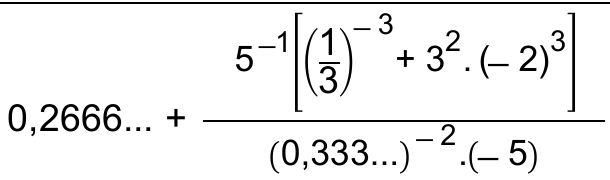 é igual a
É correto afirmar queResolução comentada
Análise das alternativas
 com x ≥ 0 e x ≠ 1, então Y é igual a
O gráfico abaixo apresenta a variação mensal do IPCA no Brasil, de abril de 2020 a março de 2021.

Fonte <<https://www.ibge.gov.br/indicadores#ipca>> Acesso em 24/04/2021. (Adaptado).
De acordo com as informações do gráfico e analisando as variações em períodos mensais, é correto afirmar que houve
Texto-base:
Texto-base:
Texto-base:
Texto-base:
Texto-base:
Texto-base:
Texto-base:
Texto-base:
Texto-base:
Texto-base:
Texto-base:
Texto-base:
Texto-base:
Texto-base:
Texto-base:
Texto-base:
A expressão numérica
O proprietário de uma loja de motos comprou duas motos para revenda e pagou o total de R$ 27000,00 Na revenda dessas motos, o proprietário lucrou 10% com a primeira e, apesar de ter tido um prejuízo de 5% com a segunda, no total ele ainda teve lucro de R$ 750,00 sobre o valor de compra.
Se
O Índice Nacional de Preços ao Consumidor Amplo (IPCA) é um índice oficial de inflação do Brasil usado pelo Governo Federal. O objetivo do IPCA é medir a inflação de um conjunto de produtos e serviços comercializados no varejo, tais como transporte, educação, alimentação e outros. Ele serve de referência para as metas de inflação e para as alterações na taxa de juros.