← Voltar para a lista de provas Marinha do Brasil · Oficial do Quadro Complementar do Corpo da Armada (QC-CA) — Ciências Náuticas (Área de Máquinas) 50 questões nesta prova · página 1 de 3 · 49 com gabarito Gabarito disponível 'Puncture' significa pequeno furo. No texto, a âncora atingiu e perfurou o casco ('strike and puncture the hull'). Puncture é uma perfuração, ou seja, um pequeno furo, o que corresponde a 'small hole'. Shackle é a manilha, fender é a defensa, list é a banda (inclinação) e crash-stop é a parada de emergência. Nenhum deles significa perfuração. Referência: Vocabulário em contexto, texto-base. Resolução comentada do VaiConcursos. Gabarito disponível As inspeções regulares não bastaram, pois os inspetores não sabiam avaliar o estado do cabo. O texto diz que o cabo era inspecionado regularmente, mas que os inspetores não foram instruídos a examiná-lo nem a avaliar se ainda servia. Logo, inspeções em intervalos regulares não garantiram o bom funcionamento do equipamento. A: o texto diz que a corrosão 'provavelmente' causou a falha, não 'certamente'. C: a âncora era uma substituta. D: ela escorregou e não foi lançada de propósito. E: o problema foi o desgaste (pastilha de 2-3 mm), não uma pastilha mais larga. Referência: Texto 'Real Life Accident: Anchor Damages Hull' (Marsreport/Marine Insight). Resolução comentada do VaiConcursos. Gabarito disponível Gabarito disponível Dredger (draga) não transporta carga. Lash-vessel, bulk carrier (graneleiro), coaster (cabotagem) e reefer (frigorífico) transportam cargas. A dredger é uma draga, usada para escavar e remover sedimentos, e não para transportar carga de um porto a outro. A, B, C e D são navios de carga, portanto servem ao transporte. Por isso não são a resposta pedida. Referência: Texto-base e vocabulário de tipos de navios. Resolução comentada do VaiConcursos. Gabarito disponível Gabarito disponível Conectivos: whilst / but / During / However. 'Whilst the vessel was at sea' indica simultaneidade. 'All but emergency auxiliary power supplies' significa 'todas exceto'. 'During less than an hour' dá a duração do incêndio, e 'However' marca a oposição ao fato de que ninguém se feriu. B (once/and/After/When), C, D e E não formam frases coerentes. Exemplos: 'After less than an hour' e 'Furthermore' não se encaixam, e 'despite the vessel was' é gramaticalmente incorreto. Referência: Gramática inglesa: conjunções e conectivos. Resolução comentada do VaiConcursos. Gabarito disponível Bombas de lastro ajustam trim e banda; bombas de porão drenam líquidos dos porões. As bombas de lastro (ballast pumps) transferem água entre tanques para corrigir trim e banda (listing). As bombas de porão (bilge pumps) drenam líquidos indesejados dos porões, como água doce ou salgada e óleos. As bombas de combustível, de água doce, de incêndio, de óleo lubrificante e alternativas não servem para ajustar trim e banda. As engrenagens (gearwheel) também não são bombas de porão. Só E combina as duas funções corretamente. Referência: Vocabulário técnico naval: sistemas de bombeamento a bordo. Resolução comentada do VaiConcursos. Gabarito disponível Deslocamento lateral do navio é 'swaying'; guinada da proa para um bordo e outro é 'yawing'. Swaying (deriva lateral) é o movimento linear em que o navio inteiro se desloca para boreste e para bombordo. Yawing (guinada) é o movimento rotacional em que a proa é empurrada para um bordo e depois para o outro. Pitching é o caturro (proa e popa sobem e descem) e rolling é o balanço lateral. Surging é o movimento linear longitudinal e heaving é o vertical. Só a opção D associa corretamente sway e yaw. Referência: Terminologia de movimentos do navio (seis graus de liberdade). Resolução comentada do VaiConcursos. Gabarito disponível SOLAS II-1, Regra 26: banda de 15° estática, 22,5° dinâmica e caturro de 7,5°. A regra exige que a propulsão principal e as máquinas auxiliares essenciais operem com banda de até 15° em condição estática e 22,5° em condição dinâmica (jogando). Ao mesmo tempo, devem suportar caturro dinâmico de 7,5° pela proa ou pela popa. As demais combinações (12,5/20/10; 12,5/15/7,5; 15/22,5/8; 17,5/22,5/10) trazem ao menos um valor diferente do texto da regra. Referência: SOLAS, Cap. II-1, Parte C, Regra 26. Resolução comentada do VaiConcursos. Gabarito disponível Bomba rotativa de deslocamento positivo exige válvula de alívio no início do recalque. Nas bombas de deslocamento positivo, o líquido é empurrado mecanicamente. Se o recalque for fechado, a pressão sobe sem limite e pode romper a bomba ou a tubulação. Por isso se instala uma válvula de alívio (segurança) no início do recalque, que desvia o fluido de volta à sucção ou ao tanque. Globo, borboleta e agulha são válvulas de bloqueio ou regulagem, e fechá-las pode causar sobrepressão. A de retenção impede o refluxo, mas não protege contra sobrepressão. Referência: Macintyre, A. J. Bombas e Instalações de Bombeamento (1997). Resolução comentada do VaiConcursos. Gabarito disponível Grupos de aquaviários do RLESTA: o 3º grupo é de Pescadores e o 5º, de Práticos, que não são tripulantes temporários. As afirmativas I (Marítimos, 1º grupo) e II (Fluviários, 2º grupo) descrevem corretamente os grupos. Os Pescadores formam o 3º grupo, e não o 4º, que é o dos Mergulhadores. Por isso a III é falsa. A afirmativa III erra a numeração: Pescadores são o 3º grupo. A IV erra ao qualificar os práticos como 'tripulantes temporários'. Por essa razão, B, C, D e E, que incluem III ou IV, estão incorretas. Só A traz apenas I e II. Referência: RLESTA (Decreto nº 2.596/1998), classificação dos aquaviários em grupos; NORMAM-13/DPC. Resolução comentada do VaiConcursos. Gabarito disponível Gabarito disponível Bomba axial: grandes vazões e baixa altura manométrica. Bombas de fluxo axial são adequadas a grandes quantidades de água com baixa altura de elevação (low head). B) alta altura é característica de bombas centrífugas multiestágio. C), D) e E) tratam de situações não associadas à definição da bomba axial. A) está correta. Referência: Taylor (2007), Introduction to Marine Engineering. Resolução comentada do VaiConcursos. Gabarito disponível Anéis de desgaste são substituíveis em vez do rotor ou da carcaça. Os anéis de desgaste ficam na folga entre rotor e carcaça. Eles sofrem o desgaste e podem ser trocados facilmente, preservando as peças mais caras. A) não são anéis galvânicos de sacrifício. B) não protegem mancais. D) não protegem gaxetas. E) não preservam o acoplamento. C) está correta. Referência: Bombas centrífugas: componentes. Resolução comentada do VaiConcursos. Gabarito disponível Selo mecânico consome menos potência e ambos não podem operar a seco. O selo mecânico tem menos atrito e consome menos potência que a gaxeta, e ambos precisam de lubrificação, não podendo funcionar a seco. As afirmativas III e IV são verdadeiras. I é falsa, pois a vedação principal ao longo do eixo é tradicionalmente feita com gaxeta. II é falsa, porque o atrito do selo é menor. Logo A, B, C e D estão erradas. E) está correta. Referência: Máquinas de fluxo: vedação de eixo de bombas. Resolução comentada do VaiConcursos. Gabarito disponível Aparelho de governo: 35° a 35° e 35° a 30° em até 28 s. A SOLAS exige que o aparelho de governo principal leve o leme de 35° de um bordo a 35° do outro e, de 35° em um bordo a 30° no bordo oposto, em no máximo 28 segundos. A) usa 30° e 20 s. B) e D) usam 30° como primeira posição de ida. C) usa 25 s. E) está correta. Referência: SOLAS, Capítulo II-1, Regra 29. Resolução comentada do VaiConcursos. Gabarito disponível Reincidência na LESTA: período igual ou inferior a doze meses. O art. 10 da Lei 9.537/97 define reincidência como a repetição da mesma infração em período igual ou inferior a doze meses. A) seis, C) dezoito, D) vinte e quatro e E) quarenta e oito meses não correspondem ao prazo legal. B) está correta. Referência: Lei 9.537/1997, art. 10. Resolução comentada do VaiConcursos. Gabarito disponível Gabarito disponível Categoria C da Lei 9.966/2000: risco moderado. A lei classifica as substâncias em A (risco máximo), B (risco grave), C (risco moderado) e D (risco pequeno). Portanto C corresponde a risco moderado. A) A é risco máximo, não inexistente. B) B é risco grave. D) D é risco pequeno. E) a lei não prevê categoria E. C) está correta. Referência: Lei 9.966/2000, art. 4º. Resolução comentada do VaiConcursos. Gabarito disponívelMarinha do Brasil — CP-QC-CA e QC-FN/2016 — Ciências Náuticas (Área de Máquinas) — QC-CA — Prova Amarela
Texto-base: Real Life Accident: Anchor Damages Hull, Bow Thruster Compartment Flooded
November 27, 2015 byMarsreport
Recently, a freight ship was underway in 15 foot seas when the forepeak flood alarms activated. The crew investigated and discovered the starboard anchor had slipped 10-15 links, causing it to strike and puncture the hull.
As a result, seawater flooded the bow thruster and emergency fire pump compartment. The casualty resulted in excess of $1 million in vessel damage and a month's lost revenues while the vessel was out of service undergoing repair.
During the repair period, it was discovered that the anchor windlass brake pad had worn down to 2-3mm thickness. With only this amount of pad, the fully applied brake could not achieve its designed holding power. The crew should have recognised the excessive wear to the brake pads and that these required replacement. It was also discovered that the anchor involved in the incident was a replacement, and had different specifications to the original anchor.
The replacement anchor's relative position in the hawse pipe was not the same as the original, because the shank length and connecting linkages were different. The size difference prevented the riding pawl from properly engaging the anchor chain. As an added safety device, a wire sling had been used to secure the anchor while at sea. The wire sling was threaded through a chain link and secured to the vessel with a pelican hook.
When the sling broke and the brake failed, the anchor's weight and the ship's movement then caused it to drop before the riding pawl could properly engage. The sling failure was likely caused by the corrosion of the inner wire strands; the inner wire strands being exposed to the elements because of the sharp bend in the wire. Although the wire sling was inspected regularly, those performing the inspections were not instructed on how to examine and determine its serviceability.
Lessonslearned
• All preventative maintenance programmes should be up to date and include specific language on anchor windlass equipment, particularly emphasising when brake assemblies must be renewed or adjusted.
• When key vessel components, such as anchors, are to be replaced, a proper review should be undertaken and all possible variables considered.
• Persons involved with vessel maintenance and repair should have the technical resources available to them in order to assist in determining serviceability or replacement of shipboard equipment.
(Adaptedfrom:www.marineinsight.com)
The word "puncture" (paragraph 1) is closest in meaning to:Resolução comentada
Análise das alternativas
Texto-base: Real Life Accident: Anchor Damages Hull, Bow Thruster Compartment Flooded
November 27, 2015 byMarsreport
Recently, a freight ship was underway in 15 foot seas when the forepeak flood alarms activated. The crew investigated and discovered the starboard anchor had slipped 10-15 links, causing it to strike and puncture the hull.
As a result, seawater flooded the bow thruster and emergency fire pump compartment. The casualty resulted in excess of $1 million in vessel damage and a month's lost revenues while the vessel was out of service undergoing repair.
During the repair period, it was discovered that the anchor windlass brake pad had worn down to 2-3mm thickness. With only this amount of pad, the fully applied brake could not achieve its designed holding power. The crew should have recognised the excessive wear to the brake pads and that these required replacement. It was also discovered that the anchor involved in the incident was a replacement, and had different specifications to the original anchor.
The replacement anchor's relative position in the hawse pipe was not the same as the original, because the shank length and connecting linkages were different. The size difference prevented the riding pawl from properly engaging the anchor chain. As an added safety device, a wire sling had been used to secure the anchor while at sea. The wire sling was threaded through a chain link and secured to the vessel with a pelican hook.
When the sling broke and the brake failed, the anchor's weight and the ship's movement then caused it to drop before the riding pawl could properly engage. The sling failure was likely caused by the corrosion of the inner wire strands; the inner wire strands being exposed to the elements because of the sharp bend in the wire. Although the wire sling was inspected regularly, those performing the inspections were not instructed on how to examine and determine its serviceability.
Lessonslearned
• All preventative maintenance programmes should be up to date and include specific language on anchor windlass equipment, particularly emphasising when brake assemblies must be renewed or adjusted.
• When key vessel components, such as anchors, are to be replaced, a proper review should be undertaken and all possible variables considered.
• Persons involved with vessel maintenance and repair should have the technical resources available to them in order to assist in determining serviceability or replacement of shipboard equipment.
(Adaptedfrom:www.marineinsight.com)
Choose the correct option according to the text.Resolução comentada
Análise das alternativas
Texto-base: Real Life Accident: Anchor Damages Hull, Bow Thruster Compartment Flooded
November 27, 2015 byMarsreport
Recently, a freight ship was underway in 15 foot seas when the forepeak flood alarms activated. The crew investigated and discovered the starboard anchor had slipped 10-15 links, causing it to strike and puncture the hull.
As a result, seawater flooded the bow thruster and emergency fire pump compartment. The casualty resulted in excess of $1 million in vessel damage and a month's lost revenues while the vessel was out of service undergoing repair.
During the repair period, it was discovered that the anchor windlass brake pad had worn down to 2-3mm thickness. With only this amount of pad, the fully applied brake could not achieve its designed holding power. The crew should have recognised the excessive wear to the brake pads and that these required replacement. It was also discovered that the anchor involved in the incident was a replacement, and had different specifications to the original anchor.
The replacement anchor's relative position in the hawse pipe was not the same as the original, because the shank length and connecting linkages were different. The size difference prevented the riding pawl from properly engaging the anchor chain. As an added safety device, a wire sling had been used to secure the anchor while at sea. The wire sling was threaded through a chain link and secured to the vessel with a pelican hook.
When the sling broke and the brake failed, the anchor's weight and the ship's movement then caused it to drop before the riding pawl could properly engage. The sling failure was likely caused by the corrosion of the inner wire strands; the inner wire strands being exposed to the elements because of the sharp bend in the wire. Although the wire sling was inspected regularly, those performing the inspections were not instructed on how to examine and determine its serviceability.
Lessonslearned
• All preventative maintenance programmes should be up to date and include specific language on anchor windlass equipment, particularly emphasising when brake assemblies must be renewed or adjusted.
• When key vessel components, such as anchors, are to be replaced, a proper review should be undertaken and all possible variables considered.
• Persons involved with vessel maintenance and repair should have the technical resources available to them in order to assist in determining serviceability or replacement of shipboard equipment.
(Adaptedfrom:www.marineinsight.com)

Texto-base: Real Life Accident: Anchor Damages Hull, Bow Thruster Compartment Flooded
November 27, 2015 byMarsreport
Recently, a freight ship was underway in 15 foot seas when the forepeak flood alarms activated. The crew investigated and discovered the starboard anchor had slipped 10-15 links, causing it to strike and puncture the hull.
As a result, seawater flooded the bow thruster and emergency fire pump compartment. The casualty resulted in excess of $1 million in vessel damage and a month's lost revenues while the vessel was out of service undergoing repair.
During the repair period, it was discovered that the anchor windlass brake pad had worn down to 2-3mm thickness. With only this amount of pad, the fully applied brake could not achieve its designed holding power. The crew should have recognised the excessive wear to the brake pads and that these required replacement. It was also discovered that the anchor involved in the incident was a replacement, and had different specifications to the original anchor.
The replacement anchor's relative position in the hawse pipe was not the same as the original, because the shank length and connecting linkages were different. The size difference prevented the riding pawl from properly engaging the anchor chain. As an added safety device, a wire sling had been used to secure the anchor while at sea. The wire sling was threaded through a chain link and secured to the vessel with a pelican hook.
When the sling broke and the brake failed, the anchor's weight and the ship's movement then caused it to drop before the riding pawl could properly engage. The sling failure was likely caused by the corrosion of the inner wire strands; the inner wire strands being exposed to the elements because of the sharp bend in the wire. Although the wire sling was inspected regularly, those performing the inspections were not instructed on how to examine and determine its serviceability.
Lessonslearned
• All preventative maintenance programmes should be up to date and include specific language on anchor windlass equipment, particularly emphasising when brake assemblies must be renewed or adjusted.
• When key vessel components, such as anchors, are to be replaced, a proper review should be undertaken and all possible variables considered.
• Persons involved with vessel maintenance and repair should have the technical resources available to them in order to assist in determining serviceability or replacement of shipboard equipment.
(Adaptedfrom:www.marineinsight.com)
A 'freight ship'(paragraph 1) is any sort of ship or vessel that carries cargo, goods, and materials from one port to another.
Choose the option that DOES NOT serve the purpose of transportation.Resolução comentada
Análise das alternativas
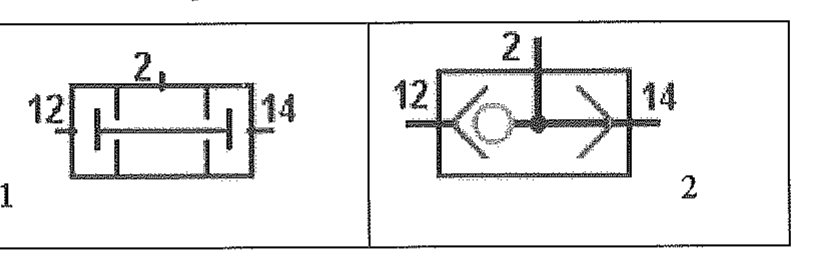
As válvulas pneumáticas de bloqueio, representadas na tabela acima representam, respectivamente, num circuito lógico, as seguintes portas lógicas:
A fire occurred in the generator room ________the vessel was at sea, depriving the vessel of all _______ emergency auxiliary power supplies. The crew fought the fire by using the vessel's fixed Halon installation and dry powder apparatus. __________less than an hour the fire was extinguished. No injuries were experienced. ___________ , due to the fire, the vessel lost her main propulsion power and had to be towed to port. (Casualty Information, 1997)Resolução comentada
Análise das alternativas
I - ____________ are used to trim the vessel. Listing will occur when there is a difference between draft at port side and draft at starboard side.
II- ____________ are used to drain superfluous liquids such as fresh and salt water, oils, etc. from the holds.Resolução comentada
Análise das alternativas
Due to the influences of the wind and the sea the vessel can make different rotating and linear motions:
I - when the whole ship moves bodily to starboard and then to port, the vessel is _____________.
II- when her bow is pushed to starboard and then to port, the vessel is _____________.Resolução comentada
Análise das alternativas
A máquina de propulsão principal e todas as máquinas auxiliares, essenciais ao sistema de propulsão e à segurança do navio, tal como estão instaladas a bordo, deverão ser projetadas para operar com o navio sem banda ou com banda para qualquer dos bordos até ________ inclusive, em condições estáticas e de ________ em condições dinâmicas (jogando) de um bordo para outro e, ao mesmo tempo, caturrando dinamicamente ________ pela proa ou pela popa. A Administração pode aceitar alterações desses ângulos, levando em conta o tipo, o porte e as condições de serviço do navio.Resolução comentada
Análise das alternativas
Resolução comentada
Análise das alternativas
I - 1° Grupo - Marítimos: tripulantes que operam embarcações classificadas para a navegação em mar aberto, apoio marítimo e para a navegação interior nos canais, lagoas, baías, angras, enseadas e áreas marítimas consideradas abrigadas.
II - 2° Grupo - Fluviários: tripulantes que operam embarcações classificadas para a navegação interior nos lagos, rios e de apoio portuário fluvial.
III- 4° Grupo - Pescadores: tripulantes que exercem atividades a bordo de embarcações de pesca.
IV - 5° Grupo - Práticos: tripulantes temporários que prestam serviço de praticagem embarcado.
Assinale a opção correta.Resolução comentada
Análise das alternativas
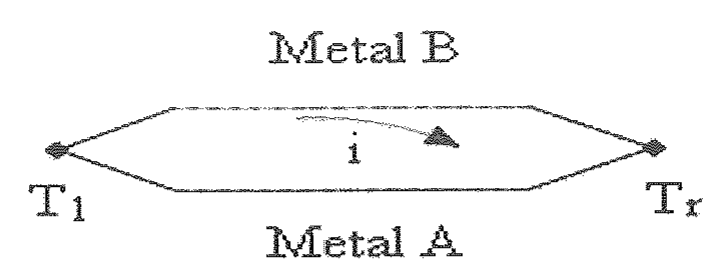
Ao analisarmos a teoria termoelétrica, conforme figura acima, podemos afirmar que em um circuito
According to Taylor (2007), the axial flow pump is used on machinery:Resolução comentada
Análise das alternativas
Resolução comentada
Análise das alternativas
I - A vedação principal utiliza o selo mecânico ao longo do eixo.
II - As perdas por atrito, quando se utiliza o selo mecânico, são maiores do que quando se utiliza gaxeta.
III- O selo mecânico consome menos potência que a gaxeta.
IV - A gaxeta e o selo mecânico não podem funcionar a seco.
Assinale a opção correta.Resolução comentada
Análise das alternativas
"O aparelho de governo principal e a madre do leme deverão ser capazes de poder levar o leme de uma posição de ______ graus de um bordo para uma posição de ______ graus do outro bordo, com o navio navegando em água salgada com calado máximo e dando adiante com a velocidade máxima de serviço e, nas mesmas condições, de uma posição de ______ graus em ambos os bordos para uma posição de ______ graus do bordo oposto, no tempo máximo de ______ segundos."Resolução comentada
Análise das alternativas
Resolução comentada
Análise das alternativas
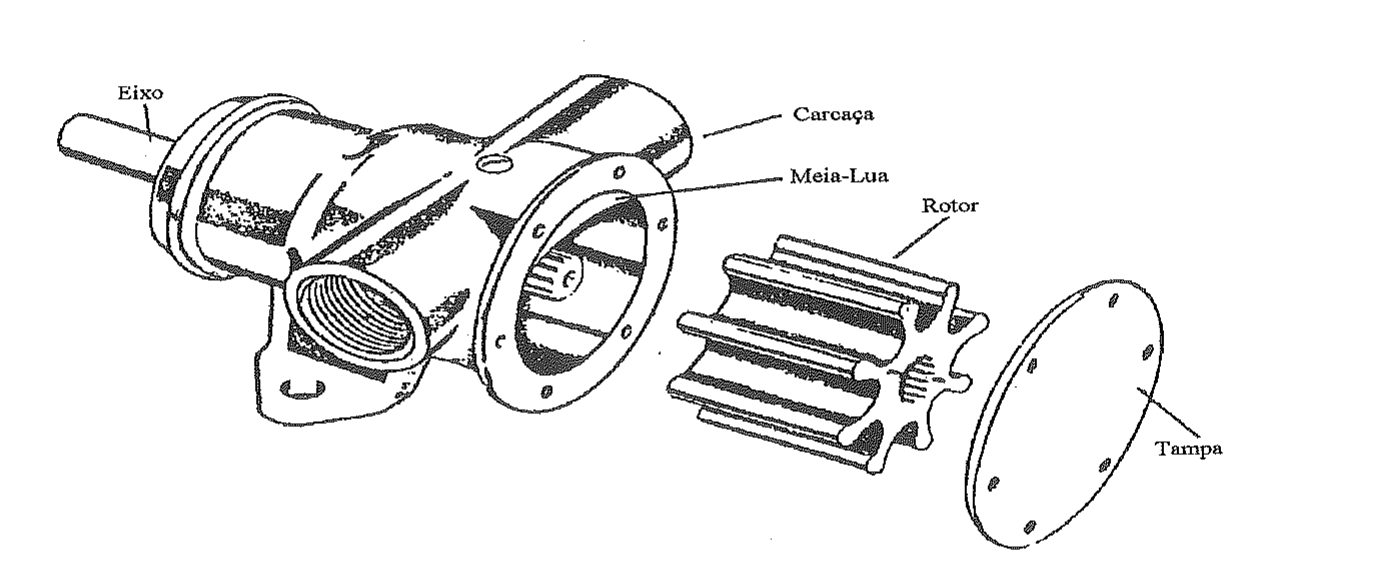
A figura acima representa um tipo de bomba comum usada para a circulação de água salgada para resfriamento de motores de embarcações de pequeno e médio porte. De acordo com Lima (2003), qual o nome dessa bomba?Resolução comentada
Análise das alternativas
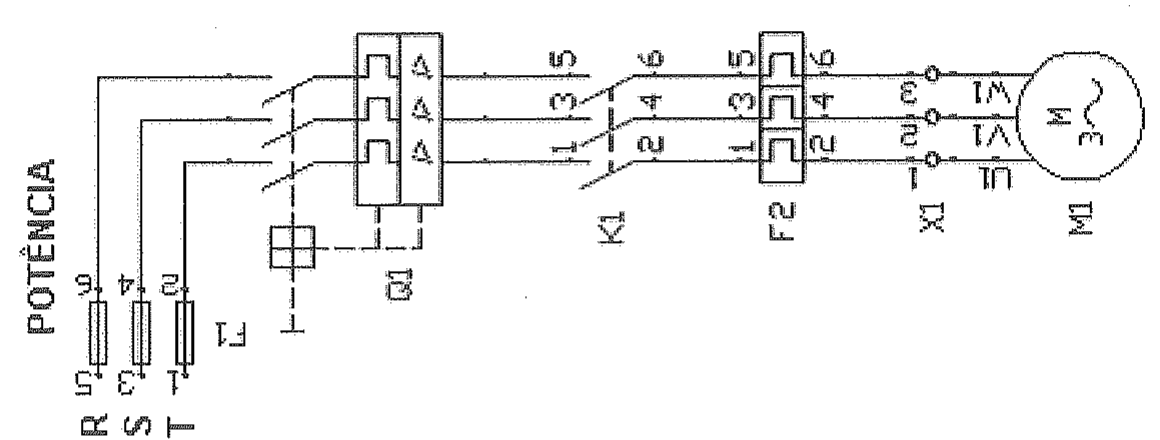
Um navio apresenta uma planta elétrica de força do motor do molinete, conforme diagrama acima. Sendo assim, pode-se afirmar que
Leia o texto abaixo para responder às questões de 1 a 4
Leia o texto abaixo para responder às questões de 1 a 4
Leia o texto abaixo para responder às questões de 1 a 4
Leia o texto abaixo para responder às questões de 1 a 4
Observe a tabela a seguir.
Choose the option that correctly completes the blanks of the text below, respectively.
On a vessel many pumping systems are used. Choose the option that correctly completes the sentences below, respectively:
Choose the option that correctly completes the sentences below, respectively.
De acordo com a Convenção Internacional para Salvaguarda da Vida Humana no Mar, SOLAS, Capítulo II-1, em sua PARTE C, Regra 26, as máquinas, caldeiras e outros vasos de pressão, canalizações e acessórios respectivos, deverão ser adequadamente projetados e construídos para desempenhar o serviço para os quais foram intencionados, e deverão ser de tal maneira instalados e protegidos para que tornem mínima qualquer possibilidade de dano às pessoas a bordo. Sendo assim, assinale a opção que completa corretamente as lacunas da sentença abaixo.
De acordo com Macintyre (1997), no início do recalque, a instalação de bomba rotativa de deslocamento positivo deve ter uma válvula
De acordo com o Regulamento de Segurança do Tráfego Aquaviário em Águas Jurisdicionais Brasileiras (RLESTA), analise as afirmativas abaixo.
Observe a figura a seguir.
Choose the correct option to complete the sentence.
Nas bombas centrífugas de médio e grande porte, os anéis de desgaste são anéis
Com relação aos selos mecânicos e às gaxetas, analise as afirmativas abaixo.
De acordo com o SOLAS, Convenção Internacional para Salvaguarda da Vida Humana no Mar, no concernente aos parâmetros de operação do Aparelho de Governo principal, assinale a opção que completa corretamente as lacunas da sentença abaixo.
De acordo com a LEI N° 9.537, de 11 de dezembro de 1997, Lei Especial de Segurança do Tráfego Aquaviário em Águas sob Jurisdição Nacional (LESTA). Artigo 10. Reincidência, para efeito de gradação das penalidades, é a repetição da prática da mesma infração em um período igual ou inferior a
Observe a figura a seguir.
O Art. 4o da Lei n° 9.966/2000, Lei do óleo, classifica as categorias das substâncias nocivas ou perigosas, de acordo com o risco produzido, quando descarregadas na água, tanto para a saúde humana como para o ecossistema aquático. Assinale a opção que apresenta a correta correspondência da classificação de riscos, segundo a lei referenciada.
Observe a figura a seguir.