← Voltar para a lista de provas Escola Preparatória de Cadetes do Ar (EPCAR) — Comando da Aeronáutica · Exame de Admissão ao CPCAR 2023 (Curso Preparatório de Cadetes do Ar) 49 questões nesta prova · página 1 de 3 · 48 com gabarito Gabarito disponível Interpretação: o texto mostra que a mudança climática afeta o Natal em países de climas muito diferentes. O texto apresenta Holanda (frio), Filipinas, Porto Rico e Brasil (quentes). Ele mostra que, apesar das tradições e do clima distintos de cada lugar, todos sofrem os efeitos da mudança climática. Por isso a alternativa C está correta. A) Errada: as tradições descritas são diferentes entre os países (parol, parranda, patinação). B) Errada: tanto países frios quanto quentes são afetados. D) Errada: Filipinas, Porto Rico e Brasil, países quentes, têm tradições prejudicadas. Referência: Texto 'How climate change has altered Christmas' (BBC Future, 2021). Resolução comentada do VaiConcursos. Gabarito disponível D discorda do texto: os desastres não ocorreram no mesmo ano. O tufão Goni foi em novembro do ano passado, o furacão Maria em 2017 e a inundação no Brasil, 'vários anos atrás'. Os desastres não ocorreram todos no mesmo ano. A) Condiz: inundações e perda da decoração natalina. B) Condiz: inundação, seca e incêndios no Brasil. C) Condiz: o texto mostra celebrações impactadas. Referência: Texto I, BBC Future. Resolução comentada do VaiConcursos. Gabarito disponível A causa do sem comunicação é estar protegido no porão. No texto, Salvador estava se protegendo no porão com outras 10 pessoas e perdeu a comunicação com o pai e os amigos. A relação é de causa, expressa por 'because'. A) 'then' sugere sequência errada. B) 'after that' inverte a ordem dos fatos. C) 'however' indica contraste inexistente. Referência: Texto I; linking words. Resolução comentada do VaiConcursos. Gabarito disponível Sequência: V, F, F, V. I é V: patinar no gelo é atividade de estação fria. II é F: o parágrafo apresenta a duração e as decorações, não alterações. III é F: o trecho relata a vulnerabilidade e a escuridão, não conclui sobre a importância do Natal. IV é V: 'used to decorate... Now we can't' compara passado e presente. A, B e C não correspondem à sequência T, F, F, T. Referência: Texto I, análise de parágrafos. Resolução comentada do VaiConcursos. Gabarito disponível Gabarito disponível Objetivo principal: informar sobre problemas da mudança climática. O texto mostra, por meio de relatos em três países, como a mudança climática afeta tradições natalinas e causa problemas. A finalidade é informar. A) Errada: não ensina a evitar a mudança climática. C) Errada: não se dirige ao governo. D) Errada: o foco não é formas de celebrar apesar do clima, mas os impactos. Referência: Texto I, BBC Future. Resolução comentada do VaiConcursos. Gabarito disponível C contradiz a ideia da autora. A autora defende que a mudança climática e a alta das temperaturas ameaçam as tradições natalinas. Dizer que, com o aumento das temperaturas, as pessoas podem continuar celebrando com as mesmas tradições contraria essa ideia. A, B e D expressam coerentemente que o clima ameaça ou altera as tradições. Referência: Texto I; conditionals. Resolução comentada do VaiConcursos. Gabarito disponível A ideia é de possibilidade, dada por 'may collapse'. O texto diz que cientistas alertam que a biodiversidade 'may collapse' em menos de 30 anos, o que indica possibilidade. A alternativa A mantém esse sentido. B) e C) Erradas: afirmam certeza. D) Errada: afirma que em 2050 já está colapsando e perde a condicionalidade. Referência: Texto I, parágrafo sobre o Cerrado. Resolução comentada do VaiConcursos. Gabarito disponível Corretas: I e III. I é correta: a última corrida foi há 24 anos, então não ocorreu no ano passado. III é correta: jovens e velhos patinam. II é falsa: a corrida não ocorre há 24 anos. IV é falsa: a tradição não é exclusiva da Frísia. A, C e D incluem afirmativas falsas (II ou IV). Referência: Texto I, parágrafos sobre a Holanda. Resolução comentada do VaiConcursos. Gabarito disponível As Filipinas celebram por mais de três meses. A celebração vai de 1º de setembro a 6 de janeiro, mais de quatro meses, portanto mais de três. A) Errada: cantam músicas folclóricas na parranda, não para estranhos nas montanhas. B) Errada: o Natal brasileiro começa em 24 de novembro, um mês antes. D) Errada: distribuir comida a necessitados é do Brasil, não dos chinchorros. Referência: Texto I, seção das Filipinas. Resolução comentada do VaiConcursos. Gabarito disponível Gabarito disponível D é incorreta: o estudo de 2019 não previu que a tempestade de 1956 se repetirá. O texto diz que um estudo de 2019 concluiu que uma tempestade como o furacão Maria é cinco vezes mais provável hoje, e não que um estudo de 2017 tenha mostrado isso. A data e a descrição estão erradas. A) Correta em essência: tempestades fortes são mais prováveis hoje. B) Correta: a chuva de Maria superou qualquer tempestade desde 1956. C) Correta: houve um estudo em 2019. Referência: BBC Future, 'How climate change has altered Christmas'. Resolução comentada do VaiConcursos. Gabarito disponível Gabarito disponível Gabarito disponível Gabarito disponível Gabarito disponível Apenas II e III estão corretas. I é falsa: as notícias seguintes trazem a investigação, as tatuagens e a conclusão. II é verdadeira: as testemunhas depõem, mas há também a perícia e a ciência. III é verdadeira: usa-se Lombroso e medicina legal. IV é falsa: o passado criminoso é um dado adicional, não uma mudança de rumo. A, B e D são incompatíveis com a contagem: apenas duas afirmativas (II e III) são corretas. Referência: Texto I, notícias dos dias 22 a 25. Resolução comentada do VaiConcursos. Gabarito disponível O livro de Lombroso foi decisivo para atribuir a autoria. A notícia mostra que as tatuagens foram comparadas às descritas por Lombroso e que o professor apresentou Manuel como alguém a ser vigiado pela polícia, por serem cópia fiel do livro. Assim, a autoridade do livro foi decisiva. A) Errada: não há interpretação do conteúdo amoroso, só comparação com o livro. C) Errada: a autoridade policial atuou, mas o peso decisivo foi científico. D) Errada: moradia e trabalho não são o fundamento. Referência: Texto I, notícias dos dias 23 a 25. Resolução comentada do VaiConcursos. Gabarito disponível Gabarito disponível A alternativa A erra ao chamar de aposto o que é adjunto adverbial. 'Ontem pela manhã' é adjunto adverbial de tempo e 'no necrotério' é adjunto adverbial de lugar; 'três praças da brigada policial' é o sujeito. Não há aposto que indique localização das testemunhas, logo a análise está errada. B) Correta: '1º delegado auxiliar' é aposto que indica o cargo. C) Correta: 'ex-corneta...' é aposto indicando a ocupação. D) Correta: 'na casinha...' é adjunto adverbial de lugar. Referência: Sintaxe: aposto e adjunto adverbial. Resolução comentada do VaiConcursos.EPCAR — Exame de Admissão ao CPCAR 2023 — Língua Inglesa, Língua Portuguesa, Matemática e Redação — Versão A
TEXT I
How climate change has altered Christmas
By Isabelle Gerretsen, 2021
While Hollywood's representation of a white Christmas
might be the northern hemisphere ideal, for many around the
world the holiday is celebrated in very different weather. But,
climate change is threatening both winter wonderlands and
5 warmer Christmas traditions.
In the Netherlands, where I grew up, a popular tradition
around Christmas is to put on your skates and take to the
frozen rivers. Young and old head onto the ice.
Active skaters used to enter the Elfstedentocht, an
10 iconic ice-skating race covering 200km that passes through
11 cities in the northern province Friesland. It's been 24
years since the last race happened. Climate change is
endangering this beloved winter tradition.
And it is not just cold-weather holiday traditions that are
15 slowly disappearing. Around the world extreme weather
caused by climate change and rising temperatures are
altering beloved Christmas traditions. BBC Future speaks to
three young people who share their Christmas stories.
Mitzi Jonelle Tan, 22, the Philippines
20 The Philippines has the earliest and longest Christmas
season in the world. "We celebrate from 1 September until 6
January," says the 22-year-old climate activist from Manila,
the capital of the Philippines. It is a colourful and creative
time. People make their own Christmas decorations,
25 including a star-shaped lantern, called a parol that they hang
in windows and streets for the entire festive season.
"On Christmas morning we always take photos in front
of churches near where my mum grew up," she says. "My
mum and grandpa also used to take pictures there." But in
30 50 years' time, this special place for the Jonelle Tan family
could no longer exist due to rising sea levels.
The Philippines is the world's most vulnerable country
to disasters caused by climate change. It is hit on average by
more than 20 typhoons each year, which cause severe
35 flooding and large-scale destruction. Flooding already
means that families can't put up their Christmas lights.
In November last year, super typhoon Goni, the year's
most powerful storm, hit the Philippines at 225km/h. "A few
days before Christmas, we were still helping clean up the
40 mud that had flooded the houses”, says Tan. People brought
food and gifts to the evacuation centres. "Christmas is a
celebration of what we've suffered that year, together as a
community".
Salvador Gómez-Colón, 19, Puerto Rico
45 Puerto Ricans love Christmas, says 19-year-old
Salvador Gómez-Colón. “It is a spectacle. It's the biggest
holiday in Puerto Rico”. During the festive period, families
head into the mountains around the capital San Juan to
gather at food trucks, called chinchorros. There they eat
50 suckling pig and cod fritters. "It's very communal, you meet
your neighbours and talk to strangers", Gómez-Colón says.
One of his favourite Christmas traditions is the
parranda: carolling in the streets and outside people's
houses. "We sing folklore songs with cymbals and drums".
55 This tradition continued even during Puerto Rico's darkest
days, after the country was hit by category 5 Hurricane Maria
in 2017. It dropped more rain on Puerto Rico than any storm
to hit the country since 1956. A storm of such power is five
times more probable to hit now than in the 1950s due to
60 climate change, a 2019 study found.
"I've never felt as vulnerable in my entire life. I was
[protecting myself] in a basement room with 10 others and
lost communication with my dad and friends," he says.
During the Christmas period, much of Puerto Rico was still in
65 complete darkness. Despite the terrible situation, Puerto
Ricans managed to celebrate Christmas that year.
Daniel Holanda, 19, Brazil
Christmas starts on 24 November when Brazilians
decorate the tree. Several years ago, Holanda’s family
70 house flooded while they were celebrating this tradition.
He celebrates Christmas in the city of Anápolis in
Brazil's central state, Goiás. "Every year we get together
on 24 December at my grandma's house. I have seven
uncles and they each bring a dish for dinner," he says.
75 “Christmas dinner is often candlelit as the flooding
causes frequent power cuts at this time of year. We used
to decorate the house with lights and play a lot of different
games outside. Now we can't do it anymore”, he says.
Goiás is home to the Cerrado, a vast wooded
80 savannah that contains thousands of rare species.
Scientists have warned that this biodiversity place may
collapse in less than 30 years if temperatures continue to
rise and large agricultural businesses rapidly change
forests into soy plantations. Besides flooding, the region
85 has suffered from extreme drought in recent years.
Wildfires are also a major problem there.
Despite the challenges, people find a way to gather
and return at Christmas time, he says. "On Christmas Eve,
we give food to people in need, especially old people."
Adapted from https://www.bbc.com/future/article/20211206-how-climate-change-has-altered-christmas.
Accessed on March 05th, 2022
Glossary:
1. To threaten: to announce or warn of something bad, disastrous or dangerous
2. To rise: to move upwards, to increase
3. To flood: to become covered with water
4. To gather: to come together in a group
5. Mud: wet earth that is soft and sticky
6. Basement: a room in a house below the level of the ground
7. Despite: not prevented/influenced by; although
8. Drought: a long period when there is little or no rain
9. Dutch: people from the Netherlands
It is correct to state thatResolução comentada
Análise das alternativas
TEXT I
How climate change has altered Christmas
By Isabelle Gerretsen, 2021
While Hollywood's representation of a white Christmas
might be the northern hemisphere ideal, for many around the
world the holiday is celebrated in very different weather. But,
climate change is threatening both winter wonderlands and
5 warmer Christmas traditions.
In the Netherlands, where I grew up, a popular tradition
around Christmas is to put on your skates and take to the
frozen rivers. Young and old head onto the ice.
Active skaters used to enter the Elfstedentocht, an
10 iconic ice-skating race covering 200km that passes through
11 cities in the northern province Friesland. It's been 24
years since the last race happened. Climate change is
endangering this beloved winter tradition.
And it is not just cold-weather holiday traditions that are
15 slowly disappearing. Around the world extreme weather
caused by climate change and rising temperatures are
altering beloved Christmas traditions. BBC Future speaks to
three young people who share their Christmas stories.
Mitzi Jonelle Tan, 22, the Philippines
20 The Philippines has the earliest and longest Christmas
season in the world. "We celebrate from 1 September until 6
January," says the 22-year-old climate activist from Manila,
the capital of the Philippines. It is a colourful and creative
time. People make their own Christmas decorations,
25 including a star-shaped lantern, called a parol that they hang
in windows and streets for the entire festive season.
"On Christmas morning we always take photos in front
of churches near where my mum grew up," she says. "My
mum and grandpa also used to take pictures there." But in
30 50 years' time, this special place for the Jonelle Tan family
could no longer exist due to rising sea levels.
The Philippines is the world's most vulnerable country
to disasters caused by climate change. It is hit on average by
more than 20 typhoons each year, which cause severe
35 flooding and large-scale destruction. Flooding already
means that families can't put up their Christmas lights.
In November last year, super typhoon Goni, the year's
most powerful storm, hit the Philippines at 225km/h. "A few
days before Christmas, we were still helping clean up the
40 mud that had flooded the houses”, says Tan. People brought
food and gifts to the evacuation centres. "Christmas is a
celebration of what we've suffered that year, together as a
community".
Salvador Gómez-Colón, 19, Puerto Rico
45 Puerto Ricans love Christmas, says 19-year-old
Salvador Gómez-Colón. “It is a spectacle. It's the biggest
holiday in Puerto Rico”. During the festive period, families
head into the mountains around the capital San Juan to
gather at food trucks, called chinchorros. There they eat
50 suckling pig and cod fritters. "It's very communal, you meet
your neighbours and talk to strangers", Gómez-Colón says.
One of his favourite Christmas traditions is the
parranda: carolling in the streets and outside people's
houses. "We sing folklore songs with cymbals and drums".
55 This tradition continued even during Puerto Rico's darkest
days, after the country was hit by category 5 Hurricane Maria
in 2017. It dropped more rain on Puerto Rico than any storm
to hit the country since 1956. A storm of such power is five
times more probable to hit now than in the 1950s due to
60 climate change, a 2019 study found.
"I've never felt as vulnerable in my entire life. I was
[protecting myself] in a basement room with 10 others and
lost communication with my dad and friends," he says.
During the Christmas period, much of Puerto Rico was still in
65 complete darkness. Despite the terrible situation, Puerto
Ricans managed to celebrate Christmas that year.
Daniel Holanda, 19, Brazil
Christmas starts on 24 November when Brazilians
decorate the tree. Several years ago, Holanda’s family
70 house flooded while they were celebrating this tradition.
He celebrates Christmas in the city of Anápolis in
Brazil's central state, Goiás. "Every year we get together
on 24 December at my grandma's house. I have seven
uncles and they each bring a dish for dinner," he says.
75 “Christmas dinner is often candlelit as the flooding
causes frequent power cuts at this time of year. We used
to decorate the house with lights and play a lot of different
games outside. Now we can't do it anymore”, he says.
Goiás is home to the Cerrado, a vast wooded
80 savannah that contains thousands of rare species.
Scientists have warned that this biodiversity place may
collapse in less than 30 years if temperatures continue to
rise and large agricultural businesses rapidly change
forests into soy plantations. Besides flooding, the region
85 has suffered from extreme drought in recent years.
Wildfires are also a major problem there.
Despite the challenges, people find a way to gather
and return at Christmas time, he says. "On Christmas Eve,
we give food to people in need, especially old people."
Adapted from https://www.bbc.com/future/article/20211206-how-climate-change-has-altered-christmas.
Accessed on March 05th, 2022
Glossary:
1. To threaten: to announce or warn of something bad, disastrous or dangerous
2. To rise: to move upwards, to increase
3. To flood: to become covered with water
4. To gather: to come together in a group
5. Mud: wet earth that is soft and sticky
6. Basement: a room in a house below the level of the ground
7. Despite: not prevented/influenced by; although
8. Drought: a long period when there is little or no rain
9. Dutch: people from the Netherlands
Choose the statement that is in DISAGREEMENT with the text.Resolução comentada
Análise das alternativas
TEXT I
How climate change has altered Christmas
By Isabelle Gerretsen, 2021
While Hollywood's representation of a white Christmas
might be the northern hemisphere ideal, for many around the
world the holiday is celebrated in very different weather. But,
climate change is threatening both winter wonderlands and
5 warmer Christmas traditions.
In the Netherlands, where I grew up, a popular tradition
around Christmas is to put on your skates and take to the
frozen rivers. Young and old head onto the ice.
Active skaters used to enter the Elfstedentocht, an
10 iconic ice-skating race covering 200km that passes through
11 cities in the northern province Friesland. It's been 24
years since the last race happened. Climate change is
endangering this beloved winter tradition.
And it is not just cold-weather holiday traditions that are
15 slowly disappearing. Around the world extreme weather
caused by climate change and rising temperatures are
altering beloved Christmas traditions. BBC Future speaks to
three young people who share their Christmas stories.
Mitzi Jonelle Tan, 22, the Philippines
20 The Philippines has the earliest and longest Christmas
season in the world. "We celebrate from 1 September until 6
January," says the 22-year-old climate activist from Manila,
the capital of the Philippines. It is a colourful and creative
time. People make their own Christmas decorations,
25 including a star-shaped lantern, called a parol that they hang
in windows and streets for the entire festive season.
"On Christmas morning we always take photos in front
of churches near where my mum grew up," she says. "My
mum and grandpa also used to take pictures there." But in
30 50 years' time, this special place for the Jonelle Tan family
could no longer exist due to rising sea levels.
The Philippines is the world's most vulnerable country
to disasters caused by climate change. It is hit on average by
more than 20 typhoons each year, which cause severe
35 flooding and large-scale destruction. Flooding already
means that families can't put up their Christmas lights.
In November last year, super typhoon Goni, the year's
most powerful storm, hit the Philippines at 225km/h. "A few
days before Christmas, we were still helping clean up the
40 mud that had flooded the houses”, says Tan. People brought
food and gifts to the evacuation centres. "Christmas is a
celebration of what we've suffered that year, together as a
community".
Salvador Gómez-Colón, 19, Puerto Rico
45 Puerto Ricans love Christmas, says 19-year-old
Salvador Gómez-Colón. “It is a spectacle. It's the biggest
holiday in Puerto Rico”. During the festive period, families
head into the mountains around the capital San Juan to
gather at food trucks, called chinchorros. There they eat
50 suckling pig and cod fritters. "It's very communal, you meet
your neighbours and talk to strangers", Gómez-Colón says.
One of his favourite Christmas traditions is the
parranda: carolling in the streets and outside people's
houses. "We sing folklore songs with cymbals and drums".
55 This tradition continued even during Puerto Rico's darkest
days, after the country was hit by category 5 Hurricane Maria
in 2017. It dropped more rain on Puerto Rico than any storm
to hit the country since 1956. A storm of such power is five
times more probable to hit now than in the 1950s due to
60 climate change, a 2019 study found.
"I've never felt as vulnerable in my entire life. I was
[protecting myself] in a basement room with 10 others and
lost communication with my dad and friends," he says.
During the Christmas period, much of Puerto Rico was still in
65 complete darkness. Despite the terrible situation, Puerto
Ricans managed to celebrate Christmas that year.
Daniel Holanda, 19, Brazil
Christmas starts on 24 November when Brazilians
decorate the tree. Several years ago, Holanda’s family
70 house flooded while they were celebrating this tradition.
He celebrates Christmas in the city of Anápolis in
Brazil's central state, Goiás. "Every year we get together
on 24 December at my grandma's house. I have seven
uncles and they each bring a dish for dinner," he says.
75 “Christmas dinner is often candlelit as the flooding
causes frequent power cuts at this time of year. We used
to decorate the house with lights and play a lot of different
games outside. Now we can't do it anymore”, he says.
Goiás is home to the Cerrado, a vast wooded
80 savannah that contains thousands of rare species.
Scientists have warned that this biodiversity place may
collapse in less than 30 years if temperatures continue to
rise and large agricultural businesses rapidly change
forests into soy plantations. Besides flooding, the region
85 has suffered from extreme drought in recent years.
Wildfires are also a major problem there.
Despite the challenges, people find a way to gather
and return at Christmas time, he says. "On Christmas Eve,
we give food to people in need, especially old people."
Adapted from https://www.bbc.com/future/article/20211206-how-climate-change-has-altered-christmas.
Accessed on March 05th, 2022
Glossary:
1. To threaten: to announce or warn of something bad, disastrous or dangerous
2. To rise: to move upwards, to increase
3. To flood: to become covered with water
4. To gather: to come together in a group
5. Mud: wet earth that is soft and sticky
6. Basement: a room in a house below the level of the ground
7. Despite: not prevented/influenced by; although
8. Drought: a long period when there is little or no rain
9. Dutch: people from the Netherlands
Choose the option that explains what happened to Salvador Gómez-Colón.
During the storm, he could not talk to his dad and friends,Resolução comentada
Análise das alternativas
TEXT I
How climate change has altered Christmas
By Isabelle Gerretsen, 2021
While Hollywood's representation of a white Christmas
might be the northern hemisphere ideal, for many around the
world the holiday is celebrated in very different weather. But,
climate change is threatening both winter wonderlands and
5 warmer Christmas traditions.
In the Netherlands, where I grew up, a popular tradition
around Christmas is to put on your skates and take to the
frozen rivers. Young and old head onto the ice.
Active skaters used to enter the Elfstedentocht, an
10 iconic ice-skating race covering 200km that passes through
11 cities in the northern province Friesland. It's been 24
years since the last race happened. Climate change is
endangering this beloved winter tradition.
And it is not just cold-weather holiday traditions that are
15 slowly disappearing. Around the world extreme weather
caused by climate change and rising temperatures are
altering beloved Christmas traditions. BBC Future speaks to
three young people who share their Christmas stories.
Mitzi Jonelle Tan, 22, the Philippines
20 The Philippines has the earliest and longest Christmas
season in the world. "We celebrate from 1 September until 6
January," says the 22-year-old climate activist from Manila,
the capital of the Philippines. It is a colourful and creative
time. People make their own Christmas decorations,
25 including a star-shaped lantern, called a parol that they hang
in windows and streets for the entire festive season.
"On Christmas morning we always take photos in front
of churches near where my mum grew up," she says. "My
mum and grandpa also used to take pictures there." But in
30 50 years' time, this special place for the Jonelle Tan family
could no longer exist due to rising sea levels.
The Philippines is the world's most vulnerable country
to disasters caused by climate change. It is hit on average by
more than 20 typhoons each year, which cause severe
35 flooding and large-scale destruction. Flooding already
means that families can't put up their Christmas lights.
In November last year, super typhoon Goni, the year's
most powerful storm, hit the Philippines at 225km/h. "A few
days before Christmas, we were still helping clean up the
40 mud that had flooded the houses”, says Tan. People brought
food and gifts to the evacuation centres. "Christmas is a
celebration of what we've suffered that year, together as a
community".
Salvador Gómez-Colón, 19, Puerto Rico
45 Puerto Ricans love Christmas, says 19-year-old
Salvador Gómez-Colón. “It is a spectacle. It's the biggest
holiday in Puerto Rico”. During the festive period, families
head into the mountains around the capital San Juan to
gather at food trucks, called chinchorros. There they eat
50 suckling pig and cod fritters. "It's very communal, you meet
your neighbours and talk to strangers", Gómez-Colón says.
One of his favourite Christmas traditions is the
parranda: carolling in the streets and outside people's
houses. "We sing folklore songs with cymbals and drums".
55 This tradition continued even during Puerto Rico's darkest
days, after the country was hit by category 5 Hurricane Maria
in 2017. It dropped more rain on Puerto Rico than any storm
to hit the country since 1956. A storm of such power is five
times more probable to hit now than in the 1950s due to
60 climate change, a 2019 study found.
"I've never felt as vulnerable in my entire life. I was
[protecting myself] in a basement room with 10 others and
lost communication with my dad and friends," he says.
During the Christmas period, much of Puerto Rico was still in
65 complete darkness. Despite the terrible situation, Puerto
Ricans managed to celebrate Christmas that year.
Daniel Holanda, 19, Brazil
Christmas starts on 24 November when Brazilians
decorate the tree. Several years ago, Holanda’s family
70 house flooded while they were celebrating this tradition.
He celebrates Christmas in the city of Anápolis in
Brazil's central state, Goiás. "Every year we get together
on 24 December at my grandma's house. I have seven
uncles and they each bring a dish for dinner," he says.
75 “Christmas dinner is often candlelit as the flooding
causes frequent power cuts at this time of year. We used
to decorate the house with lights and play a lot of different
games outside. Now we can't do it anymore”, he says.
Goiás is home to the Cerrado, a vast wooded
80 savannah that contains thousands of rare species.
Scientists have warned that this biodiversity place may
collapse in less than 30 years if temperatures continue to
rise and large agricultural businesses rapidly change
forests into soy plantations. Besides flooding, the region
85 has suffered from extreme drought in recent years.
Wildfires are also a major problem there.
Despite the challenges, people find a way to gather
and return at Christmas time, he says. "On Christmas Eve,
we give food to people in need, especially old people."
Adapted from https://www.bbc.com/future/article/20211206-how-climate-change-has-altered-christmas.
Accessed on March 05th, 2022
Glossary:
1. To threaten: to announce or warn of something bad, disastrous or dangerous
2. To rise: to move upwards, to increase
3. To flood: to become covered with water
4. To gather: to come together in a group
5. Mud: wet earth that is soft and sticky
6. Basement: a room in a house below the level of the ground
7. Despite: not prevented/influenced by; although
8. Drought: a long period when there is little or no rain
9. Dutch: people from the Netherlands
Write (T) for the true sentences and (F) to the false ones, according to the text.
I - The 3rd paragraph (ℓ. 09 to 13) describes a cold season activity. ( )
II - The 5th paragraph (ℓ. 20 to 26) tells how the celebrations were altered due to climate change. ( )
III - In the 11th paragraph (ℓ. 61 to 66), there is a conclusion about the importance of Christmas to Puerto Ricans. ( )
IV - In the 14th paragraph (ℓ. 75 to 78), there is a comparison between a habit in the past and present. ( )
Choose the correct sequence.Resolução comentada
Análise das alternativas
TEXT I
How climate change has altered Christmas
By Isabelle Gerretsen, 2021
While Hollywood's representation of a white Christmas
might be the northern hemisphere ideal, for many around the
world the holiday is celebrated in very different weather. But,
climate change is threatening both winter wonderlands and
5 warmer Christmas traditions.
In the Netherlands, where I grew up, a popular tradition
around Christmas is to put on your skates and take to the
frozen rivers. Young and old head onto the ice.
Active skaters used to enter the Elfstedentocht, an
10 iconic ice-skating race covering 200km that passes through
11 cities in the northern province Friesland. It's been 24
years since the last race happened. Climate change is
endangering this beloved winter tradition.
And it is not just cold-weather holiday traditions that are
15 slowly disappearing. Around the world extreme weather
caused by climate change and rising temperatures are
altering beloved Christmas traditions. BBC Future speaks to
three young people who share their Christmas stories.
Mitzi Jonelle Tan, 22, the Philippines
20 The Philippines has the earliest and longest Christmas
season in the world. "We celebrate from 1 September until 6
January," says the 22-year-old climate activist from Manila,
the capital of the Philippines. It is a colourful and creative
time. People make their own Christmas decorations,
25 including a star-shaped lantern, called a parol that they hang
in windows and streets for the entire festive season.
"On Christmas morning we always take photos in front
of churches near where my mum grew up," she says. "My
mum and grandpa also used to take pictures there." But in
30 50 years' time, this special place for the Jonelle Tan family
could no longer exist due to rising sea levels.
The Philippines is the world's most vulnerable country
to disasters caused by climate change. It is hit on average by
more than 20 typhoons each year, which cause severe
35 flooding and large-scale destruction. Flooding already
means that families can't put up their Christmas lights.
In November last year, super typhoon Goni, the year's
most powerful storm, hit the Philippines at 225km/h. "A few
days before Christmas, we were still helping clean up the
40 mud that had flooded the houses”, says Tan. People brought
food and gifts to the evacuation centres. "Christmas is a
celebration of what we've suffered that year, together as a
community".
Salvador Gómez-Colón, 19, Puerto Rico
45 Puerto Ricans love Christmas, says 19-year-old
Salvador Gómez-Colón. “It is a spectacle. It's the biggest
holiday in Puerto Rico”. During the festive period, families
head into the mountains around the capital San Juan to
gather at food trucks, called chinchorros. There they eat
50 suckling pig and cod fritters. "It's very communal, you meet
your neighbours and talk to strangers", Gómez-Colón says.
One of his favourite Christmas traditions is the
parranda: carolling in the streets and outside people's
houses. "We sing folklore songs with cymbals and drums".
55 This tradition continued even during Puerto Rico's darkest
days, after the country was hit by category 5 Hurricane Maria
in 2017. It dropped more rain on Puerto Rico than any storm
to hit the country since 1956. A storm of such power is five
times more probable to hit now than in the 1950s due to
60 climate change, a 2019 study found.
"I've never felt as vulnerable in my entire life. I was
[protecting myself] in a basement room with 10 others and
lost communication with my dad and friends," he says.
During the Christmas period, much of Puerto Rico was still in
65 complete darkness. Despite the terrible situation, Puerto
Ricans managed to celebrate Christmas that year.
Daniel Holanda, 19, Brazil
Christmas starts on 24 November when Brazilians
decorate the tree. Several years ago, Holanda’s family
70 house flooded while they were celebrating this tradition.
He celebrates Christmas in the city of Anápolis in
Brazil's central state, Goiás. "Every year we get together
on 24 December at my grandma's house. I have seven
uncles and they each bring a dish for dinner," he says.
75 “Christmas dinner is often candlelit as the flooding
causes frequent power cuts at this time of year. We used
to decorate the house with lights and play a lot of different
games outside. Now we can't do it anymore”, he says.
Goiás is home to the Cerrado, a vast wooded
80 savannah that contains thousands of rare species.
Scientists have warned that this biodiversity place may
collapse in less than 30 years if temperatures continue to
rise and large agricultural businesses rapidly change
forests into soy plantations. Besides flooding, the region
85 has suffered from extreme drought in recent years.
Wildfires are also a major problem there.
Despite the challenges, people find a way to gather
and return at Christmas time, he says. "On Christmas Eve,
we give food to people in need, especially old people."
Adapted from https://www.bbc.com/future/article/20211206-how-climate-change-has-altered-christmas.
Accessed on March 05th, 2022
Glossary:
1. To threaten: to announce or warn of something bad, disastrous or dangerous
2. To rise: to move upwards, to increase
3. To flood: to become covered with water
4. To gather: to come together in a group
5. Mud: wet earth that is soft and sticky
6. Basement: a room in a house below the level of the ground
7. Despite: not prevented/influenced by; although
8. Drought: a long period when there is little or no rain
9. Dutch: people from the Netherlands
The word in bold can be omitted in:
TEXT I
How climate change has altered Christmas
By Isabelle Gerretsen, 2021
While Hollywood's representation of a white Christmas
might be the northern hemisphere ideal, for many around the
world the holiday is celebrated in very different weather. But,
climate change is threatening both winter wonderlands and
5 warmer Christmas traditions.
In the Netherlands, where I grew up, a popular tradition
around Christmas is to put on your skates and take to the
frozen rivers. Young and old head onto the ice.
Active skaters used to enter the Elfstedentocht, an
10 iconic ice-skating race covering 200km that passes through
11 cities in the northern province Friesland. It's been 24
years since the last race happened. Climate change is
endangering this beloved winter tradition.
And it is not just cold-weather holiday traditions that are
15 slowly disappearing. Around the world extreme weather
caused by climate change and rising temperatures are
altering beloved Christmas traditions. BBC Future speaks to
three young people who share their Christmas stories.
Mitzi Jonelle Tan, 22, the Philippines
20 The Philippines has the earliest and longest Christmas
season in the world. "We celebrate from 1 September until 6
January," says the 22-year-old climate activist from Manila,
the capital of the Philippines. It is a colourful and creative
time. People make their own Christmas decorations,
25 including a star-shaped lantern, called a parol that they hang
in windows and streets for the entire festive season.
"On Christmas morning we always take photos in front
of churches near where my mum grew up," she says. "My
mum and grandpa also used to take pictures there." But in
30 50 years' time, this special place for the Jonelle Tan family
could no longer exist due to rising sea levels.
The Philippines is the world's most vulnerable country
to disasters caused by climate change. It is hit on average by
more than 20 typhoons each year, which cause severe
35 flooding and large-scale destruction. Flooding already
means that families can't put up their Christmas lights.
In November last year, super typhoon Goni, the year's
most powerful storm, hit the Philippines at 225km/h. "A few
days before Christmas, we were still helping clean up the
40 mud that had flooded the houses”, says Tan. People brought
food and gifts to the evacuation centres. "Christmas is a
celebration of what we've suffered that year, together as a
community".
Salvador Gómez-Colón, 19, Puerto Rico
45 Puerto Ricans love Christmas, says 19-year-old
Salvador Gómez-Colón. “It is a spectacle. It's the biggest
holiday in Puerto Rico”. During the festive period, families
head into the mountains around the capital San Juan to
gather at food trucks, called chinchorros. There they eat
50 suckling pig and cod fritters. "It's very communal, you meet
your neighbours and talk to strangers", Gómez-Colón says.
One of his favourite Christmas traditions is the
parranda: carolling in the streets and outside people's
houses. "We sing folklore songs with cymbals and drums".
55 This tradition continued even during Puerto Rico's darkest
days, after the country was hit by category 5 Hurricane Maria
in 2017. It dropped more rain on Puerto Rico than any storm
to hit the country since 1956. A storm of such power is five
times more probable to hit now than in the 1950s due to
60 climate change, a 2019 study found.
"I've never felt as vulnerable in my entire life. I was
[protecting myself] in a basement room with 10 others and
lost communication with my dad and friends," he says.
During the Christmas period, much of Puerto Rico was still in
65 complete darkness. Despite the terrible situation, Puerto
Ricans managed to celebrate Christmas that year.
Daniel Holanda, 19, Brazil
Christmas starts on 24 November when Brazilians
decorate the tree. Several years ago, Holanda’s family
70 house flooded while they were celebrating this tradition.
He celebrates Christmas in the city of Anápolis in
Brazil's central state, Goiás. "Every year we get together
on 24 December at my grandma's house. I have seven
uncles and they each bring a dish for dinner," he says.
75 “Christmas dinner is often candlelit as the flooding
causes frequent power cuts at this time of year. We used
to decorate the house with lights and play a lot of different
games outside. Now we can't do it anymore”, he says.
Goiás is home to the Cerrado, a vast wooded
80 savannah that contains thousands of rare species.
Scientists have warned that this biodiversity place may
collapse in less than 30 years if temperatures continue to
rise and large agricultural businesses rapidly change
forests into soy plantations. Besides flooding, the region
85 has suffered from extreme drought in recent years.
Wildfires are also a major problem there.
Despite the challenges, people find a way to gather
and return at Christmas time, he says. "On Christmas Eve,
we give food to people in need, especially old people."
Adapted from https://www.bbc.com/future/article/20211206-how-climate-change-has-altered-christmas.
Accessed on March 05th, 2022
Glossary:
1. To threaten: to announce or warn of something bad, disastrous or dangerous
2. To rise: to move upwards, to increase
3. To flood: to become covered with water
4. To gather: to come together in a group
5. Mud: wet earth that is soft and sticky
6. Basement: a room in a house below the level of the ground
7. Despite: not prevented/influenced by; although
8. Drought: a long period when there is little or no rain
9. Dutch: people from the Netherlands
The main goal of the text is toResolução comentada
Análise das alternativas
TEXT I
How climate change has altered Christmas
By Isabelle Gerretsen, 2021
While Hollywood's representation of a white Christmas
might be the northern hemisphere ideal, for many around the
world the holiday is celebrated in very different weather. But,
climate change is threatening both winter wonderlands and
5 warmer Christmas traditions.
In the Netherlands, where I grew up, a popular tradition
around Christmas is to put on your skates and take to the
frozen rivers. Young and old head onto the ice.
Active skaters used to enter the Elfstedentocht, an
10 iconic ice-skating race covering 200km that passes through
11 cities in the northern province Friesland. It's been 24
years since the last race happened. Climate change is
endangering this beloved winter tradition.
And it is not just cold-weather holiday traditions that are
15 slowly disappearing. Around the world extreme weather
caused by climate change and rising temperatures are
altering beloved Christmas traditions. BBC Future speaks to
three young people who share their Christmas stories.
Mitzi Jonelle Tan, 22, the Philippines
20 The Philippines has the earliest and longest Christmas
season in the world. "We celebrate from 1 September until 6
January," says the 22-year-old climate activist from Manila,
the capital of the Philippines. It is a colourful and creative
time. People make their own Christmas decorations,
25 including a star-shaped lantern, called a parol that they hang
in windows and streets for the entire festive season.
"On Christmas morning we always take photos in front
of churches near where my mum grew up," she says. "My
mum and grandpa also used to take pictures there." But in
30 50 years' time, this special place for the Jonelle Tan family
could no longer exist due to rising sea levels.
The Philippines is the world's most vulnerable country
to disasters caused by climate change. It is hit on average by
more than 20 typhoons each year, which cause severe
35 flooding and large-scale destruction. Flooding already
means that families can't put up their Christmas lights.
In November last year, super typhoon Goni, the year's
most powerful storm, hit the Philippines at 225km/h. "A few
days before Christmas, we were still helping clean up the
40 mud that had flooded the houses”, says Tan. People brought
food and gifts to the evacuation centres. "Christmas is a
celebration of what we've suffered that year, together as a
community".
Salvador Gómez-Colón, 19, Puerto Rico
45 Puerto Ricans love Christmas, says 19-year-old
Salvador Gómez-Colón. “It is a spectacle. It's the biggest
holiday in Puerto Rico”. During the festive period, families
head into the mountains around the capital San Juan to
gather at food trucks, called chinchorros. There they eat
50 suckling pig and cod fritters. "It's very communal, you meet
your neighbours and talk to strangers", Gómez-Colón says.
One of his favourite Christmas traditions is the
parranda: carolling in the streets and outside people's
houses. "We sing folklore songs with cymbals and drums".
55 This tradition continued even during Puerto Rico's darkest
days, after the country was hit by category 5 Hurricane Maria
in 2017. It dropped more rain on Puerto Rico than any storm
to hit the country since 1956. A storm of such power is five
times more probable to hit now than in the 1950s due to
60 climate change, a 2019 study found.
"I've never felt as vulnerable in my entire life. I was
[protecting myself] in a basement room with 10 others and
lost communication with my dad and friends," he says.
During the Christmas period, much of Puerto Rico was still in
65 complete darkness. Despite the terrible situation, Puerto
Ricans managed to celebrate Christmas that year.
Daniel Holanda, 19, Brazil
Christmas starts on 24 November when Brazilians
decorate the tree. Several years ago, Holanda’s family
70 house flooded while they were celebrating this tradition.
He celebrates Christmas in the city of Anápolis in
Brazil's central state, Goiás. "Every year we get together
on 24 December at my grandma's house. I have seven
uncles and they each bring a dish for dinner," he says.
75 “Christmas dinner is often candlelit as the flooding
causes frequent power cuts at this time of year. We used
to decorate the house with lights and play a lot of different
games outside. Now we can't do it anymore”, he says.
Goiás is home to the Cerrado, a vast wooded
80 savannah that contains thousands of rare species.
Scientists have warned that this biodiversity place may
collapse in less than 30 years if temperatures continue to
rise and large agricultural businesses rapidly change
forests into soy plantations. Besides flooding, the region
85 has suffered from extreme drought in recent years.
Wildfires are also a major problem there.
Despite the challenges, people find a way to gather
and return at Christmas time, he says. "On Christmas Eve,
we give food to people in need, especially old people."
Adapted from https://www.bbc.com/future/article/20211206-how-climate-change-has-altered-christmas.
Accessed on March 05th, 2022
Glossary:
1. To threaten: to announce or warn of something bad, disastrous or dangerous
2. To rise: to move upwards, to increase
3. To flood: to become covered with water
4. To gather: to come together in a group
5. Mud: wet earth that is soft and sticky
6. Basement: a room in a house below the level of the ground
7. Despite: not prevented/influenced by; although
8. Drought: a long period when there is little or no rain
9. Dutch: people from the Netherlands
Choose the sentence that is INCOHERENT with the idea supported by the author.Resolução comentada
Análise das alternativas
TEXT I
How climate change has altered Christmas
By Isabelle Gerretsen, 2021
While Hollywood's representation of a white Christmas
might be the northern hemisphere ideal, for many around the
world the holiday is celebrated in very different weather. But,
climate change is threatening both winter wonderlands and
5 warmer Christmas traditions.
In the Netherlands, where I grew up, a popular tradition
around Christmas is to put on your skates and take to the
frozen rivers. Young and old head onto the ice.
Active skaters used to enter the Elfstedentocht, an
10 iconic ice-skating race covering 200km that passes through
11 cities in the northern province Friesland. It's been 24
years since the last race happened. Climate change is
endangering this beloved winter tradition.
And it is not just cold-weather holiday traditions that are
15 slowly disappearing. Around the world extreme weather
caused by climate change and rising temperatures are
altering beloved Christmas traditions. BBC Future speaks to
three young people who share their Christmas stories.
Mitzi Jonelle Tan, 22, the Philippines
20 The Philippines has the earliest and longest Christmas
season in the world. "We celebrate from 1 September until 6
January," says the 22-year-old climate activist from Manila,
the capital of the Philippines. It is a colourful and creative
time. People make their own Christmas decorations,
25 including a star-shaped lantern, called a parol that they hang
in windows and streets for the entire festive season.
"On Christmas morning we always take photos in front
of churches near where my mum grew up," she says. "My
mum and grandpa also used to take pictures there." But in
30 50 years' time, this special place for the Jonelle Tan family
could no longer exist due to rising sea levels.
The Philippines is the world's most vulnerable country
to disasters caused by climate change. It is hit on average by
more than 20 typhoons each year, which cause severe
35 flooding and large-scale destruction. Flooding already
means that families can't put up their Christmas lights.
In November last year, super typhoon Goni, the year's
most powerful storm, hit the Philippines at 225km/h. "A few
days before Christmas, we were still helping clean up the
40 mud that had flooded the houses”, says Tan. People brought
food and gifts to the evacuation centres. "Christmas is a
celebration of what we've suffered that year, together as a
community".
Salvador Gómez-Colón, 19, Puerto Rico
45 Puerto Ricans love Christmas, says 19-year-old
Salvador Gómez-Colón. “It is a spectacle. It's the biggest
holiday in Puerto Rico”. During the festive period, families
head into the mountains around the capital San Juan to
gather at food trucks, called chinchorros. There they eat
50 suckling pig and cod fritters. "It's very communal, you meet
your neighbours and talk to strangers", Gómez-Colón says.
One of his favourite Christmas traditions is the
parranda: carolling in the streets and outside people's
houses. "We sing folklore songs with cymbals and drums".
55 This tradition continued even during Puerto Rico's darkest
days, after the country was hit by category 5 Hurricane Maria
in 2017. It dropped more rain on Puerto Rico than any storm
to hit the country since 1956. A storm of such power is five
times more probable to hit now than in the 1950s due to
60 climate change, a 2019 study found.
"I've never felt as vulnerable in my entire life. I was
[protecting myself] in a basement room with 10 others and
lost communication with my dad and friends," he says.
During the Christmas period, much of Puerto Rico was still in
65 complete darkness. Despite the terrible situation, Puerto
Ricans managed to celebrate Christmas that year.
Daniel Holanda, 19, Brazil
Christmas starts on 24 November when Brazilians
decorate the tree. Several years ago, Holanda’s family
70 house flooded while they were celebrating this tradition.
He celebrates Christmas in the city of Anápolis in
Brazil's central state, Goiás. "Every year we get together
on 24 December at my grandma's house. I have seven
uncles and they each bring a dish for dinner," he says.
75 “Christmas dinner is often candlelit as the flooding
causes frequent power cuts at this time of year. We used
to decorate the house with lights and play a lot of different
games outside. Now we can't do it anymore”, he says.
Goiás is home to the Cerrado, a vast wooded
80 savannah that contains thousands of rare species.
Scientists have warned that this biodiversity place may
collapse in less than 30 years if temperatures continue to
rise and large agricultural businesses rapidly change
forests into soy plantations. Besides flooding, the region
85 has suffered from extreme drought in recent years.
Wildfires are also a major problem there.
Despite the challenges, people find a way to gather
and return at Christmas time, he says. "On Christmas Eve,
we give food to people in need, especially old people."
Adapted from https://www.bbc.com/future/article/20211206-how-climate-change-has-altered-christmas.
Accessed on March 05th, 2022
Glossary:
1. To threaten: to announce or warn of something bad, disastrous or dangerous
2. To rise: to move upwards, to increase
3. To flood: to become covered with water
4. To gather: to come together in a group
5. Mud: wet earth that is soft and sticky
6. Basement: a room in a house below the level of the ground
7. Despite: not prevented/influenced by; although
8. Drought: a long period when there is little or no rain
9. Dutch: people from the Netherlands
Choose the option that explains the idea of the penultimate paragraph (ℓ. 79 to 86).Resolução comentada
Análise das alternativas
TEXT I
How climate change has altered Christmas
By Isabelle Gerretsen, 2021
While Hollywood's representation of a white Christmas
might be the northern hemisphere ideal, for many around the
world the holiday is celebrated in very different weather. But,
climate change is threatening both winter wonderlands and
5 warmer Christmas traditions.
In the Netherlands, where I grew up, a popular tradition
around Christmas is to put on your skates and take to the
frozen rivers. Young and old head onto the ice.
Active skaters used to enter the Elfstedentocht, an
10 iconic ice-skating race covering 200km that passes through
11 cities in the northern province Friesland. It's been 24
years since the last race happened. Climate change is
endangering this beloved winter tradition.
And it is not just cold-weather holiday traditions that are
15 slowly disappearing. Around the world extreme weather
caused by climate change and rising temperatures are
altering beloved Christmas traditions. BBC Future speaks to
three young people who share their Christmas stories.
Mitzi Jonelle Tan, 22, the Philippines
20 The Philippines has the earliest and longest Christmas
season in the world. "We celebrate from 1 September until 6
January," says the 22-year-old climate activist from Manila,
the capital of the Philippines. It is a colourful and creative
time. People make their own Christmas decorations,
25 including a star-shaped lantern, called a parol that they hang
in windows and streets for the entire festive season.
"On Christmas morning we always take photos in front
of churches near where my mum grew up," she says. "My
mum and grandpa also used to take pictures there." But in
30 50 years' time, this special place for the Jonelle Tan family
could no longer exist due to rising sea levels.
The Philippines is the world's most vulnerable country
to disasters caused by climate change. It is hit on average by
more than 20 typhoons each year, which cause severe
35 flooding and large-scale destruction. Flooding already
means that families can't put up their Christmas lights.
In November last year, super typhoon Goni, the year's
most powerful storm, hit the Philippines at 225km/h. "A few
days before Christmas, we were still helping clean up the
40 mud that had flooded the houses”, says Tan. People brought
food and gifts to the evacuation centres. "Christmas is a
celebration of what we've suffered that year, together as a
community".
Salvador Gómez-Colón, 19, Puerto Rico
45 Puerto Ricans love Christmas, says 19-year-old
Salvador Gómez-Colón. “It is a spectacle. It's the biggest
holiday in Puerto Rico”. During the festive period, families
head into the mountains around the capital San Juan to
gather at food trucks, called chinchorros. There they eat
50 suckling pig and cod fritters. "It's very communal, you meet
your neighbours and talk to strangers", Gómez-Colón says.
One of his favourite Christmas traditions is the
parranda: carolling in the streets and outside people's
houses. "We sing folklore songs with cymbals and drums".
55 This tradition continued even during Puerto Rico's darkest
days, after the country was hit by category 5 Hurricane Maria
in 2017. It dropped more rain on Puerto Rico than any storm
to hit the country since 1956. A storm of such power is five
times more probable to hit now than in the 1950s due to
60 climate change, a 2019 study found.
"I've never felt as vulnerable in my entire life. I was
[protecting myself] in a basement room with 10 others and
lost communication with my dad and friends," he says.
During the Christmas period, much of Puerto Rico was still in
65 complete darkness. Despite the terrible situation, Puerto
Ricans managed to celebrate Christmas that year.
Daniel Holanda, 19, Brazil
Christmas starts on 24 November when Brazilians
decorate the tree. Several years ago, Holanda’s family
70 house flooded while they were celebrating this tradition.
He celebrates Christmas in the city of Anápolis in
Brazil's central state, Goiás. "Every year we get together
on 24 December at my grandma's house. I have seven
uncles and they each bring a dish for dinner," he says.
75 “Christmas dinner is often candlelit as the flooding
causes frequent power cuts at this time of year. We used
to decorate the house with lights and play a lot of different
games outside. Now we can't do it anymore”, he says.
Goiás is home to the Cerrado, a vast wooded
80 savannah that contains thousands of rare species.
Scientists have warned that this biodiversity place may
collapse in less than 30 years if temperatures continue to
rise and large agricultural businesses rapidly change
forests into soy plantations. Besides flooding, the region
85 has suffered from extreme drought in recent years.
Wildfires are also a major problem there.
Despite the challenges, people find a way to gather
and return at Christmas time, he says. "On Christmas Eve,
we give food to people in need, especially old people."
Adapted from https://www.bbc.com/future/article/20211206-how-climate-change-has-altered-christmas.
Accessed on March 05th, 2022
Glossary:
1. To threaten: to announce or warn of something bad, disastrous or dangerous
2. To rise: to move upwards, to increase
3. To flood: to become covered with water
4. To gather: to come together in a group
5. Mud: wet earth that is soft and sticky
6. Basement: a room in a house below the level of the ground
7. Despite: not prevented/influenced by; although
8. Drought: a long period when there is little or no rain
9. Dutch: people from the Netherlands
Read the statements related to the text.
I - Elfstedentocht didn’t happen last year.
II - People from Netherlands have been participating in a race covering 200km for 24 years.
III - Dutches at all ages usually ice skate during Christmas season.
IV - The northern province Friesland is the only place that preserves the beloved winter tradition.
The correct sentences areResolução comentada
Análise das alternativas
TEXT I
How climate change has altered Christmas
By Isabelle Gerretsen, 2021
While Hollywood's representation of a white Christmas
might be the northern hemisphere ideal, for many around the
world the holiday is celebrated in very different weather. But,
climate change is threatening both winter wonderlands and
5 warmer Christmas traditions.
In the Netherlands, where I grew up, a popular tradition
around Christmas is to put on your skates and take to the
frozen rivers. Young and old head onto the ice.
Active skaters used to enter the Elfstedentocht, an
10 iconic ice-skating race covering 200km that passes through
11 cities in the northern province Friesland. It's been 24
years since the last race happened. Climate change is
endangering this beloved winter tradition.
And it is not just cold-weather holiday traditions that are
15 slowly disappearing. Around the world extreme weather
caused by climate change and rising temperatures are
altering beloved Christmas traditions. BBC Future speaks to
three young people who share their Christmas stories.
Mitzi Jonelle Tan, 22, the Philippines
20 The Philippines has the earliest and longest Christmas
season in the world. "We celebrate from 1 September until 6
January," says the 22-year-old climate activist from Manila,
the capital of the Philippines. It is a colourful and creative
time. People make their own Christmas decorations,
25 including a star-shaped lantern, called a parol that they hang
in windows and streets for the entire festive season.
"On Christmas morning we always take photos in front
of churches near where my mum grew up," she says. "My
mum and grandpa also used to take pictures there." But in
30 50 years' time, this special place for the Jonelle Tan family
could no longer exist due to rising sea levels.
The Philippines is the world's most vulnerable country
to disasters caused by climate change. It is hit on average by
more than 20 typhoons each year, which cause severe
35 flooding and large-scale destruction. Flooding already
means that families can't put up their Christmas lights.
In November last year, super typhoon Goni, the year's
most powerful storm, hit the Philippines at 225km/h. "A few
days before Christmas, we were still helping clean up the
40 mud that had flooded the houses”, says Tan. People brought
food and gifts to the evacuation centres. "Christmas is a
celebration of what we've suffered that year, together as a
community".
Salvador Gómez-Colón, 19, Puerto Rico
45 Puerto Ricans love Christmas, says 19-year-old
Salvador Gómez-Colón. “It is a spectacle. It's the biggest
holiday in Puerto Rico”. During the festive period, families
head into the mountains around the capital San Juan to
gather at food trucks, called chinchorros. There they eat
50 suckling pig and cod fritters. "It's very communal, you meet
your neighbours and talk to strangers", Gómez-Colón says.
One of his favourite Christmas traditions is the
parranda: carolling in the streets and outside people's
houses. "We sing folklore songs with cymbals and drums".
55 This tradition continued even during Puerto Rico's darkest
days, after the country was hit by category 5 Hurricane Maria
in 2017. It dropped more rain on Puerto Rico than any storm
to hit the country since 1956. A storm of such power is five
times more probable to hit now than in the 1950s due to
60 climate change, a 2019 study found.
"I've never felt as vulnerable in my entire life. I was
[protecting myself] in a basement room with 10 others and
lost communication with my dad and friends," he says.
During the Christmas period, much of Puerto Rico was still in
65 complete darkness. Despite the terrible situation, Puerto
Ricans managed to celebrate Christmas that year.
Daniel Holanda, 19, Brazil
Christmas starts on 24 November when Brazilians
decorate the tree. Several years ago, Holanda’s family
70 house flooded while they were celebrating this tradition.
He celebrates Christmas in the city of Anápolis in
Brazil's central state, Goiás. "Every year we get together
on 24 December at my grandma's house. I have seven
uncles and they each bring a dish for dinner," he says.
75 “Christmas dinner is often candlelit as the flooding
causes frequent power cuts at this time of year. We used
to decorate the house with lights and play a lot of different
games outside. Now we can't do it anymore”, he says.
Goiás is home to the Cerrado, a vast wooded
80 savannah that contains thousands of rare species.
Scientists have warned that this biodiversity place may
collapse in less than 30 years if temperatures continue to
rise and large agricultural businesses rapidly change
forests into soy plantations. Besides flooding, the region
85 has suffered from extreme drought in recent years.
Wildfires are also a major problem there.
Despite the challenges, people find a way to gather
and return at Christmas time, he says. "On Christmas Eve,
we give food to people in need, especially old people."
Adapted from https://www.bbc.com/future/article/20211206-how-climate-change-has-altered-christmas.
Accessed on March 05th, 2022
Glossary:
1. To threaten: to announce or warn of something bad, disastrous or dangerous
2. To rise: to move upwards, to increase
3. To flood: to become covered with water
4. To gather: to come together in a group
5. Mud: wet earth that is soft and sticky
6. Basement: a room in a house below the level of the ground
7. Despite: not prevented/influenced by; although
8. Drought: a long period when there is little or no rain
9. Dutch: people from the Netherlands
About the Christmas season, it is correct to say thatResolução comentada
Análise das alternativas
TEXT I
How climate change has altered Christmas
By Isabelle Gerretsen, 2021
While Hollywood's representation of a white Christmas
might be the northern hemisphere ideal, for many around the
world the holiday is celebrated in very different weather. But,
climate change is threatening both winter wonderlands and
5 warmer Christmas traditions.
In the Netherlands, where I grew up, a popular tradition
around Christmas is to put on your skates and take to the
frozen rivers. Young and old head onto the ice.
Active skaters used to enter the Elfstedentocht, an
10 iconic ice-skating race covering 200km that passes through
11 cities in the northern province Friesland. It's been 24
years since the last race happened. Climate change is
endangering this beloved winter tradition.
And it is not just cold-weather holiday traditions that are
15 slowly disappearing. Around the world extreme weather
caused by climate change and rising temperatures are
altering beloved Christmas traditions. BBC Future speaks to
three young people who share their Christmas stories.
Mitzi Jonelle Tan, 22, the Philippines
20 The Philippines has the earliest and longest Christmas
season in the world. "We celebrate from 1 September until 6
January," says the 22-year-old climate activist from Manila,
the capital of the Philippines. It is a colourful and creative
time. People make their own Christmas decorations,
25 including a star-shaped lantern, called a parol that they hang
in windows and streets for the entire festive season.
"On Christmas morning we always take photos in front
of churches near where my mum grew up," she says. "My
mum and grandpa also used to take pictures there." But in
30 50 years' time, this special place for the Jonelle Tan family
could no longer exist due to rising sea levels.
The Philippines is the world's most vulnerable country
to disasters caused by climate change. It is hit on average by
more than 20 typhoons each year, which cause severe
35 flooding and large-scale destruction. Flooding already
means that families can't put up their Christmas lights.
In November last year, super typhoon Goni, the year's
most powerful storm, hit the Philippines at 225km/h. "A few
days before Christmas, we were still helping clean up the
40 mud that had flooded the houses”, says Tan. People brought
food and gifts to the evacuation centres. "Christmas is a
celebration of what we've suffered that year, together as a
community".
Salvador Gómez-Colón, 19, Puerto Rico
45 Puerto Ricans love Christmas, says 19-year-old
Salvador Gómez-Colón. “It is a spectacle. It's the biggest
holiday in Puerto Rico”. During the festive period, families
head into the mountains around the capital San Juan to
gather at food trucks, called chinchorros. There they eat
50 suckling pig and cod fritters. "It's very communal, you meet
your neighbours and talk to strangers", Gómez-Colón says.
One of his favourite Christmas traditions is the
parranda: carolling in the streets and outside people's
houses. "We sing folklore songs with cymbals and drums".
55 This tradition continued even during Puerto Rico's darkest
days, after the country was hit by category 5 Hurricane Maria
in 2017. It dropped more rain on Puerto Rico than any storm
to hit the country since 1956. A storm of such power is five
times more probable to hit now than in the 1950s due to
60 climate change, a 2019 study found.
"I've never felt as vulnerable in my entire life. I was
[protecting myself] in a basement room with 10 others and
lost communication with my dad and friends," he says.
During the Christmas period, much of Puerto Rico was still in
65 complete darkness. Despite the terrible situation, Puerto
Ricans managed to celebrate Christmas that year.
Daniel Holanda, 19, Brazil
Christmas starts on 24 November when Brazilians
decorate the tree. Several years ago, Holanda’s family
70 house flooded while they were celebrating this tradition.
He celebrates Christmas in the city of Anápolis in
Brazil's central state, Goiás. "Every year we get together
on 24 December at my grandma's house. I have seven
uncles and they each bring a dish for dinner," he says.
75 “Christmas dinner is often candlelit as the flooding
causes frequent power cuts at this time of year. We used
to decorate the house with lights and play a lot of different
games outside. Now we can't do it anymore”, he says.
Goiás is home to the Cerrado, a vast wooded
80 savannah that contains thousands of rare species.
Scientists have warned that this biodiversity place may
collapse in less than 30 years if temperatures continue to
rise and large agricultural businesses rapidly change
forests into soy plantations. Besides flooding, the region
85 has suffered from extreme drought in recent years.
Wildfires are also a major problem there.
Despite the challenges, people find a way to gather
and return at Christmas time, he says. "On Christmas Eve,
we give food to people in need, especially old people."
Adapted from https://www.bbc.com/future/article/20211206-how-climate-change-has-altered-christmas.
Accessed on March 05th, 2022
Glossary:
1. To threaten: to announce or warn of something bad, disastrous or dangerous
2. To rise: to move upwards, to increase
3. To flood: to become covered with water
4. To gather: to come together in a group
5. Mud: wet earth that is soft and sticky
6. Basement: a room in a house below the level of the ground
7. Despite: not prevented/influenced by; although
8. Drought: a long period when there is little or no rain
9. Dutch: people from the Netherlands
Mark the only alternative that the underlined word can be replaced by THAT.
TEXT I
How climate change has altered Christmas
By Isabelle Gerretsen, 2021
While Hollywood's representation of a white Christmas
might be the northern hemisphere ideal, for many around the
world the holiday is celebrated in very different weather. But,
climate change is threatening both winter wonderlands and
5 warmer Christmas traditions.
In the Netherlands, where I grew up, a popular tradition
around Christmas is to put on your skates and take to the
frozen rivers. Young and old head onto the ice.
Active skaters used to enter the Elfstedentocht, an
10 iconic ice-skating race covering 200km that passes through
11 cities in the northern province Friesland. It's been 24
years since the last race happened. Climate change is
endangering this beloved winter tradition.
And it is not just cold-weather holiday traditions that are
15 slowly disappearing. Around the world extreme weather
caused by climate change and rising temperatures are
altering beloved Christmas traditions. BBC Future speaks to
three young people who share their Christmas stories.
Mitzi Jonelle Tan, 22, the Philippines
20 The Philippines has the earliest and longest Christmas
season in the world. "We celebrate from 1 September until 6
January," says the 22-year-old climate activist from Manila,
the capital of the Philippines. It is a colourful and creative
time. People make their own Christmas decorations,
25 including a star-shaped lantern, called a parol that they hang
in windows and streets for the entire festive season.
"On Christmas morning we always take photos in front
of churches near where my mum grew up," she says. "My
mum and grandpa also used to take pictures there." But in
30 50 years' time, this special place for the Jonelle Tan family
could no longer exist due to rising sea levels.
The Philippines is the world's most vulnerable country
to disasters caused by climate change. It is hit on average by
more than 20 typhoons each year, which cause severe
35 flooding and large-scale destruction. Flooding already
means that families can't put up their Christmas lights.
In November last year, super typhoon Goni, the year's
most powerful storm, hit the Philippines at 225km/h. "A few
days before Christmas, we were still helping clean up the
40 mud that had flooded the houses”, says Tan. People brought
food and gifts to the evacuation centres. "Christmas is a
celebration of what we've suffered that year, together as a
community".
Salvador Gómez-Colón, 19, Puerto Rico
45 Puerto Ricans love Christmas, says 19-year-old
Salvador Gómez-Colón. “It is a spectacle. It's the biggest
holiday in Puerto Rico”. During the festive period, families
head into the mountains around the capital San Juan to
gather at food trucks, called chinchorros. There they eat
50 suckling pig and cod fritters. "It's very communal, you meet
your neighbours and talk to strangers", Gómez-Colón says.
One of his favourite Christmas traditions is the
parranda: carolling in the streets and outside people's
houses. "We sing folklore songs with cymbals and drums".
55 This tradition continued even during Puerto Rico's darkest
days, after the country was hit by category 5 Hurricane Maria
in 2017. It dropped more rain on Puerto Rico than any storm
to hit the country since 1956. A storm of such power is five
times more probable to hit now than in the 1950s due to
60 climate change, a 2019 study found.
"I've never felt as vulnerable in my entire life. I was
[protecting myself] in a basement room with 10 others and
lost communication with my dad and friends," he says.
During the Christmas period, much of Puerto Rico was still in
65 complete darkness. Despite the terrible situation, Puerto
Ricans managed to celebrate Christmas that year.
Daniel Holanda, 19, Brazil
Christmas starts on 24 November when Brazilians
decorate the tree. Several years ago, Holanda’s family
70 house flooded while they were celebrating this tradition.
He celebrates Christmas in the city of Anápolis in
Brazil's central state, Goiás. "Every year we get together
on 24 December at my grandma's house. I have seven
uncles and they each bring a dish for dinner," he says.
75 “Christmas dinner is often candlelit as the flooding
causes frequent power cuts at this time of year. We used
to decorate the house with lights and play a lot of different
games outside. Now we can't do it anymore”, he says.
Goiás is home to the Cerrado, a vast wooded
80 savannah that contains thousands of rare species.
Scientists have warned that this biodiversity place may
collapse in less than 30 years if temperatures continue to
rise and large agricultural businesses rapidly change
forests into soy plantations. Besides flooding, the region
85 has suffered from extreme drought in recent years.
Wildfires are also a major problem there.
Despite the challenges, people find a way to gather
and return at Christmas time, he says. "On Christmas Eve,
we give food to people in need, especially old people."
Adapted from https://www.bbc.com/future/article/20211206-how-climate-change-has-altered-christmas.
Accessed on March 05th, 2022
Glossary:
1. To threaten: to announce or warn of something bad, disastrous or dangerous
2. To rise: to move upwards, to increase
3. To flood: to become covered with water
4. To gather: to come together in a group
5. Mud: wet earth that is soft and sticky
6. Basement: a room in a house below the level of the ground
7. Despite: not prevented/influenced by; although
8. Drought: a long period when there is little or no rain
9. Dutch: people from the Netherlands
Choose the INCORRECT statement about Puerto Rico.Resolução comentada
Análise das alternativas
TEXT II
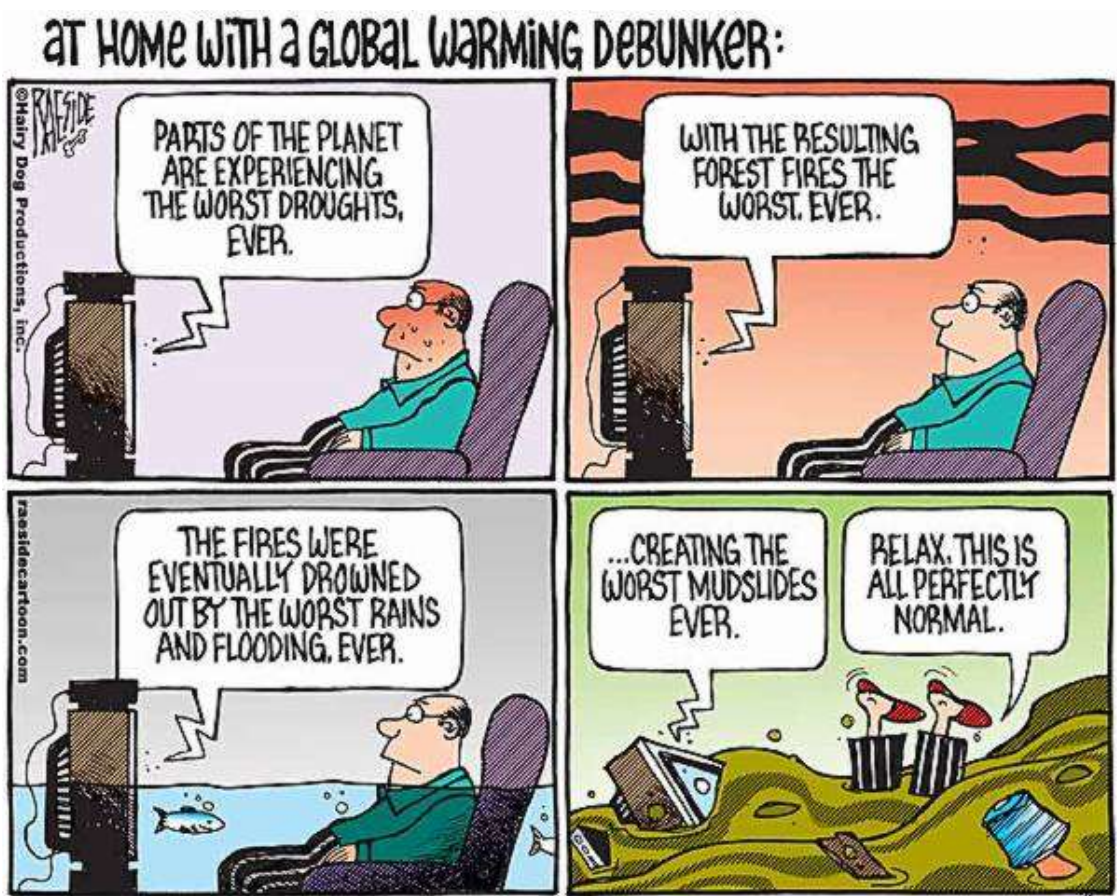
Source: https://raesidecartoon.com/vault/global-warming-climate-change/ Accessed on March 16th, 2022.
Glossary:
1. Mudslide: a large amount of mud sliding down a mountain
2. To drown out: to cover
Mark the correct option.
TEXT II
Source: https://raesidecartoon.com/vault/global-warming-climate-change/ Accessed on March 16th, 2022.
Glossary:
1. Mudslide: a large amount of mud sliding down a mountain
2. To drown out: to cover
According to the first sentence of the text, it is possible to state that the situation that is being presented
TEXT II
Source: https://raesidecartoon.com/vault/global-warming-climate-change/ Accessed on March 16th, 2022.
Glossary:
1. Mudslide: a large amount of mud sliding down a mountain
2. To drown out: to cover
Choose the correct option about the guy in the cartoon.
TEXT I
How climate change has altered Christmas
By Isabelle Gerretsen, 2021
While Hollywood's representation of a white Christmas
might be the northern hemisphere ideal, for many around the
world the holiday is celebrated in very different weather. But,
climate change is threatening both winter wonderlands and
5 warmer Christmas traditions.
In the Netherlands, where I grew up, a popular tradition
around Christmas is to put on your skates and take to the
frozen rivers. Young and old head onto the ice.
Active skaters used to enter the Elfstedentocht, an
10 iconic ice-skating race covering 200km that passes through
11 cities in the northern province Friesland. It's been 24
years since the last race happened. Climate change is
endangering this beloved winter tradition.
And it is not just cold-weather holiday traditions that are
15 slowly disappearing. Around the world extreme weather
caused by climate change and rising temperatures are
altering beloved Christmas traditions. BBC Future speaks to
three young people who share their Christmas stories.
Mitzi Jonelle Tan, 22, the Philippines
20 The Philippines has the earliest and longest Christmas
season in the world. "We celebrate from 1 September until 6
January," says the 22-year-old climate activist from Manila,
the capital of the Philippines. It is a colourful and creative
time. People make their own Christmas decorations,
25 including a star-shaped lantern, called a parol that they hang
in windows and streets for the entire festive season.
"On Christmas morning we always take photos in front
of churches near where my mum grew up," she says. "My
mum and grandpa also used to take pictures there." But in
30 50 years' time, this special place for the Jonelle Tan family
could no longer exist due to rising sea levels.
The Philippines is the world's most vulnerable country
to disasters caused by climate change. It is hit on average by
more than 20 typhoons each year, which cause severe
35 flooding and large-scale destruction. Flooding already
means that families can't put up their Christmas lights.
In November last year, super typhoon Goni, the year's
most powerful storm, hit the Philippines at 225km/h. "A few
days before Christmas, we were still helping clean up the
40 mud that had flooded the houses”, says Tan. People brought
food and gifts to the evacuation centres. "Christmas is a
celebration of what we've suffered that year, together as a
community".
Salvador Gómez-Colón, 19, Puerto Rico
45 Puerto Ricans love Christmas, says 19-year-old
Salvador Gómez-Colón. “It is a spectacle. It's the biggest
holiday in Puerto Rico”. During the festive period, families
head into the mountains around the capital San Juan to
gather at food trucks, called chinchorros. There they eat
50 suckling pig and cod fritters. "It's very communal, you meet
your neighbours and talk to strangers", Gómez-Colón says.
One of his favourite Christmas traditions is the
parranda: carolling in the streets and outside people's
houses. "We sing folklore songs with cymbals and drums".
55 This tradition continued even during Puerto Rico's darkest
days, after the country was hit by category 5 Hurricane Maria
in 2017. It dropped more rain on Puerto Rico than any storm
to hit the country since 1956. A storm of such power is five
times more probable to hit now than in the 1950s due to
60 climate change, a 2019 study found.
"I've never felt as vulnerable in my entire life. I was
[protecting myself] in a basement room with 10 others and
lost communication with my dad and friends," he says.
During the Christmas period, much of Puerto Rico was still in
65 complete darkness. Despite the terrible situation, Puerto
Ricans managed to celebrate Christmas that year.
Daniel Holanda, 19, Brazil
Christmas starts on 24 November when Brazilians
decorate the tree. Several years ago, Holanda’s family
70 house flooded while they were celebrating this tradition.
He celebrates Christmas in the city of Anápolis in
Brazil's central state, Goiás. "Every year we get together
on 24 December at my grandma's house. I have seven
uncles and they each bring a dish for dinner," he says.
75 “Christmas dinner is often candlelit as the flooding
causes frequent power cuts at this time of year. We used
to decorate the house with lights and play a lot of different
games outside. Now we can't do it anymore”, he says.
Goiás is home to the Cerrado, a vast wooded
80 savannah that contains thousands of rare species.
Scientists have warned that this biodiversity place may
collapse in less than 30 years if temperatures continue to
rise and large agricultural businesses rapidly change
forests into soy plantations. Besides flooding, the region
85 has suffered from extreme drought in recent years.
Wildfires are also a major problem there.
Despite the challenges, people find a way to gather
and return at Christmas time, he says. "On Christmas Eve,
we give food to people in need, especially old people."
Adapted from https://www.bbc.com/future/article/20211206-how-climate-change-has-altered-christmas.
Accessed on March 05th, 2022
Glossary:
1. To threaten: to announce or warn of something bad, disastrous or dangerous
2. To rise: to move upwards, to increase
3. To flood: to become covered with water
4. To gather: to come together in a group
5. Mud: wet earth that is soft and sticky
6. Basement: a room in a house below the level of the ground
7. Despite: not prevented/influenced by; although
8. Drought: a long period when there is little or no rain
9. Dutch: people from the Netherlands
TEXT II
Source: https://raesidecartoon.com/vault/global-warming-climate-change/ Accessed on March 16th, 2022.
Glossary:
1. Mudslide: a large amount of mud sliding down a mountain
2. To drown out: to cover
Considering texts I and II, it is correct to say that in both cases
TEXTO I
Você lerá a seguir trechos – com ortografia atualizada – extraídos do jornal A Gazeta de notícias, da cidade do Rio de Janeiro, que publicou, dos dias 22 a 25 de julho de 1895, a notícia de um assassinato e os desdobramentos da investigação policial sobre o fato.
Dia 22
Às 2 ½ horas da madrugada de ontem, um indivíduo,
que corria da rua da Relação em direção à repartição da
polícia, caiu morto junto à porta principal do edifício,
apresentando no peito um profundo ferimento.
5 Ato contínuo um outro indivíduo, que também se
achava ferido no rosto, parou junto ao cadáver procurando
certificar-se se o indivíduo que ali se achava caído estava
com vida.
Tornando-se o referido indivíduo suspeito, foi
10 imediatamente preso e apresentado ao Sr. Dr. Carijó,
1º delegado auxiliar.
/.../
Ontem pela manhã apareceram no necrotério três
praças da brigada policial, entre os quais se achava
15 Antonio Primeiro, pertencente à 6ª companhia, que
declarou reconhecer o cadáver como o de João Ferreira
da Silva, ex-corneta da brigada policial, de onde teve baixa
há cerca de três meses.
/.../
20 Silva era casado com Maria Virginia da Costa, com a
qual residia, em companhia de dois filhos menores, na
casinha nº 19 da estalagem da rua do Rezende, nº 109.
Segundo nos informou Maria Virginia, seu marido era
homem pacato, de bons costumes e trabalhava como
25 servente de pedreiro em umas obras da rua Francisco
Muratori.
Disse mais que seu marido havia estado no botequim
no 64 da referida rua, ponto de reunião de indivíduos
suspeitos, não regressando mais à casa.
Dia 23
30 O Sr. Dr. Carijó, 1º delegado auxiliar, auxiliado por
seu escrivão o Sr. major Luiz de Andrade, já descobriu o
fio do misterioso assassinato de João Ferreira da Silva,
perpetrado na rua da Relação, na madrugada de 21 do
corrente mês.
35 Já depuseram no inquérito muitas testemunhas, entre
as quais se acham os dois soldados de polícia que
rondaram a referida rua e a dos Inválidos, José Teixeira da
Silva, Balbino Ferreira de Oliveira, Pedro da Costa, Manuel
de Souza e Silva, Maria Regina da Costa e outras pessoas
40 que estiveram com o falecido no botequim nº 64 da rua do
Rezende, de onde saíram em serenata.
A autoridade policial espera em breve descobrir o
verdadeiro assassino para entregá-lo à ação da justiça.
Segundo trata C. Lombroso* em seu livro intitulado
45 L´Uomo delinquente, publicamos em seguida as tatuagens
verificadas no corpo de Manuel de Sousa e Silva pelos
Drs. Moraes Brito e Cunha Cruz.
Manuel de Sousa e Silva, de cor branca, com 21 anos
de idade, português, solteiro, morador à rua
50 Resende, nº 109.
Apresenta uma ferida incisa na região tenar**, dois
centímetros de extensão, dirigida de cima para baixo, de
dentro para fora, na mão esquerda; apresenta, entre
outras, as seguintes tatuagens: um crucifixo na face
55 anterior do braço esquerdo; um signo de Salomão, na face
externa do mesmo braço; as iniciais I. M. C. (Isaura Maria
da Conceição) isto no dorso da mão do mesmo lado; no
dorso da mão direita um signo de Salomão; na face
anterior do antebraço, do mesmo lado um coração, com
60 ápice para baixo, atravessado por uma seta, e um punhal
em cruz; na área representada pelo coração, as iniciais M.
S. S. (Manuel de Sousa e Silva); por baixo dessas iniciais,
e na mesma área, as iniciais S. E. S. (Sara Escaldina dos
Santos); por sobre o coração, na mesma face do braço,
65 uma estrela; sobre a estrela, uma fita com as iniciais M. S.
F. (Maria da Silva Fidalga); por sobre a fita as iniciais M. J.
R. C. (Maria Joaquina Rosa da Conceição); no peito, na
região precordial, um coração atravessado por dois
punhais em cruz. Uma figura de mulher e outra de homem,
70 em colóquio amoroso, na face anterior do braço direito.
*Cesare Lombroso (1835-1909) foi criminologista italiano, autor entre outros livros de L’uomo delinquente (1876), e muito influente na época, embora em boa parte desacreditado hoje. Achava que a criminalidade era hereditária, e que os criminosos podiam ser reconhecidos por certos traços e defeitos físicos, inclusive o uso excessivo de tatuagem.
** tenar: palma da mão.
Dia 24
Sobre o assassinato de João Ferreira da Silva,
perpetrado na rua da Relação, temos a acrescentar o
seguinte:
O Sr. Dr. Carijó, 1º delegado auxiliar, conseguiu
75 descobrir e prender todos os indivíduos que, na noite do
crime, estiveram em serenata com a vítima /.../.
O Sr. Dr. Souza Lima, lente* da Academia de
Medicina, requisitou ontem do Sr. Dr. Carijó a presença de
Manuel de Souza e Silva, o homem tatuado de que
80 tratamos ontem na nossa notícia.
À 1 hora da tarde, na aula de medicina legal, fez uma
pequena preleção aos seus alunos sobre os indivíduos
tatuados de que trata o professor Lombroso,
apresentando-lhes Souza e Silva como um dos indivíduos
85 que deviam estar sempre sob as vistas da polícia por isso
que os desenhos de tatuagem que apresentava no corpo
eram descritos pelo sábio escritor italiano em seu livro
L´Uomo delinquente, os quais demonstraram ser uma
cópia fiel dos que existiam no citado livro.
* lente: professor de escola superior ou secundária.
Dia 25
90 O Sr. Dr. Carijó, prosseguindo no inquérito sobre o
assassinato de João Ferreira da Silva, chegou à
conclusão de que o autor do crime foi Manuel de Souza e
Silva, vulgo Nené, o qual já cumpriu pena há anos
passados por crime de morte.
95 Nené é o indivíduo que, conforme noticiamos,
apresenta o corpo cheio de tatuagens.
/.../
Pelos depoimentos das testemunhas, vê-se que o
móvel do crime foram os ciúmes de Nené por causa de
100 uma mulher.
(ASSIS, Machado de. A Semana – 165. Edição, apresentação e notas por John Gledson. In: Machadiana Eletrônica, Vitória, v. 4, n.9, p. s-s, jul.-dez. 2021.- com adaptações.)
Considerando a sequência de notícias apresentada ao longo dos dias (Texto I), julgue as afirmativas a seguir, considerando o processo de investigação do crime.
I - As notícias dos dias 23 a 25 são dispensáveis para se compreender a motivação do crime e a identificação do criminoso, pois tais informações já podem ser compreendidas na notícia do dia 22.
II - O papel das testemunhas tem relevância para o desfecho da investigação, mas não é o único elemento levado em consideração pelas autoridades policiais.
III - As notícias dos dias 23 e 24 revelam que a investigação do crime procura basear-se em dados tidos como científicos naquela época.
IV - A notícia do dia 25 revela uma mudança no rumo das investigações, ao divulgar a descoberta de que o suspeito era um homem procurado pela polícia por já ter cometido outro homicídio no passado.
A partir da análise das afirmativas, conclui-se queResolução comentada
Análise das alternativas
TEXTO I
Você lerá a seguir trechos – com ortografia atualizada – extraídos do jornal A Gazeta de notícias, da cidade do Rio de Janeiro, que publicou, dos dias 22 a 25 de julho de 1895, a notícia de um assassinato e os desdobramentos da investigação policial sobre o fato.
Dia 22
Às 2 ½ horas da madrugada de ontem, um indivíduo,
que corria da rua da Relação em direção à repartição da
polícia, caiu morto junto à porta principal do edifício,
apresentando no peito um profundo ferimento.
5 Ato contínuo um outro indivíduo, que também se
achava ferido no rosto, parou junto ao cadáver procurando
certificar-se se o indivíduo que ali se achava caído estava
com vida.
Tornando-se o referido indivíduo suspeito, foi
10 imediatamente preso e apresentado ao Sr. Dr. Carijó,
1º delegado auxiliar.
/.../
Ontem pela manhã apareceram no necrotério três
praças da brigada policial, entre os quais se achava
15 Antonio Primeiro, pertencente à 6ª companhia, que
declarou reconhecer o cadáver como o de João Ferreira
da Silva, ex-corneta da brigada policial, de onde teve baixa
há cerca de três meses.
/.../
20 Silva era casado com Maria Virginia da Costa, com a
qual residia, em companhia de dois filhos menores, na
casinha nº 19 da estalagem da rua do Rezende, nº 109.
Segundo nos informou Maria Virginia, seu marido era
homem pacato, de bons costumes e trabalhava como
25 servente de pedreiro em umas obras da rua Francisco
Muratori.
Disse mais que seu marido havia estado no botequim
no 64 da referida rua, ponto de reunião de indivíduos
suspeitos, não regressando mais à casa.
Dia 23
30 O Sr. Dr. Carijó, 1º delegado auxiliar, auxiliado por
seu escrivão o Sr. major Luiz de Andrade, já descobriu o
fio do misterioso assassinato de João Ferreira da Silva,
perpetrado na rua da Relação, na madrugada de 21 do
corrente mês.
35 Já depuseram no inquérito muitas testemunhas, entre
as quais se acham os dois soldados de polícia que
rondaram a referida rua e a dos Inválidos, José Teixeira da
Silva, Balbino Ferreira de Oliveira, Pedro da Costa, Manuel
de Souza e Silva, Maria Regina da Costa e outras pessoas
40 que estiveram com o falecido no botequim nº 64 da rua do
Rezende, de onde saíram em serenata.
A autoridade policial espera em breve descobrir o
verdadeiro assassino para entregá-lo à ação da justiça.
Segundo trata C. Lombroso* em seu livro intitulado
45 L´Uomo delinquente, publicamos em seguida as tatuagens
verificadas no corpo de Manuel de Sousa e Silva pelos
Drs. Moraes Brito e Cunha Cruz.
Manuel de Sousa e Silva, de cor branca, com 21 anos
de idade, português, solteiro, morador à rua
50 Resende, nº 109.
Apresenta uma ferida incisa na região tenar**, dois
centímetros de extensão, dirigida de cima para baixo, de
dentro para fora, na mão esquerda; apresenta, entre
outras, as seguintes tatuagens: um crucifixo na face
55 anterior do braço esquerdo; um signo de Salomão, na face
externa do mesmo braço; as iniciais I. M. C. (Isaura Maria
da Conceição) isto no dorso da mão do mesmo lado; no
dorso da mão direita um signo de Salomão; na face
anterior do antebraço, do mesmo lado um coração, com
60 ápice para baixo, atravessado por uma seta, e um punhal
em cruz; na área representada pelo coração, as iniciais M.
S. S. (Manuel de Sousa e Silva); por baixo dessas iniciais,
e na mesma área, as iniciais S. E. S. (Sara Escaldina dos
Santos); por sobre o coração, na mesma face do braço,
65 uma estrela; sobre a estrela, uma fita com as iniciais M. S.
F. (Maria da Silva Fidalga); por sobre a fita as iniciais M. J.
R. C. (Maria Joaquina Rosa da Conceição); no peito, na
região precordial, um coração atravessado por dois
punhais em cruz. Uma figura de mulher e outra de homem,
70 em colóquio amoroso, na face anterior do braço direito.
*Cesare Lombroso (1835-1909) foi criminologista italiano, autor entre outros livros de L’uomo delinquente (1876), e muito influente na época, embora em boa parte desacreditado hoje. Achava que a criminalidade era hereditária, e que os criminosos podiam ser reconhecidos por certos traços e defeitos físicos, inclusive o uso excessivo de tatuagem.
** tenar: palma da mão.
Dia 24
Sobre o assassinato de João Ferreira da Silva,
perpetrado na rua da Relação, temos a acrescentar o
seguinte:
O Sr. Dr. Carijó, 1º delegado auxiliar, conseguiu
75 descobrir e prender todos os indivíduos que, na noite do
crime, estiveram em serenata com a vítima /.../.
O Sr. Dr. Souza Lima, lente* da Academia de
Medicina, requisitou ontem do Sr. Dr. Carijó a presença de
Manuel de Souza e Silva, o homem tatuado de que
80 tratamos ontem na nossa notícia.
À 1 hora da tarde, na aula de medicina legal, fez uma
pequena preleção aos seus alunos sobre os indivíduos
tatuados de que trata o professor Lombroso,
apresentando-lhes Souza e Silva como um dos indivíduos
85 que deviam estar sempre sob as vistas da polícia por isso
que os desenhos de tatuagem que apresentava no corpo
eram descritos pelo sábio escritor italiano em seu livro
L´Uomo delinquente, os quais demonstraram ser uma
cópia fiel dos que existiam no citado livro.
* lente: professor de escola superior ou secundária.
Dia 25
90 O Sr. Dr. Carijó, prosseguindo no inquérito sobre o
assassinato de João Ferreira da Silva, chegou à
conclusão de que o autor do crime foi Manuel de Souza e
Silva, vulgo Nené, o qual já cumpriu pena há anos
passados por crime de morte.
95 Nené é o indivíduo que, conforme noticiamos,
apresenta o corpo cheio de tatuagens.
/.../
Pelos depoimentos das testemunhas, vê-se que o
móvel do crime foram os ciúmes de Nené por causa de
100 uma mulher.
(ASSIS, Machado de. A Semana – 165. Edição, apresentação e notas por John Gledson. In: Machadiana Eletrônica, Vitória, v. 4, n.9, p. s-s, jul.-dez. 2021.- com adaptações.)
No Texto I, na conclusão do inquérito, que atribuiu a autoria do crime a Manuel de Souza e Silva, teve papel decisivo aResolução comentada
Análise das alternativas
TEXTO I
Você lerá a seguir trechos – com ortografia atualizada – extraídos do jornal A Gazeta de notícias, da cidade do Rio de Janeiro, que publicou, dos dias 22 a 25 de julho de 1895, a notícia de um assassinato e os desdobramentos da investigação policial sobre o fato.
Dia 22
Às 2 ½ horas da madrugada de ontem, um indivíduo,
que corria da rua da Relação em direção à repartição da
polícia, caiu morto junto à porta principal do edifício,
apresentando no peito um profundo ferimento.
5 Ato contínuo um outro indivíduo, que também se
achava ferido no rosto, parou junto ao cadáver procurando
certificar-se se o indivíduo que ali se achava caído estava
com vida.
Tornando-se o referido indivíduo suspeito, foi
10 imediatamente preso e apresentado ao Sr. Dr. Carijó,
1º delegado auxiliar.
/.../
Ontem pela manhã apareceram no necrotério três
praças da brigada policial, entre os quais se achava
15 Antonio Primeiro, pertencente à 6ª companhia, que
declarou reconhecer o cadáver como o de João Ferreira
da Silva, ex-corneta da brigada policial, de onde teve baixa
há cerca de três meses.
/.../
20 Silva era casado com Maria Virginia da Costa, com a
qual residia, em companhia de dois filhos menores, na
casinha nº 19 da estalagem da rua do Rezende, nº 109.
Segundo nos informou Maria Virginia, seu marido era
homem pacato, de bons costumes e trabalhava como
25 servente de pedreiro em umas obras da rua Francisco
Muratori.
Disse mais que seu marido havia estado no botequim
no 64 da referida rua, ponto de reunião de indivíduos
suspeitos, não regressando mais à casa.
Dia 23
30 O Sr. Dr. Carijó, 1º delegado auxiliar, auxiliado por
seu escrivão o Sr. major Luiz de Andrade, já descobriu o
fio do misterioso assassinato de João Ferreira da Silva,
perpetrado na rua da Relação, na madrugada de 21 do
corrente mês.
35 Já depuseram no inquérito muitas testemunhas, entre
as quais se acham os dois soldados de polícia que
rondaram a referida rua e a dos Inválidos, José Teixeira da
Silva, Balbino Ferreira de Oliveira, Pedro da Costa, Manuel
de Souza e Silva, Maria Regina da Costa e outras pessoas
40 que estiveram com o falecido no botequim nº 64 da rua do
Rezende, de onde saíram em serenata.
A autoridade policial espera em breve descobrir o
verdadeiro assassino para entregá-lo à ação da justiça.
Segundo trata C. Lombroso* em seu livro intitulado
45 L´Uomo delinquente, publicamos em seguida as tatuagens
verificadas no corpo de Manuel de Sousa e Silva pelos
Drs. Moraes Brito e Cunha Cruz.
Manuel de Sousa e Silva, de cor branca, com 21 anos
de idade, português, solteiro, morador à rua
50 Resende, nº 109.
Apresenta uma ferida incisa na região tenar**, dois
centímetros de extensão, dirigida de cima para baixo, de
dentro para fora, na mão esquerda; apresenta, entre
outras, as seguintes tatuagens: um crucifixo na face
55 anterior do braço esquerdo; um signo de Salomão, na face
externa do mesmo braço; as iniciais I. M. C. (Isaura Maria
da Conceição) isto no dorso da mão do mesmo lado; no
dorso da mão direita um signo de Salomão; na face
anterior do antebraço, do mesmo lado um coração, com
60 ápice para baixo, atravessado por uma seta, e um punhal
em cruz; na área representada pelo coração, as iniciais M.
S. S. (Manuel de Sousa e Silva); por baixo dessas iniciais,
e na mesma área, as iniciais S. E. S. (Sara Escaldina dos
Santos); por sobre o coração, na mesma face do braço,
65 uma estrela; sobre a estrela, uma fita com as iniciais M. S.
F. (Maria da Silva Fidalga); por sobre a fita as iniciais M. J.
R. C. (Maria Joaquina Rosa da Conceição); no peito, na
região precordial, um coração atravessado por dois
punhais em cruz. Uma figura de mulher e outra de homem,
70 em colóquio amoroso, na face anterior do braço direito.
*Cesare Lombroso (1835-1909) foi criminologista italiano, autor entre outros livros de L’uomo delinquente (1876), e muito influente na época, embora em boa parte desacreditado hoje. Achava que a criminalidade era hereditária, e que os criminosos podiam ser reconhecidos por certos traços e defeitos físicos, inclusive o uso excessivo de tatuagem.
** tenar: palma da mão.
Dia 24
Sobre o assassinato de João Ferreira da Silva,
perpetrado na rua da Relação, temos a acrescentar o
seguinte:
O Sr. Dr. Carijó, 1º delegado auxiliar, conseguiu
75 descobrir e prender todos os indivíduos que, na noite do
crime, estiveram em serenata com a vítima /.../.
O Sr. Dr. Souza Lima, lente* da Academia de
Medicina, requisitou ontem do Sr. Dr. Carijó a presença de
Manuel de Souza e Silva, o homem tatuado de que
80 tratamos ontem na nossa notícia.
À 1 hora da tarde, na aula de medicina legal, fez uma
pequena preleção aos seus alunos sobre os indivíduos
tatuados de que trata o professor Lombroso,
apresentando-lhes Souza e Silva como um dos indivíduos
85 que deviam estar sempre sob as vistas da polícia por isso
que os desenhos de tatuagem que apresentava no corpo
eram descritos pelo sábio escritor italiano em seu livro
L´Uomo delinquente, os quais demonstraram ser uma
cópia fiel dos que existiam no citado livro.
* lente: professor de escola superior ou secundária.
Dia 25
90 O Sr. Dr. Carijó, prosseguindo no inquérito sobre o
assassinato de João Ferreira da Silva, chegou à
conclusão de que o autor do crime foi Manuel de Souza e
Silva, vulgo Nené, o qual já cumpriu pena há anos
passados por crime de morte.
95 Nené é o indivíduo que, conforme noticiamos,
apresenta o corpo cheio de tatuagens.
/.../
Pelos depoimentos das testemunhas, vê-se que o
móvel do crime foram os ciúmes de Nené por causa de
100 uma mulher.
(ASSIS, Machado de. A Semana – 165. Edição, apresentação e notas por John Gledson. In: Machadiana Eletrônica, Vitória, v. 4, n.9, p. s-s, jul.-dez. 2021.- com adaptações.)
Observe a imagem a seguir, que exemplifica a grafia original de um trecho do Texto I, como foi publicado no jornal A Gazeta de Notícias, em 1895:
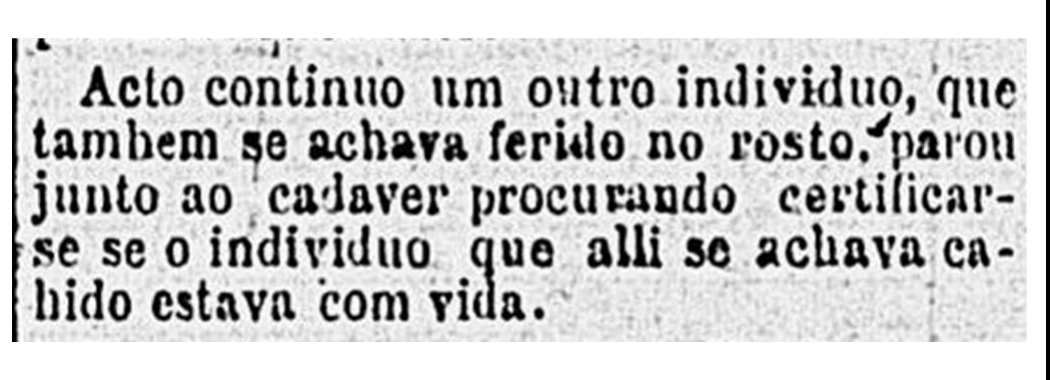
Como se constata, há, no trecho, diferenças em relação à grafia padrão da Língua Portuguesa atual.
Imagine que um estudioso esteja desenvolvendo uma pesquisa sobre as mudanças do padrão ortográfico da nossa Língua ao longo do tempo e, a partir da leitura de todas as notícias que compõem o Texto I, em sua grafia original, tenha selecionado as seguintes palavras como amostragem para o estudo:
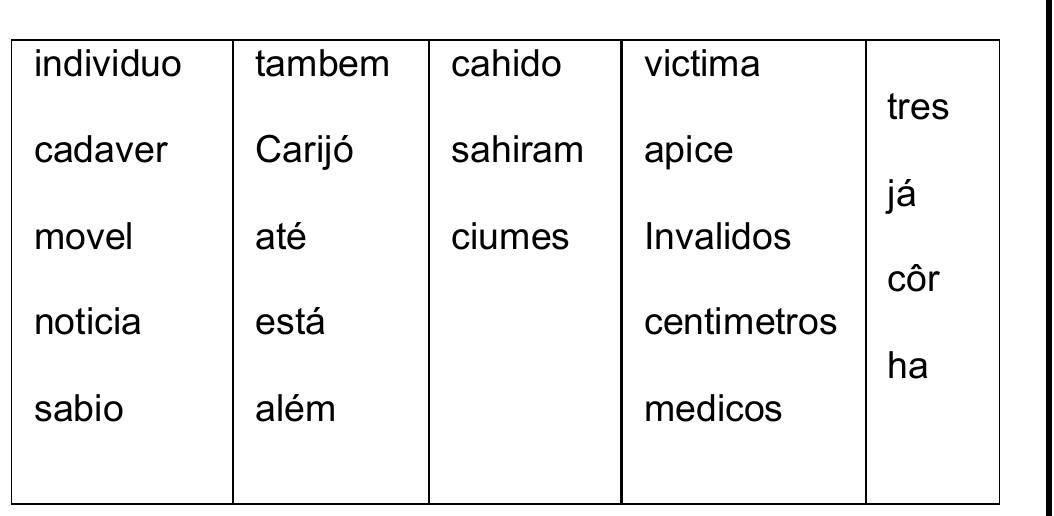
A seguir, são apresentadas deduções feitas pelo pesquisador ao comparar o padrão ortográfico das duas épocas. Considerando apenas as palavras aqui listadas, pressupondo que não há erros de impressão no jornal e que a grafia das palavras está de acordo com o padrão da época, julgue cada dedução como “verdadeira” ou “falsa”.
I - O padrão de acentuação das palavras paroxítonas adotado em 1895 é o mesmo que vigora atualmente na Língua Portuguesa.
II - A obrigatoriedade da acentuação das proparoxítonas não existia em 1895.
III - A grafia das palavras “já” e “ha” representa uma dificuldade para o pesquisador estabelecer a regra de acentuação dos monossílabos tônicos de 1895.
IV - As palavras oxítonas estão grafadas de acordo com o padrão atual, indicando que a regra de 1895 era a mesma.
A partir da análise das afirmativas, conclui-se que
TEXTO I
Você lerá a seguir trechos – com ortografia atualizada – extraídos do jornal A Gazeta de notícias, da cidade do Rio de Janeiro, que publicou, dos dias 22 a 25 de julho de 1895, a notícia de um assassinato e os desdobramentos da investigação policial sobre o fato.
Dia 22
Às 2 ½ horas da madrugada de ontem, um indivíduo,
que corria da rua da Relação em direção à repartição da
polícia, caiu morto junto à porta principal do edifício,
apresentando no peito um profundo ferimento.
5 Ato contínuo um outro indivíduo, que também se
achava ferido no rosto, parou junto ao cadáver procurando
certificar-se se o indivíduo que ali se achava caído estava
com vida.
Tornando-se o referido indivíduo suspeito, foi
10 imediatamente preso e apresentado ao Sr. Dr. Carijó,
1º delegado auxiliar.
/.../
Ontem pela manhã apareceram no necrotério três
praças da brigada policial, entre os quais se achava
15 Antonio Primeiro, pertencente à 6ª companhia, que
declarou reconhecer o cadáver como o de João Ferreira
da Silva, ex-corneta da brigada policial, de onde teve baixa
há cerca de três meses.
/.../
20 Silva era casado com Maria Virginia da Costa, com a
qual residia, em companhia de dois filhos menores, na
casinha nº 19 da estalagem da rua do Rezende, nº 109.
Segundo nos informou Maria Virginia, seu marido era
homem pacato, de bons costumes e trabalhava como
25 servente de pedreiro em umas obras da rua Francisco
Muratori.
Disse mais que seu marido havia estado no botequim
no 64 da referida rua, ponto de reunião de indivíduos
suspeitos, não regressando mais à casa.
Dia 23
30 O Sr. Dr. Carijó, 1º delegado auxiliar, auxiliado por
seu escrivão o Sr. major Luiz de Andrade, já descobriu o
fio do misterioso assassinato de João Ferreira da Silva,
perpetrado na rua da Relação, na madrugada de 21 do
corrente mês.
35 Já depuseram no inquérito muitas testemunhas, entre
as quais se acham os dois soldados de polícia que
rondaram a referida rua e a dos Inválidos, José Teixeira da
Silva, Balbino Ferreira de Oliveira, Pedro da Costa, Manuel
de Souza e Silva, Maria Regina da Costa e outras pessoas
40 que estiveram com o falecido no botequim nº 64 da rua do
Rezende, de onde saíram em serenata.
A autoridade policial espera em breve descobrir o
verdadeiro assassino para entregá-lo à ação da justiça.
Segundo trata C. Lombroso* em seu livro intitulado
45 L´Uomo delinquente, publicamos em seguida as tatuagens
verificadas no corpo de Manuel de Sousa e Silva pelos
Drs. Moraes Brito e Cunha Cruz.
Manuel de Sousa e Silva, de cor branca, com 21 anos
de idade, português, solteiro, morador à rua
50 Resende, nº 109.
Apresenta uma ferida incisa na região tenar**, dois
centímetros de extensão, dirigida de cima para baixo, de
dentro para fora, na mão esquerda; apresenta, entre
outras, as seguintes tatuagens: um crucifixo na face
55 anterior do braço esquerdo; um signo de Salomão, na face
externa do mesmo braço; as iniciais I. M. C. (Isaura Maria
da Conceição) isto no dorso da mão do mesmo lado; no
dorso da mão direita um signo de Salomão; na face
anterior do antebraço, do mesmo lado um coração, com
60 ápice para baixo, atravessado por uma seta, e um punhal
em cruz; na área representada pelo coração, as iniciais M.
S. S. (Manuel de Sousa e Silva); por baixo dessas iniciais,
e na mesma área, as iniciais S. E. S. (Sara Escaldina dos
Santos); por sobre o coração, na mesma face do braço,
65 uma estrela; sobre a estrela, uma fita com as iniciais M. S.
F. (Maria da Silva Fidalga); por sobre a fita as iniciais M. J.
R. C. (Maria Joaquina Rosa da Conceição); no peito, na
região precordial, um coração atravessado por dois
punhais em cruz. Uma figura de mulher e outra de homem,
70 em colóquio amoroso, na face anterior do braço direito.
*Cesare Lombroso (1835-1909) foi criminologista italiano, autor entre outros livros de L’uomo delinquente (1876), e muito influente na época, embora em boa parte desacreditado hoje. Achava que a criminalidade era hereditária, e que os criminosos podiam ser reconhecidos por certos traços e defeitos físicos, inclusive o uso excessivo de tatuagem.
** tenar: palma da mão.
Dia 24
Sobre o assassinato de João Ferreira da Silva,
perpetrado na rua da Relação, temos a acrescentar o
seguinte:
O Sr. Dr. Carijó, 1º delegado auxiliar, conseguiu
75 descobrir e prender todos os indivíduos que, na noite do
crime, estiveram em serenata com a vítima /.../.
O Sr. Dr. Souza Lima, lente* da Academia de
Medicina, requisitou ontem do Sr. Dr. Carijó a presença de
Manuel de Souza e Silva, o homem tatuado de que
80 tratamos ontem na nossa notícia.
À 1 hora da tarde, na aula de medicina legal, fez uma
pequena preleção aos seus alunos sobre os indivíduos
tatuados de que trata o professor Lombroso,
apresentando-lhes Souza e Silva como um dos indivíduos
85 que deviam estar sempre sob as vistas da polícia por isso
que os desenhos de tatuagem que apresentava no corpo
eram descritos pelo sábio escritor italiano em seu livro
L´Uomo delinquente, os quais demonstraram ser uma
cópia fiel dos que existiam no citado livro.
* lente: professor de escola superior ou secundária.
Dia 25
90 O Sr. Dr. Carijó, prosseguindo no inquérito sobre o
assassinato de João Ferreira da Silva, chegou à
conclusão de que o autor do crime foi Manuel de Souza e
Silva, vulgo Nené, o qual já cumpriu pena há anos
passados por crime de morte.
95 Nené é o indivíduo que, conforme noticiamos,
apresenta o corpo cheio de tatuagens.
/.../
Pelos depoimentos das testemunhas, vê-se que o
móvel do crime foram os ciúmes de Nené por causa de
100 uma mulher.
(ASSIS, Machado de. A Semana – 165. Edição, apresentação e notas por John Gledson. In: Machadiana Eletrônica, Vitória, v. 4, n.9, p. s-s, jul.-dez. 2021.- com adaptações.)
Considerando todo o Texto I, a explicação da função sintática do trecho NÃO está correta na alternativa:Resolução comentada
Análise das alternativas
Texto-base:
Texto-base:
Texto-base:
Texto-base:
Texto-base:
Texto-base:
Texto-base:
Texto-base:
Texto-base:
Texto-base:
Texto-base:
Texto-base:
Texto-base:
Texto-base:
Texto-base:
Texto-base:
Texto-base:
Texto-base:
Texto-base:
Texto-base: