← Voltar para a lista de provas Exército Brasileiro — Escola de Saúde e Formação Complementar do Exército (ESFCEx) · Oficial do Quadro Complementar do Exército 60 questões nesta prova · página 2 de 3 · 60 com gabarito Gabarito disponível Soares: paradigma behaviorista, depois cognitivista (construtivismo), depois sociocultural. Para Soares, nos anos 1960-70 predominou a perspectiva behaviorista, substituída nos anos 1980 pela cognitivista (construtivismo) e, nos anos 1990, pela sociocultural (letramento), aprimoramento do paradigma cognitivista. B, C e D) Não correspondem à periodização descrita por Soares. E) Fonético e social-interacionista não representam a sequência apresentada pela autora, e a gabaritada reflete corretamente a transição comportamental, cognitiva e sociocultural. Referência: Soares (2004), Alfabetização e letramento. Resolução comentada do VaiConcursos. Gabarito disponível Para Aquino, a indisciplina é sintoma de uma escola pensada para um tipo de aluno, ocupada por outro. Com a democratização, novos sujeitos chegaram à escola, idealizada e organizada para um público específico. A indisciplina aparece como sintoma desse descompasso institucional, não como problema só do aluno ou da família. A) Não há eliminação das estratégias de exclusão. B) A visão sócio-histórica rejeita explicar a indisciplina como fato isolado de família ou personalidade. C) Indisciplina não denota harmonia e cooperação. E) Colocar a origem apenas no aluno contraria a perspectiva relacional e institucional. Referência: Aquino (1996), indisciplina escolar. Resolução comentada do VaiConcursos. Gabarito disponível Princípio: civilidade; marca no Brasil e em Portugal: fidalguia/distinção aristocrática. Boto trata a socialização escolar como aprendizado da civilidade, isto é, de comportamentos e hierarquias adequados a cada posição social. No contexto luso-brasileiro, a marca é a fidalguia, a distinção aristocrática, que naturaliza hierarquias entre superiores e inferiores, como no trecho. A) Cidadania passiva não é o princípio estrutural apontado. B) Igualdade político-legal contraria a ênfase em hierarquias. C) Miscigenação ou diversidade não é o foco do texto. D) Colonialismo e homem cordial não correspondem ao par indicado pela autora. Referência: Boto (2014), liturgia escolar e civilidade. Resolução comentada do VaiConcursos. Gabarito disponível A competência de examinar consequências sociais das mídias (segurança, privacidade) é a alfabetização responsável. Na obra de Coll e Monereo, a dimensão responsável da alfabetização digital envolve avaliar as consequências sociais dos meios, como segurança e privacidade, e agir com ética. As demais dimensões têm outros focos. A) Midiática: análise e produção de mensagens nas mídias. B) Tecnológica: domínio de ferramentas e dispositivos. D) Informacional: busca, seleção e avaliação de informação. E) Global: compreensão do contexto global, não a análise de segurança e privacidade. Referência: Coll e Monereo (orgs.), 2010. Resolução comentada do VaiConcursos. Gabarito disponível Entender permanências e mudanças ajuda a ir além de apenas transpor o modelo presencial para o remoto. Pela ótica da cultura escolar, evita-se tanto a dicotomia inovação versus resistência quanto a ideia de simplesmente transferir o formato presencial para o ensino a distância. Isso permite repensar o trabalho escolar de modo crítico, considerando o que permanece e o que muda. A) Priorizar o síncrono não decorre do texto. C) Defender o presencial independentemente do cenário é posição rígida, contrária à reflexão proposta. D) Resguardar a cultura tradicional contraria a ideia de que a escola muda e permanece. E) Rotular instituições e professores como avessos a mudanças é exatamente o antagonismo que a autora critica. Referência: Alcântara (2022), cultura escolar. Resolução comentada do VaiConcursos. Gabarito disponível Gabarito disponível Ropoli refere-se ao saber da experiência, subjetivo e dotado de sentido. A mudança depende da elaboração que os professores fazem do que vivem na experiência inclusiva, ou seja, de atribuir sentido ao que acontece. Isso corresponde ao saber da experiência (Larrosa), subjetivo, pessoal e relativo. B) Refere-se a saber teórico, não à elaboração da vivência. C) Tempo de magistério e repetição não equivalem a experiência que é elaborada. D) Empirismo e observação científica não são o foco. E) Visão utilitária e instrumental da prática não traduz a ideia de elaboração de sentido. Referência: Ropoli (2010); Larrosa sobre saber da experiência. Resolução comentada do VaiConcursos. Gabarito disponível O excerto descreve o discurso interior em Vygotsky. O discurso interior é a fala internalizada, abreviada, fragmentada, com predomínio do sentido sobre o significado e compreensível apenas ao próprio sujeito. Segundo Vygotsky, deriva da fala egocêntrica, que se internaliza e passa a funcionar como instrumento do pensamento. A) Pensamento artístico não é o conceito descrito. B) Estado de consciência como organização objetiva das interações não corresponde ao texto. D) O balbucio é pré-linguístico e não tem as características descritas. E) A fala egocêntrica é a etapa anterior, externalizada; o trecho trata de linguagem já internalizada. Referência: Vygotsky, Pensamento e Linguagem; Oliveira (1992). Resolução comentada do VaiConcursos. Gabarito disponível Gestão democrática (art. 14 LDB): participação das comunidades escolar e local em conselhos escolares. O art. 14 da LDB estabelece como princípios da gestão democrática a participação dos profissionais da educação na elaboração do projeto pedagógico da escola e a participação das comunidades escolar e local em conselhos escolares ou equivalentes. A alternativa E reproduz esse princípio. A) A LDB não prevê eleição de direção por votação entre pais e mestres. B) Gestão democrática é incompatível com centralização nacional das normas; os sistemas definem suas normas. C) O princípio fala em participação dos profissionais da educação na elaboração do projeto pedagógico da escola, não na definição de políticas públicas nacionais. D) A LDB prevê progressivos graus de autonomia pedagógica, administrativa e de gestão financeira, não gestão financeira centralizada. Referência: Lei nº 9.394/96 (LDB), art. 14. Resolução comentada do VaiConcursos. Gabarito disponível Segundo o art. 7º, § 2º, o que caracteriza um sistema é a atividade intencional e organicamente concebida, voltada às mesmas finalidades. Conforme o gabarito, o § 2º do art. 7º da Resolução CNE/CEB nº 4/2010 define sistema como atividade intencional e organicamente concebida, que se justifica pela realização de atividades voltadas às mesmas finalidades ou à concretização dos mesmos objetivos (D). A) Trata dos padrões mínimos de qualidade e da avaliação, noção de outro ponto da resolução. B) Trata da inseparabilidade entre educar e cuidar. C) Refere-se ao direito à educação como base da cidadania. E) Trata da escola como espaço de cultura e identidades. Referência: Resolução CNE/CEB nº 4/2010, Título III, art. 7º, § 2º. Resolução comentada do VaiConcursos. Gabarito disponível ESP implica delimitar o conteúdo às necessidades específicas dos aprendizes. O ESP parte da análise de necessidades e restringe o conteúdo às situações e habilidades de que os aprendizes precisam. Isso corresponde à alternativa A. B) ESP não é visto como ultrapassado nem propõe sequência rígida de conteúdos. C) Não se resume a cursos de leitura com estratégias compensatórias. D) Não se destina apenas a adultos autônomos. E) O foco é a necessidade do grupo, e não os estilos individuais de aprendizagem. Referência: Hutchinson & Waters, English for Specific Purposes; Tomlinson (ed.). Resolução comentada do VaiConcursos. Gabarito disponível 'On the other hand, in general English materials...' torna o contraste mais explícito. A frase original contrasta ESP (fácil convencer) e inglês geral (mais difícil). 'On the other hand' marca esse contraste entre as duas situações, e o restante da frase ('this is obviously more difficult') permanece coerente (B). A) 'Unlike in general English materials...' exigiria o restante da frase reescrito, pois deixaria a oração incompleta. C) 'Even if' indica concessão hipotética. D) 'Although' exigiria outra estrutura e inverteria a lógica. E) 'Despite' não é seguido por 'in' + oração dessa forma e é gramaticalmente inadequado. Referência: Marcadores discursivos em inglês. Resolução comentada do VaiConcursos. Gabarito disponível Gabarito disponível Gabarito disponível Meta de curto prazo é aprender a língua necessária para uma viagem no mês seguinte. O texto contrasta objetivos de longo prazo (acadêmicos ou profissionais) com objetivos de curto prazo ligados a tarefas imediatas. Aprender a língua para usar transporte público em uma viagem no mês seguinte (D) é um objetivo concreto e próximo. A) Nota no vestibular é meta de médio e longo prazo. B) Melhor emprego no futuro é longo prazo. C) Lidar com textos na universidade é longo prazo. E) Carreira após o ensino médio também é longo prazo. Referência: Tomlinson (ed.), texto-base. Resolução comentada do VaiConcursos. Gabarito disponível Ensinar um ponto predeterminado, praticar e depois produzir é típico da visão estruturalista. A abordagem convencional (apresentar, praticar e produzir) é a sequência PPP, típica de cursos estruturalistas, em que a estrutura é definida antecipadamente. Já as abordagens baseadas em tarefas invertem essa ordem. A) Task-based começa pela tarefa e só então ensina o necessário. B) CLIL integra conteúdo e língua, sem partir de pontos predeterminados. C) Abordagens sociointeracionistas partem do uso social da língua. D) Programas nocionais partem de noções e funções comunicativas. Referência: Tomlinson (ed.), Materials Development in Language Teaching, texto-base. Resolução comentada do VaiConcursos. Gabarito disponível Gabarito disponível Gabarito disponível A capacidade de ação envolve perguntar quem é o leitor, ou seja, o contexto de produção. A capacidade de ação trata das representações do produtor sobre o contexto de produção: quem escreve, para quem, com que finalidade e onde. Perguntar quem é o provável leitor da carta (C) mobiliza essa capacidade. A) Organização do texto é capacidade discursiva. B) Estruturas gramaticais são capacidade linguístico-discursiva. D) Temas adequados não definem a capacidade de ação. E) Tipo textual e sequências são capacidade discursiva. Referência: Lousada et al., in Damianovic (ed.), Material Didático (2007), texto-base. Resolução comentada do VaiConcursos. Gabarito disponível A frase E quebra o paralelismo: 'music and play videogames'. Em 'divided my time between music and play videogames', o primeiro elemento é um substantivo e o segundo, um verbo, o que quebra o paralelismo. O correto seria 'music and videogames' ou 'playing music and playing videogames'. A) Running, swimming, lifting: todos gerúndios. B) 'both an excellent literary critic and a great scientist': dois sintagmas nominais paralelos. C) 'Reading... than watching': gerúndios paralelos. D) 'The decision to study... a decision to leave': estruturas paralelas. Referência: Gramática do inglês: paralelismo. Resolução comentada do VaiConcursos.EsFCEx — Concurso de Admissão 2023 — Curso de Formação de Oficiais do Quadro Complementar — Área: Magistério em Inglês — 012. Prova Objetiva — Versão A
Assinale a alternativa que preenche, correta e respectivamente, os termos do excerto adaptado de Soares (2004).Resolução comentada
Análise das alternativas
Resolução comentada
Análise das alternativas
A partir do que discute Boto (2014) a respeito da liturgia na escola, identifique correta e respectivamente o princípio estrutural do processo de socialização escolar e a marca que nele aparece no contexto brasileiro e português.Resolução comentada
Análise das alternativas
Resolução comentada
Análise das alternativas
Resolução comentada
Análise das alternativas
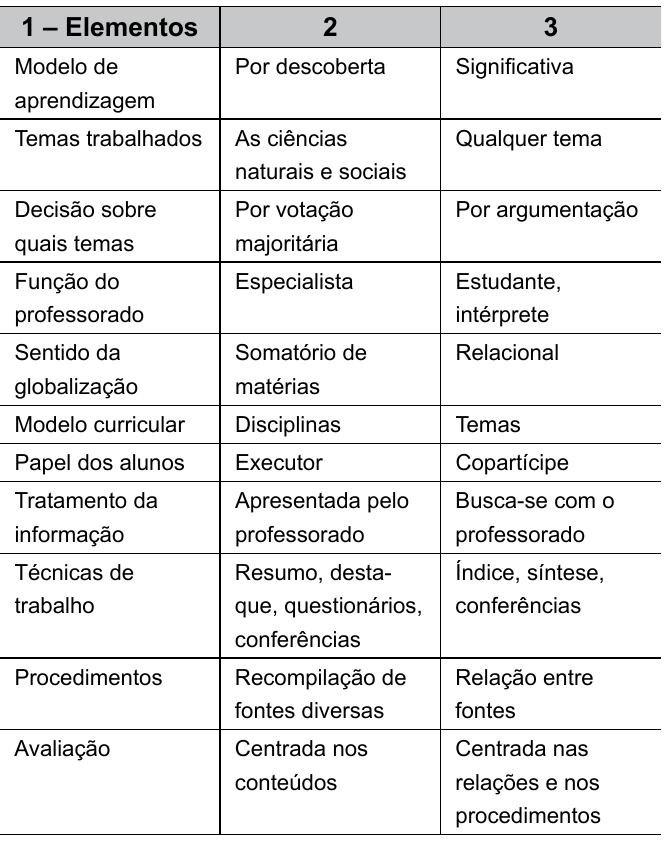
Considere a tabela para assinalar a alternativa que identifica correta e respectivamente a que se referem as colunas 2 e 3, de acordo com Hernández e Ventura (2017).Resolução comentada
Análise das alternativas
A que conceito de Vygotsky se refere o excerto, adaptado de Oliveira (in: La Taille, Oliveira e Dantas, 1992)?Resolução comentada
Análise das alternativas
Resolução comentada
Análise das alternativas
Resolução comentada
Análise das alternativas
Leia o texto para responder às questões de números 31 a 39.
Most teachers recognise the need for the students’ awareness about the potential relevance and utility of the language and skills they are teaching. And researchers have confirmed the importance of this need.
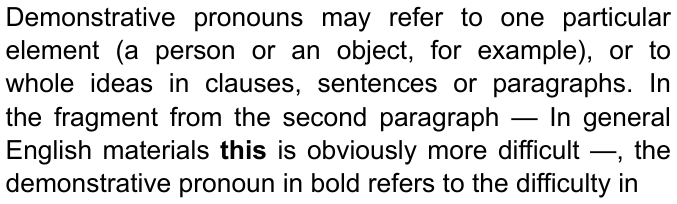
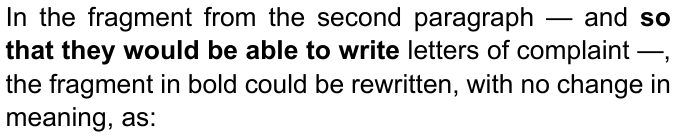
In ESP (English for specific purposes) materials, for example, it is relatively easy to convince the learners that the teaching points are relevant and useful by relating them to known learner interests and to ‘real-life’ tasks, which the learners need or might need to perform in the target language. In general English materials this is obviously more difficult; but it can be achieved by researching what the target learners are interested in and what they really want to learn the language for. An interesting example of such research was a questionnaire in Namibia which revealed that two of the most important reasons for secondary school students to wish to learn English were so they would be able to write love letters in English and so that they would be able to write letters of complaint for villagers to the village headman and from the village headman to local authorities.
Perception of relevance and utility can also be achieved by relating teaching points to challenging classroom tasks and by presenting them in ways which could facilitate the achievement of the task outcomes desired by the learners. The ‘new’ learning points are not relevant and useful because they will help the learners to achieve longterm academic or career objectives, but because they could help the learners to achieve short-term task objectives now. Of course, this only works if the tasks are begun first and the teaching is then provided in response to discovered needs. This is much more difficult for the materials writer than the conventional approach of teaching a predetermined point first and then getting the learners to practise and then produce it.
(B. Tomlinson, (ed). Material Development in Language Teaching. Cambridge: CUP. 1998/2011. pp 11-2. Adaptado)
ESP courses have been taught in Brazil since the 1970’s. TheyResolução comentada
Análise das alternativas
Leia o texto para responder às questões de números 31 a 39.
Most teachers recognise the need for the students’ awareness about the potential relevance and utility of the language and skills they are teaching. And researchers have confirmed the importance of this need.
In ESP (English for specific purposes) materials, for example, it is relatively easy to convince the learners that the teaching points are relevant and useful by relating them to known learner interests and to ‘real-life’ tasks, which the learners need or might need to perform in the target language. In general English materials this is obviously more difficult; but it can be achieved by researching what the target learners are interested in and what they really want to learn the language for. An interesting example of such research was a questionnaire in Namibia which revealed that two of the most important reasons for secondary school students to wish to learn English were so they would be able to write love letters in English and so that they would be able to write letters of complaint for villagers to the village headman and from the village headman to local authorities.
Perception of relevance and utility can also be achieved by relating teaching points to challenging classroom tasks and by presenting them in ways which could facilitate the achievement of the task outcomes desired by the learners. The ‘new’ learning points are not relevant and useful because they will help the learners to achieve longterm academic or career objectives, but because they could help the learners to achieve short-term task objectives now. Of course, this only works if the tasks are begun first and the teaching is then provided in response to discovered needs. This is much more difficult for the materials writer than the conventional approach of teaching a predetermined point first and then getting the learners to practise and then produce it.
(B. Tomlinson, (ed). Material Development in Language Teaching. Cambridge: CUP. 1998/2011. pp 11-2. Adaptado)
The second paragraph opposes ESP to general English in relation to the awareness students may have of the relevance of what they are learning. This contrast would be made more explicit if the beginning of the second sentence in the paragraph were rewritten as:Resolução comentada
Análise das alternativas
Leia o texto para responder às questões de números 31 a 39.
Most teachers recognise the need for the students’ awareness about the potential relevance and utility of the language and skills they are teaching. And researchers have confirmed the importance of this need.
In ESP (English for specific purposes) materials, for example, it is relatively easy to convince the learners that the teaching points are relevant and useful by relating them to known learner interests and to ‘real-life’ tasks, which the learners need or might need to perform in the target language. In general English materials this is obviously more difficult; but it can be achieved by researching what the target learners are interested in and what they really want to learn the language for. An interesting example of such research was a questionnaire in Namibia which revealed that two of the most important reasons for secondary school students to wish to learn English were so they would be able to write love letters in English and so that they would be able to write letters of complaint for villagers to the village headman and from the village headman to local authorities.
Perception of relevance and utility can also be achieved by relating teaching points to challenging classroom tasks and by presenting them in ways which could facilitate the achievement of the task outcomes desired by the learners. The ‘new’ learning points are not relevant and useful because they will help the learners to achieve longterm academic or career objectives, but because they could help the learners to achieve short-term task objectives now. Of course, this only works if the tasks are begun first and the teaching is then provided in response to discovered needs. This is much more difficult for the materials writer than the conventional approach of teaching a predetermined point first and then getting the learners to practise and then produce it.
(B. Tomlinson, (ed). Material Development in Language Teaching. Cambridge: CUP. 1998/2011. pp 11-2. Adaptado)
Leia o texto para responder às questões de números 31 a 39.
Most teachers recognise the need for the students’ awareness about the potential relevance and utility of the language and skills they are teaching. And researchers have confirmed the importance of this need.
In ESP (English for specific purposes) materials, for example, it is relatively easy to convince the learners that the teaching points are relevant and useful by relating them to known learner interests and to ‘real-life’ tasks, which the learners need or might need to perform in the target language. In general English materials this is obviously more difficult; but it can be achieved by researching what the target learners are interested in and what they really want to learn the language for. An interesting example of such research was a questionnaire in Namibia which revealed that two of the most important reasons for secondary school students to wish to learn English were so they would be able to write love letters in English and so that they would be able to write letters of complaint for villagers to the village headman and from the village headman to local authorities.
Perception of relevance and utility can also be achieved by relating teaching points to challenging classroom tasks and by presenting them in ways which could facilitate the achievement of the task outcomes desired by the learners. The ‘new’ learning points are not relevant and useful because they will help the learners to achieve longterm academic or career objectives, but because they could help the learners to achieve short-term task objectives now. Of course, this only works if the tasks are begun first and the teaching is then provided in response to discovered needs. This is much more difficult for the materials writer than the conventional approach of teaching a predetermined point first and then getting the learners to practise and then produce it.
(B. Tomlinson, (ed). Material Development in Language Teaching. Cambridge: CUP. 1998/2011. pp 11-2. Adaptado)
Leia o texto para responder às questões de números 31 a 39.
Most teachers recognise the need for the students’ awareness about the potential relevance and utility of the language and skills they are teaching. And researchers have confirmed the importance of this need.
In ESP (English for specific purposes) materials, for example, it is relatively easy to convince the learners that the teaching points are relevant and useful by relating them to known learner interests and to ‘real-life’ tasks, which the learners need or might need to perform in the target language. In general English materials this is obviously more difficult; but it can be achieved by researching what the target learners are interested in and what they really want to learn the language for. An interesting example of such research was a questionnaire in Namibia which revealed that two of the most important reasons for secondary school students to wish to learn English were so they would be able to write love letters in English and so that they would be able to write letters of complaint for villagers to the village headman and from the village headman to local authorities.
Perception of relevance and utility can also be achieved by relating teaching points to challenging classroom tasks and by presenting them in ways which could facilitate the achievement of the task outcomes desired by the learners. The ‘new’ learning points are not relevant and useful because they will help the learners to achieve longterm academic or career objectives, but because they could help the learners to achieve short-term task objectives now. Of course, this only works if the tasks are begun first and the teaching is then provided in response to discovered needs. This is much more difficult for the materials writer than the conventional approach of teaching a predetermined point first and then getting the learners to practise and then produce it.
(B. Tomlinson, (ed). Material Development in Language Teaching. Cambridge: CUP. 1998/2011. pp 11-2. Adaptado)
An example of a short-term language goal for a student beginning high school would beResolução comentada
Análise das alternativas
Leia o texto para responder às questões de números 31 a 39.
Most teachers recognise the need for the students’ awareness about the potential relevance and utility of the language and skills they are teaching. And researchers have confirmed the importance of this need.
In ESP (English for specific purposes) materials, for example, it is relatively easy to convince the learners that the teaching points are relevant and useful by relating them to known learner interests and to ‘real-life’ tasks, which the learners need or might need to perform in the target language. In general English materials this is obviously more difficult; but it can be achieved by researching what the target learners are interested in and what they really want to learn the language for. An interesting example of such research was a questionnaire in Namibia which revealed that two of the most important reasons for secondary school students to wish to learn English were so they would be able to write love letters in English and so that they would be able to write letters of complaint for villagers to the village headman and from the village headman to local authorities.
Perception of relevance and utility can also be achieved by relating teaching points to challenging classroom tasks and by presenting them in ways which could facilitate the achievement of the task outcomes desired by the learners. The ‘new’ learning points are not relevant and useful because they will help the learners to achieve longterm academic or career objectives, but because they could help the learners to achieve short-term task objectives now. Of course, this only works if the tasks are begun first and the teaching is then provided in response to discovered needs. This is much more difficult for the materials writer than the conventional approach of teaching a predetermined point first and then getting the learners to practise and then produce it.
(B. Tomlinson, (ed). Material Development in Language Teaching. Cambridge: CUP. 1998/2011. pp 11-2. Adaptado)
The “conventional approach” described at the end of the third paragraph is most typically found in courses which followResolução comentada
Análise das alternativas
Leia o texto para responder às questões de números 31 a 39.
Most teachers recognise the need for the students’ awareness about the potential relevance and utility of the language and skills they are teaching. And researchers have confirmed the importance of this need.
In ESP (English for specific purposes) materials, for example, it is relatively easy to convince the learners that the teaching points are relevant and useful by relating them to known learner interests and to ‘real-life’ tasks, which the learners need or might need to perform in the target language. In general English materials this is obviously more difficult; but it can be achieved by researching what the target learners are interested in and what they really want to learn the language for. An interesting example of such research was a questionnaire in Namibia which revealed that two of the most important reasons for secondary school students to wish to learn English were so they would be able to write love letters in English and so that they would be able to write letters of complaint for villagers to the village headman and from the village headman to local authorities.
Perception of relevance and utility can also be achieved by relating teaching points to challenging classroom tasks and by presenting them in ways which could facilitate the achievement of the task outcomes desired by the learners. The ‘new’ learning points are not relevant and useful because they will help the learners to achieve longterm academic or career objectives, but because they could help the learners to achieve short-term task objectives now. Of course, this only works if the tasks are begun first and the teaching is then provided in response to discovered needs. This is much more difficult for the materials writer than the conventional approach of teaching a predetermined point first and then getting the learners to practise and then produce it.
(B. Tomlinson, (ed). Material Development in Language Teaching. Cambridge: CUP. 1998/2011. pp 11-2. Adaptado)
Substantial certainty is expressed by the modal verb in bold in alternative:
Leia o texto para responder às questões de números 31 a 39.
Most teachers recognise the need for the students’ awareness about the potential relevance and utility of the language and skills they are teaching. And researchers have confirmed the importance of this need.
In ESP (English for specific purposes) materials, for example, it is relatively easy to convince the learners that the teaching points are relevant and useful by relating them to known learner interests and to ‘real-life’ tasks, which the learners need or might need to perform in the target language. In general English materials this is obviously more difficult; but it can be achieved by researching what the target learners are interested in and what they really want to learn the language for. An interesting example of such research was a questionnaire in Namibia which revealed that two of the most important reasons for secondary school students to wish to learn English were so they would be able to write love letters in English and so that they would be able to write letters of complaint for villagers to the village headman and from the village headman to local authorities.
Perception of relevance and utility can also be achieved by relating teaching points to challenging classroom tasks and by presenting them in ways which could facilitate the achievement of the task outcomes desired by the learners. The ‘new’ learning points are not relevant and useful because they will help the learners to achieve longterm academic or career objectives, but because they could help the learners to achieve short-term task objectives now. Of course, this only works if the tasks are begun first and the teaching is then provided in response to discovered needs. This is much more difficult for the materials writer than the conventional approach of teaching a predetermined point first and then getting the learners to practise and then produce it.
(B. Tomlinson, (ed). Material Development in Language Teaching. Cambridge: CUP. 1998/2011. pp 11-2. Adaptado)

Leia o texto para responder às questões de números 31 a 39.
Most teachers recognise the need for the students’ awareness about the potential relevance and utility of the language and skills they are teaching. And researchers have confirmed the importance of this need.
In ESP (English for specific purposes) materials, for example, it is relatively easy to convince the learners that the teaching points are relevant and useful by relating them to known learner interests and to ‘real-life’ tasks, which the learners need or might need to perform in the target language. In general English materials this is obviously more difficult; but it can be achieved by researching what the target learners are interested in and what they really want to learn the language for. An interesting example of such research was a questionnaire in Namibia which revealed that two of the most important reasons for secondary school students to wish to learn English were so they would be able to write love letters in English and so that they would be able to write letters of complaint for villagers to the village headman and from the village headman to local authorities.
Perception of relevance and utility can also be achieved by relating teaching points to challenging classroom tasks and by presenting them in ways which could facilitate the achievement of the task outcomes desired by the learners. The ‘new’ learning points are not relevant and useful because they will help the learners to achieve longterm academic or career objectives, but because they could help the learners to achieve short-term task objectives now. Of course, this only works if the tasks are begun first and the teaching is then provided in response to discovered needs. This is much more difficult for the materials writer than the conventional approach of teaching a predetermined point first and then getting the learners to practise and then produce it.
(B. Tomlinson, (ed). Material Development in Language Teaching. Cambridge: CUP. 1998/2011. pp 11-2. Adaptado)
Texto-base:
Leia o texto para responder às questões de números 39 e 40.
Um conceito essencial para o trabalho com gêneros de texto é o de capacidades de linguagem. A primeira delas é a de ação. A capacidade de ação trata das representações que o agente produtor do texto tem sobre o contexto em que o gênero será produzido.
A segunda capacidade de linguagem envolvida na produção textual é a discursiva. Pode-se dizer que ela diz respeito aos tipos de discurso e aos tipos de sequências predominantes que um determinado gênero apresenta. A terceira capacidade é a linguístico-discursiva. É com ela que o aluno desenvolverá seu texto lançando uso correto das coesões nominais e verbais, da coerência ao longo da produção, da modalização do discurso e do paralelismo presente na sua construção.
(E. Lousada, et alii. A elaboração de material didático para o ensino de Língua inglesa: um estudo preliminar baseado na noção de gênero de texto. In DAMIANOVIC, M. C. (ed). Material Didático: Elaboração e Avaliação. Taubaté: Cabral - Editora e Livraria Universitária. 2007. pp. 204-6. Adaptado)
A “letter of complaint”, citada no segundo parágrafo do texto de Tomlinson, é um exemplo de gênero textual. Preocupado com o desenvolvimento de capacidades de ação na produção de gêneros escritos, um professor de Língua Inglesa deverá propor a seus alunos que, ao prepararem sua carta de reclamação, levem em consideração a seguinte pergunta:Resolução comentada
Análise das alternativas
Leia o texto para responder às questões de números 39 e 40.
Um conceito essencial para o trabalho com gêneros de texto é o de capacidades de linguagem. A primeira delas é a de ação. A capacidade de ação trata das representações que o agente produtor do texto tem sobre o contexto em que o gênero será produzido.
A segunda capacidade de linguagem envolvida na produção textual é a discursiva. Pode-se dizer que ela diz respeito aos tipos de discurso e aos tipos de sequências predominantes que um determinado gênero apresenta. A terceira capacidade é a linguístico-discursiva. É com ela que o aluno desenvolverá seu texto lançando uso correto das coesões nominais e verbais, da coerência ao longo da produção, da modalização do discurso e do paralelismo presente na sua construção.
(E. Lousada, et alii. A elaboração de material didático para o ensino de Língua inglesa: um estudo preliminar baseado na noção de gênero de texto. In DAMIANOVIC, M. C. (ed). Material Didático: Elaboração e Avaliação. Taubaté: Cabral - Editora e Livraria Universitária. 2007. pp. 204-6. Adaptado)
The last sentence mentions the importance of “parallelism” in the construction of texts. There is a parallelism error as to the use of noun phrases in alternative:Resolução comentada
Análise das alternativas
As últimas três décadas assistiram a mudanças de paradigmas teóricos no campo da alfabetização que podem ser assim resumidas: um paradigma __________, dominante nos anos de 1960 e 1970, é substituído, nos anos de 1980, por um paradigma __________, que avança, nos anos de 1990, para um paradigma __________. Se a transição da teoria I para a teoria II representou realmente uma radical mudança de paradigma, a transição da teoria II para a perspectiva III pode ser interpretada antes como um aprimoramento do paradigma II do que propriamente como uma mudança paradigmática.
Aquino (1996) apresenta o olhar sócio-histórico sobre a indisciplina, destacando alterações geracionais trazidas pela democratização política do Brasil na década de 1980. Nesse contexto, um novo sujeito histórico, ou um novo aluno, emergiu. Dentro dessa perspectiva, a indisciplina
“O discurso veiculado [pelas revistas pedagógicas] proclama a existência de hierarquias e degraus, com pessoas superiores e outras inferiores no tabuleiro social – cada uma devendo ser tratada de acordo com sua posição na hierarquia previamente estabelecida. Evidentemente, a distância entre adultos e crianças é uma das fronteiras que estabelece relações de subordinação e dependência. Essa vem explícita, ao passo que as demais – fronteiras de classe, de raça, de etnia, de gênero, de condição social – não são exatamente mencionadas. E a criança – acreditando na existência de natural subordinação entre homens, mulheres e crianças, entre poderosos e fracos, entre ricos e pobres – será preparada para a sociedade que a espera”.
Dentre as dimensões da alfabetização digital, uma delas é descrita, na obra organizada por Coll e Monero (2010), como “a competência de examinar as consequências sociais dos meios de comunicação do ponto de vista da segurança, da privacidade e outros”. Essa competência é a alfabetização
Para Alcântara (2022), “mais do que um rígido antagonismo entre as propostas de inovação e as acusações de resistência da escola à mudança, é fértil refletir, na perspectiva da cultura escolar, sobre como se operam as permanências e mudanças na escola”. A autora entende que a escola caminha em ambos os sentidos, sendo importante desnaturalizar processos históricos e sociais. No contexto da escola pós-pandemia, essa compreensão ajuda a
Analise a tabela a seguir.
Ao discutir a construção do projeto político-pedagógico (PPP), Ropoli (2010) observa que as “mudanças não ocorrem pela mera adoção de práticas diferentes de ensinar. Elas dependem da elaboração dos professores sobre o que lhes acontece no decorrer da experiência educacional inclusiva que eles se propuseram a viver”. A autora se refere ao
É fragmentado, abreviado, contém quase só núcleos de significação, compreensível apenas pelo próprio sujeito. Nele, predomina o sentido sobre o significado das palavras: no plano intrapsicológico o indivíduo lida com a dimensão do significado que relaciona as palavras às vivências afetivas e contextuais muito mais que ao seu aspecto objetivo e compartilhado. Os sentidos de diferentes palavras fluem um dentro do outro e cada palavra está tão saturada de sentido que seriam necessárias muitas palavras para explicá-la.
Sobre a gestão democrática preconizada pelo artigo 14 da Lei nº 9.394/96 (Lei de Diretrizes e Bases da Educação Nacional), é correto afirmar que ela tem como um de seus princípios a
A Resolução CNE/CEB nº 04/2010 trata do Sistema Nacional de Educação, em seu Título III. De acordo com o § 2º do artigo 7º, o que caracteriza um sistema é
Texto-base:
Texto-base:
Texto-base:
Texto-base:
Texto-base:
Texto-base:
Texto-base:
Texto-base:
Texto-base:
Texto-base: