← Voltar para a lista de provas Escola Preparatória de Cadetes do Ar (EPCAR) — Comando da Aeronáutica · Exame de Admissão ao CPCAR 2026 (Curso Preparatório de Cadetes do Ar) 49 questões nesta prova · página 1 de 3 · 48 com gabarito Gabarito disponível O narrador adormeceu após sentir um cheiro que o acalmou, sugerindo uma substância no ar. O narrador sente 'something that made me feel calmer', fica muito relaxado e dorme. Isso indica que algum composto químico foi liberado no ar da nave. A) A aventura começou na porta da nave, não na do narrador. B) A nave não pousou; ela estava no espaço, e os anéis são mencionados em Vênus. D) O narrador só ouve a própria respiração porque estava escuro, não porque estava no espaço. Referência: Interpretação de texto narrativo. Resolução comentada do VaiConcursos. Gabarito disponível Gabarito disponível A pele era áspera como lixa e com brilho (glitter). O texto diz que a pele era 'grey skin that looked like sandpaper with glitter'. Sandpaper indica aspereza (rough) e glitter indica brilho (luminous). A) Smooth contradiz 'sandpaper'. B) 'Glorious' não corresponde a glitter. D) 'Delicate' e 'opaque' não são sugeridos pelo texto. Referência: Interpretação de texto; vocabulário descritivo. Resolução comentada do VaiConcursos. Gabarito disponível 'Or someone' enfatiza a possibilidade de ser alguém (um ser) e não apenas algo. O narrador diz 'reveal something. Or someone.'. A conjunção 'or' corrige/reformula a ideia anterior, destacando que o que apareceu era uma pessoa/ser, ou seja, a ênfase recai em 'someone'. Isso se confirma na descrição seguinte, que fala de um corpo humanoide. B) Inverte a ênfase. C) 'Or' não exclui 'something' por completo; apenas dá destaque a 'someone'. D) Se não houvesse diferença, não haveria o efeito de ênfase da frase isolada. Referência: Conjunções (or) e efeito de sentido. Resolução comentada do VaiConcursos. Gabarito disponível Detectar mundos semelhantes à Terra exigirá telescópios de imagem maiores e mais avançados. O 2º parágrafo após 'But unless we get lucky' diz que encontrar outro 'blue-white marble' (a Terra vista de longe) 'will probably require an even larger imaging telescope'. Ou seja, a demora decorre da necessidade de telescópios mais avançados. A) O texto não fala de falta de exoplanetas na zona habitável. B) Radiação cósmica não é mencionada. C) O número de astrônomos não é citado como razão. Referência: Interpretação de texto (informação explícita), parágrafo 3. Resolução comentada do VaiConcursos. Gabarito disponível 'Zero in on' significa focalizar, concentrar-se em algo. A expressão phrasal verb 'zero in on' significa focar/concentrar-se em algo. Assim, o telescópio vai se concentrar na luz refletida pelo planeta distante, para detectar assinaturas de oxigênio, vapor d'água etc. A) Contradiz o texto, que diz que ele usará a luz refletida. B) O telescópio analisa a luz refletida e não gera luz própria. D) 'Zero in' não tem relação com 'ground zero' nem com a origem da vida. Referência: Phrasal verbs; vocabulário em contexto. Resolução comentada do VaiConcursos. Gabarito disponível 'Bare bones evidence' são evidências básicas e preliminares. 'Bare bones' significa o mínimo essencial, básico. Assim, o telescópio James Webb poderia fornecer evidências básicas e preliminares sobre mundos potencialmente habitáveis, isto é, que podem sustentar vida. A) Errada: o texto fala em 'potentially habitable worlds', não em planetas possivelmente inabitáveis. C) Errada: 'conclusive' contradiz 'bare bones'. D) Errada: 'strong data' contradiz a ideia de evidência mínima. Referência: Vocabulário e expressões idiomáticas. Resolução comentada do VaiConcursos. Gabarito disponível K2 é uma missão que deu continuidade ao que o Kepler iniciou. 'Extended incarnation' indica que o K2 é uma versão estendida da missão Kepler, que prosseguiu com o trabalho dela de outra forma. A) Errada: o texto não diz que o K2 faz 'tudo e mais'. C) Errada: não se fala em descontinuação e recomeço do processo. D) Errada: 'incarnation' aqui não significa reencarnação de vidas. Referência: Vocabulário em contexto. Resolução comentada do VaiConcursos. Gabarito disponível A expressão poética designa a descoberta de outra Terra no universo. 'Blue-white marble' remete à imagem da Terra vista do espaço (a 'bola de gude azul'). Com a imagem 'hidden in the star field, like a sand grain on the beach', o texto usa linguagem poética para falar em encontrar outro planeta como a Terra. A) Errada: não se trata de uma estrela. B) Errada: o foco não é a dificuldade com planetas pequenos, mas a metáfora de uma 'outra Terra'. D) Errada: não fala do céu azul nem de estrelas brancas. Referência: Linguagem figurada (metáfora). Resolução comentada do VaiConcursos. Gabarito disponível Gabarito disponível Gabarito disponível Gabarito disponível Não se infere que a família se importasse menos com ele com o passar do tempo. O poema mostra que a mãe sofria em silêncio ('silent cry') e que a família evitava olhar a estrela onde o pai caiu, sinal de dor, não de indiferença. Já se infere que o pai morreu, que não se realizava na Terra e que ignorava as lágrimas da mãe. A) Inferível: o sol o levou ('taken him inside'). B) Inferível: ele buscava algo além do mundo. C) Inferível: as lágrimas da mãe passaram despercebidas por ele. Referência: Rocket Man, estrofes 3 e 4. Resolução comentada do VaiConcursos. Gabarito disponível Sequência correta: T - F - F - F - T. 1) V: mãe e filho vivem em tristeza e se isolam. 2) F: a frase é metafórica (o pai foi 'levado' pelo sol). 3) F: a busca por algo mais brilhante que uma estrela leva-o para longe da família. 4) F: eles só saem com chuva ou céu nublado, para evitar o céu claro que lembra a perda. 5) V: a vida de astronauta simboliza o espírito aventureiro e a distância emocional. B, C e D) Erradas: divergem em ao menos um item, como tratar a frase do sol como literal ou ver a busca do pai como foco na família. Referência: Interpretação e linguagem figurada. Resolução comentada do VaiConcursos. Gabarito disponível 'Unless' introduz a condição para eles saírem. 'Unless' significa 'a menos que'. A frase diz que mãe e filho nunca saíam, a menos que o céu estivesse nublado ou o sol coberto. Portanto a condição se refere a eles saírem (go out). B) Errada: 'never go out' é o comportamento geral, não a condição. C) Errada: escapar da dor é outra circunstância ('Or to escape the pain'). D) Errada: a condição é de tempo nublado, não especificamente 'durante o dia'. Referência: Conjunção condicional 'unless'. Resolução comentada do VaiConcursos. Gabarito disponível A dor que queriam evitar é saber que o que o pai mais amava o levou. Na letra, mãe e filho só saíam quando chovia para escapar da dor. O poema mostra que o pai amava 'o mundo além do mundo' e o céu, e a perda dele para o sol/estrelas é a causa da dor. Logo, a dor é saber que aquilo que o pai mais amava o levou. A) Errada: não há desejo de seguir o pai ao espaço. B) Errada: eles foram informados da morte, não há dor por desconhecimento do momento. C) Errada: a dor não vem de incerteza sobre a nave. Referência: Rocket Man, estrofes 2 e 3. Resolução comentada do VaiConcursos. Gabarito disponível Gabarito disponível Gabarito disponível Gabarito disponívelEPCAR — Exame de Admissão ao CPCAR 2026 — Língua Inglesa, Matemática, Língua Portuguesa e Redação — Versão A
Direction: Consider text I to answer questions 01 to 04.
TEXT I
Aliens
I pointed my flashlight’s beam into the doorway to reveal the
interior of the spaceship. I called inside. “Hello. Is anybody
there?” No response. A big round silver table was in the
middle of the room with a smaller black spot on top of it. Test
5 tubes lined the far wall, some small and others large enough
to fit a cow. Most of them were occupied with creatures I had
never seen before in any book I had ever read. Then I heard
a noise. I turned around to see the door close. Everything was
really dark and all I could hear was my own breathing. Then I
10 smelled something that made me feel calmer. I felt so relaxed
like I could fall asleep. Like I could just fall asleep. I fell
asleep.
I opened my eyes to a bright light shining in my face. I stood
up to see where I was and what happened. I was still on the
15 ship but it was different. I was laying on a long silver chair with
a light over me like I was in a hospital. The walls were radiating
a violet purple, the floor was glowing white and the top bar that
was connecting the middle table to the ceiling was glowing
blue. I turned to my left to see what was behind me and what
20 I saw was space. Stars and meteors were floating outside the
window. Venus was so close I could see the rocks floating in
its ring. I got up to observe the table when a metal door
opened up to reveal something. Or someone. It had a
humanoid body and a handsome face but with extraordinary
25 features. It had grey skin that looked like sandpaper with
glitter. It was wearing a white lab coat and black pants while
holding what looked like an iPad but longer.
Adapted from: SCHWIEBERT, Jesse. Short Story: Aliens. The Mustangmoom,2020. Available on: https://themustangmoom.com/13473/creative-corner/short-story-aliens. Accessed on: February 25th, 2025.
It’s correct to say thatResolução comentada
Análise das alternativas
Direction: Consider text I to answer questions 01 to 04.
TEXT I
Aliens
I pointed my flashlight’s beam into the doorway to reveal the
interior of the spaceship. I called inside. “Hello. Is anybody
there?” No response. A big round silver table was in the
middle of the room with a smaller black spot on top of it. Test
5 tubes lined the far wall, some small and others large enough
to fit a cow. Most of them were occupied with creatures I had
never seen before in any book I had ever read. Then I heard
a noise. I turned around to see the door close. Everything was
really dark and all I could hear was my own breathing. Then I
10 smelled something that made me feel calmer. I felt so relaxed
like I could fall asleep. Like I could just fall asleep. I fell
asleep.
I opened my eyes to a bright light shining in my face. I stood
up to see where I was and what happened. I was still on the
15 ship but it was different. I was laying on a long silver chair with
a light over me like I was in a hospital. The walls were radiating
a violet purple, the floor was glowing white and the top bar that
was connecting the middle table to the ceiling was glowing
blue. I turned to my left to see what was behind me and what
20 I saw was space. Stars and meteors were floating outside the
window. Venus was so close I could see the rocks floating in
its ring. I got up to observe the table when a metal door
opened up to reveal something. Or someone. It had a
humanoid body and a handsome face but with extraordinary
25 features. It had grey skin that looked like sandpaper with
glitter. It was wearing a white lab coat and black pants while
holding what looked like an iPad but longer.
Adapted from: SCHWIEBERT, Jesse. Short Story: Aliens. The Mustangmoom,2020. Available on: https://themustangmoom.com/13473/creative-corner/short-story-aliens. Accessed on: February 25th, 2025.

Direction: Consider text I to answer questions 01 to 04.
TEXT I
Aliens
I pointed my flashlight’s beam into the doorway to reveal the
interior of the spaceship. I called inside. “Hello. Is anybody
there?” No response. A big round silver table was in the
middle of the room with a smaller black spot on top of it. Test
5 tubes lined the far wall, some small and others large enough
to fit a cow. Most of them were occupied with creatures I had
never seen before in any book I had ever read. Then I heard
a noise. I turned around to see the door close. Everything was
really dark and all I could hear was my own breathing. Then I
10 smelled something that made me feel calmer. I felt so relaxed
like I could fall asleep. Like I could just fall asleep. I fell
asleep.
I opened my eyes to a bright light shining in my face. I stood
up to see where I was and what happened. I was still on the
15 ship but it was different. I was laying on a long silver chair with
a light over me like I was in a hospital. The walls were radiating
a violet purple, the floor was glowing white and the top bar that
was connecting the middle table to the ceiling was glowing
blue. I turned to my left to see what was behind me and what
20 I saw was space. Stars and meteors were floating outside the
window. Venus was so close I could see the rocks floating in
its ring. I got up to observe the table when a metal door
opened up to reveal something. Or someone. It had a
humanoid body and a handsome face but with extraordinary
25 features. It had grey skin that looked like sandpaper with
glitter. It was wearing a white lab coat and black pants while
holding what looked like an iPad but longer.
Adapted from: SCHWIEBERT, Jesse. Short Story: Aliens. The Mustangmoom,2020. Available on: https://themustangmoom.com/13473/creative-corner/short-story-aliens. Accessed on: February 25th, 2025.
What did the alien’s skin look like?Resolução comentada
Análise das alternativas
Direction: Consider text I to answer questions 01 to 04.
TEXT I
Aliens
I pointed my flashlight’s beam into the doorway to reveal the
interior of the spaceship. I called inside. “Hello. Is anybody
there?” No response. A big round silver table was in the
middle of the room with a smaller black spot on top of it. Test
5 tubes lined the far wall, some small and others large enough
to fit a cow. Most of them were occupied with creatures I had
never seen before in any book I had ever read. Then I heard
a noise. I turned around to see the door close. Everything was
really dark and all I could hear was my own breathing. Then I
10 smelled something that made me feel calmer. I felt so relaxed
like I could fall asleep. Like I could just fall asleep. I fell
asleep.
I opened my eyes to a bright light shining in my face. I stood
up to see where I was and what happened. I was still on the
15 ship but it was different. I was laying on a long silver chair with
a light over me like I was in a hospital. The walls were radiating
a violet purple, the floor was glowing white and the top bar that
was connecting the middle table to the ceiling was glowing
blue. I turned to my left to see what was behind me and what
20 I saw was space. Stars and meteors were floating outside the
window. Venus was so close I could see the rocks floating in
its ring. I got up to observe the table when a metal door
opened up to reveal something. Or someone. It had a
humanoid body and a handsome face but with extraordinary
25 features. It had grey skin that looked like sandpaper with
glitter. It was wearing a white lab coat and black pants while
holding what looked like an iPad but longer.
Adapted from: SCHWIEBERT, Jesse. Short Story: Aliens. The Mustangmoom,2020. Available on: https://themustangmoom.com/13473/creative-corner/short-story-aliens. Accessed on: February 25th, 2025.
In the sentence “Or someone” (ℓ. 23), the use of “Or” expresses the emphasis onResolução comentada
Análise das alternativas
Direction: Consider text II to answer questions 05 to 09.
TEXT II
Is There Life On Other Planets?
The ultimate goal of NASA's exoplanet program is to find
unmistakable signs of current life on a planet beyond Earth.
How soon that can happen depends on two unknowns: the
prevalence of life in the galaxy and how lucky we get as we
5 take those first, tentative, exploratory steps.
Our early planet finding missions, such as NASA’s Kepler
and its extended incarnation, K2, or the James Webb Space
Telescope, could yield bare bones evidence of the
potentially habitable worlds. James Webb, designed in part
10 to investigate gas giants and super-Earths, might find an
outsized version of our planet. NASA's Nancy Grace Roman
Space Telescope or the Wide-Field Infrared Survey
Telescope, could zero in on a distant planet’s reflected light
to detect the signatures of oxygen, water vapor, or some
15 other powerful indication of possible life.
But unless we get lucky, the search for signs of life could
take decades. Discovering another blue-white marble hidden
in the star field, like a sand grain on the beach, will probably
require an even larger imaging telescope. Designs are
20 already underway for that next-generation planet finder, to
be sent aloft in the 2030s or 2040s.
MIT physics professor Sara Seager looks for possible
chemical combinations that could signal the presence of
alien life. She and her biochemistry colleagues first focused
25 on the six main elements associated with life on Earth:
carbon, nitrogen, oxygen, phosphorous, sulfur and
hydrogen.
“We’re going to have so few planets, we have to get lucky,”
Seager said. “I don’t want to miss anything. I don’t want to
30 miss it because we weren’t smart enough to think of some
molecule.”
Adapted from: NASA. Is There Life On Other Planets? Available on: https://science.nasa.gov/exoplanets/is-there-life-on-other-planets. Accessed on: February 25th, 2025.
Glossary:
1. exoplanet: a planet of a star that is outside the solar system.
2. prevalence: the fact that something is very common or happens often.
3. NASA’s Kepler: space telescope designed to survey a portion of the Milky Way galaxy.
4. loft: in the air or in a higher position.
5. MIT: Massachusetts Institute of Technology.
What is one of the main reasons NASA's exoplanet program could take decades to find definitive signs of life?Resolução comentada
Análise das alternativas
Direction: Consider text II to answer questions 05 to 09.
TEXT II
Is There Life On Other Planets?
The ultimate goal of NASA's exoplanet program is to find
unmistakable signs of current life on a planet beyond Earth.
How soon that can happen depends on two unknowns: the
prevalence of life in the galaxy and how lucky we get as we
5 take those first, tentative, exploratory steps.
Our early planet finding missions, such as NASA’s Kepler
and its extended incarnation, K2, or the James Webb Space
Telescope, could yield bare bones evidence of the
potentially habitable worlds. James Webb, designed in part
10 to investigate gas giants and super-Earths, might find an
outsized version of our planet. NASA's Nancy Grace Roman
Space Telescope or the Wide-Field Infrared Survey
Telescope, could zero in on a distant planet’s reflected light
to detect the signatures of oxygen, water vapor, or some
15 other powerful indication of possible life.
But unless we get lucky, the search for signs of life could
take decades. Discovering another blue-white marble hidden
in the star field, like a sand grain on the beach, will probably
require an even larger imaging telescope. Designs are
20 already underway for that next-generation planet finder, to
be sent aloft in the 2030s or 2040s.
MIT physics professor Sara Seager looks for possible
chemical combinations that could signal the presence of
alien life. She and her biochemistry colleagues first focused
25 on the six main elements associated with life on Earth:
carbon, nitrogen, oxygen, phosphorous, sulfur and
hydrogen.
“We’re going to have so few planets, we have to get lucky,”
Seager said. “I don’t want to miss anything. I don’t want to
30 miss it because we weren’t smart enough to think of some
molecule.”
Adapted from: NASA. Is There Life On Other Planets? Available on: https://science.nasa.gov/exoplanets/is-there-life-on-other-planets. Accessed on: February 25th, 2025.
Glossary:
1. exoplanet: a planet of a star that is outside the solar system.
2. prevalence: the fact that something is very common or happens often.
3. NASA’s Kepler: space telescope designed to survey a portion of the Milky Way galaxy.
4. loft: in the air or in a higher position.
5. MIT: Massachusetts Institute of Technology.
The sentence "NASA's Nancy Grace Roman Space Telescope or the Wide-Field Infrared Survey Telescope, could zero in on a distant planet’s reflected light" means that the telescope willResolução comentada
Análise das alternativas
Direction: Consider text II to answer questions 05 to 09.
TEXT II
Is There Life On Other Planets?
The ultimate goal of NASA's exoplanet program is to find
unmistakable signs of current life on a planet beyond Earth.
How soon that can happen depends on two unknowns: the
prevalence of life in the galaxy and how lucky we get as we
5 take those first, tentative, exploratory steps.
Our early planet finding missions, such as NASA’s Kepler
and its extended incarnation, K2, or the James Webb Space
Telescope, could yield bare bones evidence of the
potentially habitable worlds. James Webb, designed in part
10 to investigate gas giants and super-Earths, might find an
outsized version of our planet. NASA's Nancy Grace Roman
Space Telescope or the Wide-Field Infrared Survey
Telescope, could zero in on a distant planet’s reflected light
to detect the signatures of oxygen, water vapor, or some
15 other powerful indication of possible life.
But unless we get lucky, the search for signs of life could
take decades. Discovering another blue-white marble hidden
in the star field, like a sand grain on the beach, will probably
require an even larger imaging telescope. Designs are
20 already underway for that next-generation planet finder, to
be sent aloft in the 2030s or 2040s.
MIT physics professor Sara Seager looks for possible
chemical combinations that could signal the presence of
alien life. She and her biochemistry colleagues first focused
25 on the six main elements associated with life on Earth:
carbon, nitrogen, oxygen, phosphorous, sulfur and
hydrogen.
“We’re going to have so few planets, we have to get lucky,”
Seager said. “I don’t want to miss anything. I don’t want to
30 miss it because we weren’t smart enough to think of some
molecule.”
Adapted from: NASA. Is There Life On Other Planets? Available on: https://science.nasa.gov/exoplanets/is-there-life-on-other-planets. Accessed on: February 25th, 2025.
Glossary:
1. exoplanet: a planet of a star that is outside the solar system.
2. prevalence: the fact that something is very common or happens often.
3. NASA’s Kepler: space telescope designed to survey a portion of the Milky Way galaxy.
4. loft: in the air or in a higher position.
5. MIT: Massachusetts Institute of Technology.
The sentence "the James Webb Space Telescope, could yield bare bones evidence of the potentially habitable worlds" implies that the telescopeResolução comentada
Análise das alternativas
Direction: Consider text II to answer questions 05 to 09.
TEXT II
Is There Life On Other Planets?
The ultimate goal of NASA's exoplanet program is to find
unmistakable signs of current life on a planet beyond Earth.
How soon that can happen depends on two unknowns: the
prevalence of life in the galaxy and how lucky we get as we
5 take those first, tentative, exploratory steps.
Our early planet finding missions, such as NASA’s Kepler
and its extended incarnation, K2, or the James Webb Space
Telescope, could yield bare bones evidence of the
potentially habitable worlds. James Webb, designed in part
10 to investigate gas giants and super-Earths, might find an
outsized version of our planet. NASA's Nancy Grace Roman
Space Telescope or the Wide-Field Infrared Survey
Telescope, could zero in on a distant planet’s reflected light
to detect the signatures of oxygen, water vapor, or some
15 other powerful indication of possible life.
But unless we get lucky, the search for signs of life could
take decades. Discovering another blue-white marble hidden
in the star field, like a sand grain on the beach, will probably
require an even larger imaging telescope. Designs are
20 already underway for that next-generation planet finder, to
be sent aloft in the 2030s or 2040s.
MIT physics professor Sara Seager looks for possible
chemical combinations that could signal the presence of
alien life. She and her biochemistry colleagues first focused
25 on the six main elements associated with life on Earth:
carbon, nitrogen, oxygen, phosphorous, sulfur and
hydrogen.
“We’re going to have so few planets, we have to get lucky,”
Seager said. “I don’t want to miss anything. I don’t want to
30 miss it because we weren’t smart enough to think of some
molecule.”
Adapted from: NASA. Is There Life On Other Planets? Available on: https://science.nasa.gov/exoplanets/is-there-life-on-other-planets. Accessed on: February 25th, 2025.
Glossary:
1. exoplanet: a planet of a star that is outside the solar system.
2. prevalence: the fact that something is very common or happens often.
3. NASA’s Kepler: space telescope designed to survey a portion of the Milky Way galaxy.
4. loft: in the air or in a higher position.
5. MIT: Massachusetts Institute of Technology.
“Extended incarnation” (ℓ. 7) conveys the idea thatResolução comentada
Análise das alternativas
Direction: Consider text II to answer questions 05 to 09.
TEXT II
Is There Life On Other Planets?
The ultimate goal of NASA's exoplanet program is to find
unmistakable signs of current life on a planet beyond Earth.
How soon that can happen depends on two unknowns: the
prevalence of life in the galaxy and how lucky we get as we
5 take those first, tentative, exploratory steps.
Our early planet finding missions, such as NASA’s Kepler
and its extended incarnation, K2, or the James Webb Space
Telescope, could yield bare bones evidence of the
potentially habitable worlds. James Webb, designed in part
10 to investigate gas giants and super-Earths, might find an
outsized version of our planet. NASA's Nancy Grace Roman
Space Telescope or the Wide-Field Infrared Survey
Telescope, could zero in on a distant planet’s reflected light
to detect the signatures of oxygen, water vapor, or some
15 other powerful indication of possible life.
But unless we get lucky, the search for signs of life could
take decades. Discovering another blue-white marble hidden
in the star field, like a sand grain on the beach, will probably
require an even larger imaging telescope. Designs are
20 already underway for that next-generation planet finder, to
be sent aloft in the 2030s or 2040s.
MIT physics professor Sara Seager looks for possible
chemical combinations that could signal the presence of
alien life. She and her biochemistry colleagues first focused
25 on the six main elements associated with life on Earth:
carbon, nitrogen, oxygen, phosphorous, sulfur and
hydrogen.
“We’re going to have so few planets, we have to get lucky,”
Seager said. “I don’t want to miss anything. I don’t want to
30 miss it because we weren’t smart enough to think of some
molecule.”
Adapted from: NASA. Is There Life On Other Planets? Available on: https://science.nasa.gov/exoplanets/is-there-life-on-other-planets. Accessed on: February 25th, 2025.
Glossary:
1. exoplanet: a planet of a star that is outside the solar system.
2. prevalence: the fact that something is very common or happens often.
3. NASA’s Kepler: space telescope designed to survey a portion of the Milky Way galaxy.
4. loft: in the air or in a higher position.
5. MIT: Massachusetts Institute of Technology.
When the text says “Discovering another blue-white marble hidden in the star field” (ℓ. 17-18), theyResolução comentada
Análise das alternativas
Direction: Consider text III to answer questions 10 to 12.
TEXT III
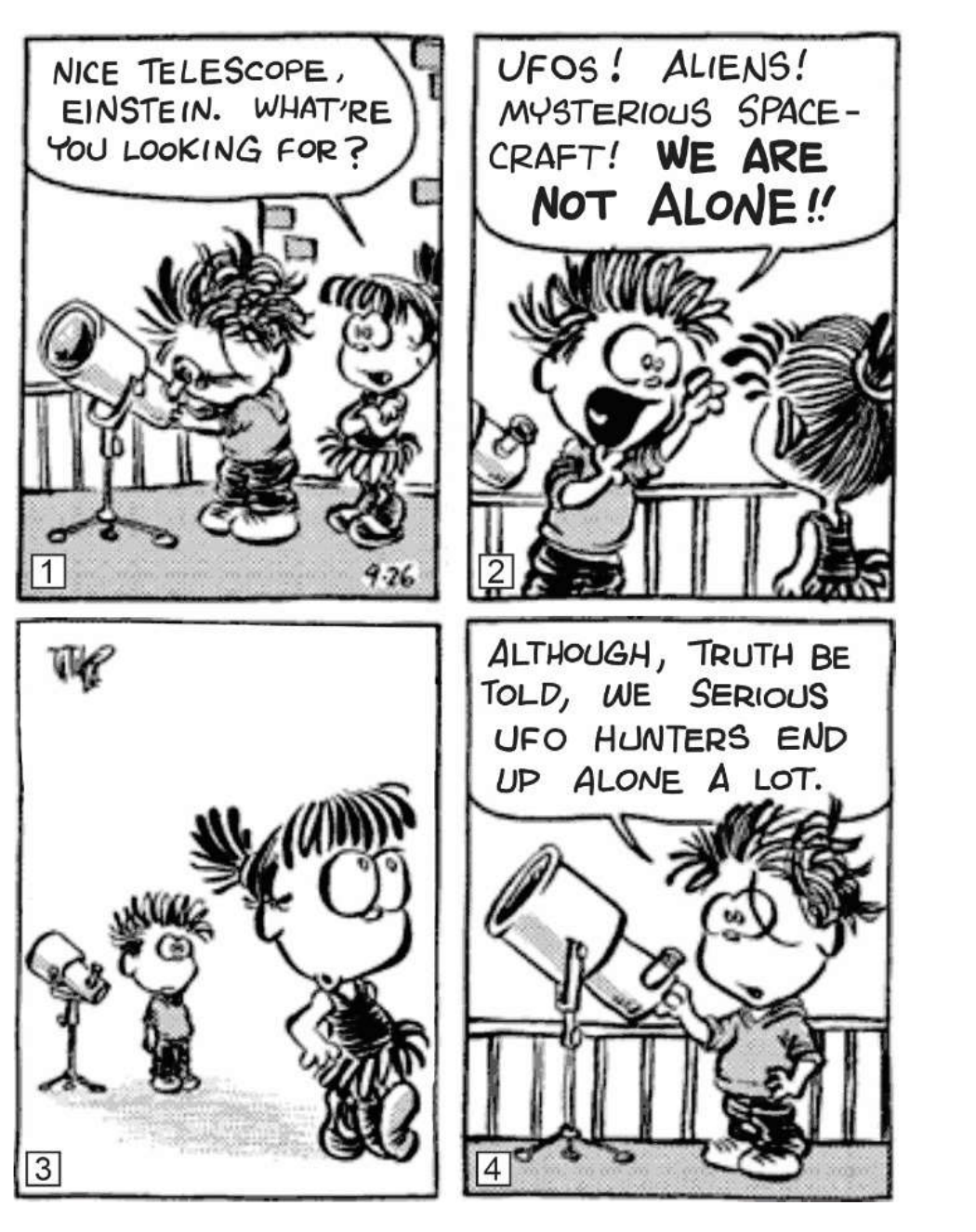
MARK, Tatulli. Heart of the City. Available on: https://www.gocomics.com/blog/326/the-truth-is-out-there-happy-world-ufo-day. Accessed on: February 25th, 2025
About the expression “truth be told” check (T) True or (F) False:
( ) make a point.
( ) admit something.
( ) restate a point of view.
( ) give an honest opinion.
Choose the correct sequence.
Direction: Consider text III to answer questions 10 to 12.
TEXT III
MARK, Tatulli. Heart of the City. Available on: https://www.gocomics.com/blog/326/the-truth-is-out-there-happy-world-ufo-day. Accessed on: February 25th, 2025
About the word “alone” in the second and fourth boxes, it’s possible to infer that
Direction: Consider text III to answer questions 10 to 12.
TEXT III
MARK, Tatulli. Heart of the City. Available on: https://www.gocomics.com/blog/326/the-truth-is-out-there-happy-world-ufo-day. Accessed on: February 25th, 2025
By calling the boy “Einstein”, it can be inferred that the girl is being
Direction: Read text IV to answer questions 13 to 16.
TEXT IV
Rocket Man
My father was a rocket man
He often went to Jupiter or Mercury, to Venus or to Mars
My mother and I would watch the sky
And wonder if a falling star
5 Was a ship becoming ashes with a rocket man inside
My mother and I
Never went out
Unless the sky was cloudy or the sun was blotted out
10 Or to escape the pain
We only went out when it rained
My father was a rocket man
He loved the world beyond the world, the sky beyond
15 the sky
And on my mother's face, as lonely as the world in
space
I could read the silent cry
That if my father fell into a star
20 We must not look upon that star again
Tears are often jewel-like
My mother's went unnoticed by my father, for his jewels
were the stars
25 And in my father's eyes I knew he had to find
In the sanctity of distance something brighter than a star
One day they told us the sun had flared and taken him
inside
Adapted from: ROCKET man. Interpreter: Pearls Before Swine. Songwriter: Tom Rapp. In THE USE of Ashes. Interpreter: Pearls Before Swine. Florida: Editor Ogmios, 1970. (03:06). Available on: https://www.vagalume.com.br/pearls-before-swine/rocket-man.html. Accessed on March 17th, 2025.
It’s NOT possible to infer that the rocket manResolução comentada
Análise das alternativas
Direction: Read text IV to answer questions 13 to 16.
TEXT IV
Rocket Man
My father was a rocket man
He often went to Jupiter or Mercury, to Venus or to Mars
My mother and I would watch the sky
And wonder if a falling star
5 Was a ship becoming ashes with a rocket man inside
My mother and I
Never went out
Unless the sky was cloudy or the sun was blotted out
10 Or to escape the pain
We only went out when it rained
My father was a rocket man
He loved the world beyond the world, the sky beyond
15 the sky
And on my mother's face, as lonely as the world in
space
I could read the silent cry
That if my father fell into a star
20 We must not look upon that star again
Tears are often jewel-like
My mother's went unnoticed by my father, for his jewels
were the stars
25 And in my father's eyes I knew he had to find
In the sanctity of distance something brighter than a star
One day they told us the sun had flared and taken him
inside
Adapted from: ROCKET man. Interpreter: Pearls Before Swine. Songwriter: Tom Rapp. In THE USE of Ashes. Interpreter: Pearls Before Swine. Florida: Editor Ogmios, 1970. (03:06). Available on: https://www.vagalume.com.br/pearls-before-swine/rocket-man.html. Accessed on March 17th, 2025.
Read the sentences and choose (T) True or (F) False.
( ) The mother and child live in constant sorrow, which makes them emotionally withdrawn.
( ) “The sun had flared and taken him inside” is a literal way of describing the father’s death.
( ) The father seeks something "brighter than a star", implying that he is searching for meaning in his family.
( ) "We only went out when it rained" reflects the family’s grief, as they seek the clear skies that remind them of their loss.
( ) The father’s life as a rocket man symbolizes both his adventurous spirit and the emotional distance with his family.
Check the correct sequence.Resolução comentada
Análise das alternativas
Direction: Read text IV to answer questions 13 to 16.
TEXT IV
Rocket Man
My father was a rocket man
He often went to Jupiter or Mercury, to Venus or to Mars
My mother and I would watch the sky
And wonder if a falling star
5 Was a ship becoming ashes with a rocket man inside
My mother and I
Never went out
Unless the sky was cloudy or the sun was blotted out
10 Or to escape the pain
We only went out when it rained
My father was a rocket man
He loved the world beyond the world, the sky beyond
15 the sky
And on my mother's face, as lonely as the world in
space
I could read the silent cry
That if my father fell into a star
20 We must not look upon that star again
Tears are often jewel-like
My mother's went unnoticed by my father, for his jewels
were the stars
25 And in my father's eyes I knew he had to find
In the sanctity of distance something brighter than a star
One day they told us the sun had flared and taken him
inside
Adapted from: ROCKET man. Interpreter: Pearls Before Swine. Songwriter: Tom Rapp. In THE USE of Ashes. Interpreter: Pearls Before Swine. Florida: Editor Ogmios, 1970. (03:06). Available on: https://www.vagalume.com.br/pearls-before-swine/rocket-man.html. Accessed on March 17th, 2025.
The use of “Unless” (ℓ. 9) introduces a condition for the speaker and his/her mother toResolução comentada
Análise das alternativas
Direction: Read text IV to answer questions 13 to 16.
TEXT IV
Rocket Man
My father was a rocket man
He often went to Jupiter or Mercury, to Venus or to Mars
My mother and I would watch the sky
And wonder if a falling star
5 Was a ship becoming ashes with a rocket man inside
My mother and I
Never went out
Unless the sky was cloudy or the sun was blotted out
10 Or to escape the pain
We only went out when it rained
My father was a rocket man
He loved the world beyond the world, the sky beyond
15 the sky
And on my mother's face, as lonely as the world in
space
I could read the silent cry
That if my father fell into a star
20 We must not look upon that star again
Tears are often jewel-like
My mother's went unnoticed by my father, for his jewels
were the stars
25 And in my father's eyes I knew he had to find
In the sanctity of distance something brighter than a star
One day they told us the sun had flared and taken him
inside
Adapted from: ROCKET man. Interpreter: Pearls Before Swine. Songwriter: Tom Rapp. In THE USE of Ashes. Interpreter: Pearls Before Swine. Florida: Editor Ogmios, 1970. (03:06). Available on: https://www.vagalume.com.br/pearls-before-swine/rocket-man.html. Accessed on March 17th, 2025.
What pain did the mother and son want to escape when it rained?Resolução comentada
Análise das alternativas
O comprimento da barra pode ser calculado, dependendo da temperatura, através de uma função como esboçado no gráfico abaixo.
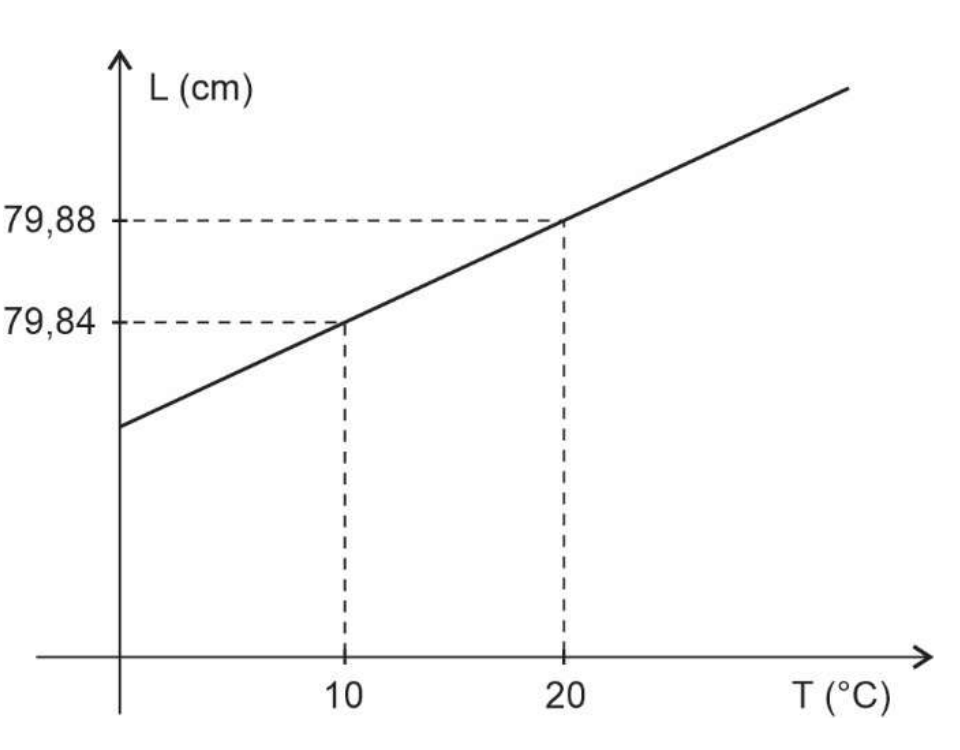
Uma barra, estando inicialmente a 50º C, sofre um aquecimento de 20% de sua temperatura.
O aumento percentual correspondente de seu comprimento, em cm, é de:
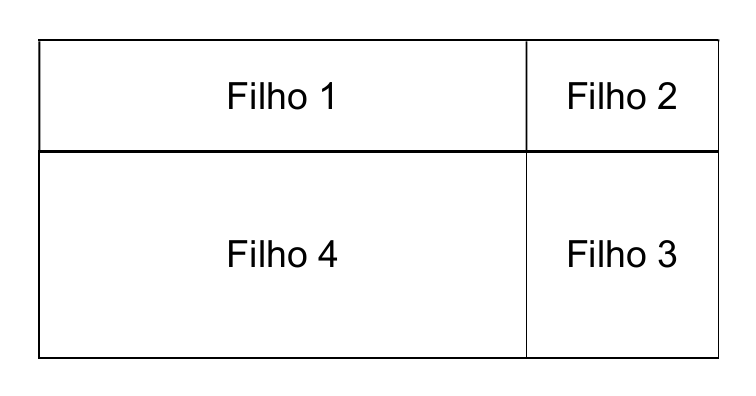
O filho 1 ficou com 27 km² de área, o filho 2 com 18 km² de área, o filho 3 com 72 km² de área.
A área destinada ao filho 4, em km², é igual a:
Dessa forma, |M| é a distância do número M até o número zero.
Considere dois números reais A e B, com A ≠ B, e seus respectivos módulos dados por |A| e |B|.
É correto afirmar, necessariamente, que
Texto-base:
Texto-base:
Texto-base:
Texto-base:
Texto-base:
Texto-base:
Texto-base:
Texto-base:
Texto-base:
Texto-base:
Texto-base:
Texto-base:
Texto-base:
Texto-base:
Texto-base:
Texto-base:
Considere uma certa barra de metal que possui um comprimento inicial L₀, em centímetros. Essa barra, ao ser aquecida, sofre apenas um aumento em seu comprimento diretamente proporcional à temperatura (ºC) de aquecimento.
Um pai comprou um terreno retangular e repartiu-o em quatro terrenos também retangulares entre seus quatro filhos, conforme o croqui abaixo.
Na matemática, define-se módulo de um número como a distância que esse número está do zero na reta numérica. Para representar o módulo de um número, usam-se duas barras verticais, uma antes e outra depois do número.